Tuckpointing NYC

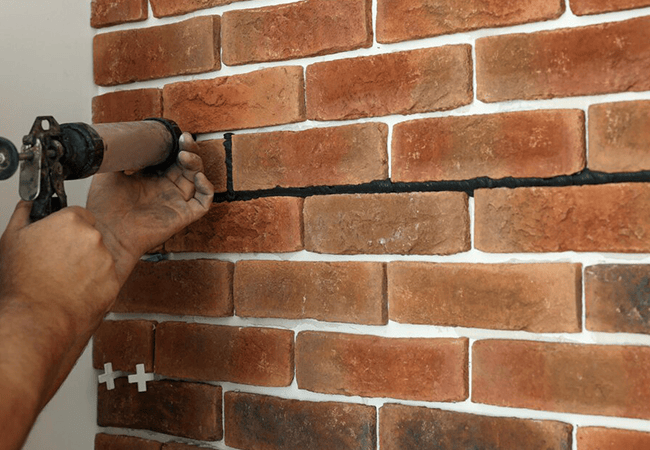
Tuckpointing is a loosely used word in New York masonry. Strictly, it is a decorative joint. Mortar colored to the brick fills the joint flush, and a fine ribbon of putty is laid along it, so ordinary brickwork reads as if it were laid with hairline precision.
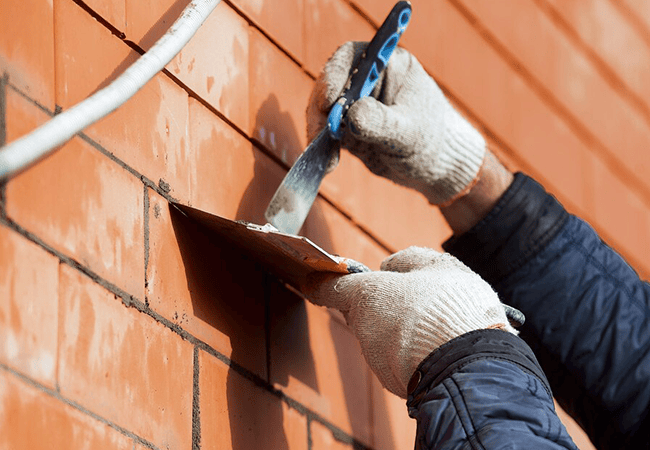

Tuckpointing Contractor in NYC​

What Tuckpointing Is on a New York Wall

For a New York wall, the clearest definition comes from the Society for the Protection of Ancient Buildings, which describes tuck pointing as a highly specialized way of filling joints so they look finer and more regular than they are. Used from the late 1600s to the early 1900s, it imitated gauged work, brick cut and laid with joints barely there. NPS Preservation Brief 2 defines it technically as a primarily decorative raised joint of mortar or lime putty on top of flush joints.

As a tuckpointing contractor in NYC we use the word in that strict sense, and our tuckpointing services cover the stopping, the ribbon and the trimming that make the joint. If the job a wall needs is cutting out failed mortar and packing in new, that is ordinary repointing, set out on our brick pointing NYC page.

Verified on:

Signs an NYC Front Was Tuckpointed

Tuckpointing was often lost to later work, and much of the city’s brick went up as it faded. The Bronx alone grew from 200,507 people in 1900 to 1,265,258 by 1930, according to NYC City Planning census tables.

These are the clues worth looking for before any joint is touched.

A thin line standing proud

A narrow, even ribbon running along the center of each joint, slightly raised from the face, is the clearest sign on an NYC wall.

Joints close to the brick's color

The stopping under the ribbon was colored to the brick, so the joint nearly vanishes and New York bricks look closer together.

Lines straighter than the bricks

The ribbon was trimmed against a straightedge, so on an NYC wall it runs dead true even where the bricks themselves wander slightly.

Traces in sheltered spots

ERA Architects notes sandblasting stripped many ribbons. Look first under New York sills, cornices and door hoods, where weather and cleaning reached least.

One color and no ribbon

A single mortar colored to blend with the brick, with no ribbon on top, is custom color brick pointing NYC work instead.

Tuckpointing Done Properly in New York

Four details that separate true tuckpointing from a painted line or a rushed copy.

The stopping comes first

SPAB describes joints filled flush in mortar colored to the brick, then scored with a narrow groove to take the ribbon. On an NYC front the stopping is what makes the bricks look tight, so it is done with as much care as the ribbon.

The ribbon is putty and fine sand

SPAB Information Sheet 8 gives 2 parts lime putty to 1 part silver sand as the favored tuckpointing mortar. Usually white, occasionally black, red or brown, the ribbon on a New York wall follows whatever color the original carried.

The ribbon is narrow and slightly raised

The same sheet puts the ribbon at about 4 to 6 mm, roughly 3/16 to 1/4 inch, projecting some 3 mm, about 1/8 inch, beyond the brick. On an NYC front, measuring a surviving fragment sets the size for the new work.

New ribbon needs new stopping

SPAB advises that a new ribbon should not be laid on old stopping. Where the colored mortar under it on a New York wall has failed, it is renewed first, so the ribbon has sound material to sit on.

How We Tuckpoint an NYC Wall

We find what the wall originally had

Sheltered corners of the NYC front are checked for surviving ribbon, noting its color, width and how far it stands proud. That fragment, not a catalog, sets the specification.

We lay and score the colored stopping

Once the joints are cleared, they are filled flush in mortar colored to the brick and scored with a narrow groove along each line. On a New York wall this is the stage that tightens the look of the brickwork.

We tuck and trim the ribbon by hand

The putty ribbon is pushed into the groove with a jointer, then cut clean along both edges with a Frenchman against a straightedge. It is slow, careful work on any NYC front, and it cannot be rushed.

Craft Behind Our NYC Tuckpointing

We Size Every NYC Ribbon From the Original

We Tuck and Trim Each NYC Ribbon by Hand

We Leave a Faded but Sound NYC Ribbon Alone

NYC Clients on Our Tuckpointing

Excellent4.646 reviews
4.6
Excellent46 reviews
Posted on Google Google
Hasnat Chaudhary
72 days ago
Trustindex verifies that the original source of the review is Google.
Great services
Posted on Google Google
Chaudhary Khizer Ahmed
72 days ago
Trustindex verifies that the original source of the review is Google.
Great service
Posted on Google Google
Vas Ortiz
72 days ago
Trustindex verifies that the original source of the review is Google.
They were prompt and finished in a day. I was really impressed and they guaranteed their work. Great job guys!! Thank you. We’ll definitely keep in touch for future work.
Posted on Google Google
Ricardo Cruz
76 days ago
Trustindex verifies that the original source of the review is Google.
I found Sadat restoration very professional, thorough at their work , reliable and amazing clean up at the end! Thank you Mohammed , to you and your crew. I highly recommend this company!
Posted on Google Google
Robert Scarano
80 days ago
Trustindex verifies that the original source of the review is Google.
As the owner of Scarano Architect, PLLC firm, we recommend this team. They repaired the façade in a timely fashion, ensuring all work was done properly and fully code compliant. They are professional, reliable, and easy to work with. Hoping to do more projects with them.
Posted on Google Google
Jen Volmer
80 days ago
Trustindex verifies that the original source of the review is Google.
We worked with Sardar Restoration to repoint brick on our home. I've worked with several contractors in the Riverdale/Bronx area, and had a positive experience with Mohammed and his team. They were communicative, punctual, clear with timelines and costs. My favorite thing might have been how efficiently they used their time!
Posted on Google Google
Dorothy Balacich
87 days ago
Trustindex verifies that the original source of the review is Google.
I am extremely happy with the work Sardar did on my firescape. I needed it scraped and primed n painted. It was not done for many years. They are reliable and did a very clean and professional job. I am using them for my next project. Thank you Mohammed !!!
Posted on Google Google
Voncho
92 days ago
Trustindex verifies that the original source of the review is Google.
They did a phenomenal job with the pavers! I’m very happy with there work! Highly recommended
Posted on Google Google
Angelica Quinteros
175 days ago
Trustindex verifies that the original source of the review is Google.
amazing team of saardars
Posted on Google Google
Anthony Tapia
175 days ago
Trustindex verifies that the original source of the review is Google.
Loved there work
Tuckpointing Contractor in NYC​

Why True Tuckpointing in NYC Takes Time

SPAB Information Sheet 8 puts a good day’s tuckpointing at about 1.5 square meters, roughly 16 square feet, and notes that most bricklayers cannot do it at all. That pace is the honest measure of the craft. Every ribbon has to be pushed in, trimmed along both edges and kept dead straight across bricks that are not. A quote that covers a New York front in the time it would take to repoint it is describing something else, often a painted line or a single colored joint. Real tuckpointing is worth that time on a front that was built with it.

Tuckpointing Across NYC's Five Boroughs

Brick tuckpointing work runs across all five boroughs, from Manhattan and Brooklyn to Queens and the Bronx, on older fronts wherever a ribbon joint was used, and we take on the same craft in Westchester County and Yonkers.

See brickwork contractor NYC for how we tell what a brick wall needs, or tuckpointing vs repointing for the two compared side by side.

Serving Every Corner of NYC

Tuckpointing Projects in NYC

Browse our gallery to explore the outstanding projects we’ve successfully completed, highlighting our expertise.

Frequently Asked Questions

What is tuckpointing?

Tuckpointing is a decorative two-part joint. The joint is filled flush in mortar colored to the brick, then a thin contrasting ribbon of lime putty is tucked along it. NPS Brief 2 calls it a raised joint on flush joints, and on an NYC front it is rarer than the word’s everyday use suggests.

Why is it called tuckpointing?

Because the ribbon is tucked in. After the colored stopping is scored with a narrow groove, SPAB describes the contrasting ribbon being pushed or tucked into that groove, then trimmed. The name describes that final step, which is also the part of New York tuckpointing that takes the most skill.

How wide is a tuckpointing ribbon?

Narrow, about 4 to 6 mm, roughly 3/16 to 1/4 inch, according to SPAB Information Sheet 8, projecting some 3 mm, about 1/8 inch, beyond the brick face. On an NYC wall with surviving fragments, the original ribbon is measured and the new work follows it rather than a standard size.

Does faded tuckpointing need to be redone?

Not if the joints underneath are sound. SPAB advises that a faded ribbon alone does not justify repointing, and that the colored stopping can often be repaired without stripping everything. On a New York front a faint ribbon over solid joints is usually best left as it is.

How much tuckpointing can be done in a day?

Not much. SPAB Information Sheet 8 gives about 1.5 square meters, roughly 16 square feet, as a good daily output, because every ribbon is pushed in and trimmed by hand along both edges. On an NYC front that pace is normal for the craft, not a sign of slow work.

What mortar is used for tuckpointing?

Two different mixes. The joint is first filled flush with mortar colored to the brick, then the ribbon goes on top of it. SPAB Information Sheet 8 gives 2 parts lime putty to 1 part silver sand as the favored ribbon mix. On an NYC front, a surviving fragment guides the color of both.

When was tuckpointing used on buildings?

From the late 1600s to the early 1900s, according to SPAB, mainly to make ordinary brick look like fine gauged work. Much of New York’s brick, including most of the Bronx, went up as the craft was fading, so many city walls were never tuckpointed at all and only need ordinary joint work.

Can tuckpointing be added to a wall that never had it?

Yes, but it is a new finish rather than a restoration. A ribbon makes joints look finer than they are, so it changes how the whole front reads. On an NYC building it works best where people see it up close, such as an entrance or the ground floor, rather than across every story.

What should I ask a tuckpointing contractor?

Ask to see a ribbon they have trimmed, whether they check surviving fragments before setting size and color, and whether failed stopping is renewed before new ribbon goes on. SPAB notes the skill is scarce among bricklayers, so on an NYC front those answers separate true tuckpointing from ordinary repointing.