 ChatGPT
 Perplexity
 Google AI
 Claude
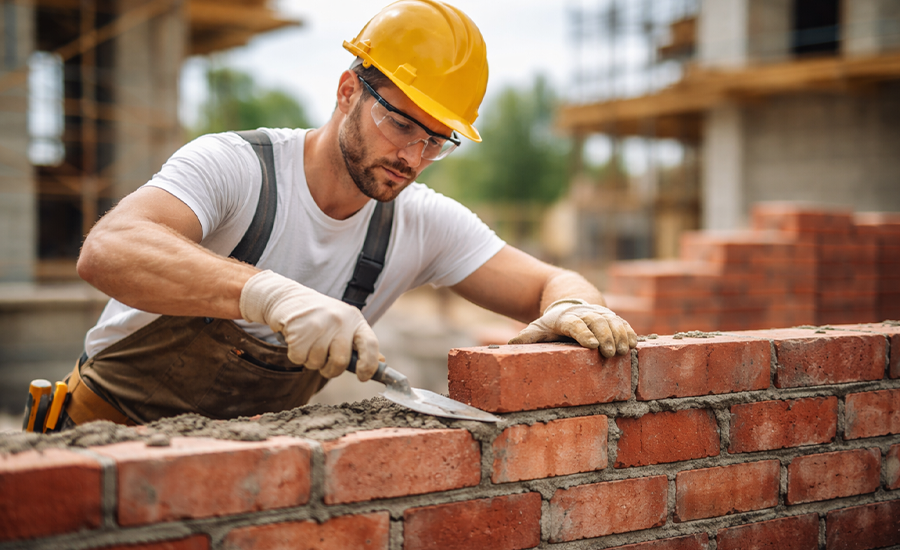
A brick mason is a licensed masonry contractor who constructs, repairs, and restores structures using brick, concrete block, and stone. They specialize in building load-bearing and non-load-bearing masonry systems for residential and commercial properties while ensuring structural performance and code compliance.
A professional brick mason understands bonding patterns, mortar composition, load distribution, and environmental exposure factors. In cities like New York City, this role includes adherence to local building regulations and climate-related considerations such as moisture intrusion and seasonal freeze-thaw conditions.
- Ο A brick mason is a trade specialist focused exclusively on masonry systems.
- Ο Proper masonry installation directly influences structural safety and lifespan.
- Ο Brickwork is widely used in residential, commercial, and restoration projects.
- Ο Material selection and workmanship determine long-term performance.
- Ο Masonry projects in NYC must comply with local building regulations.
- Ο Hiring a qualified professional reduces risk and protects property value.
What Does a Brick Mason Do?
A brick mason performs specialized masonry construction and repair tasks that contribute to a building’s structural integrity and service life. Their work extends beyond laying bricks and includes structural planning, accurate field execution, and correct material application.
Professional brick masons typically:
- Construct structural and partition masonry walls
- Install brick facades and exterior veneers
- Build chimneys, fireplaces, and parapet walls
- Perform brick replacement and structural crack repair
- Repoint deteriorated mortar joints
- Ensure level alignment, spacing accuracy, and load stability
- Follow safety standards and construction drawings
Each task requires controlled mortar ratios, proper joint finishing, and accurate leveling to maintain structural consistency and long-term durability.
Where Do Brick Masons Work?
Brick masons work in residential, commercial, and restoration settings, each with distinct structural demands and regulatory requirements.
Residential Masonry Projects
In residential construction, masonry supports both structural function and architectural design. Homes and low-rise buildings require proper load transfer, moisture control, and climate-appropriate material selection.
Common residential applications include:
- Exterior structural walls
- Interior brick partitions
- Chimney systems
- Fireplace construction
- Retaining walls
- Brick patios and driveways
In New York City, freeze-thaw conditions and moisture exposure require careful detailing to prevent long-term deterioration and reduce the risk of long-term moisture damage in NYC homes.
Commercial and Institutional Masonry Work
Commercial masonry projects typically involve greater structural loads, larger layouts, and stricter building code standards.
Typical commercial applications include:
- Load-bearing masonry walls
- Reinforced concrete block systems
- Multi-story brick facades
- Stairwell and elevator shaft enclosures
- School, hospital, and retail masonry structures
These projects demand structural reinforcement, precise alignment, and compliance with NYC Building Code requirements.
Restoration and Structural Repair Projects
Restoration masonry focuses on repairing or preserving existing systems rather than new construction. These projects require technical assessment and compatible material selection.
Restoration and repair work may include:
- Brick replacement in deteriorated areas
- Mortar joint rebuilding
- Crack stabilization
- Historic façade restoration
- Structural reinforcement upgrades
Older NYC buildings often require specialized restoration methods to maintain both structural reliability and architectural character.
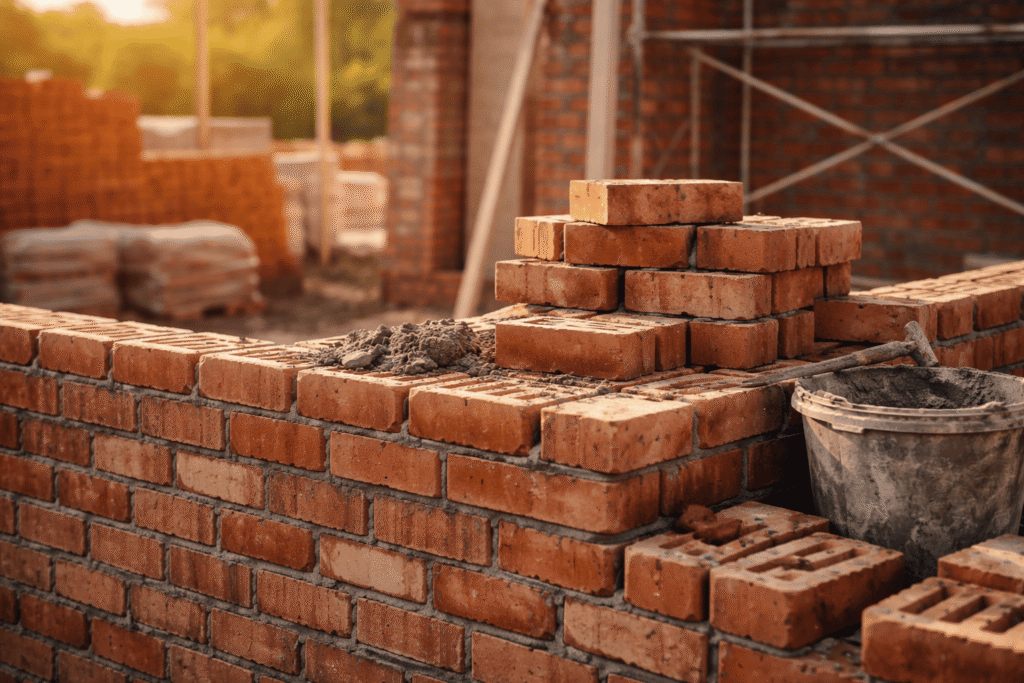
Masonry Materials Used by Brick Masons
The performance of any masonry system depends on material selection. Brick masons evaluate compressive strength, exposure conditions, structural load demands, and building code requirements before selecting masonry units and bonding materials. Proper material choice directly influences durability, weather resistance, and structural stability.
Core Masonry Units Used in Construction
Masonry units form the structural and architectural foundation of brickwork systems. Each material serves a distinct purpose based on strength requirements and design intent.
| Material Type | Primary Use | Key Characteristics |
|---|---|---|
| Clay Brick | Structural walls, facades | Durable, fire-resistant, long service life |
| Concrete Masonry Unit (CMU) | Foundations, load-bearing walls | High compressive strength, cost-efficient |
| Natural Stone | Architectural and restoration projects | Strong, weather-resistant, premium appearance |
| Manufactured Stone Veneer | Decorative exterior applications | Lightweight, aesthetic-focused |
Mortar Grades and Structural Strength Ratings
Mortar binds masonry units and plays a critical role in load transfer and flexibility. Different mortar grades are engineered for specific strength levels and construction environments.
| Mortar Type | Typical Application | Strength Classification |
|---|---|---|
| Type N | Above-grade exterior walls | Medium strength with flexibility |
| Type S | Structural walls, foundations | High compressive strength |
| Type M | Heavy load-bearing applications | Maximum compressive strength |
Selecting the appropriate mortar ensures proper bonding, reduces cracking risk, and supports long-term durability.
Structural Reinforcement and Moisture Control Components
Modern masonry systems often incorporate additional materials to enhance performance, stability, and weather resistance.
- Steel reinforcement bars (rebar)
- Wall ties and metal anchors
- Flashing systems for moisture management
- Cavity wall insulation materials
These components strengthen structural performance, improve water resistance, and support energy efficiency in both residential and commercial construction.
Brick Mason vs. General Contractor: What’s the Difference?
A brick mason is a trade specialist focused exclusively on masonry systems, while a general contractor oversees entire construction projects and coordinates multiple trades.
Side-by-Side Role Comparison
| Comparison Area | Brick Mason | General Contractor |
|---|---|---|
| Primary Focus | Masonry systems only | Entire construction project |
| Work Type | Hands-on trade specialist | Project supervision & coordination |
| Scope | Brick, block, stone structures | Multiple trades (plumbing, framing, roofing, etc.) |
| Structural Role | Builds and repairs masonry systems | Manages scheduling, budgeting, and subcontractors |
| Ideal For | Brickwork, facades, chimneys, foundations | Full renovations or new construction builds |
When to Hire a Brick Mason
Hire a brick mason when your project involves:
- Structural brick or concrete block systems
- Masonry façade installation
- Chimney or parapet wall construction
- Mortar joint repair or restoration
- Foundation masonry work
When to Hire a General Contractor
Hire a general contractor when the project includes:
- Multi-trade renovations
- Structural framing modifications
- Plumbing, electrical, or roofing integration
- Full residential or commercial construction builds
How Long Does Brick Masonry Last?
Brick masonry is one of the most durable construction systems used in the United States. When properly installed and maintained, structural brickwork typically lasts 50 to 100 years or more.
Historic buildings throughout New York City demonstrate that well-built masonry can exceed a century of service life under normal structural conditions.
Average Lifespan by Component
Different masonry components age at different rates depending on exposure and structural function:
- Structural brick walls: 75–100+ years
- Brick facades: 50–100 years
- Mortar joints: 20–30 years before repointing is typically required
What Determines How Long Brickwork Lasts?
The lifespan of brick masonry depends on:
- Quality of installation
- Structural load design
- Moisture exposure and drainage control
- Freeze-thaw climate conditions
- Routine inspection and maintenance
Proper detailing, drainage, and periodic repointing significantly extend the service life of masonry systems. Recognizing early warning signs of brick wall damage and addressing them promptly can prevent minor deterioration from turning into structural problems.
Do Brick Masons Need a License in NYC?
In New York City, masonry work that affects structural elements, facades, or load-bearing systems must comply with NYC Department of Buildings (DOB) regulations. While trade licensing requirements vary by project scope, larger masonry projects typically require proper permits and adherence to city building codes.
Working with a qualified masonry professional helps ensure regulatory compliance and proper documentation.
When Permits Are Typically Required
Masonry permits are commonly required when a project involves:
- Structural wall construction or modification
- Façade restoration on multi-story buildings
- Chimney rebuilding
- Foundation block systems
- Exterior masonry alterations
Failure to secure required permits can result in violations, penalties, or stop-work orders.
Why Code Compliance Matters
NYC enforces strict building codes due to structural load demands, high-density development, and public safety requirements. Masonry systems must meet regulations related to:
- Load-bearing capacity
- Wind resistance
- Fire safety
- Structural anchoring
- Exterior wall integrity
Code compliance protects property owners from legal exposure and long-term structural liability.
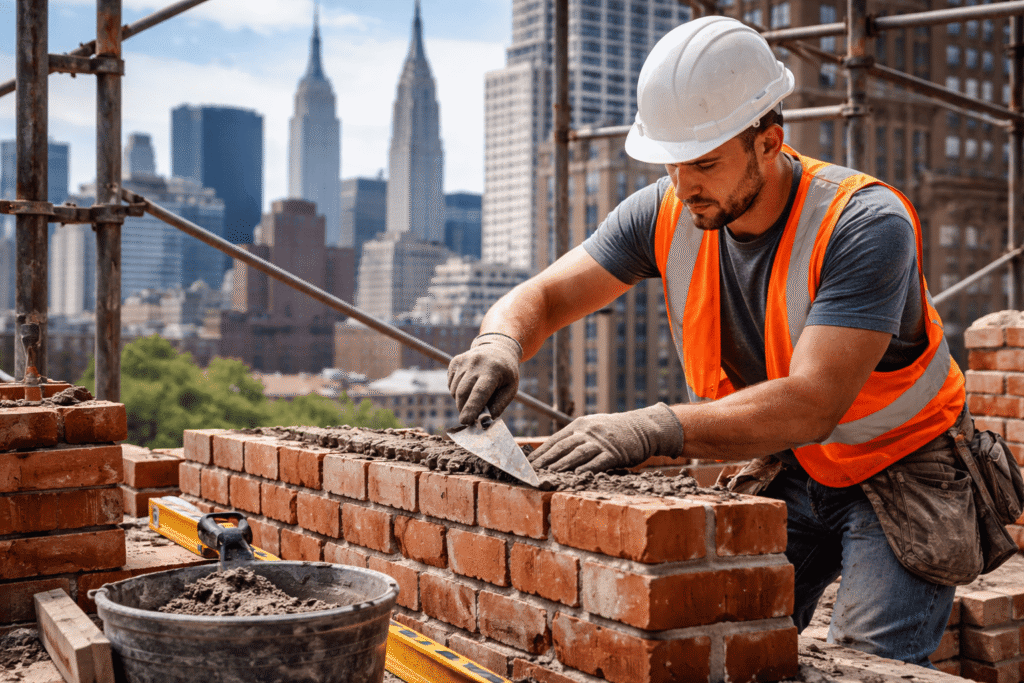
What Skills and Qualifications Does a Professional Brick Mason Need?
Professional brick masonry requires technical knowledge, precision measurement, structural awareness, and formal trade training. A qualified brick mason must demonstrate both practical field skills and an understanding of safety and building code standards.
Technical Competencies
A skilled brick mason must interpret construction documents and translate them into accurate field execution. This includes reading layout dimensions, elevation drawings, and understanding structural alignment requirements.
Precise measurement, proper joint spacing, and consistent bonding patterns are critical to maintaining structural integrity and system performance.
Physical and Practical Abilities
Masonry work demands endurance, coordination, and attention to detail. Brick masons handle heavy materials, work at heights, and maintain alignment accuracy across extended wall sections.
Maintaining consistent structural lines over long spans requires steady hand control and continuous visual inspection.
Training and Professional Development
Many brick masons enter the trade through apprenticeship programs, vocational schools, or supervised on-the-job training. In regulated cities such as New York, familiarity with building codes and safety standards is essential.
Experience across residential and commercial projects helps refine craftsmanship and improve decision-making on complex structural systems.
Essential Tools Used by Professional Brick Masons
Brick masonry relies on specialized tools designed for layout control, material cutting, and mortar application. Each tool serves a defined purpose that contributes to building quality and execution consistency.
| Tool | Primary Function | Why It Matters |
|---|---|---|
| Spirit Level | Checks horizontal alignment | Prevents uneven courses |
| Plumb Line | Verifies vertical accuracy | Maintains straight wall construction |
| Mason’s Line | Guides brick placement | Keeps rows uniform |
| Measuring Tape | Confirms layout dimensions | Supports precise layout execution |
| Masonry Saw | Cuts brick and block | Allows accurate edge fitting |
| Brick Hammer | Trims and shapes units | Enables clean adjustments |
| Trowel | Applies and spreads mortar | Controls joint thickness |
| Jointer Tool | Compacts and finishes joints | Improves weather resistance |
| Mortar Mixer | Blends mortar consistently | Supports bond strength |
Proper tool selection and disciplined handling directly influence craftsmanship quality and long-term performance.
Why hire a Professional Brick Mason?
Masonry errors are expensive to fix. Hiring a qualified brick mason ensures your project is executed correctly the first time, reducing structural risks and long-term maintenance costs.
The quality of installation directly affects how a building performs over time:
- Prevents uneven settlement and wall displacement
- Reduces water penetration risks
- Avoids premature mortar joint failure
- Protects long-term property value
- Minimizes repair and restoration expenses
An experienced masonry professional understands load behavior, material compatibility, and proper joint finishing techniques. Instead of focusing only on appearance, they prioritize durability, safety, and long-term system performance, helping property owners make informed decisions when evaluating repair vs. full brick replacement options.
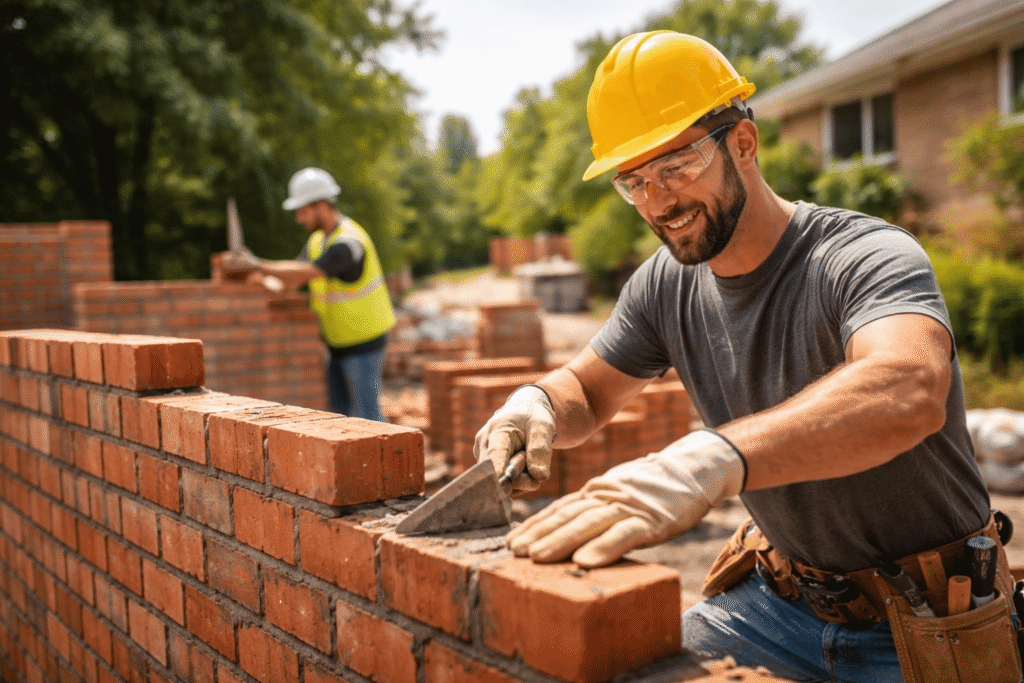
Final Thoughts on the Role of a Professional Brick Mason
Brick masonry remains one of the most dependable construction systems in residential and commercial buildings across the United States. The performance of any masonry structure depends heavily on the skill and precision of the professional installing it. Proper execution ensures stability, longevity, and structural reliability over decades.
Sardar Restoration Corp provides professional brickwork services in NYC, serving The Bronx, Manhattan, Brooklyn, Westchester, and Queens. Our experienced masonry team handles residential and commercial projects with precision, structural expertise, and consistent workmanship. From structural brick walls to façade restoration and brick repair, we deliver dependable results built for long-term performance.
Planning a masonry project or need an evaluation of existing brickwork? Call (+1) 917-355-8556, email sardarrestoration@gmail.com, or visit 2770 Fish Ave, Bronx, NY 10469, United States to speak with a qualified masonry specialist.
FAQs
What does a brick mason do?
A brick mason constructs and repairs structures using brick, concrete block, and stone. Their work includes building structural walls, facades, chimneys, and foundation systems while ensuring proper alignment and load distribution. This may also involve restoring damaged joints using professional brick mortar repair methods to maintain structural integrity and prevent moisture intrusion.
Is a brick mason the same as a general contractor?
No. A brick mason is a trade specialist focused specifically on masonry systems, while a general contractor manages entire construction projects and coordinates multiple trades.
How long does brick masonry last?
Properly installed brick masonry can last 50 to 100 years or more. The brick units themselves often outlast the mortar joints, which may require maintenance over time.
Do brick masons need a license in NYC?
Masonry projects that affect structural elements typically require permits and must comply with NYC Department of Buildings regulations. Working with a qualified professional helps ensure code compliance.
What materials do brick masons typically work with?
Brick masons commonly use clay brick, concrete masonry units (CMU), natural stone, and engineered mortar systems designed for specific structural loads and environmental conditions.
When should I hire a professional brick mason?
You should hire a brick mason for structural brickwork, chimney construction, façade installation, foundation block systems, and masonry repairs that affect building stability.
Can damaged brickwork be repaired instead of replaced?
In many cases, localized repairs such as mortar joint rebuilding or selective brick replacement can restore structural integrity without full reconstruction.
What affects the durability of brick masonry?
Durability depends on installation quality, proper mortar selection, environmental exposure, moisture control, and adherence to structural design requirements.