
Stucco Contractor NYC
Stucco repair, replacement and installation across New York City, on masonry buildings and frame houses alike. We work on traditional three-coat, one-coat and EIFS systems, and we start by identifying which one you have, because the repair depends entirely on that.
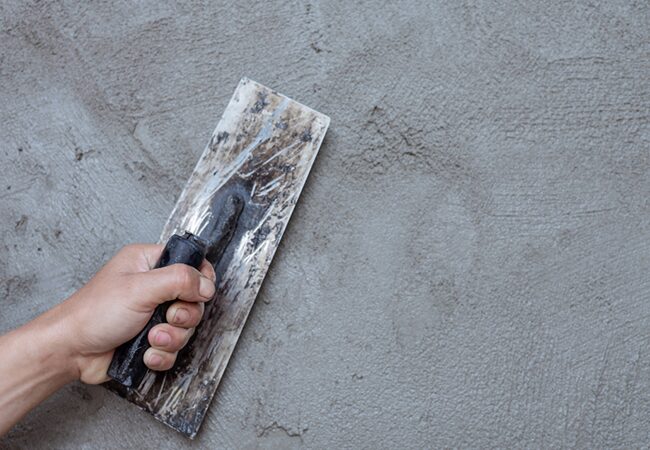
Stucco on New York City Buildings
Stucco is a cladding system, not a finish. It sheds water, breathes, and moves with the building underneath it, and when it fails the cause is usually behind the surface rather than on it. Cracks, staining, hollow patches and bubbling paint are all symptoms of something happening in the wall.
Most stucco in New York City sits on masonry rather than on wood frame, and a large share of it was applied over brick that was already deteriorating. That matters, because stucco over sound brick performs well for decades, and stucco over failing brick traps water and accelerates the problem it was meant to hide.
We identify the system, find out what is behind it, and tell you whether the wall needs patching, repointing underneath, or removal and replacement. Then we do that work rather than the largest version of it.
- We work on traditional, one-coat and EIFS systems
- We check what is behind the stucco before quoting
- Residential, commercial, and buildings under facade filing requirements
Verified on:






Which Stucco System Do You Have?
Traditional three-coat
Scratch, brown and finish coats over lath or masonry. The oldest and most durable system, common on pre-war New York buildings.
One-coat
A single thicker application over a base, faster and cheaper to install. Common on later construction and on repairs done on a budget.
EIFS
Synthetic, insulated, and applied over foam board. Widely used from the 1970s onward. Repairs are not interchangeable with cement stucco.
Stucco over brick
Not a system in itself, but very common in New York. How it performs depends entirely on the condition of the brick underneath.
Our Stucco Services in NYC
Once we know what system you have and what is behind it, the work falls into one of these.






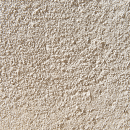
How a Stucco Job Runs
Find out what is there
We check the system type, sound the wall for hollow areas, and look at what the stucco is sitting on. Hollow-sounding stucco has already separated from its substrate.
Fix the cause, then the surface
If water is getting in behind the stucco, patching the face just seals it in. Flashing, joints and the substrate get dealt with first.
Match the finish
Texture and color are matched to the existing wall so the repair does not read as a patch. On a full elevation this is straightforward. On a spot repair it is the hard part.
Why NYC Owners Call Us for Stucco
We Identify the System First
We Check What Is Behind It
Licensed and Insured
What NYC Customers Say About Our Stucco Work
Trustindex verifies that the original source of the review is Google.Posted on Google Kevin Bradley3 days agoGreat team. They know what they are doing.Trustindex verifies that the original source of the review is Google.Posted on GoogleHasnat Chaudhary88 days agoGreat servicesTrustindex verifies that the original source of the review is Google.Posted on GoogleChaudhary Khizer Ahmed88 days agoGreat serviceTrustindex verifies that the original source of the review is Google.Posted on GoogleVas Ortiz88 days agoThey were prompt and finished in a day. I was really impressed and they guaranteed their work. Great job guys!! Thank you. We’ll definitely keep in touch for future work.Trustindex verifies that the original source of the review is Google.Posted on GoogleRicardo Cruz92 days agoI found Sadat restoration very professional, thorough at their work , reliable and amazing clean up at the end! Thank you Mohammed , to you and your crew. I highly recommend this company!Trustindex verifies that the original source of the review is Google.Posted on GoogleRobert Scarano96 days agoAs the owner of Scarano Architect, PLLC firm, we recommend this team. They repaired the façade in a timely fashion, ensuring all work was done properly and fully code compliant. They are professional, reliable, and easy to work with. Hoping to do more projects with them.Trustindex verifies that the original source of the review is Google.Posted on GoogleJen Volmer96 days agoWe worked with Sardar Restoration to repoint brick on our home. I've worked with several contractors in the Riverdale/Bronx area, and had a positive experience with Mohammed and his team. They were communicative, punctual, clear with timelines and costs. My favorite thing might have been how efficiently they used their time!Trustindex verifies that the original source of the review is Google.Posted on GoogleDorothy Balacich103 days agoI am extremely happy with the work Sardar did on my firescape. I needed it scraped and primed n painted. It was not done for many years. They are reliable and did a very clean and professional job. I am using them for my next project. Thank you Mohammed !!!Trustindex verifies that the original source of the review is Google.Posted on GoogleVoncho108 days agoThey did a phenomenal job with the pavers! I’m very happy with there work! Highly recommendedTrustindex verifies that the original source of the review is Google.Posted on GoogleAngelica Quinteros191 days agoamazing team of saardars


Stucco on a Facade Filing
If your building is over six stories, stucco on the exterior walls falls inside the Facade Inspection Safety Program along with the rest of the facade. Stucco that is cracked, hollow or delaminating can be written up in an inspection report, and it has to be corrected on the same schedule as any other facade condition. We handle stucco work as part of that scope and file with the Department of Buildings where the job requires it.
Stucco Services by Borough
Stucco behaves differently depending on what it was applied to, and that changes across the city.
Also see all masonry services in NYC.

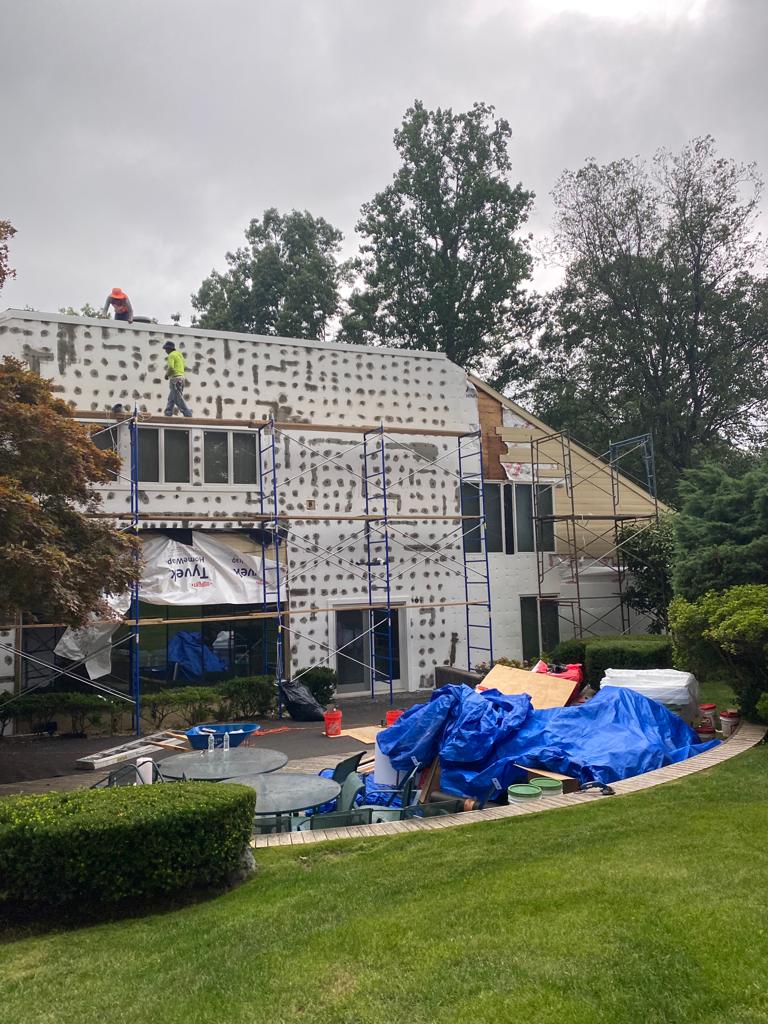
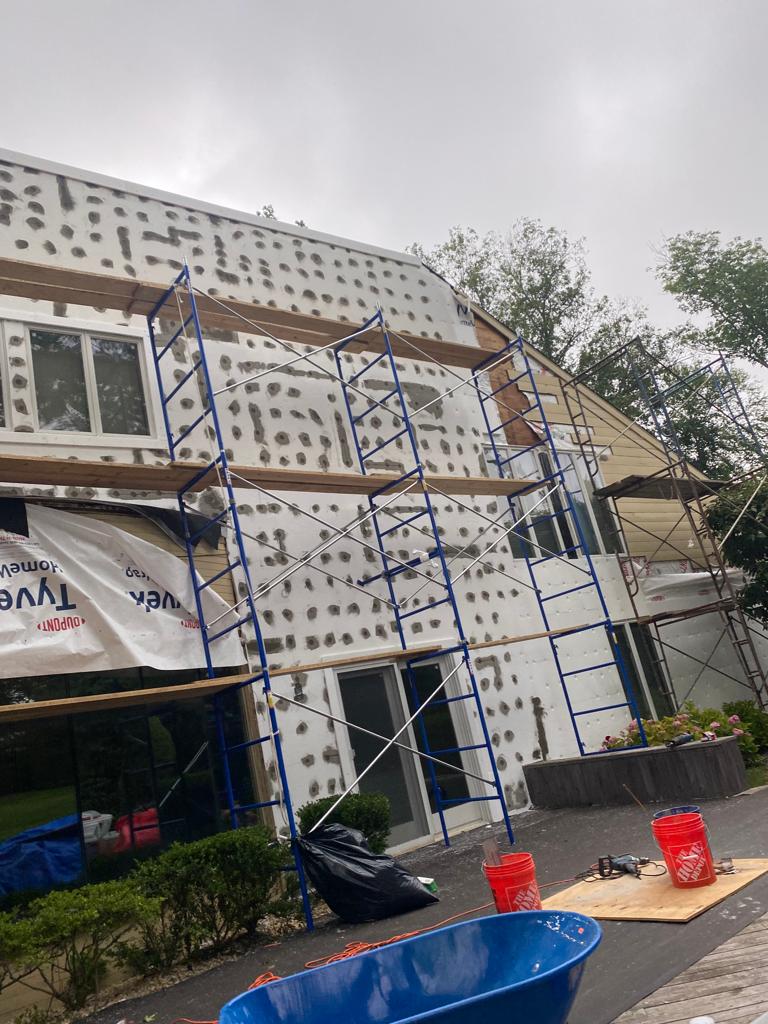
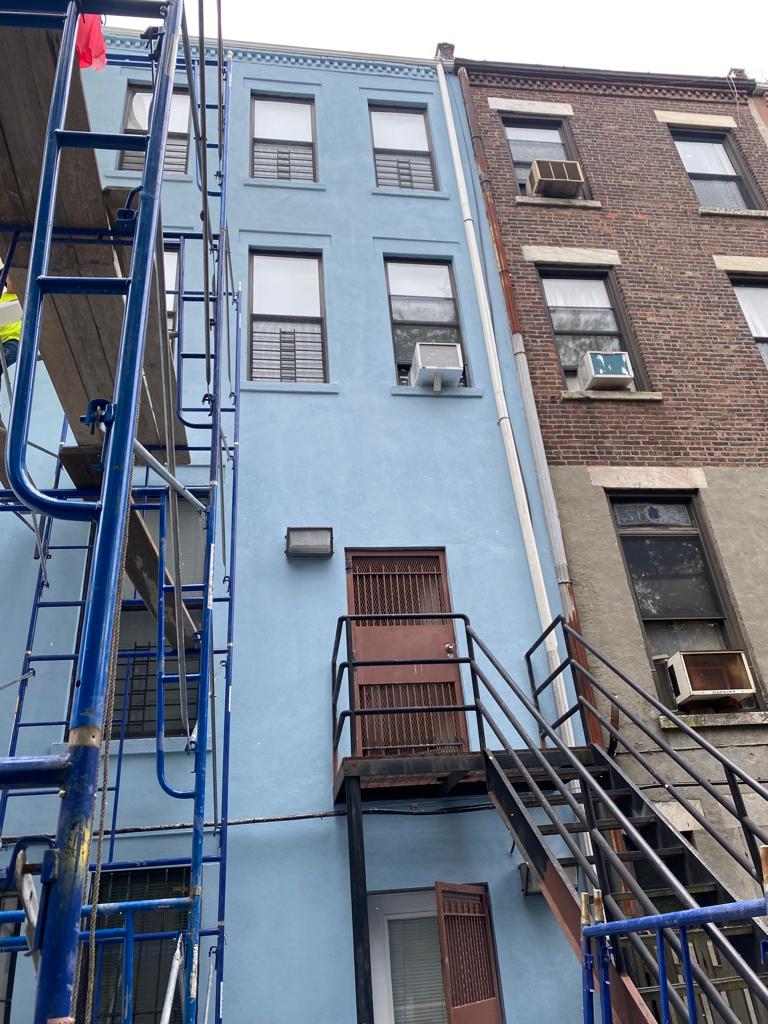
Stucco Projects in NYC
Browse our gallery to explore the outstanding projects we’ve successfully completed, highlighting our expertise.
Frequently Asked Questions
Tap it. Traditional three-coat over masonry sounds solid and feels like stone. EIFS sounds hollow everywhere because it is foam board underneath, and it is usually softer if you press hard. One-coat sits between the two. Age helps as well, because on a pre-war New York building it is almost certainly traditional cement stucco, while EIFS did not appear here until the 1970s. Knowing which one you have decides everything about the repair.
Usually not, and this is worth being direct about. Stucco applied over brick that needs repointing traps water inside the wall instead of letting the joints breathe. The brick keeps deteriorating out of sight, and the stucco eventually fails too, at which point you are paying to remove stucco and repoint brick that could have been repointed in the first place. A lot of the stucco we remove in New York was applied for exactly this reason. Over sound, properly prepared brick it performs well.
Most of the time it is repaired. Removal is only necessary when the stucco has separated from its substrate across a large area, or when what is behind it has failed. The test is whether the wall sounds hollow. Solid stucco with cracks is a repair. Hollow stucco over a wide area has already let go and patching it will not hold.
Some cracking is normal and comes from the building moving, which stucco is meant to accommodate. What is not normal is cracking in a pattern. Horizontal cracks tracking a floor line, stepped cracks following the masonry joints behind, or cracks radiating from window corners. Those follow something structural. The pattern tells you more than the width does.
It depends on scope and building height. Patching and refinishing generally do not require a filing. Removing and replacing stucco across an elevation, or any stucco work forming part of a facade repair on a building over six stories, generally does. We check before quoting and file directly with the Department of Buildings when it is needed.
Yes, and on a spot repair it is the part that decides whether the job looks right. Texture is matched by hand on site rather than picked from a chart, and color is matched to the weathered wall rather than to the original mix, because stucco changes tone as it ages. On badly faded elevations, recoating the whole wall is sometimes the better answer than trying to blend into it.