
 ChatGPT
 Perplexity
 Google AI
 Claude
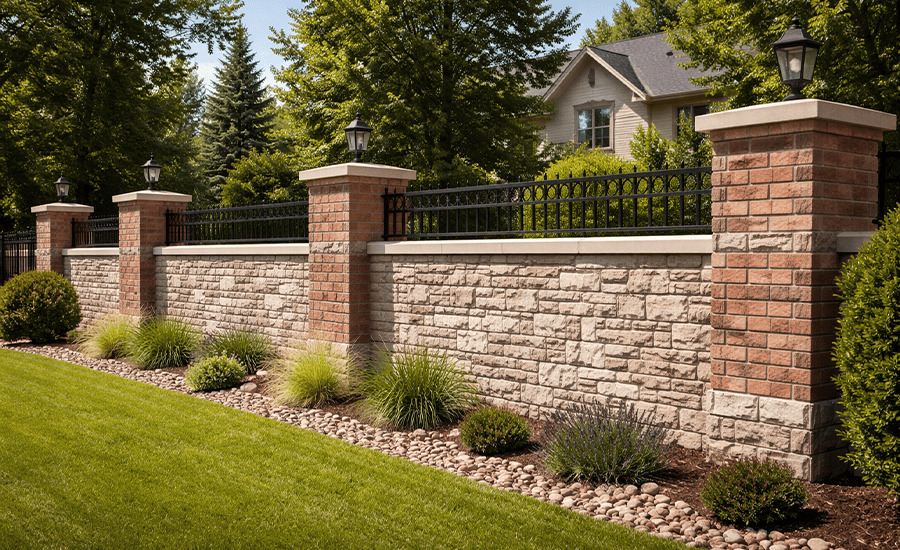
A masonry fence is a permanent boundary structure constructed from brick, concrete block, natural stone, or similar bonded materials installed over a reinforced concrete footing. Unlike lightweight wood, vinyl, or metal fencing systems, masonry fencing forms a rigid, solid barrier designed for long-term structural stability and security.
In dense urban environments like NYC, masonry fences are often chosen for their strength, privacy control, and resistance to harsh weather exposure. With proper footing depth and drainage, they perform reliably against moisture, freeze-thaw cycles, and wind pressure, making them suitable for both residential and commercial properties.
Masonry fences serve as perimeter walls, privacy enclosures, decorative boundaries, or high-security barriers, depending on structural design.
- Ο Built from brick, concrete block, natural stone, or stucco finishes
- Ο Installed on a reinforced concrete foundation
- Ο Typically lasts 50 to 80+ years with proper maintenance
- Ο Higher upfront cost than wood or vinyl systems
- Ο Minimal long-term maintenance requirements
- Ο Provides strong privacy and security protection
- Ο Suitable for residential and commercial properties
- Ο Contributes to long-term property value and curb appeal
Key Differences: Masonry vs Wood vs Metal Fencing
Choosing the right fence depends on durability expectations, maintenance capacity, security needs, and long-term cost considerations. While wood and metal fencing are common in residential areas, masonry fencing is often selected for properties where permanence, strength, and privacy are higher priorities.
The table below highlights the practical differences that typically influence a property owner’s decision.
| Feature | Masonry Fence | Wood Fence | Metal Fence |
|---|---|---|---|
| Structural Strength | Solid, load-bearing structure with high stability | Moderate strength, can weaken over time | Strong frame but not load-bearing |
| Lifespan | 50–80+ years with proper maintenance | 10–20 years depending on care | 20–40 years depending on material |
| Maintenance Needs | Minimal; periodic inspection and joint repair | Requires staining, sealing, repainting | May require rust treatment or repainting |
| Weather Resistance | Highly resistant to moisture, wind, and freeze–thaw cycles | Vulnerable to rot, warping, and insects | Can corrode if untreated |
| Privacy Level | Full visual and physical barrier | Good privacy when panels are solid | Limited privacy unless combined with panels |
| Security Level | Strong physical deterrent | Moderate security | Visible barrier but climbable |
| Upfront Cost | Higher initial investment | Lower initial cost | Moderate cost |
| Long-Term Value | Strong long-term return and durability | Replacement likely within 15–20 years | Durable but mainly decorative |
From a long-term ownership perspective, masonry fencing generally provides greater structural stability and lifecycle value. Wood may suit short-term or budget-focused projects, while metal fencing works well where visibility and decorative appeal are priorities rather than full privacy.
Types of Materials Used in Masonry Fences
The strength, lifespan, and appearance of a masonry fence depend largely on the material selected. Each option offers a different balance of structural stability, cost efficiency, and architectural style. The right material should align with the property’s design, security requirements, and long-term maintenance expectations.
Brick Masonry Fences
Brick masonry fences provide a timeless and structured appearance that works well with both traditional and urban properties. When built over a reinforced concrete footing, brick systems offer strong durability and reliable weather resistance. The performance of brick systems also depends on proper joint detailing, including different types of masonry joints that influence both durability and moisture control.
They are commonly selected for residential properties where architectural consistency with the main building is important.
Natural Stone Masonry Fences
Natural stone fencing offers a premium visual character combined with exceptional durability. Its dense composition provides strong resistance to impact, moisture, and long-term environmental exposure.
This option is typically chosen for luxury homes, estates, or properties where architectural distinction and long-term permanence are priorities.
Concrete Block Masonry Fences
Concrete block systems are widely used for structural reliability and cost balance. They provide solid load-bearing performance and can be finished with stucco or veneer for improved appearance.
Stucco-Finished Masonry Fences
Stucco finishes are applied over concrete block structures to create smooth or textured surfaces. They allow color customization and integrate well with modern or contemporary architectural designs.
This system combines the structural reliability of masonry with a cleaner exterior finish suited for updated residential and commercial properties.
Material selection should consider soil stability, required wall height, drainage conditions, and local climate exposure to ensure long-term structural performance.
Why Masonry Fencing Is a Smart Investment
Masonry fencing is often selected for its structural durability, privacy protection, and long service life. As explained in what masonry construction involves, its solid composition and reinforced foundation make it a practical long-term boundary solution. While the upfront installation cost is typically higher than wood or lightweight fencing systems, its reduced maintenance and extended lifespan make it a practical long-term investment.
Long-Term Structural Durability
Masonry fences are built to withstand:
- Harsh weather conditions
- Moisture exposure
- Wind pressure
- Minor surface impacts
Unlike wood, which can rot, or metal, which may corrode, masonry structures maintain their strength and form for decades when properly constructed.
Enhanced Security and Privacy
A solid masonry fence provides:
- Strong physical barrier against trespassing
- Limited visibility into the property
- Fewer access points for intruders
- Added protection for children and pets
Architectural Compatibility
Masonry fencing complements various architectural styles, including:
- Traditional
- Modern
- Mediterranean
- Colonial
- Contemporary
Customization options may include:
- Material selection
- Surface finishes
- Decorative caps or coping
- Integrated lighting elements
Minimal Maintenance Requirements
Compared to wood fencing systems, masonry fences typically require:
- No routine staining or sealing
- Resistance to pests and rot
- Occasional cleaning
- Periodic mortar joint inspection
Acoustic Performance Benefits
Solid masonry walls help:
- Reduce street and traffic noise
- Limit sound transmission from neighboring properties
- Improve outdoor comfort in dense urban settings
When Is a Masonry Fence the Right Choice?
A masonry fence is most suitable when long-term structural performance, privacy control, and strong boundary definition are priorities. It is generally selected when lighter fencing systems may not provide the required durability or level of enclosure.
Masonry fencing is often the right choice in situations such as:
- Properties located in dense urban neighborhoods
- Homes requiring full visual privacy from adjacent buildings
- Commercial sites that need controlled access and perimeter security
- Areas exposed to strong wind or seasonal weather shifts
- Properties near traffic corridors where sound buffering is beneficial
- Projects aiming for architectural consistency with brick or stone exteriors
- Owners seeking a permanent boundary rather than a short-term fencing solution
When a Masonry Fence May Not Be the Best Option
Although masonry fencing offers durability and privacy advantages, it may not be the most practical solution in every situation. Certain project constraints, budget limits, or site conditions can make alternative fencing systems more suitable.
A masonry fence may not be ideal when:
- The project requires a low upfront installation cost
- The boundary solution is temporary or short-term
- Soil conditions are unstable without significant foundation work
- Local zoning regulations restrict wall height
- The property requires open visibility rather than full enclosure
- Fast installation is a priority over long-term durability
- The design intent favors lightweight or decorative fencing systems
In such cases, alternative fencing systems may provide a more practical solution depending on site and budget considerations.
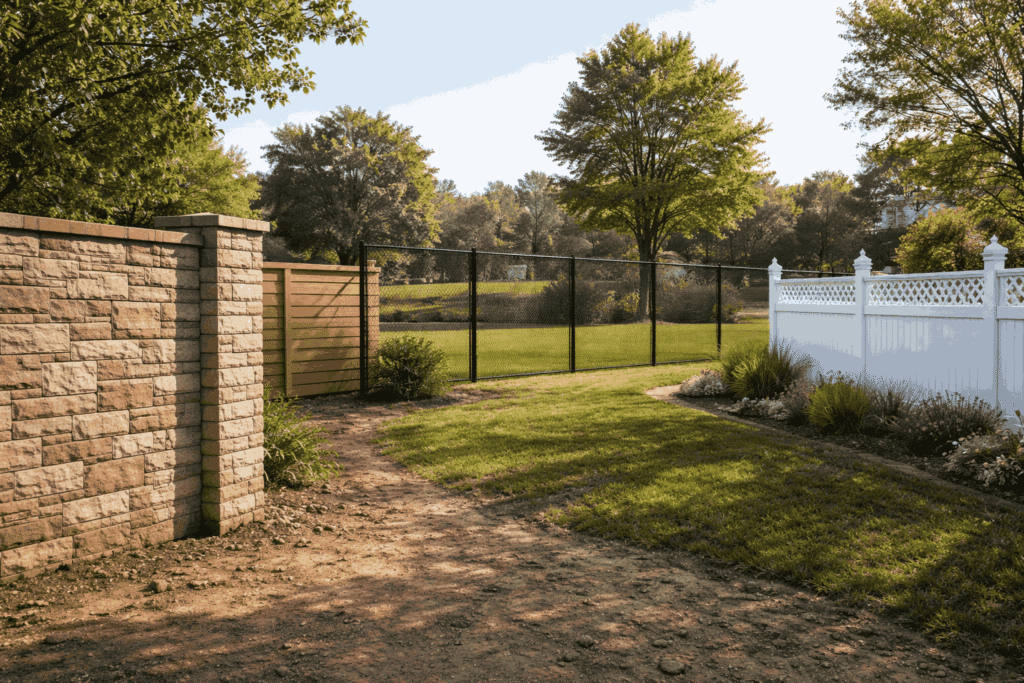
How a Masonry Fence Improves Property Value
A masonry fence enhances property value through both functional performance and visual impact. Beyond acting as a boundary, it becomes a permanent structural feature that strengthens security, privacy, and overall exterior presentation.
Performance Benefits
- Clearly defined and permanent property boundaries
- Improved safety and controlled access
- Enhanced privacy from adjacent properties
- Reduced long-term maintenance costs
- Extended structural lifespan compared to lightweight fencing
Visual and Architectural Impact
- Creates a finished and structured exterior appearance
- Complements landscaping and building façade
- Adds depth, texture, and architectural definition
- Strengthens first impressions and buyer perception
Masonry Fencing Considerations in NYC
New York City properties face specific environmental and structural conditions that influence fencing performance. Seasonal freeze-thaw cycles, dense urban layouts, wind exposure between buildings, and limited lot spacing all affect how boundary systems behave over time. Understanding common cold-weather masonry problems and fixes helps property owners anticipate performance challenges before installation.
Masonry fencing is often preferred in NYC because:
- Solid masonry performs better against freeze-thaw expansion than wood systems
- Reinforced footings improve stability in varied soil conditions
- Dense materials provide stronger privacy in closely spaced neighborhoods
- Solid walls help reduce traffic and street noise common in urban corridors
- Permanent structures align with long-term residential and commercial ownership
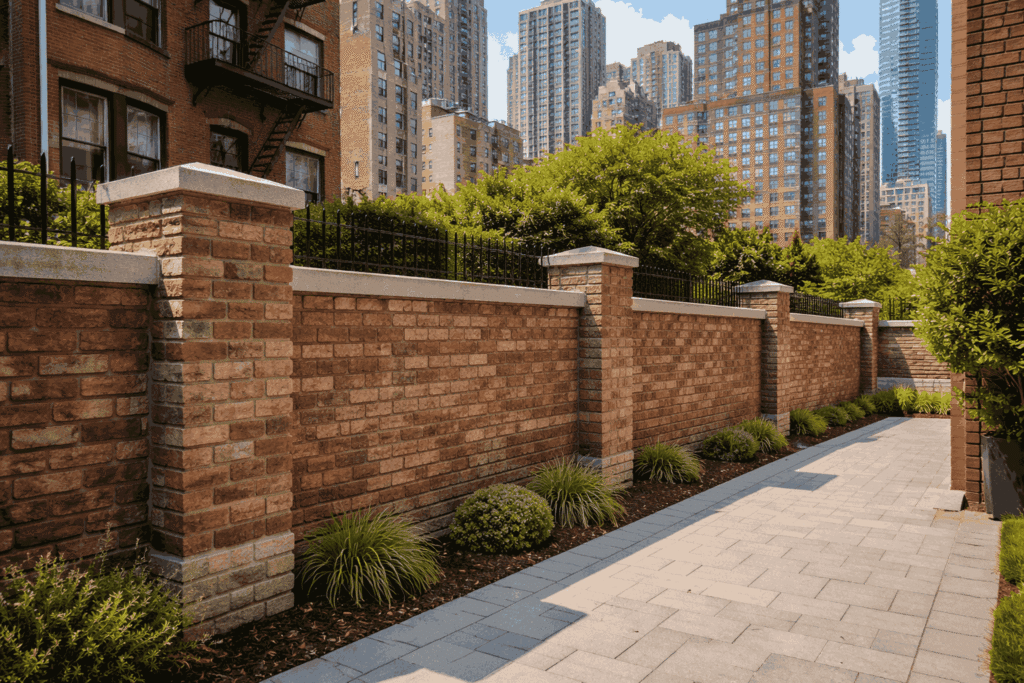
Local zoning regulations and height restrictions may apply depending on the borough and property type. Proper planning, adequate foundation depth, and code compliance are essential to ensure structural safety and avoid future violations. Property owners often ask whether masonry work can be done in the winter, especially when project timelines extend into colder months.
When constructed correctly, masonry fencing can perform reliably in NYC’s demanding environmental conditions while maintaining both privacy and architectural consistency.
Final Thoughts
A masonry fence is a long-term structural boundary solution designed for durability, privacy, and architectural consistency. At the same time, it requires a higher upfront investment compared to lightweight fencing systems; its strength, reduced maintenance needs, and extended lifespan often make it a practical choice for residential and commercial properties. When properly designed and installed, masonry fencing provides stability and visual definition that temporary or lightweight fencing systems may not match, particularly when supported by timely masonry repair and restoration services.
Sardar Restoration Corp serves properties across NYC, including The Bronx, Manhattan, Brooklyn, Westchester, and Queens. As a trusted masonry contractor, the company evaluates site conditions, material requirements, and local regulations to deliver structurally sound and code-compliant masonry fencing solutions designed to meet project-specific structural and regulatory requirements.
For project inquiries or site evaluations, contact (+1) 917-355-8556, email sardarrestoration@gmail.com, or visit 2770 Fish Ave, Bronx, NY 10469, United States.
FAQs
What is a masonry fence made of?
A masonry fence is built using brick, concrete block, natural stone, or stucco-finished systems bonded with mortar. It is supported by a reinforced concrete footing for structural stability.
How long does a masonry fence last?
A properly constructed masonry fence can last 50 to 80 years or more. Lifespan depends on material quality, foundation depth, and maintenance.
How does moisture affect masonry fences over time?
Moisture intrusion can gradually weaken mortar joints and surface materials. Understanding how moisture damage affects NYC homes over time helps property owners take preventive action before structural issues develop.
Is a masonry fence more expensive than wood fencing?
Yes, masonry fencing typically has a higher upfront cost than wood or vinyl. However, it often requires fewer repairs and replacements over time.
Does a masonry fence require regular maintenance?
Professional inspections may include tools that help determine whether moisture meters can detect mortar damage in early stages.
Do you need a permit for a masonry fence in NYC?
Permit requirements depend on fence height, location, and local building codes. It is recommended to verify regulations before construction.
Can a masonry fence reduce outside noise?
Yes, solid masonry walls help reduce street and traffic noise due to their density. They improve privacy and outdoor comfort in urban areas.
How much does a masonry fence cost per linear foot?
Costs vary based on material, height, and site conditions. Masonry generally costs more per linear foot than lightweight fencing systems.
What foundation depth is required for a masonry fence?
Foundation depth depends on soil conditions, wall height, and local code requirements. Proper footing installation prevents shifting and cracking.