Stucco Contractor Brooklyn
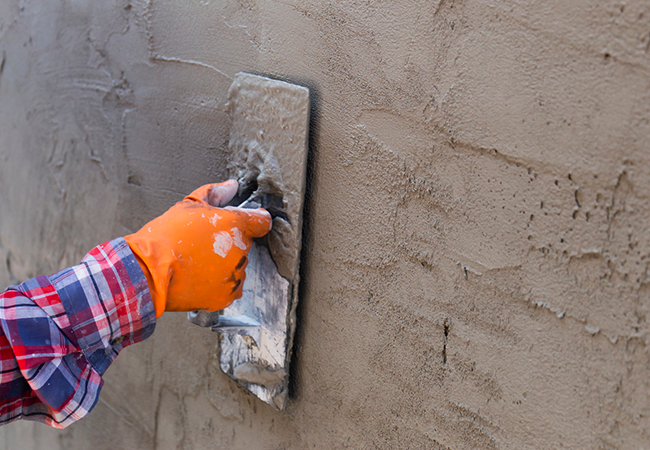
Stucco work on Brooklyn houses and buildings. Before anything else we tell you what you actually have, because a lot of what gets called stucco here is brownstone coating, and the two need different materials.
Stucco work on Brooklyn houses and buildings. Before anything else we tell you what you actually have, because a lot of what gets called stucco here is brownstone coating, and the two need different materials.
Brooklyn has less stucco than the other boroughs, and where it does exist it is usually not on the front of the building. Rowhouse fronts here are brownstone or brick. Stucco turns up on rear extensions, on side walls, and across the southern half of the borough where the housing stops being rowhouses altogether.
The other thing that happens in Brooklyn is misidentification. Brownstone facades get repaired with a cement-based patch that reads as stucco to anyone who is not looking closely. Owners call it stucco, contractors quote it as stucco, and the wrong material goes on. We check first.






The patch mix used on brownstone facades looks like stucco and is not. It is softer, tinted to match stone, and applied over sandstone rather than over lath or block. Stucco mix on a brownstone front will fail and take original stone with it.
Across Park Slope, Fort Greene and Brooklyn Heights, Landmarks will not approve covering an original brownstone or brick facade in stucco. Where it already exists and predates designation, repair in kind is usually allowed.
Extensions behind Brooklyn rowhouses are often frame or block where the house is stone. That is why the extension is stuccoed and the house is not, and why the two need separate scopes.
Bay Ridge, Bensonhurst, Gravesend and Sheepshead Bay are semi-detached and detached houses rather than rowhouses, and a lot of them are stucco-clad from the day they were built.
Which of these applies depends on what the wall is made of, and whether the building sits in a historic district.

Synthetic insulated systems, mostly on newer southern Brooklyn construction.
Large parts of Brooklyn sit inside historic districts. Whether yours does changes what is possible on the front facade and how long the job takes to start. We check before scoping.
In a Brooklyn historic district the Landmarks Preservation Commission reviews exterior work before the Department of Buildings will act. Filing in the wrong order stalls the project rather than speeding it up.
On a designated Brooklyn front, approval depends on matching original material, profile and texture. The repair mix gets specified to the existing wall rather than picked off a shelf.
Trustindex verifies that the original source of the review is Google.Posted on Google Hasnat Chaudhary76 days agoGreat servicesTrustindex verifies that the original source of the review is Google.Posted on GoogleChaudhary Khizer Ahmed76 days agoGreat serviceTrustindex verifies that the original source of the review is Google.Posted on GoogleVas Ortiz76 days agoThey were prompt and finished in a day. I was really impressed and they guaranteed their work. Great job guys!! Thank you. We’ll definitely keep in touch for future work.Trustindex verifies that the original source of the review is Google.Posted on GoogleRicardo Cruz80 days agoI found Sadat restoration very professional, thorough at their work , reliable and amazing clean up at the end! Thank you Mohammed , to you and your crew. I highly recommend this company!Trustindex verifies that the original source of the review is Google.Posted on GoogleRobert Scarano84 days agoAs the owner of Scarano Architect, PLLC firm, we recommend this team. They repaired the façade in a timely fashion, ensuring all work was done properly and fully code compliant. They are professional, reliable, and easy to work with. Hoping to do more projects with them.Trustindex verifies that the original source of the review is Google.Posted on GoogleJen Volmer84 days agoWe worked with Sardar Restoration to repoint brick on our home. I've worked with several contractors in the Riverdale/Bronx area, and had a positive experience with Mohammed and his team. They were communicative, punctual, clear with timelines and costs. My favorite thing might have been how efficiently they used their time!Trustindex verifies that the original source of the review is Google.Posted on GoogleDorothy Balacich91 days agoI am extremely happy with the work Sardar did on my firescape. I needed it scraped and primed n painted. It was not done for many years. They are reliable and did a very clean and professional job. I am using them for my next project. Thank you Mohammed !!!Trustindex verifies that the original source of the review is Google.Posted on GoogleVoncho96 days agoThey did a phenomenal job with the pavers! I’m very happy with there work! Highly recommendedTrustindex verifies that the original source of the review is Google.Posted on GoogleAngelica Quinteros179 days agoamazing team of saardarsTrustindex verifies that the original source of the review is Google.Posted on GoogleAnthony Tapia179 days agoLoved there work
Everything above is about rowhouse Brooklyn. South of Prospect Park the housing changes. Bay Ridge, Bensonhurst, Gravesend, Midwood and Sheepshead Bay run to semi-detached and detached houses, many of them stucco-clad from the day they were built rather than stuccoed later. There is no Landmarks layer on most of it, access is easier because there are driveways and side yards, and the work is closer to what we do in eastern Queens than to what we do in Park Slope. If you are down here, the job is usually simpler and cheaper than a rowhouse block would suggest.
Stucco is uneven across the borough. It is rare on rowhouse fronts in Park Slope, common on rear extensions everywhere, and standard on the detached housing down through Bay Ridge.
See stucco contractor NYC for how this differs across the city, or masonry services in Brooklyn for everything else we do here.

Browse our gallery to explore the outstanding projects we’ve successfully completed, highlighting our expertise.
Usually it is a brownstone patch rather than stucco. Brooklyn brownstone fronts are repaired with a cement-based mix tinted to match the stone, and from a few feet away it reads as stucco. That patch is deliberately softer than the sandstone behind it. Ordinary stucco mix is harder and will pull the stone face off.
Almost certainly not. Landmarks will not approve covering an original brownstone or brick front with stucco anywhere in Park Slope, Fort Greene or Brooklyn Heights. Where stucco already exists and predates designation, repairing it in kind is usually approvable. That still goes through Landmarks before Buildings will issue anything.
Because the extension is built differently. Rear additions on Brooklyn rowhouses are frequently frame or block where the original house is brownstone, and stucco suited the cheaper structure. The two parts move and weather differently, so the junction between them is where problems start.
It depends more on where in Brooklyn than on the square footage. A detached house in Bay Ridge with side yards and no historic district is the cheapest version. A rowhouse in Park Slope needs scaffolding and Landmarks review, which adds time before any work starts. We price access and approval separately from the stucco.