
 ChatGPT
 Perplexity
 Google AI
 Claude
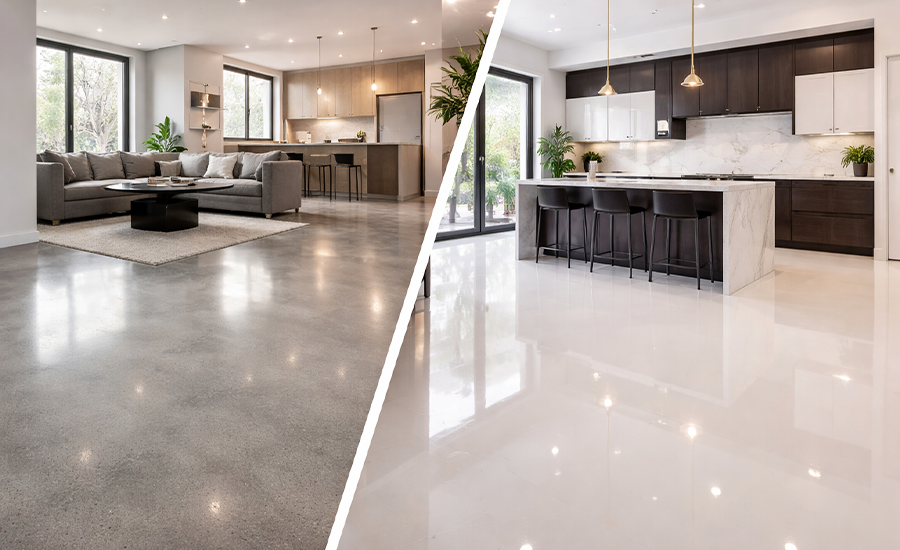
In New York City, flooring choices need to handle more than just everyday foot traffic. Apartment living, older concrete slabs, temperature shifts between seasons, moisture from basements, and high-use spaces like garages and entryways all place extra demands on residential floors. That is why polished concrete and epoxy flooring are frequently compared by NYC homeowners.
Both options are known for durability and modern appearance, but they serve different purposes once installed inside a home. A Brooklyn townhouse basement, a Manhattan apartment, or a Bronx garage each requires a flooring surface that performs reliably under specific conditions. What works well in one part of a home may not be ideal in another.
This guide compares polished concrete and epoxy flooring specifically for NYC homes, focusing on real-world performance, lifespan, maintenance needs, comfort, and suitability for different residential spaces. By the end, you will know which option makes more sense for your property and why.
- Ο Polished concrete is a permanent floor created from the existing concrete slab, making it ideal for long-term residential use.
- Ο Epoxy flooring is a surface coating that provides protection and visual flexibility but may require future reapplication.
- Ο Polished concrete typically performs better in high-traffic NYC homes and basements.
- Ο Epoxy flooring works well in garages, workshops, and utility areas where chemical resistance is important.
- Ο The best choice depends on room location, moisture exposure, and how the space is used daily.
What Is Polished Concrete?
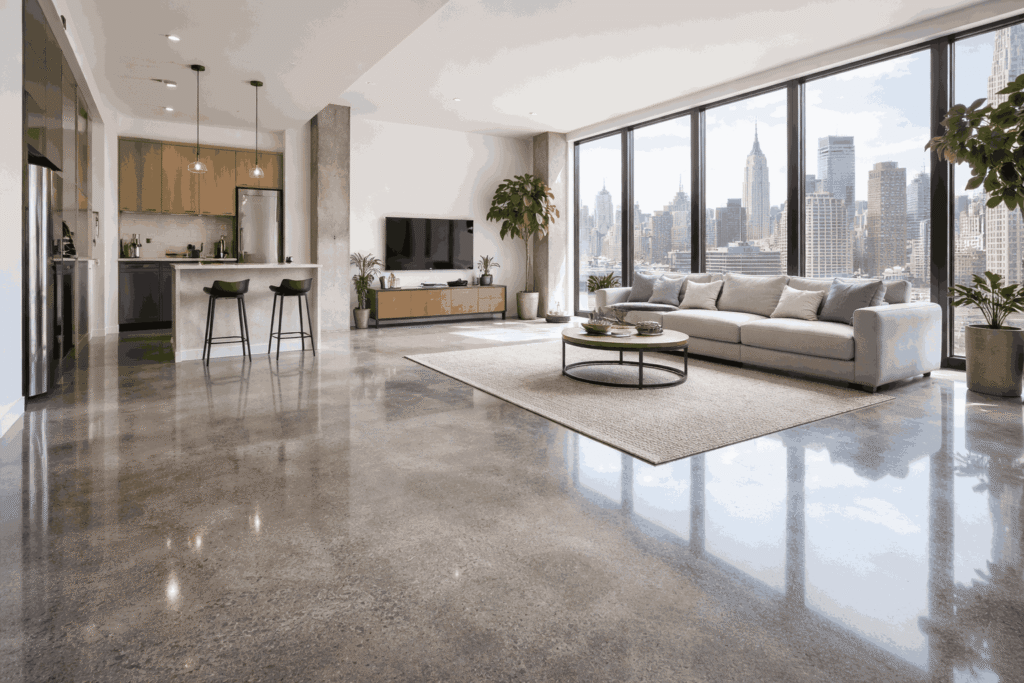
Polished concrete is not a surface coating or added flooring layer. It is created by mechanically grinding, honing, and polishing the existing concrete slab until it reaches a smooth, dense, and refined finish. In many NYC homes, especially apartments, townhouses, and basements, the concrete slab already exists beneath older flooring materials, making polished concrete a practical long-term option.
For New York City properties, polished concrete performs especially well because it becomes part of the building structure rather than sitting on top of it. Once sealed, the surface resists daily wear from foot traffic, furniture movement, and seasonal temperature changes common across NYC boroughs. Unlike coated floors, it does not peel, bubble, or separate over time.
From a visual standpoint, polished concrete offers a clean, modern appearance that fits well with NYC interior styles, from industrial lofts in Manhattan to renovated townhouses in Brooklyn and the Bronx. Finishes can range from low-sheen matte to higher gloss levels, depending on how reflective the homeowner wants the space to feel.
Why Polished Concrete Works Well in NYC Residential Properties
- It strengthens the existing slab instead of covering it with an additional layer.
- It handles high foot traffic, common in multi-family buildings.
- It performs reliably in basements where moisture levels fluctuate.
- It does not require frequent refinishing or replacement.
- It offers long-term value for homeowners planning to stay in their property.
Because polished concrete is treated with densifiers and sealers during the finishing process, it becomes harder and less porous than untreated concrete. This makes it easier to clean and maintain in busy NYC homes where dust, street debris, and daily activity are unavoidable.
What Is Epoxy Flooring?
Epoxy flooring is a surface coating applied over an existing concrete slab using a combination of resin and hardener. Once cured, it forms a smooth, protective layer that seals the concrete underneath. In NYC homes, epoxy flooring is most commonly used in garages, utility areas, workshops, and specific basement spaces where protection matters more than long-term permanence.
Unlike polished concrete, epoxy does not become part of the concrete slab itself. It sits on top of the surface, which means its performance depends heavily on proper installation and the condition of the underlying concrete. In older NYC buildings where slabs may have moisture issues or uneven surfaces, preparation plays a major role in how well epoxy performs over time.
From a visual perspective, epoxy flooring stands out for its design flexibility. NYC homeowners often choose epoxy when they want bold colors, decorative flakes, or metallic-style finishes, especially in garages or multi-use spaces. The seamless surface also helps limit dust and makes cleaning spills easier in areas exposed to oils, chemicals, or heavy equipment.
Where Epoxy Flooring Fits Best in NYC Residential Properties
- Garages that need resistance against oil, salt, and vehicle traffic
- Workshops or storage areas exposed to chemicals or heavy use
- Finished basements with controlled moisture conditions
- Utility rooms where easy cleaning is a priority
- Spaces where decorative finishes are desired over natural texture
While epoxy flooring offers strong surface protection, it does have limitations in NYC homes. Over time, temperature changes, moisture pressure from below the slab, or heavy impact can cause epoxy coatings to wear, chip, or lose gloss. In high-traffic living areas, this often leads homeowners to consider reapplication after several years.
Which Flooring Holds Up Better in NYC Homes?
NYC homes demand flooring that can handle constant use, seasonal temperature changes, moisture exposure, and everyday wear. While both polished concrete and epoxy flooring are durable options, their long-term performance differs based on how they are constructed and used inside residential spaces. In NYC homes, durability often comes down to how a floor reacts to seasonal temperature shifts, especially when homeowners start noticing small surface changes and wonder why does concrete crack in winter under repeated freeze and thaw cycles.
| Durability Factor | Polished Concrete | Epoxy Flooring |
|---|---|---|
| Structural strength | Becomes part of the concrete slab | Sits as a surface coating |
| Resistance to foot traffic | Excellent for daily residential use | Good, surface wear may appear |
| Moisture tolerance | Performs well in NYC basements | Sensitive to moisture pressure |
| Seasonal temperature impact | Remains stable across NYC seasons | Can lose bond or gloss over time |
| Scratch and wear resistance | High resistance | Moderate to high, usage dependent |
| Typical lifespan in homes | 20+ years with minimal upkeep | 10–15 years, recoating may be needed |
| Best-suited NYC areas | Living areas, basements, entryways | Garages, workshops, utility spaces |
From a durability perspective, polished concrete is better suited for long-term residential use across NYC homes, especially in high-traffic living areas. Epoxy flooring remains a strong option for garages and utility spaces where surface protection matters more than lifespan.
What Are The Maintenance Demands For Both Of These Floors?
Maintenance plays a significant role for NYC homeowners, especially in high-use spaces affected by street dust, winter salt, and moisture. While both polished concrete and epoxy flooring are considered low-maintenance options, the level of ongoing care required differs over time. In NYC homes exposed to harsh winters, upkeep becomes more important in areas where frost and snow damage concrete floors, particularly near entryways, basements, and garage-adjacent spaces.
Polished Concrete
- Requires simple sweeping and occasional damp mopping
- Does not need frequent refinishing or surface treatments
- Sealed surface resists dust buildup common in NYC homes
- Minor wear rarely affects performance or appearance
Epoxy Flooring
- Easy to clean with mild soap and water
- Resistant to spills, oils, and household chemicals
- Surface may require touch-ups if chipping or dulling occurs
- Recoating may be needed after several years in high-use areas
For busy NYC households, polished concrete generally offers a more hands-off maintenance routine. Epoxy flooring remains manageable but often requires more attention as the surface coating ages.
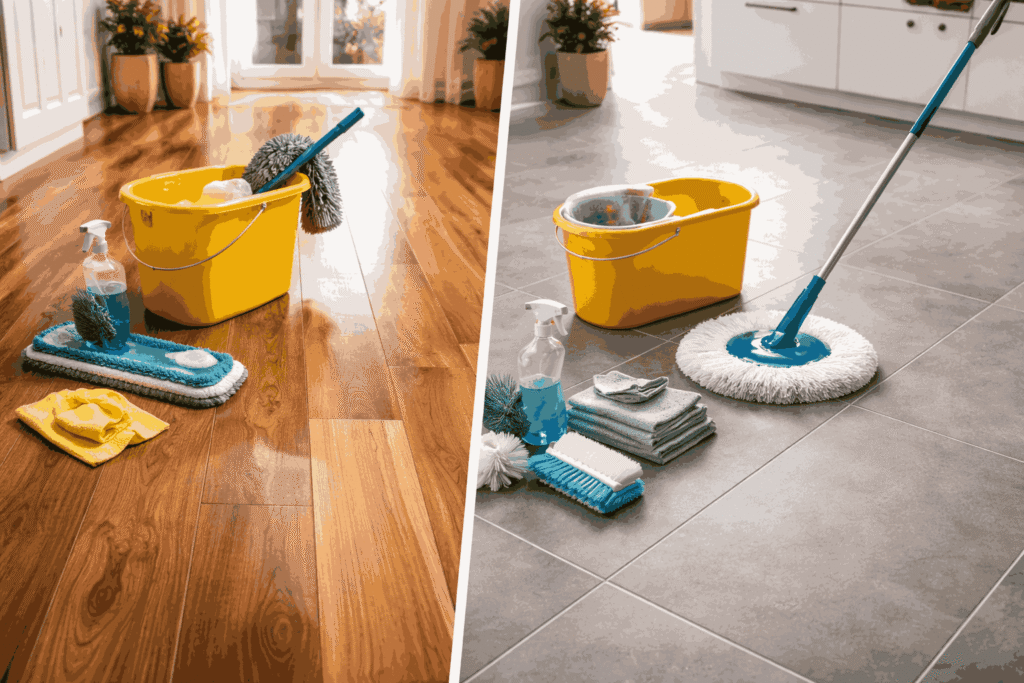
How These Floors Feel in Everyday NYC Living
Comfort plays an essential role in NYC homes, especially in apartments and basements where flooring is in constant use. How a floor feels underfoot, how it responds to temperature changes, and how safe it feels when walking all influence daily comfort. Polished concrete and epoxy flooring offer different experiences depending on where they are used.
| Comfort Factor | Polished Concrete | Epoxy Flooring |
|---|---|---|
| Underfoot feel | Firm and solid | Slightly cushioned |
| Temperature response | Cooler, especially in winter | Holds surface warmth better |
| Heating compatibility | Suitable for radiant heating | Limited compatibility |
| Slip resistance | Can be textured for grip | Can include traction additives |
| Standing comfort | Better for movement | Better for longer standing periods |
For living areas in NYC homes, surface grip and traction become especially important during winter months, which makes cold-weather concrete safety tips for NYC homes relevant when choosing smooth flooring finishes. Epoxy flooring tends to feel more forgiving in garages and utility spaces where standing comfort and grip are more important than warmth.
Where Each Flooring Performs Best in NYC Homes
In NYC homes, flooring performance depends heavily on where it is installed. Apartments, basements, garages, and entryways all face different levels of traffic, moisture, and daily use. Polished concrete and epoxy flooring each perform best in specific residential areas.
Polished Concrete
- Living rooms where a clean, modern look is preferred
- High-traffic hallways and entryways in apartments or townhouses
- Basements with occasional moisture concerns
- Open-plan interiors are standard in loft-style NYC homes
- Residential spaces where long-term durability matters
Epoxy Flooring
- Garages exposed to vehicle traffic, salt, and oil
- Workshops or storage rooms with heavy or chemical use
- Utility areas where easy cleaning is a priority
- Finished basements with stable moisture control
- Spaces where decorative finishes are desired
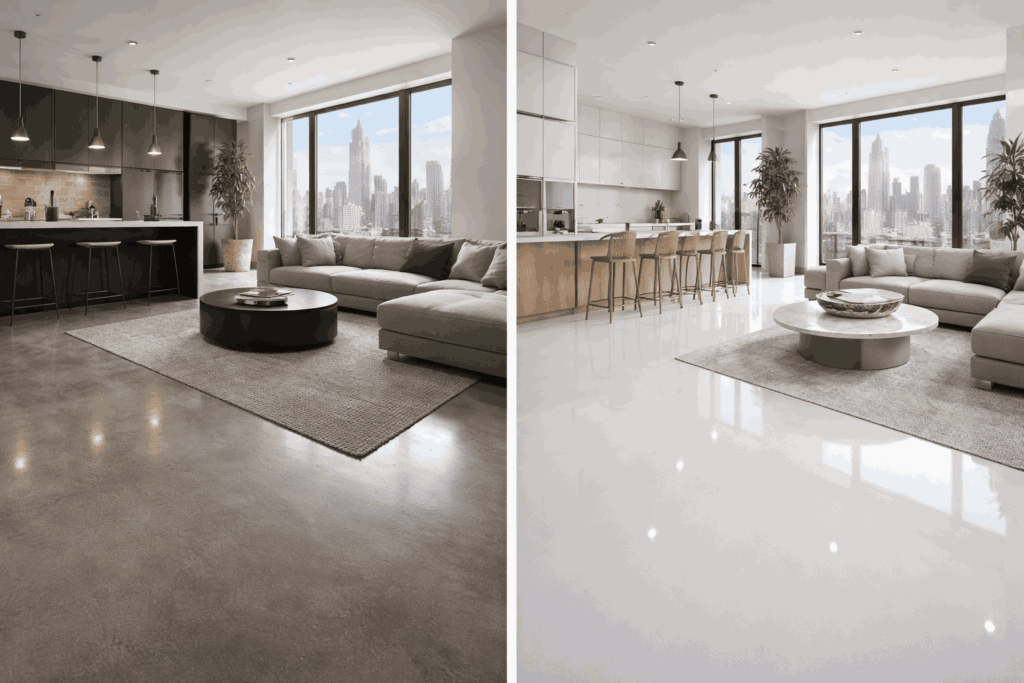
For entryways and exterior-adjacent spaces in NYC homes, principles similar to concrete sidewalk construction tips for NYC properties help explain why durability and exposure resistance matter when selecting flooring. In NYC homes, polished concrete generally suits living areas and shared spaces, while epoxy flooring works better in utility-focused zones where surface protection is the primary concern.
Final Verdict: Polished Concrete vs Epoxy Flooring
Both polished concrete and epoxy flooring work well in NYC homes, but they serve different purposes. Polished concrete is better suited for living areas, hallways, and basements where long-term durability and low maintenance matter most. Epoxy flooring performs better in garages, workshops, and utility spaces where surface protection and resistance are the priority. Choosing materials that minimize future intervention is especially important in NYC homes, where concrete repairs in winter often become more disruptive, time-sensitive, and costly.
Sardar Restoration Corp proudly serves residential and commercial properties across NYC, including The Bronx, Manhattan, Brooklyn, Westchester, and Queens. Our team delivers reliable, high-quality solutions tailored to local building conditions and seasonal challenges. You can review our service areas to find support available in your location.
For more information or to discuss your property concerns, contact (+1) 917-355-8556, email sardarrestoration@gmail.com, or visit 2770 Fish Ave, Bronx, NY 10469, United States.
FAQs
Which floor is more durable for high-traffic areas?
Polished concrete is more durable than epoxy floors and can be ideal for extremely high-traffic areas. It has a high load-bearing capacity that withstands harsh weather conditions.
Is polished concrete suitable for NYC apartments with older slabs?
Yes, polished concrete works well in many older NYC apartments as it uses the existing slab. Proper preparation helps address uneven surfaces and improves long-term performance.
Can epoxy concrete be used in kitchens?
Yes! Epoxy concrete is best used in the kitchen as it is appropriate to resist spills, stains, and some chemicals. Polished concrete is also useful in kitchens as it can be cleaned in just one sweep.
Can epoxy flooring handle winter salt brought into NYC garages?
Epoxy flooring performs well against winter salt, oil, and vehicle residue, which makes it a practical option for NYC garages and parking areas.
Which option is easier to maintain?
Polished concrete is very low-maintenance and can be easily wiped. Epoxy is also easy to clean but may need recoating every few years if scratches or dulling occur. So, polished concrete is the best option.
Which flooring option is quieter for apartment living?
Polished concrete can feel louder without rugs or furnishings, while epoxy flooring slightly absorbs sound. Noise levels often depend more on room setup than on flooring alone.
Can I customize the color of polished concrete?
Yes, but polished concrete can be customized with limited options of stains and dyes. Epoxy offers a vast range of colors, patterns, and decorative effects.
Does moisture from NYC basements affect these floors differently?
Yes, polished concrete tolerates moisture better over time. Epoxy flooring requires controlled moisture levels to avoid bonding issues beneath the coating.
Which floor is more cost-effective?
Polished concrete is more cost-effective as it offers lasting strength, minimal upkeep, and longer service life, while epoxy can be affordable in basic versions, but premium designs or decorative finishes can be more expensive.