
 ChatGPT
 Perplexity
 Google AI
 Claude
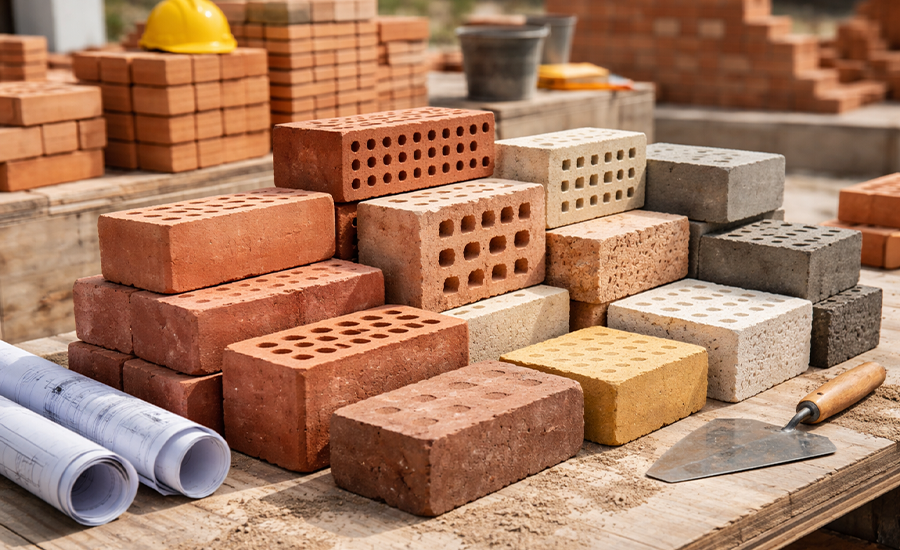
Bricks are one of the most widely used masonry materials in construction because they provide strength, durability, and long-term structural stability. In modern construction, different types of bricks are selected according to their material composition, manufacturing method, and intended structural use.
The most common brick types include clay bricks, fly ash bricks, concrete bricks, engineering bricks, fire bricks, paving bricks, hollow bricks, and several specialized bricks used for architectural or structural purposes. Each type offers different levels of compressive strength, water resistance, thermal performance, and durability.
For residential and commercial properties in NYC, selecting the appropriate brick type helps ensure compliance with building regulations, improves insulation performance, and supports long-term structural reliability. Knowing how different brick types perform helps contractors and property owners choose materials that meet the project’s structural, environmental, and functional needs.
- Ο Bricks are classified by material, manufacturing method, and construction purpose.
- Ο Common brick types include clay, fly ash, concrete, engineering, fire, paving, and hollow bricks.
- Ο Engineering bricks provide high compressive strength and very low water absorption.
- Ο Fire bricks are designed to withstand extremely high temperatures in fireplaces and furnaces.
- Ο Choosing the right brick improves durability, moisture resistance, insulation, and project cost efficiency.
Why Choosing the Right Brick Type Is Crucial
Choosing the right type of brick is important for the performance and durability of any construction project. Different brick types provide varying levels of strength, moisture resistance, and insulation, which directly influence how well a structure performs over time.
For residential and commercial buildings in NYC, selecting the appropriate brick type also helps ensure compliance with building standards and environmental conditions. Using the correct brick for its intended structural purpose reduces construction risks. It supports long-term building stability, helping property owners avoid costly issues such as repairing damaged brick walls caused by structural deterioration or unsuitable materials.
The type of brick used in construction can affect several key factors:
- Structural strength
- Water resistance
- Thermal insulation
- Fire resistance
- Maintenance requirements
- Overall construction cost
- Long-term durability
Bricks are commonly classified according to the following criteria:
- Manufacturing process
- Raw materials used
- Purpose and application
- Shape and size
- Strength and quality
Types of Bricks Based on Manufacturing Materials
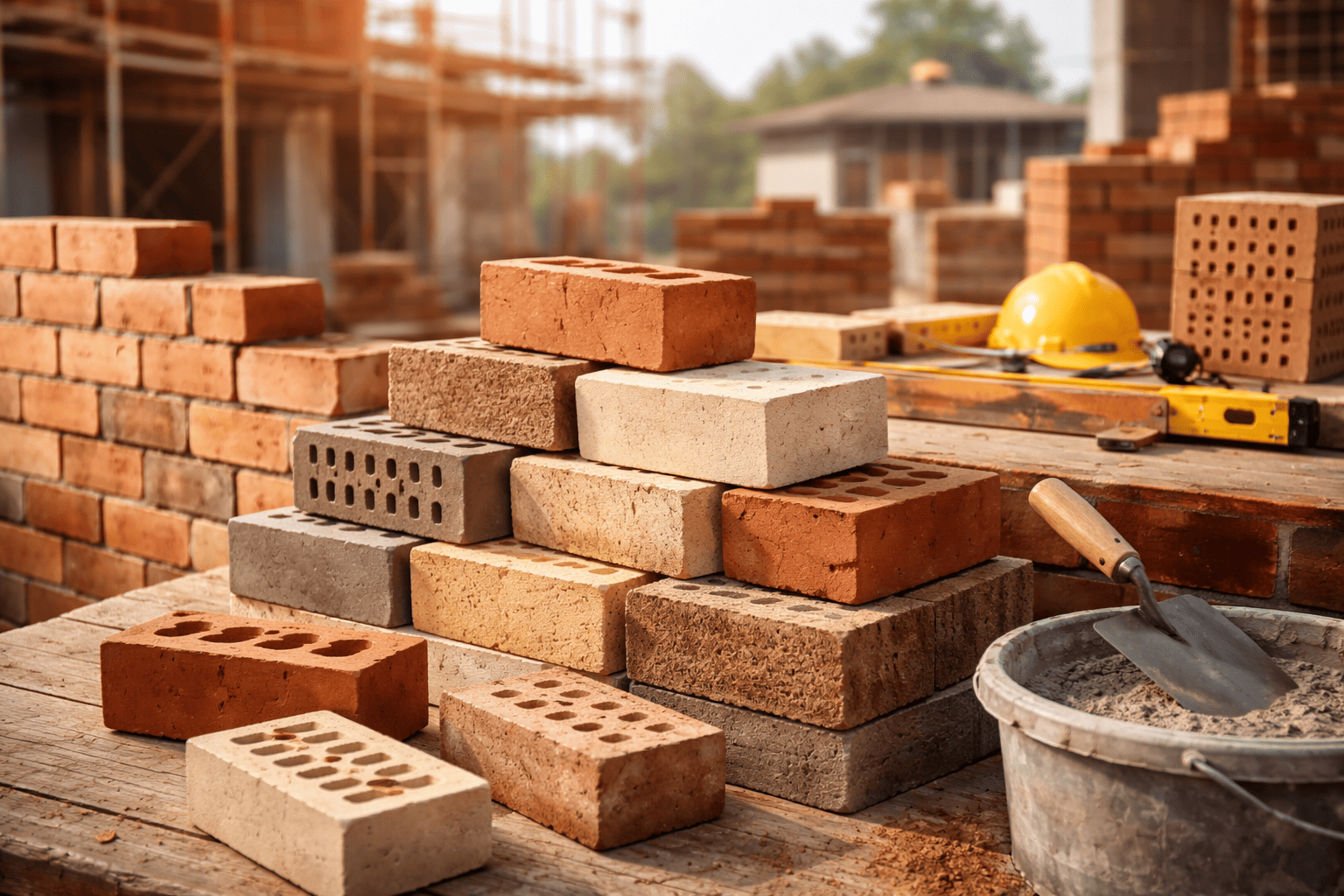
Bricks used in construction can be classified according to the materials used in their manufacturing process. Each material gives the brick different structural properties such as compressive strength, water resistance, durability, and insulation performance. Understanding these material-based brick types helps contractors and property owners select suitable bricks for different construction applications and ensures the correct materials are used in brickwork in construction projects.
The most commonly used material-based brick types include clay bricks, fly ash bricks, concrete bricks, and engineering bricks.
A. Clay Bricks
Clay bricks are traditional construction bricks made from natural clay, molded and fired in a kiln. They are widely used in masonry construction because of their durability and reliable structural performance.
Advantages
- High compressive strength
- Widely available construction material
- Cost-effective for general masonry work
Disadvantages
- Higher moisture absorption compared to other brick types
- Often requires plastering or finishing for exterior surfaces
B. Fly Ash Bricks
Fly ash bricks are manufactured using fly ash, cement, and sand. These bricks are commonly used in modern construction because they offer consistent size, improved durability, and environmentally sustainable production.
Key Benefits
- Environmentally friendly material
- Smooth surface finish
- Lower water absorption than clay bricks
- Higher-dimensional uniformity
Applications
- Residential construction
- High-rise buildings
- Commercial structures
C. Concrete Bricks
Concrete bricks are produced from solid concrete rather than natural clay. They are commonly used where strong load-bearing capacity and dimensional accuracy are required.
Features
- High compressive strength
- Uniform shape and size
- Available in multiple finishes and colors
- Suitable for load-bearing walls
D. Engineering Bricks
Engineering bricks are specifically manufactured to provide high compressive strength and very low water absorption. These bricks are commonly used in structural applications where durability and moisture resistance are critical.
| Engineering Brick Type | Compressive Strength | Water Absorption | Typical Use |
|---|---|---|---|
| Class A | Very high | Very low | Foundations, structural support, moisture barriers |
| Class B | High | Low | General structural masonry work |
Functional Types of Bricks in Construction
Bricks can also be classified according to their structural function in masonry construction. Functional bricks are selected based on whether they provide structural support, surface finishing, thermal protection, or ground-surface durability.
In residential and commercial construction, different functional brick types are used depending on their role in the building structure.
A. Facing Bricks
Facing bricks are used on exterior walls where appearance and surface quality are important. These bricks are manufactured to provide a consistent finish and visual appeal while also offering weather resistance.
Key Characteristics
- Uniform color and texture
- Smooth and consistent surface finish
- Designed for visible exterior masonry
B. Backing Bricks
Backing bricks are installed behind facing bricks to provide structural support within masonry walls. Since they are not visible after construction, appearance is less important than strength and cost efficiency. Proper installation and maintenance of the internal masonry layer, including repairing damaged brick mortar, helps maintain the structural stability of the wall system over time.
Features
- Lower surface finish quality
- Cost-efficient for internal masonry layers
- Hidden behind the facing bricks in the wall construction
C. Fire Bricks
Fire bricks, also known as refractory bricks, are manufactured to withstand extremely high temperatures without cracking or losing structural strength. These bricks are commonly used in high-heat environments such as fireplaces and industrial furnaces, where durable materials help reduce the likelihood of structural damage and the need for repairing cracked fireplace bricks caused by prolonged heat exposure.
Common Uses
- Fireplaces
- Chimneys
- Industrial furnaces
- Kilns
D. Paving Bricks
Paving bricks are designed specifically for ground surfaces that experience regular foot traffic or vehicle loads. These bricks are manufactured to provide durability and resistance to wear.
Properties
- High durability under repeated load
- Resistant to abrasion and surface wear
- Weather-resistant for outdoor environments
Applications
- Driveways
- Walkways
- Patios
E. Hollow Bricks
Hollow bricks contain internal cavities that reduce weight while improving thermal insulation. These bricks are commonly used where lighter structural loads and improved energy efficiency are desired.
Advantages
- Lightweight masonry material
- Improved thermal insulation performance
- Reduced material usage and construction cost
What Are the Special Types of Bricks?
In addition to standard and functional bricks, certain brick types are manufactured for specific architectural and structural purposes. These special bricks are designed to perform tasks that ordinary bricks cannot easily achieve, such as improving drainage, forming rounded corners, or creating secure mortar joints.
Special bricks are typically produced with precise shapes and dimensions for integration into complex masonry designs. In residential and commercial construction, these bricks help improve structural detailing, finishing quality, and long-term durability.
The following table highlights some commonly used special brick types and their primary functions in masonry construction.
| Special Brick Type | Primary Function | Core Benefit |
|---|---|---|
| Perforated Bricks | Bricks with small holes to improve mortar bonding | Better mortar grip and easier handling |
| Bullnose Bricks | Rounded edge bricks used at corners | Smooth and safe corner finishing |
| Cownose Bricks | Dual-rounded edges for decorative corners | Enhanced architectural appearance |
| Channel Bricks | Shaped bricks used in drainage channels | Supports controlled surface water flow |
| Coping Bricks | Bricks placed at the top of walls | Protects masonry from water penetration |
Factors to Consider When Choosing Bricks
Selecting the right bricks is an important step in any construction project because the performance of masonry structures depends on the quality and properties of the bricks used. Different brick materials offer varying levels of strength, durability, insulation, and resistance to environmental exposure.
For residential and commercial construction in NYC, bricks must withstand heavy structural loads, temperature changes, and moisture exposure. Choosing bricks with suitable physical and structural properties helps ensure long-term stability and reliable building performance, reducing the risk of issues such as repairing spalling brick caused by excessive moisture or material deterioration.
Before selecting bricks for a project, contractors and property owners should evaluate the following factors and often consult a professional brick mason to determine which brick type is most suitable for the structural and environmental requirements of the building:
- Compressive strength
- Water absorption rate
- Thermal insulation performance
- Fire resistance capability
- Durability under weather exposure
- Dimensional accuracy and consistency
- Sound insulation properties
- Cost efficiency and material availability
Final Thoughts
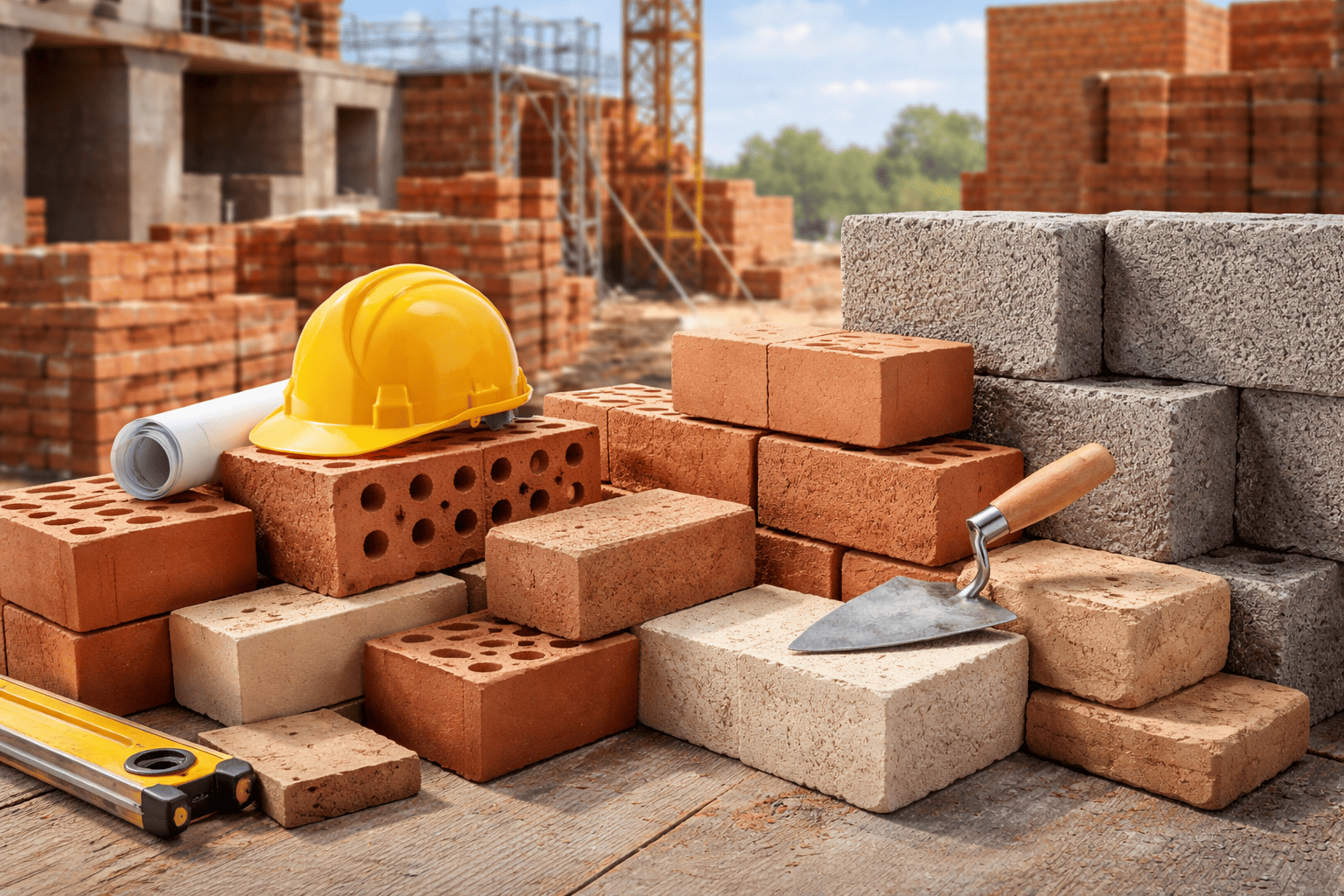
Bricks remain one of the most reliable masonry materials used in modern construction due to their strength, durability, and long service life. Different types of bricks are designed for specific structural, functional, and architectural purposes, which is why selecting the appropriate brick type is essential to achieving stable, long-lasting masonry structures.
In New York City, brick selection is particularly important because buildings must withstand heavy structural loads, exposure to moisture, and seasonal temperature changes. Using the right brick type helps improve structural performance, insulation efficiency, and overall building durability for both residential and commercial properties.
At Sardar Restoration Corp, masonry projects are carefully evaluated based on structural requirements, environmental exposure, and building design to ensure dependable long-term performance across NYC, including The Bronx, Manhattan, Brooklyn, Westchester, and Queens.
For professional masonry consultation, call (+1) 917-355-8556, email sardarrestoration@gmail.com, or visit 2770 Fish Ave, Bronx, NY 10469, United States.
FAQs
Which type of brick is strongest?
Engineering bricks, particularly Class A engineering bricks, are considered the strongest type of brick. They provide very high compressive strength and low water absorption, making them suitable for foundations, structural walls, and moisture-resistant masonry construction.
Are fly ash bricks better than clay bricks?
Fly ash bricks offer several advantages over traditional clay bricks, including lower water absorption, more uniform shape, and environmentally friendly production. However, both brick types are widely used depending on the construction requirements.
What bricks are best for foundations?
Engineering bricks and high-quality kiln-fired clay bricks are commonly used for foundations because they provide strong load-bearing capacity and good resistance to moisture and structural pressure.
Which bricks are used for fireplaces?
Fire bricks, also known as refractory bricks, are designed to withstand extremely high temperatures. They are commonly used in fireplaces, furnaces, kilns, and chimneys where heat resistance is required.
Are hollow bricks suitable for load-bearing walls?
Hollow bricks are generally not recommended for heavy load-bearing walls because their internal cavities reduce structural strength. Solid bricks or engineering bricks are typically used for structural masonry applications.
What are the most commonly used bricks in construction?
The most commonly used brick types in construction include clay bricks, fly ash bricks, concrete bricks, and engineering bricks, each selected based on structural requirements, durability, and environmental conditions.
How do you choose the right type of brick for construction?
Choosing the right brick depends on factors such as compressive strength, water absorption, durability, insulation performance, and the intended structural use of the brick within the building.