
 ChatGPT
 Perplexity
 Google AI
 Claude
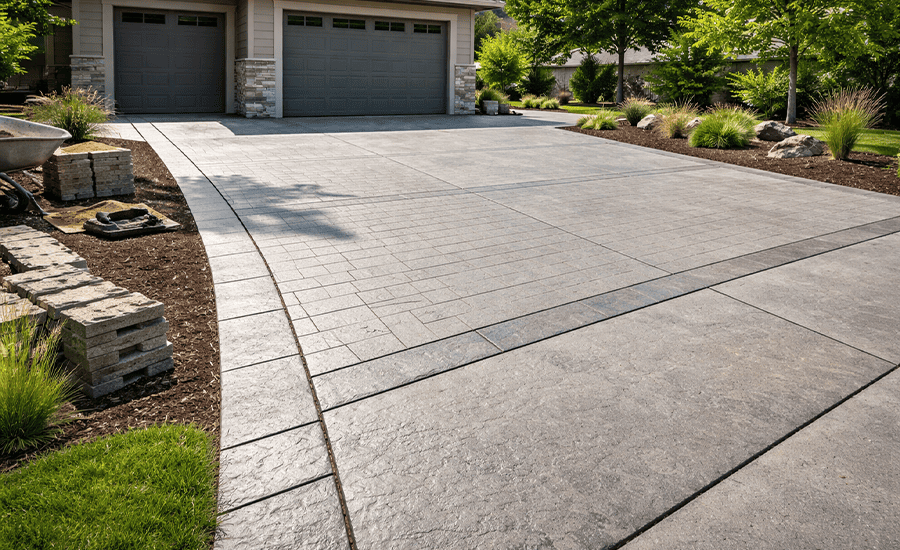
In New York City, driveways are constantly under pressure from vehicle weight, seasonal freeze-thaw cycles, moisture exposure, and urban soil conditions. Choosing the right concrete mix is not just a design decision, it directly affects long-term durability, crack resistance, and maintenance costs. A poorly selected mix can lead to surface scaling, structural cracking, and premature repairs, especially in NYC’s harsh winters. Understanding how different concrete types perform under local traffic loads and climate stress helps homeowners and property managers build driveways that remain strong, functional, and visually appealing for decades.
What You Need To Know
For NYC driveways, durability depends on matching the concrete mix to traffic load, climate exposure, and reinforcement needs. Standard concrete works for light residential use, while heavy-duty mixes are necessary for trucks, commercial vehicles, and frequent traffic. Fiber-reinforced and air-entrained concrete significantly reduces cracking caused by temperature changes and moisture expansion, which are common in New York winters. Proper reinforcement, correct slab thickness, and routine sealing are equally essential to ensure the driveway performs reliably over time and avoids costly structural failures.
- Ο The right concrete mix directly determines how well a driveway withstands NYC traffic loads and freeze-thaw cycles.
- Ο Fiber-reinforced and air-entrained concrete helps control cracking and surface damage in cold, moisture-prone conditions.
- Ο Reinforcement using rebar, wire mesh, or fibers increases load capacity and structural stability.
- Ο Proper sealing and maintenance significantly extend the service life of concrete driveways in urban environments.
Why Concrete Works the Best for Driveways?
Driveways must remain safe, durable, and structurally stable under daily use. Concrete remains one of the most reliable driveway materials in NYC because it performs consistently under heavy vehicle loads, changing weather conditions, and long-term wear. These same structural principles also apply when planning structurally stable concrete sidewalks in high-traffic areas, where proper load distribution and surface durability are essential for long-term performance.
- Excellent durability for everyday residential and commercial traffic.
- Long service life of 30+ years or more with proper care.
- Minimal upkeep compared to asphalt surfaces.
- Strong resistance to vehicle weight and surface deformation.
- Flexible finish options to improve curb appeal.
- Cost efficiency over time due to fewer repairs and replacements.
What Affects Driveway Durability & Lifespan?
Before selecting a concrete type for a driveway, several performance-related factors must be carefully evaluated. Climate exposure, traffic demands, soil conditions, and installation timing all play a role in long-term durability. In NYC, freeze-thaw cycles make proper installation especially important, and following cold-weather concrete installation practices helps reduce cracking risks, improve curing quality, and support consistent long-term performance.
- Vehicle weight and traffic frequency.
- Local climate conditions, including freeze-thaw exposure.
- Soil stability and proper drainage beneath the slab.
- Desired appearance and surface finish.
- Budget limits and long-term maintenance expectations.
Ideal Concrete Mixes for Durable Driveways
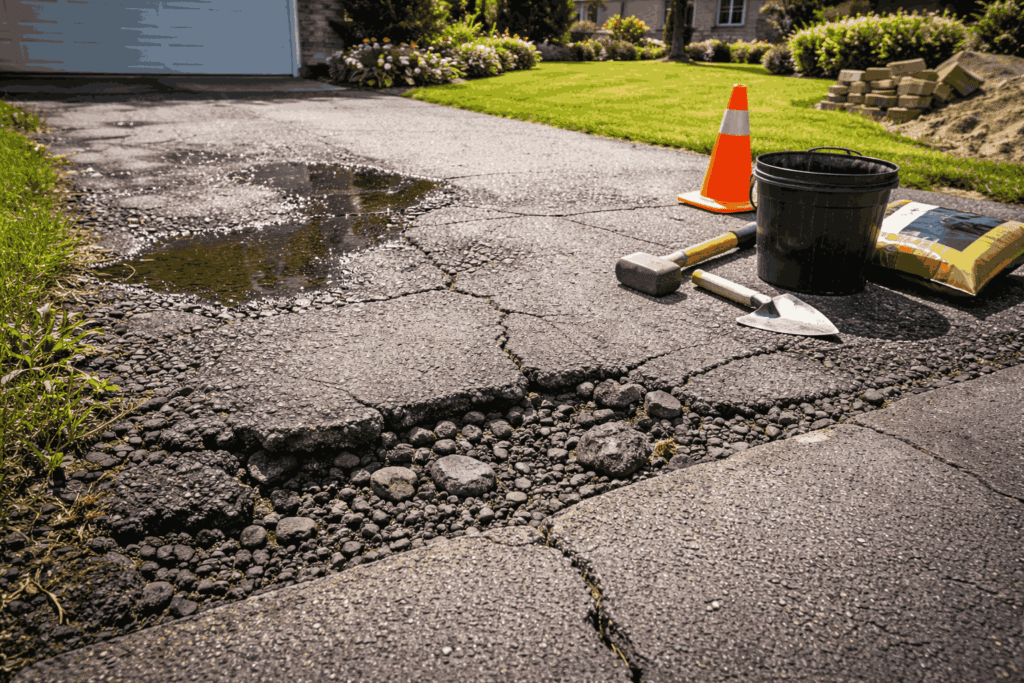
Selecting the appropriate concrete mix is critical for building a driveway that can handle NYC traffic conditions, seasonal temperature shifts, and long-term structural stress. Each concrete type is designed for specific load requirements, climate exposure, and performance expectations. Understanding the strengths and limitations of each option helps prevent premature cracking, surface wear, and costly repairs.
1. Standard Concrete Mix
Standard concrete is widely used for residential driveways with light to moderate traffic. With a compressive strength of 3000-4000 PSI, it provides adequate durability for typical residential vehicle use when installed over a properly prepared base.
Key Features:
- 3000-4000 PSI compressive strength
- Balanced cement, sand, and aggregate composition
- Compatible with wire mesh or light rebar reinforcement
Benefits:
- Affordable option for residential properties
- Suitable for cars and light SUVs
- Performs reliably with correct curing and sealing
Drawbacks:
- Not ideal for frequent heavy vehicle loads
- Sensitive to poor base preparation
2. Heavy Duty Concrete
Heavy-duty concrete is engineered for driveways exposed to higher loads and frequent traffic. With a PSI rating above 4000, this mix is commonly used for commercial properties or residential driveways that accommodate trucks, trailers, or RVs.
Key Features:
- Higher cement content for added strength
- Strong aggregate bonding
- PSI rating exceeding 4000
Benefits:
- Supports heavy vehicles without surface deformation
- Improved resistance to cracking under stress
- Longer service life under demanding conditions
Drawbacks:
- Higher upfront installation cost
- Requires experienced installation for best results
3. Composite Fiber Concrete
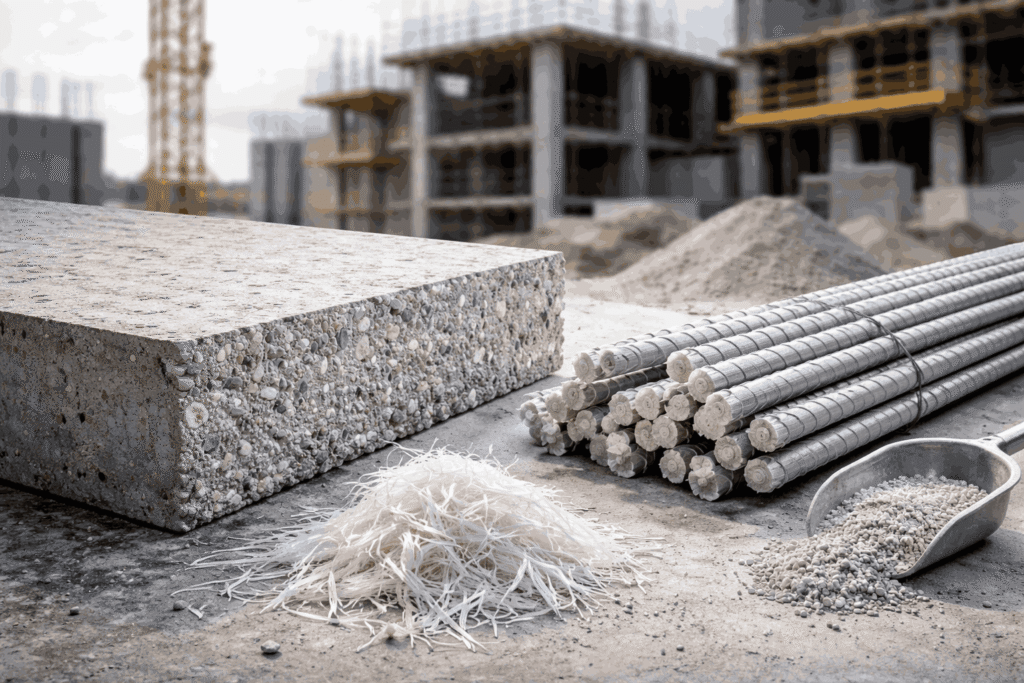
Fiber-reinforced concrete helps control cracking caused by shrinkage and stress, which is critical in preventing temperature-related concrete cracking during winter, as fibers are distributed throughout the mix to improve crack control. This option is well-suited for NYC driveways where temperature changes and minor ground movement are common.
Key Features:
- Micro-reinforcement within the concrete slab
- Reduced shrinkage cracking
- Enhanced internal cohesion
Benefits:
- Improves impact resistance
- Limits surface cracking over time
- Enhances overall durability
Drawbacks:
- Slightly higher material cost
- Does not replace rebar for heavy-load applications
4. Air-Entrained Concrete
Air-entrained concrete is specifically designed for environments exposed to freeze-thaw cycles. Tiny air pockets within the mix allow moisture to expand during freezing without damaging the concrete structure, helping prevent frost- and snow-related damage to concrete surfaces, making it ideal for NYC winters.
Key Features:
- Microscopic air bubbles within the mix
- Reduced internal pressure from freezing water
Benefits:
- Minimizes surface scaling
- Improves cold-weather durability
- Resists moisture and de-icing salt damage
Drawbacks:
- Slight reduction in compressive strength
- Must be mixed accurately to maintain performance
5. Textured Concrete
Textured concrete combines structural performance with decorative appeal, much as polished and epoxy flooring options differ in durability and surface performance for NYC homes. Options such as stamped patterns, colored finishes, and exposed aggregates allow homeowners to enhance curb appeal without sacrificing durability.
Common Types:
- Stamped concrete
- Colored or stained concrete
- Exposed aggregate finishes
Benefits:
- Improves visual appearance
- Maintains structural strength
- Offers customizable design options
Drawbacks:
- Higher installation cost
- Requires regular sealing and maintenance

Recommended Concrete Reinforcement Solutions For Driveways
For long-lasting driveway performance, concrete reinforcement plays a critical role in controlling cracks, improving load distribution, and increasing overall structural strength. In NYC, where driveways experience temperature fluctuations, moisture exposure, and varying traffic loads, selecting the proper reinforcement method helps prevent premature failure and costly repairs.
| Reinforcement Type | Function | Optimal Usage |
|---|---|---|
| Reinforcing steel bars (rebar) | Increases load-bearing capacity and structural strength | Driveways supporting heavy vehicles or commercial traffic |
| Wire mesh reinforcement | Controls cracking caused by shrinkage and minor movement | Typical residential driveways |
| Synthetic fiber reinforcement | Improves dimensional stability and crack resistance | Added durability in residential and mixed-use driveways |
Comparison of the Best-Performing Concrete Driveways
Concrete driveway performance depends on matching the concrete mix to specific site conditions, traffic demands, and environmental exposure. The comparison below helps identify the most suitable concrete options based on common driveway requirements in NYC.
| Driveway Considerations | Preferred Concrete Mixes |
|---|---|
| Light vehicle loads | Standard concrete mix |
| Heavy-duty traffic | Heavy-duty concrete |
| Improved crack tolerance | Fiber-reinforced concrete |
| Harsh winter regions | Air-entrained concrete |
| Visual design finish | Stamped or colored concrete |
| Customized concrete behavior | Admixture-enhanced concrete |
How to Maintain Long-Lasting Driveways?
Compared to asphalt, concrete driveways require less maintenance, but consistent care is essential to protect structural strength and surface condition over time. In NYC, frequent exposure to moisture, freeze-thaw cycles, and de-icing salts makes timely upkeep especially important. Planning seasonal concrete repairs during colder months helps address minor cracks early, reduce water intrusion, and prevent long-term structural damage before conditions worsen.
- Seal the concrete every 2 to 3 years to prevent moisture penetration.
- Avoid harsh de-icing chemicals, as they can cause surface scaling.
- Clean oil, fuel, and chemical spills promptly to avoid staining and deterioration.
- Repair small cracks early to stop water intrusion and structural weakening.
Conclusion
To build a durable driveway in NYC, selecting the correct concrete mix, using proper reinforcement, and ensuring professional installation are essential. Traffic load, climate exposure, and base preparation all directly affect long-term performance. When these factors are adequately addressed, concrete driveways offer reliable strength, reduced cracking, and long-lasting functionality while maintaining their appearance for decades.
Sardar Restoration Corp serves residential and commercial properties across NYC, including The Bronx, Manhattan, Brooklyn, Westchester, and Queens, providing concrete repair and replacement services suited to local building conditions and seasonal challenges.
For more information or to discuss your property concerns, contact (+1) 917-355-8556, email sardarrestoration@gmail.com, or visit 2770 Fish Ave, Bronx, NY 10469, United States.
FAQs
What kind of concrete is best for a driveway in terms of durability?
The most resilient concrete is high-strength concrete (4000–5000 psi), particularly for driveways supporting large automobiles. In regions vulnerable to cracking or freeze-thaw conditions, fiber-reinforced and air-entrained concrete can improve durability.
What is the ideal thickness for a concrete driveway?
The minimum thickness of a typical residential driveway is four inches. It is recommended to use five to six inches or more for commercial or heavy vehicles. A suitable thickness minimizes cracking and guarantees strength.
Does my driveway require reinforcement?
Yes! Tensile strength is increased, and cracks are avoided through reinforcement such as steel rebar, wire mesh, or fiber additions. The best reinforcement for big vehicles is a combination of fiber and rebar.
How long does a driveway made of concrete last?
A concrete driveway can last up to 30 years with proper installation and maintenance. Its lifespan can be increased with routine sealing and crack repairs.
Which concrete is ideal for cold climates?
For areas with freeze-thaw cycles, air-entrained concrete works well. Its tiny air bubbles stop water expansion during freezing from causing cracking.
Are there environmentally friendly concrete driveway solutions?
Yes! To lessen their environmental impact, some providers offer concrete mixes containing recycled aggregates, cementitious materials such as fly ash or slag, and low-carbon cement substitutes.
Does soil condition affect driveway durability in NYC?
Yes. Poor soil stability and inadequate drainage can cause slab movement, cracking, and uneven settling. Proper base preparation is essential for long-term performance.
Is sealing concrete driveways necessary in cold climates?
Yes. Sealing protects concrete from moisture penetration, freeze-thaw damage, and de-icing salts, helping extend the driveway’s lifespan in NYC conditions.