
 ChatGPT
 Perplexity
 Google AI
 Claude
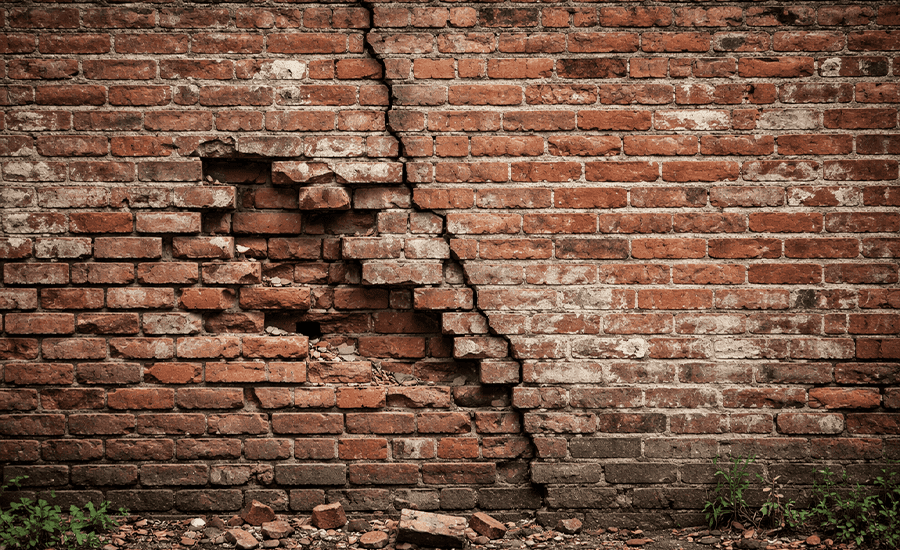
Brick walls are known for durability, but in New York City, they endure constant environmental stress. Seasonal freeze-thaw cycles, urban pollution, aging construction, and fluctuating humidity place continuous stress on masonry systems. Over time, even well-built brick façades can develop structural and moisture-related vulnerabilities.
What makes brick damage dangerous is not always what you see first. Minor cracks, light staining, or small areas of mortar deterioration may appear cosmetic. However, these early signs often indicate deeper moisture movement, metal corrosion, or structural shifting behind the surface.
Recognizing the difference between normal aging and structural risk is essential. Early identification prevents façade instability, costly reconstruction, and potential safety hazards for both residential and commercial properties.
- Ο Hairline cracks are common, but widening or horizontal cracks may indicate structural stress.
- Ο Bulging or outward wall movement requires immediate professional inspection.
- Ο Efflorescence indicates active moisture movement within the masonry system.
- Ο Spalling bricks often result from freeze-thaw damage and water retention.
- Ο Rust staining may reveal hidden steel lintel or wall tie corrosion.
- Ο Interior dampness can originate from compromised brickwork or failed flashing.
- Ο Early masonry repair reduces long-term structural risk and prevents major reconstruction costs.
Brick Wall Damage Severity Guide: When to Monitor vs. When to Act
Not all brick damage carries the same level of risk. Some conditions reflect normal aging, while others indicate structural instability requiring immediate professional attention. Understanding severity levels helps property owners make informed decisions and avoid delayed intervention.
Minor Conditions (Monitor & Maintain)
These issues are typically cosmetic or early-stage moisture indicators:
- Hairline cracks under 1mm that do not widen over time
- Light surface efflorescence that appears seasonally
- Slight mortar surface wear without joint separation
While not immediately dangerous, these signs should be monitored annually, especially in NYC, where freeze-thaw exposure accelerates deterioration.
Moderate Conditions (Professional Evaluation Recommended)
These signs suggest progressing structural or moisture-related stress:
- Cracks wider than 2–3mm, recurring in the same location, or progressively widening
- Mortar joints are crumbling or pulling away from the bricks
- Early-stage spalling or brick surface flaking
- Persistent interior dampness after rainfall
At this stage, masonry inspection is strongly recommended to prevent further structural deterioration.
Severe Conditions (Immediate Action Required)
These conditions pose potential safety and structural risks:
- Horizontal or stair-step cracks in load-bearing walls
- Visible wall bulging or displacement exceeding 1 inch
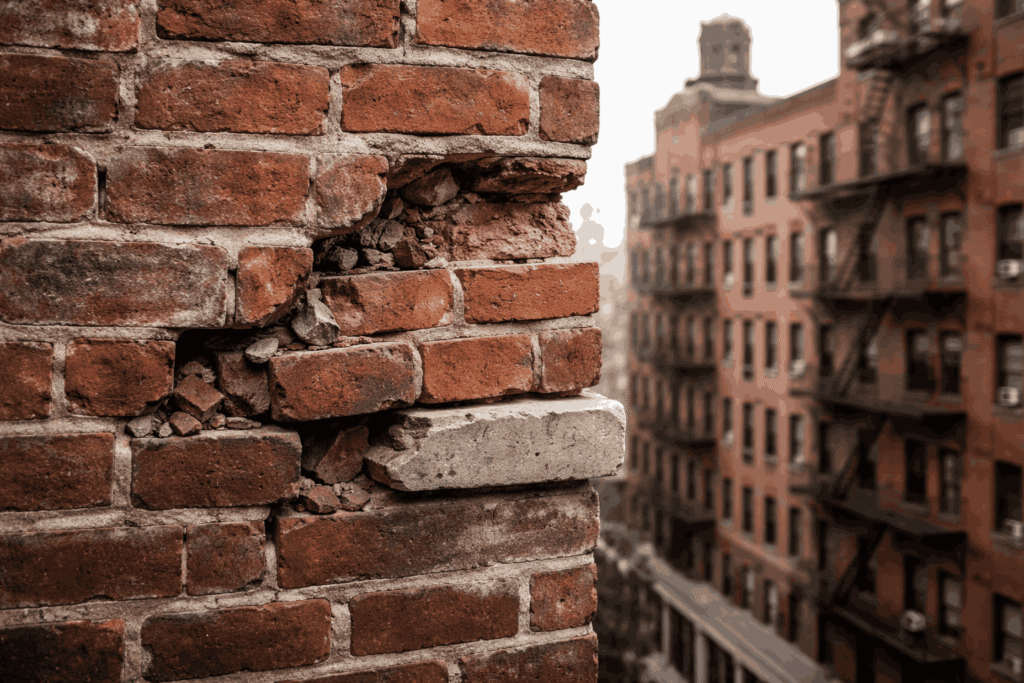
- Loose bricks at upper façade levels
- Rust staining accompanied by masonry cracking
Severe damage should be assessed immediately by a licensed masonry contractor to prevent façade instability or falling debris hazards.
Structural Warning Signs Your Brick Wall Needs Repair
Brick damage rarely happens overnight. Most structural issues develop gradually, starting with small surface changes that worsen over time. Recognizing these warning signs early helps prevent moisture intrusion, façade instability, and expensive reconstruction.
1. Structural Fissures and Expanding Cracks
Cracks are often the first visible sign of masonry stress. While small vertical hairline cracks can result from natural settling, widening cracks, horizontal fractures, or stair-step patterns along mortar joints may indicate structural movement.
Common causes
- Foundation settlement
- Thermal expansion and contraction
- Water infiltration behind masonry
- Load redistribution in aging structures
Why it matters
Cracks allow water intrusion, accelerate internal deterioration, and may signal shifting structural loads.
When to call a contractor
If cracks exceed 3mm in width, form horizontal lines, or continue expanding over time, a licensed masonry inspection is advised.
2. Deteriorating or Crumbling Mortar Joints
Mortar joints protect bricks by absorbing movement and sealing moisture pathways. Over time, weather exposure and freeze-thaw cycles weaken mortar before bricks themselves show damage.
Common causes
- Aging mortar
- Improper previous repairs
- Moisture infiltration
- Repeated freeze-thaw exposure
Why it matters
Open joints permit water entry, increasing the risk of spalling and internal structural weakening.
When to call a contractor
If mortar falls out when lightly scraped, gaps appear between bricks, or joints recede more than ¼ inch, repointing should be scheduled after understanding the differences between brick pointing and tuckpointing, ensuring the correct repair method is applied.
3. Bulging or Bowing Walls
A straight brick wall indicates stable load distribution. Outward movement, however, signals internal failure or trapped moisture pressure.
Common causes
- Failing wall ties
- Corroded steel supports
- Hydrostatic pressure buildup
- Structural overloading
Why it matters
Bulging walls increase collapse risk and create safety hazards, particularly on upper façades in dense NYC environments.
When to call a contractor
If displacement exceeds 1 inch from the vertical plane or continues progressing, immediate structural inspection is required.
4. Spalling or Flaking Bricks
Spalling occurs when the outer brick surface peels, flakes, or breaks apart. This is commonly caused by moisture entering the brick and expanding during freeze-thaw cycles.
Common causes
- Prolonged moisture retention
- Freeze-thaw expansion
- Poor brick quality
- Blocked drainage
Why it matters
Spalling reduces brick strength and exposes the inner core to accelerated deterioration.
When to call a contractor
If multiple bricks show surface loss or pieces break away easily, replacement and moisture correction are necessary.
5. White Powder Deposits (Efflorescence)
Efflorescence appears as white crystalline deposits on brick surfaces. It forms when water dissolves internal salts and carries them outward.
Common causes
- Moisture migration through masonry
- Inadequate waterproofing
- Poor drainage
Why it matters
Although not structurally dangerous on its own, efflorescence confirms active water movement inside the wall system. Moisture often travels through poorly sealed or deteriorated joints, which is why understanding common types of masonry joints helps identify where water infiltration may be occurring.
When to call a contractor
If deposits reappear after cleaning or accompany mortar deterioration, underlying moisture issues must be addressed.
6. Interior Dampness or Persistent Moisture
Brick walls are designed to manage limited moisture exposure, but persistent interior dampness suggests the exterior masonry system is compromised.
Common causes
- Cracked bricks or open mortar joints
- Failed flashing near windows and rooflines
- Inadequate waterproofing
- Poor exterior drainage
Why it matters
Ongoing moisture weakens masonry, promotes mold growth, and reduces indoor air quality.
When to call a contractor
If damp patches, peeling paint, or musty odor’s persist after rainfall, a masonry inspection should be arranged to identify exterior entry points.
7. Mold or Biological Growth Near Brick Surfaces
Biological growth around brick walls indicates prolonged moisture retention. Moss, algae, or mold formation often appears in shaded or poorly ventilated areas.
Common causes
- Trapped moisture within the wall system
- Drainage defects
- Cracked masonry allowing water penetration
Why it matters
Moisture-driven biological growth accelerates surface deterioration and may affect occupant health.
When to call a contractor
If mold repeatedly forms near brick joints or interior walls, moisture sources within the masonry should be professionally evaluated.
8. Rust Stains on Brickwork
Brown or orange staining on brick surfaces often signals internal metal corrosion, typically from steel lintels or wall ties.
Common causes
- Corroded steel supports above windows and doors
- Aging wall tie systems
- Moisture exposure around embedded metal
Why it matters
Steel expands as it corrodes, creating internal pressure that cracks the surrounding masonry.
When to call a contractor
If rust staining appears alongside cracking or displacement, structural metal components may require immediate attention.
9. Loose or Shifting Bricks
Bricks should remain firmly bonded within the wall assembly. Movement or separation indicates loss of structural cohesion.
Common causes
- Mortar bond failure
- Moisture infiltration
- Wall tie deterioration
- Structural shifting
Why it matters
Loose bricks increase fall risk and compromise façade stability, especially on upper levels. In many cases, property owners ask whether repointing can resolve this condition, and understanding whether repointing resolves loose or shifting bricks depends on whether the issue is limited to mortar deterioration or involves deeper structural movement.
When to call a contractor
If bricks move when lightly pressed or gaps widen between units, prompt repair helps prevent further deterioration.
10. Advanced Material Aging and Surface Erosion
Older brick buildings naturally experience material fatigue. However, excessive erosion or brittleness suggests the masonry has surpassed normal aging.
Common causes
- Decades of weather exposure
- Pollution-related surface degradation
- Repeated freeze-thaw cycles
Why it matters
Eroded brick surfaces lose strength and become more vulnerable to moisture penetration.
When to call a contractor
If bricks crumble under light pressure or surfaces appear severely worn, targeted replacement or restoration may be required.
When to Call a Masonry Contractor Immediately
While some brick issues can be monitored, certain warning signs require urgent professional attention. Delaying evaluation increases the risk of structural instability, façade failure, and safety hazards, particularly in multi-story NYC properties.
Seek immediate masonry inspection if you notice:
- Horizontal cracks in load-bearing walls
- Stair-step cracking along mortar joints that continues expanding
- Wall bulging or outward displacement exceeding 1 inch
- Loose bricks at upper façade levels
- Rust staining combined with cracking around windows or lintels
- Falling brick fragments or debris near the base of the wall
- Persistent interior dampness despite exterior sealing efforts
These conditions often indicate internal structural movement, metal corrosion, or trapped moisture pressure. In dense urban environments like New York City, compromised masonry not only affects property value but also poses risks to occupants and pedestrians.
Early structural evaluation prevents escalation into major façade reconstruction, emergency shoring, or violation-related repairs.
Why Brick Walls Commonly Fail in NYC
Brick walls in New York City face environmental and structural pressures that differ from those in many other regions. Older construction methods, dense urban exposure, and seasonal weather extremes create conditions that accelerate masonry deterioration if maintenance is delayed.
1. Freeze-Thaw Cycles
NYC winters repeatedly expose brickwork to freezing temperatures followed by rapid thawing. When moisture penetrates bricks or mortar joints, it expands as it freezes. Over time, this expansion weakens brick surfaces, causes spalling, and widens existing cracks. Without proper sealing and drainage, freeze-thaw stress significantly shortens masonry lifespan, which is why reviewing practical winter brick repair considerations for NYC homeowners plays an important role in preventing seasonal damage from progressing into structural deterioration.
2. Aging Construction and Historic Buildings
Many residential and commercial properties across the Bronx, Manhattan, Brooklyn, Queens, and Westchester were built decades ago. Older mortar compositions and outdated wall tie systems are more susceptible to long-term deterioration. As materials age, their ability to resist moisture movement and structural load shifts gradually declines, making material compatibility critical, especially when evaluating old vs new mortar during restoration. This is why repointing aging brick buildings becomes essential to maintain structural stability and prevent progressive façade damage.
3. Urban Pollution and Airborne Contaminants
Dense traffic, industrial activity, and airborne pollutants contribute to surface erosion and accelerated material fatigue. Over time, chemical exposure weakens brick surfaces and mortar joints, making them more susceptible to cracking and moisture penetration.
4. Trapped Moisture in Dense Urban Layouts
Closely spaced buildings reduce airflow and sunlight exposure. Limited ventilation slows natural drying, allowing moisture to remain trapped within masonry systems. Persistent moisture increases the risk of efflorescence, mold growth, metal corrosion, and freeze-related damage.
5. Structural Modifications and Load Changes
Property renovations, added floors, or interior structural alterations can redistribute loads within masonry walls. If modifications are not properly reinforced, brick façades may begin showing stress-related cracking, bulging, or displacement over time.
Brick failure in NYC is rarely caused by a single issue. Instead, it results from the combined effect of moisture intrusion, aging materials, environmental exposure, and structural stress. Regular inspection and timely repair are essential to preserve façade stability and prevent larger restoration projects.
Professional Inspection and Repair Solutions
Once warning signs appear, the next step is not guessing the severity but conducting a proper masonry assessment. A professional inspection evaluates crack patterns, moisture pathways, metal component condition, and wall stability before recommending targeted repairs.
In NYC properties, brick damage rarely affects only the visible surface. Structural movement, internal corrosion, or trapped moisture may exist behind the façade. Identifying the root cause ensures repairs address the underlying issue rather than temporarily covering symptoms.
Below are the most common repair approaches used in residential and commercial masonry systems.
Brick Repointing
Repointing involves removing deteriorated mortar and replacing it with compatible new mortar to restore joint strength and moisture resistance. Understanding the typical cost of brick repointing also helps property owners plan maintenance before minor joint deterioration leads to larger structural repairs.
Used when:
- Mortar joints are crumbling or recessed
- Gaps appear between bricks
- Water infiltration is occurring through the joints
Properly executed repointing restores structural cohesion and prevents accelerated brick damage.
Brick Replacement
When bricks lose structural integrity due to spalling, cracking, or erosion, selective brick replacement restores wall strength and appearance. In many cases, property owners benefit from understanding the key differences between brick repair and brick replacement before determining whether targeted repairs are sufficient or full unit replacement is required.
Used when:
- Brick surfaces flake or break apart
- Units crumble under light pressure
- Isolated sections show advanced deterioration
Replacing compromised bricks prevents moisture penetration from spreading to the surrounding masonry.
Lintel and Wall Tie Repair
Steel lintels above windows and doors, along with internal wall ties, provide structural support. Corrosion of these elements can cause cracking and displacement. In many aging structures, understanding why lintel failures are common in older NYC buildings helps property owners recognize early warning signs before visible façade damage develops.
Used when:
- Rust staining appears near openings
- Horizontal cracks develop above windows
- Brick movement is detected around structural supports
Addressing metal corrosion early prevents expansion-related cracking and façade instability.
Waterproofing and Moisture Control
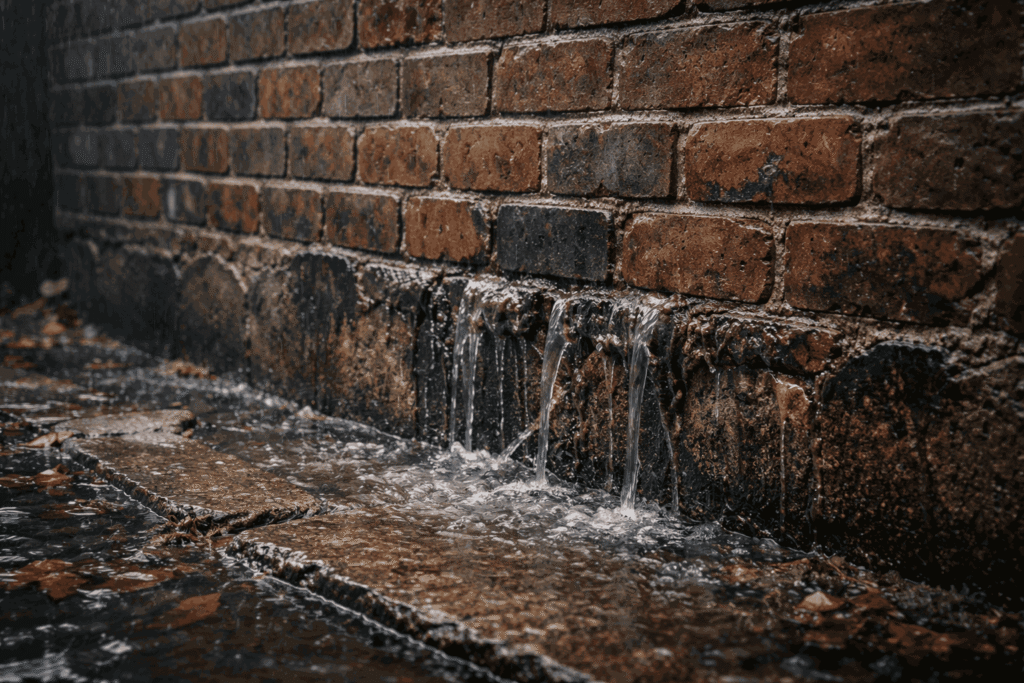
Water intrusion is a leading cause of masonry failure. Professional waterproofing solutions reduce moisture absorption while preserving vapor permeability. Over time, understanding how moisture damage affects NYC homes helps property owners recognize early warning signs before structural deterioration becomes visible.
Used when:
- Efflorescence repeatedly forms
- Interior dampness persists
- Freeze-thaw damage accelerates
Effective moisture management extends masonry lifespan and protects structural integrity. Many recurring issues are also linked to overlooked detailing and installation errors, which is why identifying common waterproofing mistakes that cause leaks is essential before minor seepage turns into long-term façade damage.
Professional masonry repair should always match the building’s original materials, structural design, and local exposure conditions. Targeted repairs performed early significantly reduce long-term restoration costs and prevent safety risks.
Final Assessment: Early Repair Prevents Structural Escalation
Brick walls rarely fail without warning. In most cases, visible surface changes appear long before structural instability develops. The difference between routine maintenance and major façade restoration often depends on how quickly those early signs are evaluated.
Cracks that widen, mortar that deteriorates, moisture that persists, or metal that corrodes will not correct themselves. Left unaddressed, minor masonry issues allow water intrusion, accelerate freeze-related damage, and increase structural stress across the wall system. Over time, repair costs multiply as deterioration spreads beyond isolated sections.
Regular inspection and timely intervention protect both residential and commercial properties from avoidable structural risk. Proactive masonry repair preserves façade stability, extends building lifespan, and maintains long-term property value in demanding NYC conditions.
Schedule a Professional Brick Inspection in NYC
If you notice any of the warning signs outlined above, a professional evaluation ensures the issue is accurately diagnosed before it progresses.
Sardar Restoration Corp provides licensed masonry inspection and repair services for residential and commercial properties across The Bronx, Manhattan, Brooklyn, Westchester, and Queens. Each repair strategy is tailored to building age, material composition, and environmental exposure conditions specific to New York City.
For consultation or to schedule an inspection:
📍 2770 Fish Ave, Bronx, NY 10469, United States
Early intervention prevents structural instability and costly façade reconstruction.
FAQs
How often should brick walls be inspected in NYC?
Brick walls should be visually inspected at least once per year and after severe weather events. Older buildings or properties exposed to heavy freeze-thaw cycles may require more frequent professional masonry evaluations.
Are small cracks in brick walls normal?
Hairline vertical cracks can result from natural settling. However, widening cracks, horizontal fractures, or stair-step patterns may indicate structural movement and should be professionally assessed.
How wide can a crack be before it becomes serious?
Cracks wider than 2–3mm, especially in load-bearing walls, should not be ignored. Expanding or recurring cracks often signal underlying structural stress or moisture intrusion.
Can brick wall damage spread if not repaired?
Yes. Moisture entering through cracks or deteriorated mortar accelerates internal damage. Over time, isolated issues can expand into widespread façade deterioration and structural instability.
What causes bricks to crumble or flake?
Spalling commonly occurs due to moisture absorption followed by freeze-thaw expansion. Aging materials, poor drainage, and prolonged water exposure also weaken brick surfaces.
Is efflorescence dangerous to brick walls?
Efflorescence itself is not structurally harmful, but it indicates active moisture movement inside the masonry system. If moisture is not controlled, it can eventually damage mortar and brick units.
Does homeowners’ insurance cover brick wall repairs?
Coverage depends on the cause of damage. Sudden events such as storms may be covered, while gradual deterioration from aging or lack of maintenance typically is not. Policy review is recommended.
How much does brick wall repair cost in NYC?
Costs vary depending on damage severity, repair type, and building height. Minor repointing may be moderate in cost, while structural reinforcement or extensive brick replacement requires a larger investment. A professional inspection provides accurate estimates.
Is a bulging brick wall considered an emergency?
Yes. Bulging or outward displacement may indicate structural instability or internal metal corrosion. Immediate evaluation is necessary to prevent potential façade failure or falling debris.
How long do professional brick repairs typically last?
When performed with compatible materials and proper installation techniques, professional masonry repairs can last decades. Regular inspection and moisture control significantly extend repair longevity.