
 ChatGPT
 Perplexity
 Google AI
 Claude
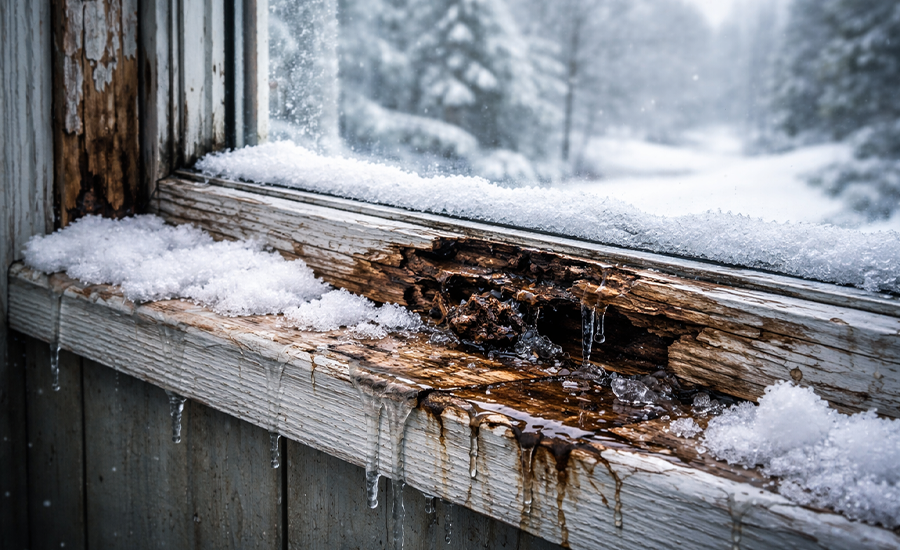
Winter weather can be harsh on residential and commercial buildings, and window sills are often among the most exposed and vulnerable exterior components. Ongoing exposure to freezing temperatures, moisture, snow, and ice gradually weakens window sills, allowing small cracks to develop and water to penetrate the surface. When left unaddressed, this combination of cold weather and moisture can lead to structural damage, water intrusion, and costly repairs over time.
In this blog, we thoroughly explain how winter weather damages window sills, highlight the most common cold-weather issues, outline practical preventive measures, and identify early warning signs of potential failure.
How Do Winter Conditions Risk the Durability of Windowsills?
Window sills act as a protective barrier between the window frame and the exterior wall, helping block moisture and outside air from entering the building. Most window sills are made from wood, concrete, stone, or masonry, materials that become more vulnerable when exposed to prolonged winter conditions. Cold temperatures, moisture, and environmental stress continuously put these materials under pressure, increasing the risk of surface wear and internal weakness over time.
The following winter-related conditions contribute most to windowsill deterioration:
- Cyclic freezing and thawing
- Heavy snow deposits
- Ice accretion
- Cold gusts
- Heavy or steady rain
- Thermal instability
Cold temperatures also affect mortar strength, which explains why masonry materials weaken faster during winter. You can read more in Why mortar cracks faster in cold weather.
Common Winter Damage Issues Affecting Window Sills
The following are the most common winter-related issues that damage window sills, affecting both their structural integrity and overall appearance.
Frost Action Damage
The following are the reasons why freeze-thaw damage happens:
- Water seeps into tiny cracks in the sill
- The temperature falls below 0°F
- Freezing water expands in volume
- Existing cracks in the material widen
Leak-Induced Water Damage
These problems are caused by prolonged moisture exposure:
- Water penetrates absorbent surfaces
- Weakening of the internal structure
- Mold growth around window frames
Ice Buildup on Window Sill Surfaces
When snow accumulates on windows and ledges, melting during the day and refreezing at night creates ice dams:
- Moisture retention at the sill surface
- Increased pressure on joints and edges
- Water forced into small openings
Thermal Cycling Effects on Window Sills
Cold temperatures cause materials to contract, while warmer daytime temperatures cause expansion:
- Minor structural cracks
- Joint separation
- Mortar deterioration
- Loosened sill components
Salt-Induced Material Deterioration
In colder regions, salt and de-icing chemicals are commonly used and can splash onto window sills:
- Gradual surface degradation
- Surface marking and color fading
- Premature concrete failure
- Corrosive damage to metal components
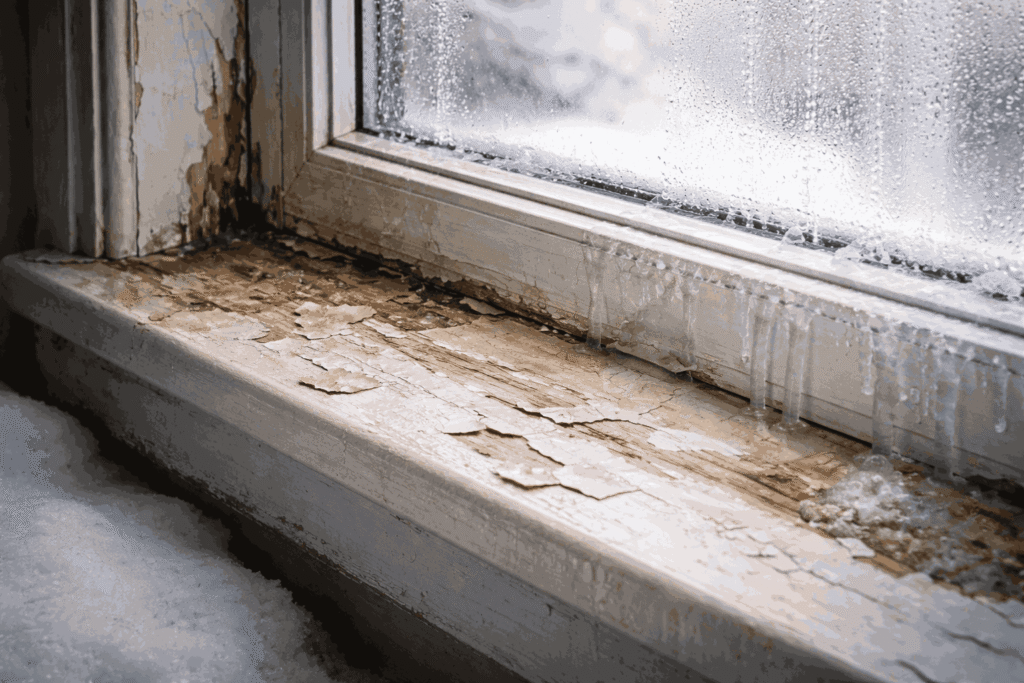
Many of these issues are part of broader seasonal masonry failures commonly seen in colder climates. Learn more in Cold weather masonry problems and fixes.
Winter Damage Types For Window Sills
Winter exposure can cause various types of physical and material damage to window sills. These damage types not only affect the surface appearance but can also compromise structural stability and allow moisture to penetrate deeper into the building envelope.
| Damage Category | Explanation | Extended Impact |
|---|---|---|
| Material cracks | Cracks develop within the sill material due to cold stress and moisture | Water intrusion into surrounding areas |
| Surface chipping | Concrete and stone surfaces begin to chip and break away | Reduced load-bearing capacity |
| Wood decomposition | Prolonged moisture causes hydration-related decay in wooden sills | Gradual sill disintegration |
| Mortar erosion | Mortar joints weaken and crumble under freeze-thaw pressure | Masonry separation |
| Material shifting | Repeated expansion and contraction alter material positioning | Loose and unstable window frames |
Warning Signs Your Window Sills May Be Failing
The following warning signs indicate that window sills may be failing due to winter exposure and ongoing moisture stress. Identifying these issues early allows timely action, helping prevent more serious structural damage, interior water intrusion, and expensive repair work.
- Visible splits or cracks in the window framework, which often widen during freeze-thaw cycles and allow moisture to enter
- Deteriorating sealants or peeling paint around the sill, indicating failing protection against water penetration
- Decay in wooden window sill components is a common sign of prolonged moisture absorption.
- Discoloration or staining around windows, often caused by trapped moisture or slow leaks.
- Unwanted air infiltration and poor air sealing lead to drafts and reduced energy efficiency.
- Fungal or mold growth around window sills, suggesting persistent damp conditions and hidden moisture issues
Damage severity can vary depending on construction methods and joint conditions. Our guide on Types of masonry joints explains how joint structure influences durability.
How to Maintain Window Sills During Winter?
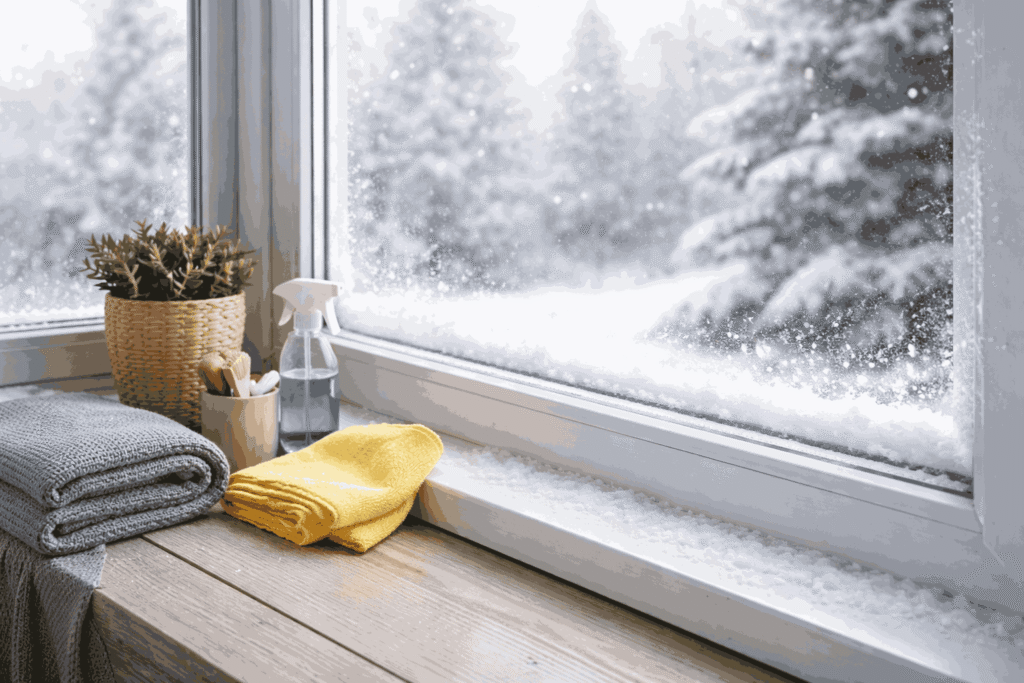
Taking proactive maintenance steps before and during winter helps protect window sills from moisture exposure, freezing temperatures, and long-term deterioration. Regular upkeep not only extends the lifespan of window sills but also reduces the risk of costly structural repairs.
- Seal all gaps before winter conditions begin to prevent water and cold air from entering through small openings.
- Apply protective surface coatings or sealants to improve weather resistance and limit moisture absorption.
- Remove accumulated snow promptly to reduce prolonged moisture contact and ice formation.
- Limit the use of de-icing agents near window areas, as chemical salts can damage sill surfaces over time.
- Keep drainage systems clear so melting snow and rainwater can flow away from the sill.
- Maintain proper grading and water runoff around exterior walls to prevent standing moisture.
- Install protective drip edges where needed to direct water away from the sill surface.
Consistently following these maintenance measures helps minimize winter-related stress on window sills and prevents minor issues from developing into more serious structural problems. Routine checks throughout the season further support long-term durability and performance.
Final Thoughts
Taking proactive measures to protect window sills from moisture and cold is essential to maintaining their durability and structural stability. Even minor winter-related damage can worsen quickly if left unattended, making early inspection and timely maintenance essential for long-term property care.
Sardar Restoration Corp proudly serves residential and commercial properties across NYC, including the Bronx, Manhattan, Brooklyn, Westchester, and Queens. Our team delivers reliable, high-quality solutions tailored to local building conditions and seasonal challenges. You can review our service areas to find support available in your location.
If you notice signs of window sill damage or want preventive maintenance before winter conditions worsen, contact us at (+1) 917-355-8556 or email sardarrestoration@gmail.com. You may also visit us at 2770 Fish Ave, Bronx, NY 10469, United States.
FAQs
Should window sills be repaired or replaced after winter damage?
It depends on the severity of the damage. Minor cracks or surface wear can often be repaired, while extensive cracking, rot, or structural instability may require complete replacement.
How can I tell if my window sills are damaged by winter weather?
Look for the following visible signs to determine the damage in your window sills:
- Cracks
- Peeling paint
- Soft wood
- Water stains
- Drafts
- Mold growth
How do snow and ice affect window sills?
When snow or ice accumulates on window sills, it can trap water from freeze-thaw cycles, leading to cracking.
Can damaged window sills increase heating costs in winter?
Yes, damaged or cracked window sills allow cold air to enter and warm air to escape. This forces heating systems to work harder, potentially increasing energy bills during the winter months.
What preventive measures can protect window sills during winter?
Our window sill and lintels contractor in NYC advises you to follow these preventive measures to protect the window sills during winter:
- Apply weather-resistant paint or sealant.
- Ensure the sill has a proper slope for drainage.
- Remove snow buildup promptly.
- Repair cracks before the cold season.
- Limit the use of de-icing chemicals near sills.
How often should I inspect my window sills in winter?
Make sure to inspect the window sills once a month during winter, especially after heavy snow or harsh weather.
Is winter window sill damage common in older buildings?
Yes, older buildings are more prone to winter window-sill damage due to aging materials, worn sealants, and repeated freeze-thaw cycles.
Can winter-damaged window sills cause interior problems?
Yes, for sure! When window sills are damaged, water can penetrate, leading to mold, mildew, water stains, and drafts that may lower energy performance and reduce ventilation effectiveness.