
 ChatGPT
 Perplexity
 Google AI
 Claude
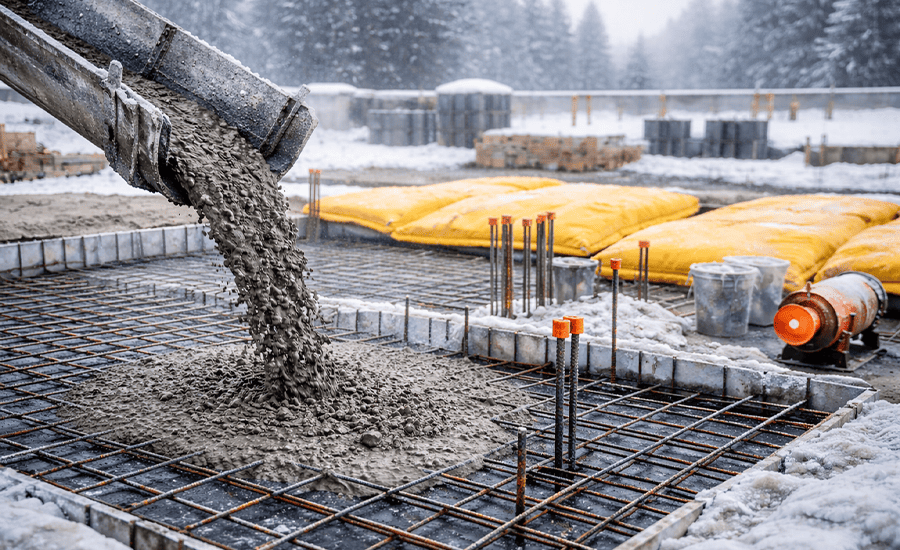
Cold weather can significantly impact the durability and strength of concrete, especially during winter construction projects. Low temperatures slow down the curing process, limit proper hydration, and reduce early-age strength, which can lead to long-term performance issues. If concrete is exposed to freezing conditions too soon, it becomes more vulnerable to cracking, scaling, and surface deterioration. That’s why monitoring weather conditions before pouring concrete and using winter-grade materials is essential to avoid structural weaknesses and premature damage.
In this guide, we’ll cover how cold temperatures affect concrete behavior, the safety measures needed for cold-weather concrete work, and a practical checklist to help ensure strong and reliable results during winter pours.
Why Do Winter Conditions Change Concrete Behavior?
As winter approaches, concrete begins to behave differently due to fluctuations in temperature that directly affect the curing process. Concrete gains its strength through hydration, a chemical reaction that depends on both sufficient moisture and stable temperatures. When conditions are right, this process allows concrete to harden properly and achieve its intended durability.
However, when ambient temperatures drop below 40°F, the hydration process slows significantly. If the water within the concrete mixture freezes before proper curing takes place, it can cause multiple performance issues, including reduced compressive strength, surface cracking, and spalling. Cold conditions can also extend the curing period and weaken the bond between concrete layers, ultimately affecting the long-term reliability of the structure.
Cold temperatures are also a major reason concrete surfaces develop cracks during winter months, which is explained in detail in our guide on Why does concrete crack more in winter?
Must-Follow Safety Tips for Cold-Weather Concrete
Cold-weather conditions demand extra care to ensure concrete cures properly and achieves long-term strength. Follow these essential safety steps to reduce winter-related risks.
Track Temperature Forecasts
Monitoring weather conditions helps prevent pouring concrete in unsafe temperatures:
- Check weather forecasts before scheduling concrete pours.
- Avoid pouring during extreme cold, ice, or heavy snowfall.
- Ideal conditions remain above 20°F for 24-48 hours after pouring.
- Use temporary shelters or heated enclosures when required.
Select Winter-Grade Concrete Mixes
Specially designed mixes improve curing performance in low temperatures:
- Rapid-set admixtures: Speed up curing in low temperatures.
- Air-void stabilizers: Create air pockets to reduce freeze-related cracking.
- Heated mixing water: Helps maintain concrete temperature above 50°F.
Prepare and Warm All Contact Surfaces
Cold surfaces can cause early freezing and weaken concrete bonding:
- Warm aggregates, water, and tools to prevent freezing.
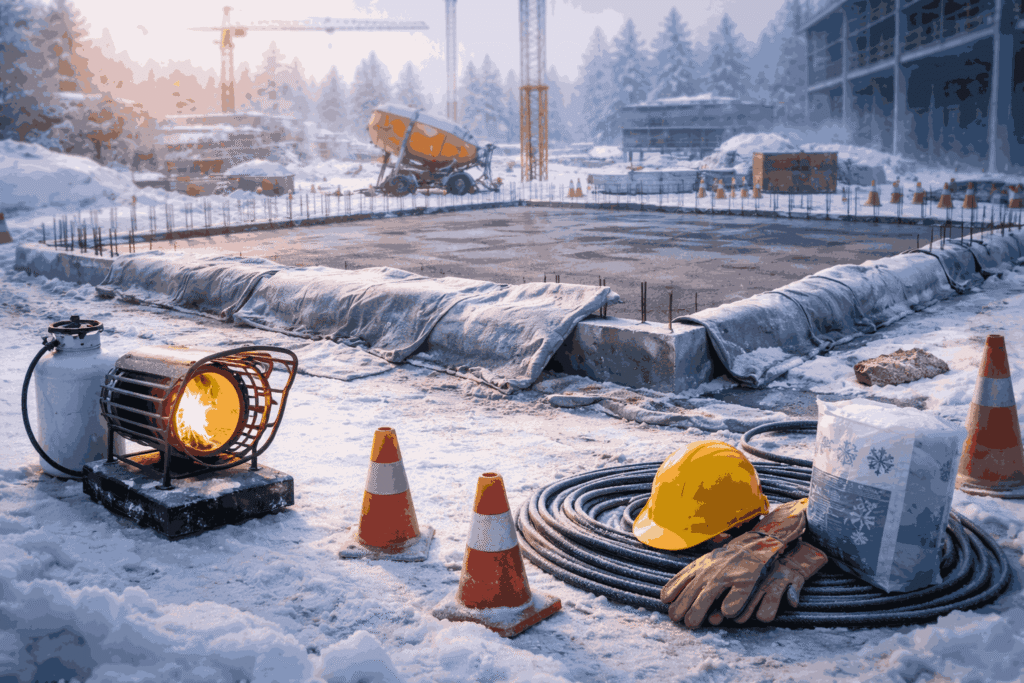
- Use heated formwork or insulation blankets.
- Avoid open flames and rely on controlled heating methods.
Use Thermal Protection During Pouring
Fresh concrete must be protected immediately after placement:
- Protect freshly placed concrete from freezing temperatures.
- Keep insulation in place until concrete reaches 70% of target strength.
Avoid Excess Mixing Water
Too much water increases freezing risk and reduces strength:
- Reduce the water-to-cement ratio to lower freeze risk.
- Prevent surface water accumulation.
- Use plasticizers to improve workability without adding extra water.
Use Approved Heating Techniques
Maintaining curing temperature is essential for proper hydration:
- Maintain curing temperature using:
- Heated shelters
- Slab-warming mats
- Ensure proper ventilation when using gas heaters.
Anticipate Rapid Weather Shifts
Sudden temperature changes can damage curing concrete:
- Monitor concrete temperature changes regularly.
- Remove insulation gradually to avoid thermal shock.
Practice Cold-Weather Jobsite Safety
Worker safety is critical during winter concrete work:
- Wear non-slip footwear to prevent falls.
- Clear snow and ice from work areas.
- Dress in warm clothing to reduce frostbite risk.
- Set safety barriers around hazardous zones.
Perform Regular Equipment Inspections
Cold temperatures can affect equipment performance and reliability:
- Check mixers, pumps, and tools for cold-weather operation.
- Use approved anti-freeze fluids if recommended.
- Clean concrete residue promptly to prevent freezing inside machinery.
Applying these safety practices is especially important for exterior concrete work, such as sidewalks, where durability and structural stability matter the most. You can also review our 6 essential tips for building rock-solid concrete sidewalks for long-term performance.
What to Check Before Pouring Concrete in Cold Weather
Before pouring concrete in winter, it’s essential to confirm that all safety and preparation steps are in place. This checklist helps ensure proper curing, site safety, and consistent concrete performance in cold conditions.
- Make sure the ambient temperature remains above 20°F during and after the pour.
- Use winter-grade concrete mixes designed for fast and controlled setting.
- Ensure all materials, including aggregates and water, are warmed before use.
- Keep insulation materials readily available to protect freshly placed concrete.
- Maintain regulated moisture levels to support proper hydration.
- Confirm that heating systems are installed, functional, and safely positioned.
- Keep thermal sensors active and correctly placed to monitor concrete temperature.
- Prepare the work area to provide a safe footing and reduce slip hazards.
- Ensure all workers wear appropriate personal protective equipment.
- Pre-check all tools and equipment for cold-weather operation.
Final Thoughts
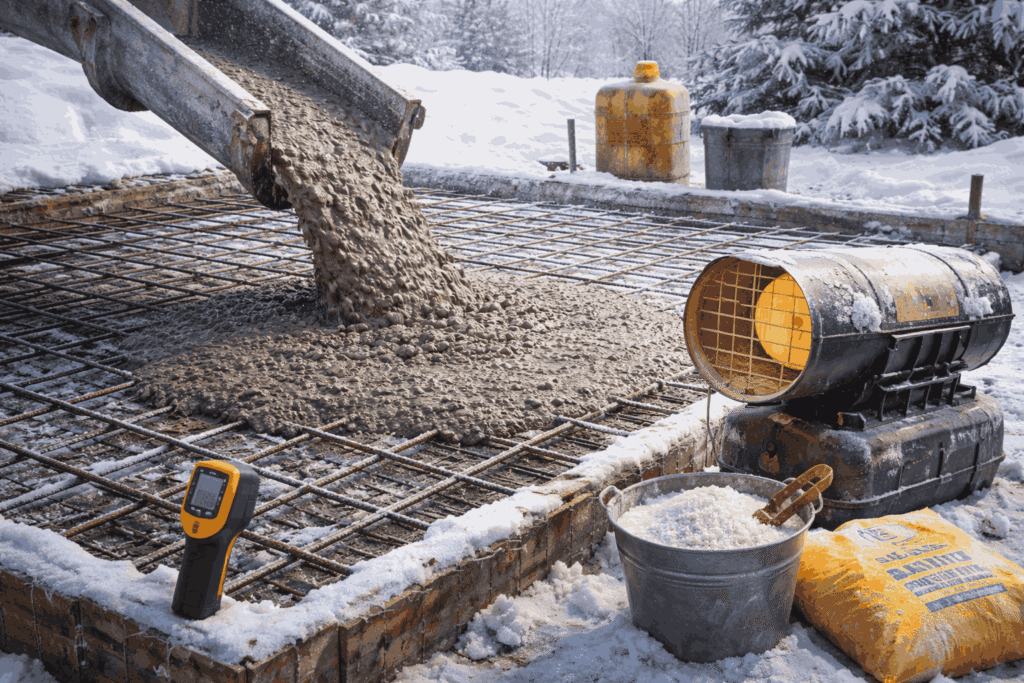
Concrete pouring in cold weather requires careful planning, professional handling, and strict temperature control. Low temperatures can easily compromise curing and strength if the right steps are ignored. By following proper safety practices, using winter-grade concrete, and monitoring conditions closely, durable and long-lasting results can still be achieved even in freezing environments. Proper preparation not only protects the structure but also keeps everyone on the job site safe.
Sardar Restoration Corp proudly serves all areas of NYC, including the Bronx, Manhattan, Brooklyn, Westchester, and Queens. Our services are built around real site conditions and project needs, ensuring reliable results across residential and commercial properties. You can explore our service areas to see how we support projects in your location.
For expert assistance, contact us at (+1) 917-355-8556 or email sardarrestoration@gmail.com, or visit us at 2770 Fish Ave, Bronx, NY 10469, United States.
FAQs
Why is cold weather a problem for concrete?
Cold weather is a significant threat to the concrete as it slows down the hydration process, and the mortar doesn’t cure properly; that’s why the concrete doesn’t gain much strength and durability. It results in cracking, surface scaling, and reduced structural integrity.
Can concrete be poured in freezing temperatures?
Concrete can be poured in freezing conditions only if proper precautions are taken. Using winter-grade mixes, insulation, and controlled heating helps prevent early freezing and strength loss.
What personal safety measures are needed for cold-weather pours?
Make sure to follow these safety measures to pour concrete in cold weather:
- Wear non-slip footwear to prevent falls.
- Clear snow and ice around work areas.
- Dress in warm clothing to avoid frostbite.
- Use barriers to mark hazardous zones.
What is the ideal temperature for pouring concrete in winter?
The ideal weather for pouring concrete in winter could be above 20°F (-6°C) for at least 24-48 hours. Make sure to check the weather forecast before pouring concrete and follow the additional safety precautions.
What additives help concrete perform better in cold weather?
The following additives help concrete perform and bond strongly in cold weather:
- Hydration accelerators: They shorten the curing time.
- Air-void stabilizer: It protects concrete from freeze damage.
- Consistency modifier: It keeps the mixture easy to work with.
How long should I insulate concrete after pouring?
The concrete should be insulated for 3-7 days until it gets 70% hard and reaches its design, but it depends on the temperature. Gradual removal of insulation is essential to prevent thermal shock.
What happens if fresh concrete freezes overnight?
If concrete freezes before proper curing, it can lose strength permanently. Early freezing often leads to surface cracking, weak bonding, and reduced long-term durability.