
 ChatGPT
 Perplexity
 Google AI
 Claude
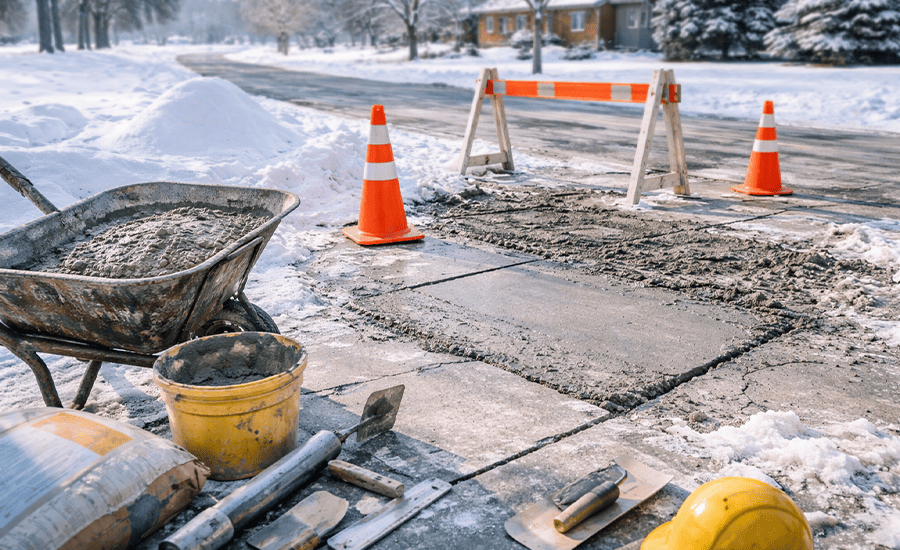
Concrete is known for its durability and load-bearing strength, but winter conditions can place added stress on concrete surfaces. Repeated freeze-thaw cycles allow moisture to enter small cracks, expand when frozen, and gradually weaken the concrete over time. If left unaddressed, minor defects can develop into larger structural concerns.
This often raises an important question for property owners. Is winter actually a suitable time for concrete repairs? The answer is yes, but only under the right conditions. Concrete repairs can be performed during winter when temperatures are properly monitored, appropriate repair methods are used, and cold-weather materials are applied to control curing and bonding.
Understanding which concrete issues worsen in winter, what types of repairs are practical, and how professionals manage cold-weather limitations helps prevent further damage and costly repairs later in the year.
What Are the Concrete Problems That Arise In Winter?
During winter months, harsh temperatures and moisture exposure make existing weaknesses in concrete more noticeable. Repeated freeze-thaw cycles cause trapped moisture to expand and contract, which gradually stresses the surface and internal structure. As a result, small defects that may seem minor in warmer weather can worsen quickly during winter.
The most common concrete problems that tend to appear or intensify in cold conditions include:
- Micro-cracks and deep fissures
- Edge and joint spalling
- Surface peeling and delamination
- Uneven slabs caused by frost heave
- Weakened bonding in older or previously repaired areas
When these issues are identified early, repairs can be planned before winter-related damage spreads further and leads to more extensive structural concerns.
Freeze-thaw damage and seasonal cracking patterns are explained in more detail in our guide on Why concrete cracks more in winter.
Is Winter Suitable for Concrete Repair?
Under the right conditions, concrete repairs can still be carried out during winter without compromising performance. Cold weather affects curing speed, bonding strength, and moisture movement, which means repairs must be planned carefully rather than applied broadly. When temperature ranges are monitored and cold-weather repair methods are used, certain repairs remain both practical and effective.
The types of concrete repairs that are generally suitable during winter include:
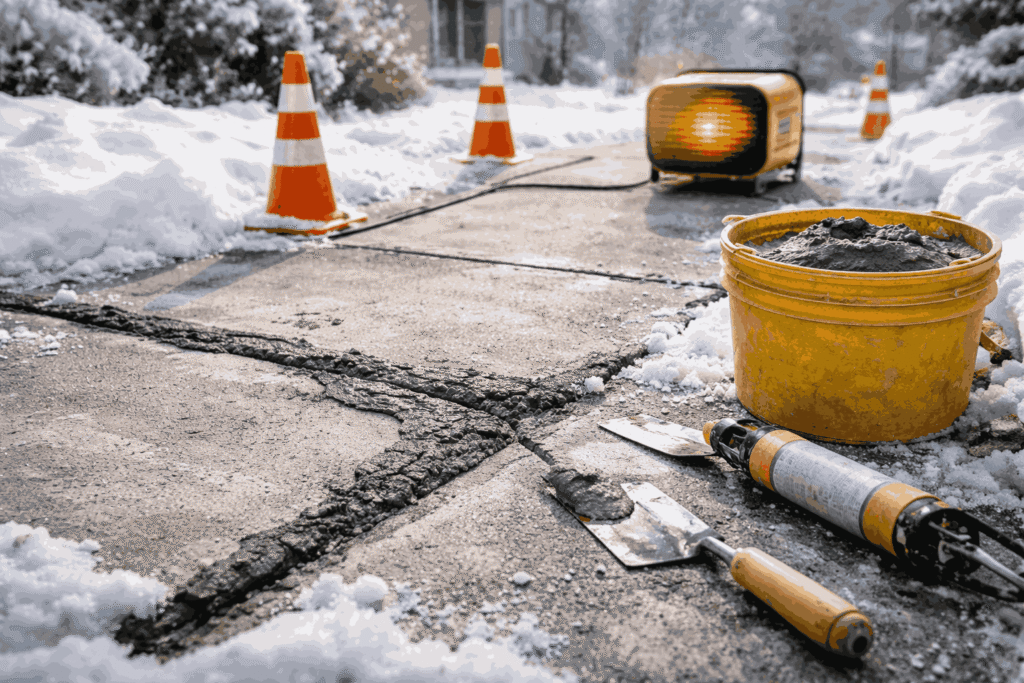
- Crack filling and sealing
- Minor patch repairs
- Repair preparation and surface evaluation
- Expansion joint restoration
- Surface protective coatings
Some repairs are better delayed until warmer weather because low temperatures can interfere with curing consistency and final surface quality. These types of work are typically avoided during winter
- Full-scale slab installation
- Decorative concrete applications
- Fracture filling remediation’s
Selecting repair methods based on seasonal limitations helps reduce the risk of premature failure and supports longer-lasting results.
Benefits of Repairing Concrete In Winters
Despite colder temperatures, addressing concrete issues during winter offers several practical advantages when repairs are planned correctly. Early intervention helps control damage caused by moisture and temperature fluctuations before conditions worsen further.
- Crack expansion during freeze-thaw cycles can be limited through timely repairs.
- Structural integrity is better preserved when damage is addressed early.
- Costly springtime repairs are often avoided by fixing issues in winter.
- Pedestrian safety improves when unstable or damaged surfaces are stabilized.
- Contractors can focus more attention on precision repairs during less congested schedules.
- Greater contractor availability is often possible during the off-season.
Completing timely repairs in winter helps prevent small issues from developing into larger and more expensive problems later in the year.
Challenges of Concrete Repairs in Winter
Cold weather introduces several practical challenges that can affect how concrete repairs perform if not planned correctly. Fluctuating temperatures, moisture exposure, and slower curing rates require careful material selection and controlled application methods to avoid long-term issues.
Some of the most common challenges faced during winter concrete repairs include:
- Curing times tend to increase due to lower temperatures.
- Bonding strength may be reduced if surface preparation is not handled properly.
- Limited temperature ranges can restrict when repairs can be safely applied.
- Moisture exposure increases the risk of freeze-related damage.
- Cold conditions make temperature control more difficult during application.
Managing these challenges requires proper timing, suitable materials, and close monitoring of weather conditions to ensure repairs remain durable.
Working safely in cold conditions requires extra planning, which is covered in our article on cold-weather concrete safety practices.
Best Practices for Concrete Repairs During Winter
Successful concrete repairs during winter depend on controlling temperature, moisture, and surface conditions throughout the repair process. Without proper precautions, cold weather can weaken bonding and affect long-term performance, even for minor repairs.
To improve durability and reduce winter-related risks, the following practices are commonly followed:
- Daily temperature ranges should be monitored before and after repairs.
- Repairs are best avoided during snowfall or freezing rain.
- Cold-weather repair materials perform better in low temperatures.
- Clean and dry surfaces help improve bonding strength.
- Insulating repaired areas helps protect them from overnight freezing.
Applying these techniques consistently helps concrete repairs remain stable and effective throughout the winter season.
Many of these winter repair precautions also apply when maintaining exterior walkways, as outlined in our guide on building durable concrete sidewalks.
Cost Considerations for Winter Concrete Repairs
Cold-weather concrete repairs can sometimes be more budget-friendly when work is planned strategically. Lower seasonal demand and early intervention often help control costs before damage escalates into larger repair needs.
Several cost-related factors can make winter repairs a practical option:
- Smaller repair scopes typically reduce overall material usage.
- Preventive repairs help limit higher expenses later in the year.
- Emergency repair costs are often avoided by acting early.
- Contractor availability during winter can lead to more flexible pricing.
Addressing concrete issues during winter not only helps manage repair quality but can also reduce long-term financial strain caused by delayed maintenance.
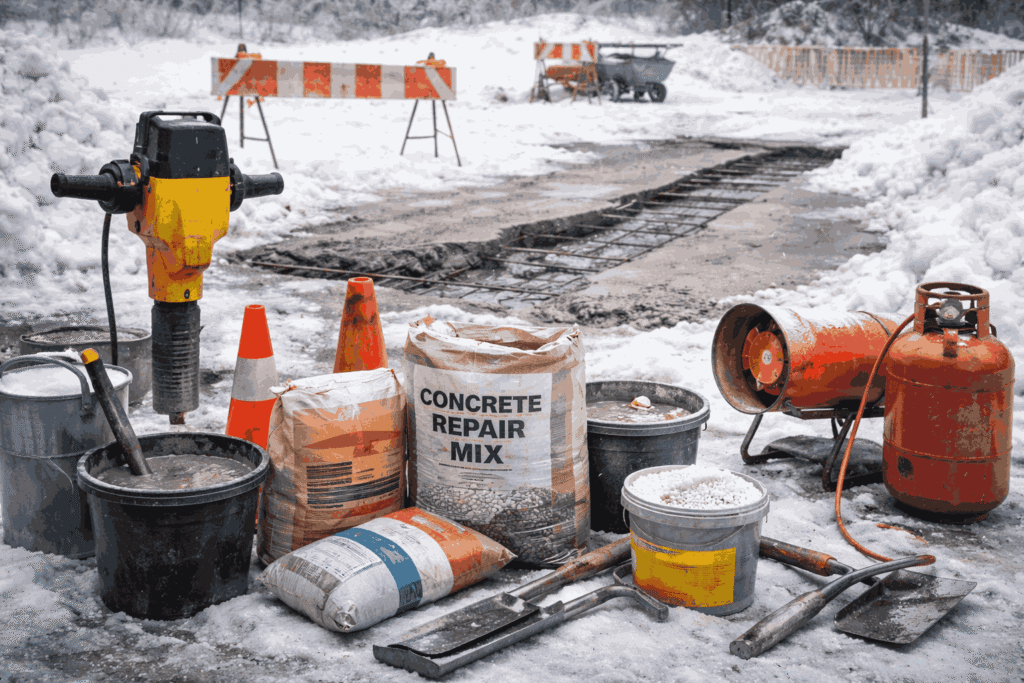
When Winter Concrete Repairs Make Practical Sense
Winter can be a suitable time for concrete repairs when the work is planned carefully and carried out using the right methods. Cold weather places extra stress on damaged concrete, which makes timely repairs important to prevent cracks, moisture intrusion, and surface deterioration from spreading further. When temperature conditions are monitored and appropriate materials are used, winter repairs can help protect concrete and extend its service life.
Addressing concrete issues early also reduces the risk of larger repairs later and helps manage long-term maintenance costs. Paying attention to weather conditions and choosing the right time to repair, resurface, or seal concrete surfaces plays a key role in achieving durable results.
Sardar Restoration Corp provides concrete repair services across NYC, including the Bronx, Manhattan, Brooklyn, Westchester, and Queens. Each project is approached with a focus on durability, safety, and long-term performance based on site conditions and seasonal requirements.
For more information, you can contact us at (+1) 917-355-8556, email sardarrestoration@gmail.com, or visit us at 2770 Fish Ave, Bronx, NY 10469, United States.
FAQs
Can concrete really be repaired during winter?
Yes! Concrete can be repaired in winter just to prevent further damage and keep the building strong throughout the winter:
- Crack sealing
- Joint repairs
- Minor surface patching
What is the minimum temperature for concrete repairs?
As per the construction company, concrete repairs can be done when the temperatures are above 40°F.
Why is winter concrete damage more severe?
Winter damage is more severe because of the recurrent freeze-thaw cycles, which widen the cracks and let moisture seep into the masonry. The winter accelerates the structural deterioration.
Are winter concrete repairs durable?
Yes! Winter concrete repairs can be durable if they are done with the right methods, correct materials, proper concrete setting time, and temperature forecast. Using cold-weather formulations and protecting repaired areas from freezing ensures long-term performance.
How long does concrete take to cure in winter?
In winter, the hydration process is reduced, and curing becomes slow. Concrete may take a few more hours to cure properly in winter, but you can also use premium materials and artificial techniques to speed up the curing process.
Is winter a cost-effective time for concrete repairs?
Yes! Winters are cost-effective when it comes to concrete repairs, as the preventive repair limits further damage, contractors are available, and small issues can be addressed before the spring.
Is it better to repair concrete now or wait until spring?
If the damage is structural, it should be fixed right away, but if it’s a small fault or cosmetic damage, homeowners can also wait until spring.