
 ChatGPT
 Perplexity
 Google AI
 Claude
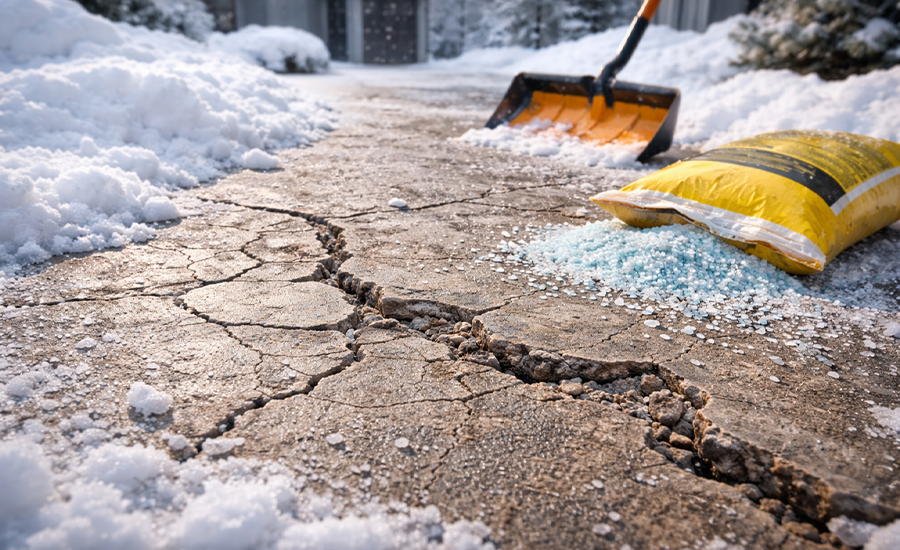
Winter conditions place extreme stress on concrete surfaces. Freezing temperatures, moisture infiltration, snow accumulation, and de-icing chemicals can quickly turn minor surface issues into serious structural damage. Preventive care is essential to maintain the durability, appearance, and safety of concrete surfaces in NYC homes during the cold months.
NYC homeowners often experience surface damage that leads to higher maintenance costs when issues are left unaddressed. Timely repairs, consistent upkeep, and effective protective strategies help safeguard concrete surfaces throughout winter and support long-term performance.
Quick Overview
Concrete is a permeable material by design, which allows it to absorb moisture from the surrounding environment, especially when using flooring finishes commonly used in NYC homes that are exposed to winter conditions. At the same time, it is widely used in residential and commercial properties across NYC because of its overall strength and durability in harsh weather conditions.
Taking preventive measures, addressing surface damage promptly, and using appropriate de-icing products help improve safety and reduce costly repairs during winter and after the season ends.
- Ο Concrete’s porous nature makes it vulnerable to moisture during winter conditions.
- Ο Freeze-thaw cycles are a primary cause of cracking and surface deterioration.
- Ο Sealing surfaces and repairing cracks early helps prevent further damage.
- Ο Using concrete-safe deicers and proper snow removal reduces surface wear.
- Ο Effective drainage plays a major role in extending concrete durability.
Why Does Winter Weather Weaken Concrete Surfaces?
Concrete damage during winter is mainly caused by environmental stress and inadequate surface protection. Concrete is a porous material that allows moisture to enter through small pores and hairline cracks. When temperatures drop below freezing, the trapped moisture freezes and expands, increasing internal pressure and explaining the reasons concrete cracks more frequently in winter.
Repeated freeze-thaw cycles, combined with prolonged rainfall and frost and snow-related surface damage, gradually reduce the lifespan of concrete surfaces in NYC. Over time, this process weakens sidewalks, concrete slabs, patios, and facades, especially when moisture exposure is continuous.
The primary winter risks to concrete include:
- Freeze-thaw cycles
- Water penetration into pores and cracks
- Ice expansion within the concrete
- De-icing salts and chemicals
- Heavy foot and vehicle traffic
- Poor drainage and standing water
Types of Winter Concrete Damage Caused By Freezing Temperatures
During winter, concrete becomes highly vulnerable to freezing temperatures and repeated freeze-thaw cycles. These cycles create surface cracks and allow moisture to penetrate deeper into the concrete, increasing safety risks and gradually reducing its lifespan. In addition, prolonged exposure to de-icing products and moisture weakens the surface layer, exposing aggregates and compromising structural strength.
Addressing these types of damage early is important, as timing concrete repairs during winter can prevent deterioration from spreading and reduce overall repair costs.
| Damage Patterns | Explanation | Future Impact |
|---|---|---|
| Concrete cracks | Repeated freeze-thaw pressure within the concrete | Weakened concrete |
| Surface peeling | Concrete surface layer delamination | Surface degradation |
| Material loss | Progressive surface breakdown | High repair cost |
| Surface depressions | Minor concrete cavities affected by freezing moisture | Water retention |
| Joint separation | Control joint deterioration from freeze-thaw stress | Structural movement |
Best Practices For Winter Concrete Preservation
Consistently following proven winter preservation practices helps keep concrete surfaces safe during cold weather, especially when building long-lasting concrete sidewalks that must withstand freeze-thaw cycles and heavy foot traffic. In climates like NYC, concrete requires vigilance, proper maintenance, the use of high-quality sealants, and gentle snow and ice removal methods to withstand winter conditions effectively.
Applying these practices before and throughout winter helps reduce surface damage, limit moisture exposure, and prevent costly repairs once the season ends.
1. Apply Sealants Before Winter
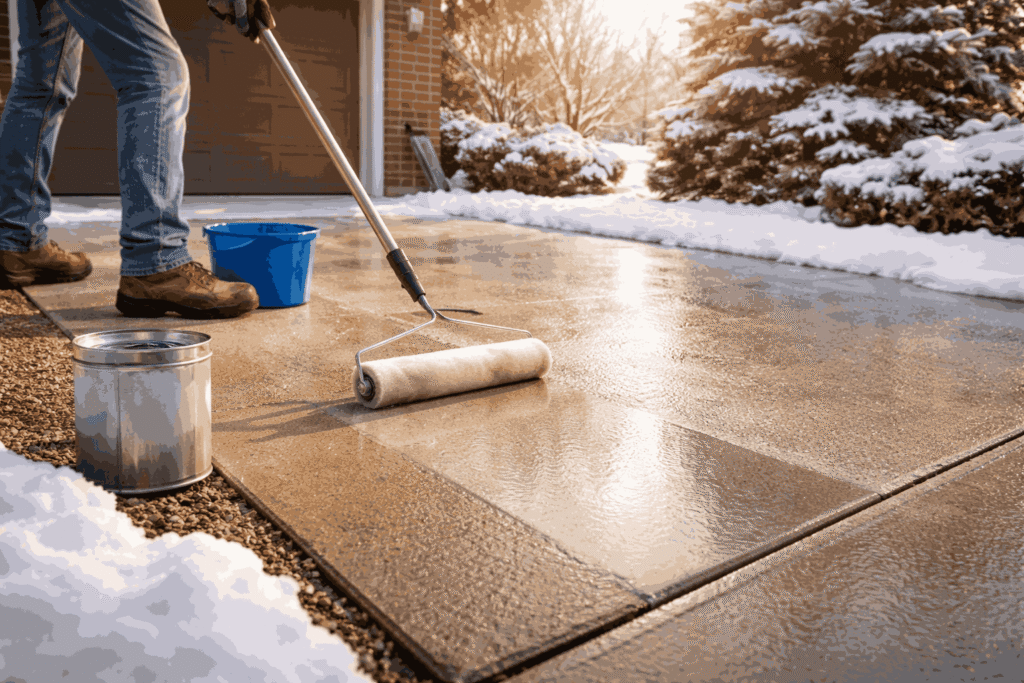
Concrete sealing creates a protective barrier that limits moisture penetration, and selecting durable concrete options for driveways that can handle freeze-thaw cycles helps reduce surface cracking and long-term damage.
Key benefits include:
- Blocks water absorption
- Reduces freeze-thaw damage
- Protects against de-icing chemicals
- Extends concrete lifespan
- Improves surface appearance
Best practice:
- Apply the sealer in early fall
- Ensure the surface is clean and dry
- Use weather-appropriate sealers
2. Address Cracks and Defects Promptly
Small cracks allow water to enter the concrete and freeze beneath the surface, increasing internal pressure and worsening existing damage. Addressing these defects early helps reduce the risk of further cracking during winter.
- Inspect driveways, walkways, patios, and slabs
- Fill cracks using concrete crack fillers or epoxy
- Repair chipped edges and surface holes
- Reseal repaired areas
3. Improve Runoff Flow Away From Concrete
Poor drainage significantly increases the risk of freeze damage by allowing water to pool near concrete surfaces. Proper runoff management helps limit prolonged moisture exposure during freezing temperatures.
- Ensure concrete slopes away from structures
- Extend downspouts away from slabs
- Clean gutters regularly
- Eliminate low spots that collect water
- Install drainage channels if needed
4. Limit the Use of De-icers
Many ice-melting products can damage concrete chemically and physically when overused or applied incorrectly. Using the correct type and a controlled amount of de-ice helps reduce surface deterioration.
Harmful deicers include:
- Sodium chloride
- Calcium chloride
- Magnesium chloride
Safer alternatives:
- Calcium magnesium acetate
- Sand or gravel for traction
- Concrete-safe ice melts
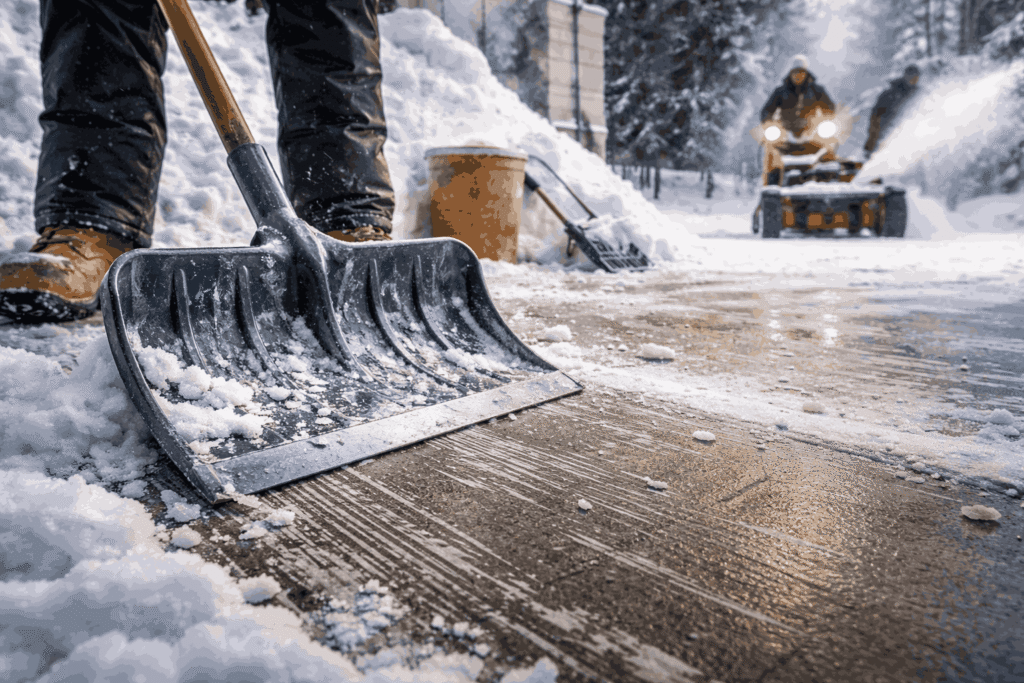
5. Remove Snow and Ice Properly
Improper snow removal can cause surface abrasion and edge damage. Using the right tools and techniques helps preserve concrete surfaces during winter maintenance.
- Use plastic or rubber-edged shovels
- Avoid metal blades scraping the surface
- Remove snow early to prevent ice buildup
- Avoid heavy machinery on thin slabs
6. Safeguard Freshly Poured Concrete
Fresh concrete is especially vulnerable to cold temperatures and requires safe concrete pouring practices in cold weather to ensure proper curing during winter conditions. Without proper curing, surface strength and long-term durability can be compromised.
- Use insulated curing blankets
- Maintain internal temperatures above freezing
- Allow sufficient curing time
- Use cold-weather concrete mixes
- Avoid foot or vehicle traffic
Winter Concrete Maintenance Guide
Proper maintenance of concrete surfaces in NYC helps them remain durable year after year without compromising structural integrity. Regular cleaning, timely inspections, and sealing with winter-safe coatings improve surface durability and reduce water-related issues such as pooling, drainage overflow, and moisture accumulation during cold months.
Consistent winter maintenance is essential to protect concrete surfaces from seasonal stress and extend their usable lifespan.
Critical Considerations for Preventive Concrete Maintenance in Winter
The table below outlines essential maintenance tasks, their purpose, and recommended service intervals to help protect concrete surfaces throughout winter.
| Required Work | Reason | Service Interval |
|---|---|---|
| Apply concrete sealing | Creates a moisture-resistant barrier | Every 2–3 years |
| Crack inspection | Identifies early signs of freeze damage | Before winter |
| Surface cleaning | Prevents excess moisture buildup | Weekly |
| Drainage enhancement | Reduces water pooling near surfaces | As required |
| Apply concrete-safe deicers | Limits chemical surface wear | During winter |
Regular maintenance helps protect concrete surfaces from freeze-thaw cycles, joint deterioration, and progressive cracking. Addressing minor issues early reduces the risk of structural damage and keeps concrete surfaces in NYC homes in stable condition throughout winter.
How To Spot Winter Damage In Concrete Surfaces?
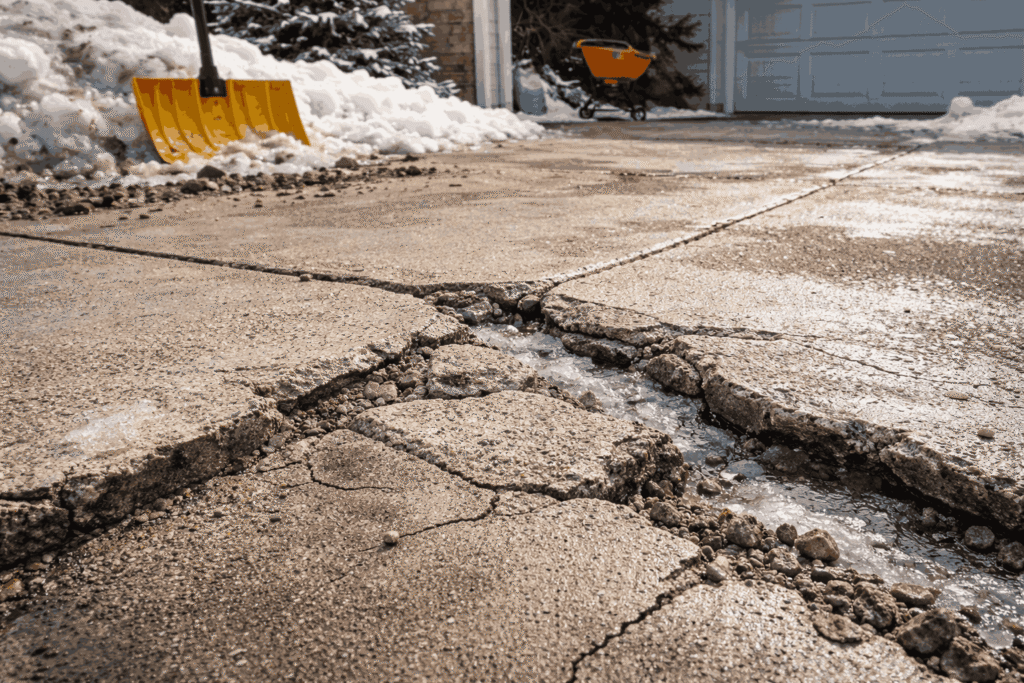
Concrete is heavily affected by extreme winter conditions, especially prolonged cold temperatures and persistent moisture. However, early inspection and timely intervention can prevent costly repairs that occur when surface layers deteriorate or structural stress develops. Identifying winter-related damage early helps maintain the durability and integrity of concrete surfaces.
Watch for the following warning signs during or after winter:
- New or expanding cracks
- Surface flaking or peeling
- Uneven or sinking slabs
- White powdery residue on the surface
- Chipped or broken edges
Minor issues are generally easier and less expensive to repair when addressed early. If left unattended, these problems can worsen over time, leading to higher repair costs and potentially affecting the resale value of your NYC property.
Final Thoughts
Winter conditions place significant stress on concrete surfaces and require proper attention to prevent long-term damage. Reapplying sealants, managing drainage effectively, and addressing surface issues on time help NYC homeowners keep their concrete surfaces strong, stable, and visually well-maintained throughout the colder months. Prompt action also reduces safety risks and prevents small issues from developing into major repairs.
Sardar Restoration Corp serves residential and commercial properties across NYC, including The Bronx, Manhattan, Brooklyn, Westchester, and Queens. As a trusted concrete repair contractor in NYC, the company follows repair approaches that account for local building conditions, material types, and seasonal exposure to ensure long-lasting protection and reliable performance.
For more information or to discuss your property concerns, contact (+1) 917-355-8556, email sardarrestoration@gmail.com, or visit 2770 Fish Ave, Bronx, NY 10469, United States.
FAQs
How often should concrete be sealed?
Concrete should typically be sealed every 2–3 years, depending on surface exposure, usage, and weather conditions. High-traffic areas and surfaces exposed to moisture may require more frequent sealing.
Can existing damaged concrete be protected?
Yes. With proper repair and sealing, damaged concrete can still be protected and perform well for many years. Acrylic, epoxy, and polyurethane sealants are commonly used to protect concrete surfaces during winter.
Is pouring concrete in winter safe?
Yes, but it requires extra care. Cold temperatures affect curing time and strength development, so winter concrete pours should use cold-weather mixes, proper insulation, and protective measures during curing.
Are all deicers bad for concrete?
No. Not all deicers are harmful, but only concrete-safe options should be used. Improper or excessive use of harsh de-icers can weaken the surface over time.
Does snow itself damage concrete?
Yes. When snow melts, the resulting moisture can seep into concrete and refreeze. This freeze-thaw process can cause cracking, spalling, and surface scaling if left unmanaged.
Can winter damage concrete even if it looks fine on the surface?
Yes. Winter damage often begins beneath the surface before visible signs appear. Moisture can freeze inside pores and joints, creating internal stress that later shows up as cracking, peeling, or slab movement.
When should a professional inspect winter-damaged concrete?
A professional inspection is recommended if cracks continue to widen, slabs become uneven, or surface deterioration spreads quickly. Early evaluation helps determine whether repairs are cosmetic or structural and prevents more extensive damage.