
 ChatGPT
 Perplexity
 Google AI
 Claude
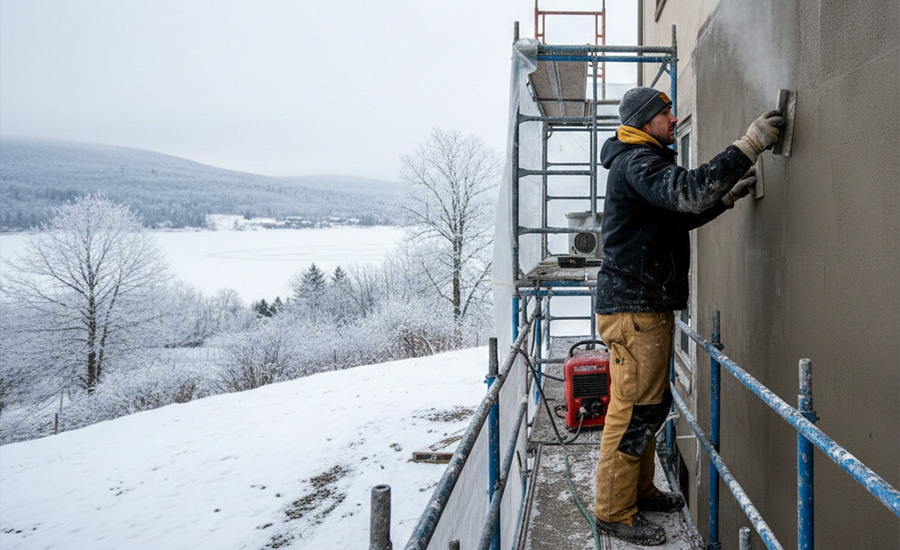
Stucco is a widely used material for insulating the interior of homes and enhancing the exterior appearance of residential and commercial properties. But repairing Stucco during cold weather can be a challenge, especially when temperatures drop below freezing, as it disrupts its durability, longevity, and proper Curing. Planning Stucco repairs in winter can be the most innovative and safest option, as it helps your Stucco withstand rain and snow.
In this blog, we’ll cover the best practices for repairing Stucco in cold temperatures and obstacles you’ll face while repairing Stucco in winter.
Obstacles of Performing Stucco Repairs In Cold Temperatures
Let’s have a look at the challenges homeowners face while performing Stucco in cold weather:
- Reduced hydration rate: At low temperatures, the Stucco becomes very difficult to handle, reducing curing rates to very low levels, resulting in uneven finishes and decreased strength.
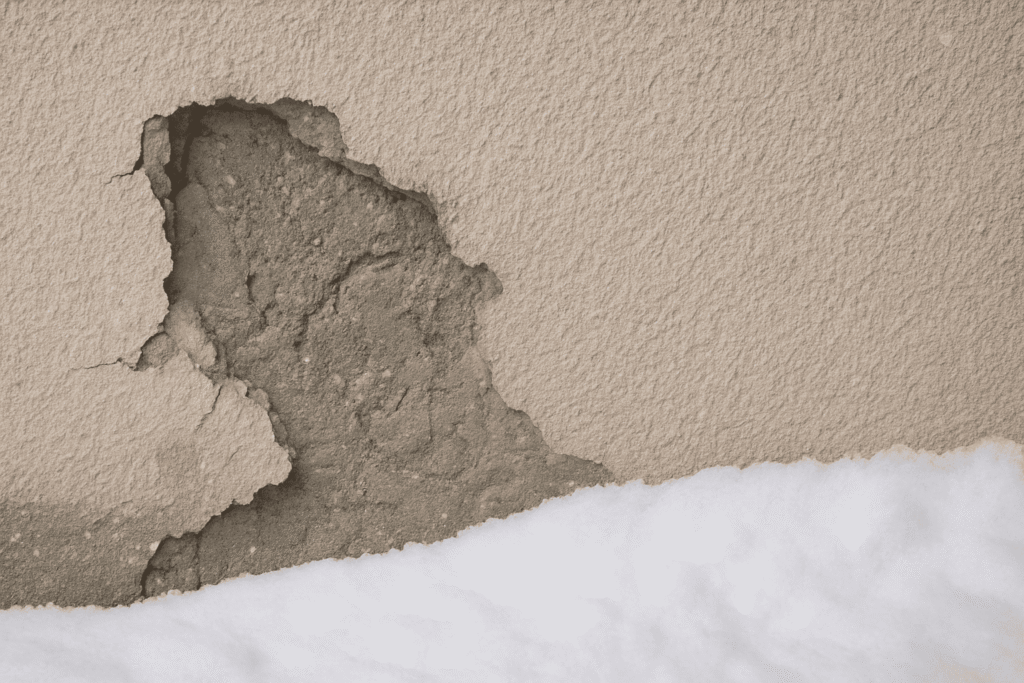
- Freeze susceptibility: In winter, the mortar’s water freezes, leading to crumbling and mortar adhesion failure.
- Lower bonding strength: When the temperature is below zero, the Stucco doesn’t bond properly to the existing walls.
- Dampness issues: In winter, salt deposits form on the mortar surface due to exposure to rain and snow.
For more insight on how winter affects surface strength and leads to faster cracking, you can also read our guide on why cold weather increases stucco damage.
Guidelines for Effective Stucco Repairs In Cold-Weather
Here is the step-by-step guideline to repair your Stucco effectively in cold weather:
Ready the Surface Application
- Remove loose, cracked, or deteriorated Stucco.
- Clean the wall thoroughly to remove dirt, dust, and frost.
- Avoid applying new Stucco to surfaces that are wet, frozen, or covered in ice.
Employ winter-formulated Stucco
- Cold-weather mixes contain additives that accelerate Curing.
- Pre-mix the dry ingredients, then add warm water (not hot) to improve workability.
- Avoid rapid heating or boiling water, which can cause uneven Curing.
Keep the optimal working Temperature
- Use insulation blankets, tarps, or temporary enclosures around the repair area.
- Heat the work area gently using portable heaters or heated tents.
- Avoid direct flame contact with the stucco surface, as this can cause cracking.
Layer Stucco Gradually
- Apply scratch, brown, and finish coats in thin, manageable layers.
- Avoid thick applications that take longer to cure and are prone to cracking.
- Allow each layer to set partially before applying the next.
Protect From Excess moisture During Curing
- Mist the Stucco lightly to prevent it from drying too quickly.
- Cover with plastic sheeting to protect against snow or rain.
- Avoid excessive water, which can freeze and cause damage.
For long-term upkeep during the colder months, you can also review our winter care tips for stucco walls to avoid moisture damage.
Schedule Work Strategically
- Plan repairs during the warmest part of the day.
- Avoid overnight applications in freezing conditions.
- Schedule work when several consecutive days of above-freezing temperatures are forecasted.
Ensure the correct tools are on Hand
- Use warm water in mixing buckets to prevent freezing.
- Ensure trowels and hawks are free from frost or ice.
- Keep protective blankets, heaters, and scaffolding ready for cold weather.
Monitor & Preserve Repairs
- After the Stucco has cured, inspect for hairline cracks, efflorescence, or adhesion issues.
- Apply sealant or paint once the surface is fully cured and the temperature is consistently above 40°F.
- Address any minor cracks promptly to prevent moisture infiltration and future damage.
If you want to understand whether applying stucco in winter is safe and how pros manage it, explore our article on working with stucco during colder months.
Conclusion
In conclusion, following best practices to repair your Stucco before winter is essential, as it keeps your Stucco protected throughout the winter, but it requires proper maintenance and repairs. Following these practices, preparing the surface, using cold-weather mixes, controlling temperature, applying thin layers, and monitoring moisture protects the surface from winter-related damage and makes it stand firm.
Sardar Restoration Corp proudly serves every corner of NYC, including the Bronx, Manhattan, Brooklyn, Westchester, and Queens. Our services are designed to meet your specific needs, providing top-quality solutions wherever you are. Check our service areas to see how we can assist you in your location.
Contact us today at (+1) 917-355-8556 or sardarrestoration@gmail.com, or visit us at 2770 Fish Ave, Bronx, NY 10469, United States.
FAQs
Can Stucco be repaired in freezing temperatures?
Yes! Stucco can be repaired in freezing temperatures only if done with proper safety precautions, using winter-grade additives, insulated tarps, and keeping an eye on the weather forecast.
How long does Stucco take to cure in winter?
Most of the time, Stucco takes at least 27 days to cure, but in winter, it needs extra care and a longer curing time, depending on temperature and humidity.
What happens if Stucco freezes during Curing?
If Stucco starts freezing during Curing, it may lead to severe damage and needs to be immediately redone, including:
- Cracks
- Crumbling
- Adhesion failure
Can you apply stucco when temperatures drop at night?
Yes, but only if the repaired area is fully protected with insulated blankets or heated enclosures. Night-time freezing can ruin curing if proper protection is not used.
What is the ideal temperature range for winter stucco repairs?
The safest range is between 40°F and 50°F. Anything below freezing slows hydration, weakens bonding, and increases the risk of cracking.
Do cold-weather stucco additives improve strength?
Yes, winter-grade accelerators help stucco cure faster and bond better in low temperatures, but they must be used correctly to avoid uneven curing.
Are there specific materials for winter stucco repairs?
Yes! Sardar Restoration Corp. uses winter-grade Stucco for repairing and recommends not to heat or boil the stucco mixtures, including:
- Cold-weather mixes
- Non-chloride accelerator
How can I prevent moisture damage during winter repairs?
By using insulated tarps, plastic sheets, and lightly water-spraying the Stucco, you can prevent it from getting damaged.