
 ChatGPT
 Perplexity
 Google AI
 Claude

Roofing systems tend to protect homes from persistent moisture, snow accumulation, UV rays, and winter freeze-thaw cycles. In contrast, winter stresses residential and commercial properties and deteriorates shingles and the roofing system. Even minor roof weaknesses can quickly escalate into serious problems during winter, resulting in leaks, structural damage, and costly repairs. Make sure to prep your roofs before winter to reduce the risk of serious issues during the season.
In this blog, we break down the most common winter-related roofing problems, explain why they occur, and share practical steps homeowners can take to reduce damage and repair costs.
Why Roofs Become Vulnerable In Winters?
Winter weather places unique stress on roofing systems due to constant temperature changes and prolonged exposure to moisture. Roofing materials are designed to withstand normal conditions, but cold climates create pressure points that slowly weaken their performance. As temperatures fluctuate, materials respond differently, potentially compromising the roof’s ability to shed water and maintain structural stability.
These seasonal conditions do not damage roofs overnight. Instead, they create gradual vulnerabilities that make existing weaknesses more noticeable and more complicated to control once winter fully sets in. Understanding how winter impacts roofing materials helps homeowners recognize why problems tend to surface during colder months rather than in mild weather.
Common reasons roofs become vulnerable in winter include:
- Extreme cold causes roofing materials to contract and become brittle.
- Snow adds excessive weight to the roof structure.
- Frozen water blocks natural roof drainage paths.
- Repeated freeze-thaw cycles widen existing cracks and gaps.
- Melting snow increases moisture exposure across roofing layers.
What Are The Typical Winter Roofing Failures?
Winter weather can expose weak points in a roofing system that often remain unnoticed during warmer months. Below are the most common roofing problems homeowners face during winter, along with their causes and early warning signs.
1. Roofline Ice Accumulation (Ice Dams)
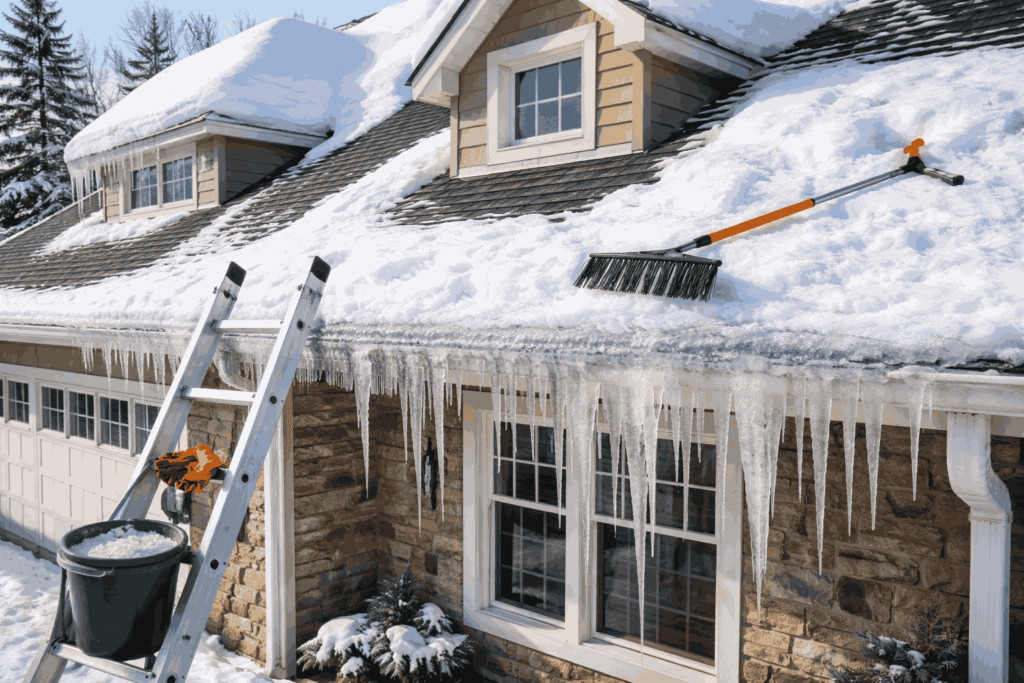
Ice dams form when heat escaping from the attic melts snow on the roof, which then refreezes near the edges. Over time, this buildup blocks proper water drainage and traps moisture.
Common causes include:
- Heat loss from the attic, melting the roof snow
- Refreezing of melted snow near the roof edges
- Ice buildup is preventing normal water flow
Potential consequences:
- Water backing up under shingles
- Interior leaks and ceiling stains
- Damage to insulation and drywall
- Mold growth inside the home
Early warning signs:
- Large icicles are forming along the roof edges
- Visible water stains or ceiling discoloration
- Peeling paint near exterior walls
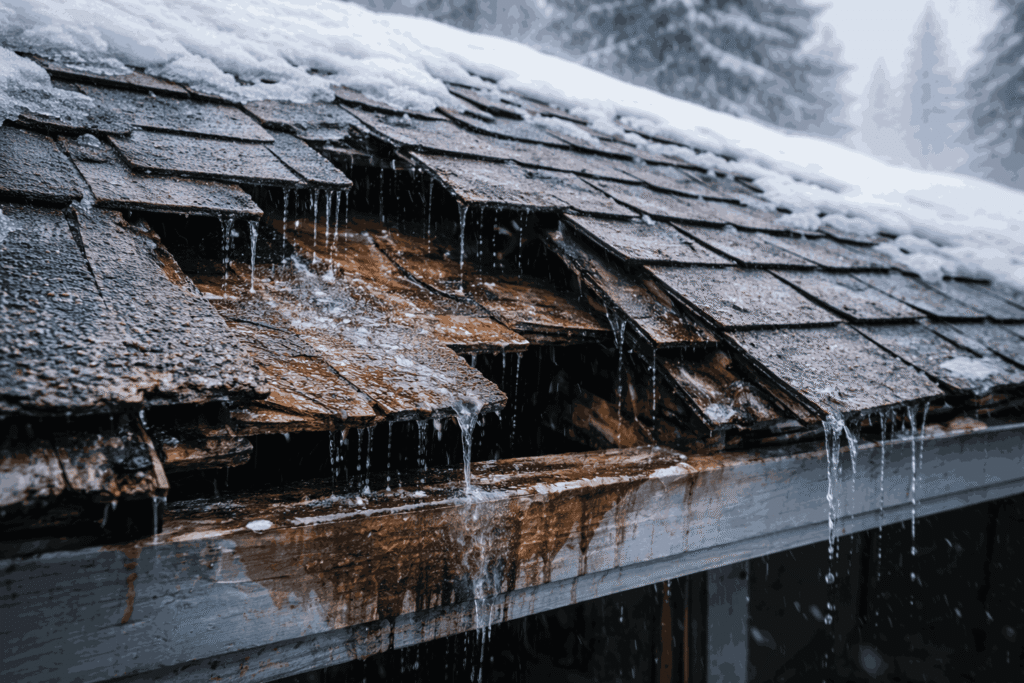
2. Roof Moisture Penetration
Winter conditions increase the likelihood of water entering the roof system, especially when materials are already worn or damaged. This explains why roof leaks increase during winter in NYC, as freezing temperatures and trapped moisture stress vulnerable roofing areas.
Common causes of winter roof leaks:
- Cracked or missing shingles
- Ice buildup beneath shingle layers
- Ineffective chimney flashing
- Gaps around roof penetrations
Long-term effects include:
- Ceiling and wall damage
- Saturated insulation
- Higher heating costs
- Mold and mildew growth
3. Roof Overloading With Snow
Excessive snow accumulation adds significant weight to the roof structure, increasing the risk of structural stress.
Risks associated with heavy snow load:
- Structural sagging
- Cracks in ceilings and walls
- Roof deck weakening
- Partial or complete roof collapse in severe cases
Early signs of snow load stress:
- Bowing ceiling lines
- Creaking or cracking sounds
- Doors and windows are becoming difficult to open
4. Freeze-Induced Shingle Cracking
Cold temperatures and winter storms can weaken shingles, making them more prone to cracking and displacement.
How winter stress affects shingles:
- Thermal contraction causes cracks
- Strong winter winds are loosening shingles
- Ice expansion lifts shingle edges
Possible complications:
- Exposed roof underlayment
- Increased risk of leaks
- Reduced overall roof lifespan
5. Damaged Flashing Seal
Flashing areas are especially vulnerable during winter due to frequent temperature fluctuations and snow accumulation.
Common winter-related flashing issues:
- Metal expansion and contraction
- Sealant cracking due to freezing temperatures
- Snow accumulation around chimneys and vents
High-risk roof areas include:
- Chimneys
- Skylights
- Roof valleys
- Vent pipes
6. Obstructed Drainage System
Gutters and drainage paths often become blocked during winter, preventing proper water flow off the roof.
Seasonal drainage problems include:
- Ice buildup is blocking water movement
- Snow freezing inside gutters
- Gutters are detaching due to ice weight
Resulting property damage may include:
- Water overflows onto the siding
- Foundation damage
- Increased ice dam formation
7. Blocked Ventilation Areas
Proper ventilation is critical during winter to regulate attic temperature and moisture levels.
Risks of blocked ventilation include:
- Increased attic moisture
- Greater likelihood of ice dam formation
- Higher heating and energy costs
How to Prevent Winter Roof Damage: Maintenance Tips for Homeowners
Preventive maintenance plays a key role in limiting winter-related roof damage. Taking a few proactive steps before and during the colder months helps reduce stress on roofing materials and lowers the risk of sudden failures. These actions focus on improving insulation, controlling moisture, and keeping the roof system functioning as intended throughout winter.
By addressing minor issues early, homeowners can avoid more extensive repairs and extend the lifespan of their roofing system.
Recommended preventive steps include:
- Schedule a professional roof inspection before winter begins.
- Seal attic gaps to improve heat retention and reduce heat loss.
- Ensure the attic insulation is adequate for cold-weather conditions.
- Clean gutters regularly and confirm proper drainage flow.
- Install a reliable venting system to manage moisture buildup.
- Remove excessive snow safely to prevent added structural stress.
- Use ice-and-water shield membranes in vulnerable roof areas.
Final Thoughts
Winter weather can put significant strain on roofing systems, but many of these issues are preventable with timely care. Regular inspections, proper snow and ice management, and routine gutter maintenance help reduce the risk of leaks, structural damage, and unexpected repair costs. By staying proactive, homeowners can protect their roofs and maintain a safe, comfortable living environment throughout the winter season.
Sardar Restoration Corp serves residential and commercial properties across NYC, including the Bronx, Manhattan, Brooklyn, Westchester, and Queens. Our team focuses on dependable roofing solutions designed to handle seasonal challenges and long-term wear. You can explore our service areas to see how we support property owners in your location.
For professional assistance, contact us at (+1) 917-355-8556 or sardarrestoration@gmail.com, or visit us at 2770 Fish Ave, Bronx, NY 10469, United States.
FAQs
How can I prevent ice dams on my roof?
To prevent ice dams on your home’s roof, keep the roof adequately insulated and sealed, and keep the gutters clean to streamline water runoff. Well-insulated to reduce heat loss.
Can heavy snow cause a roof to collapse?
Yes, excessive snow buildup can place extreme weight on a roof, especially older or poorly maintained structures. If snow is not removed in time, it can lead to structural stress or partial roof failure.
Is it safe to remove snow from a roof by yourself?
Basic snow removal can be done safely from the ground using proper tools, but climbing onto a roof during winter is risky. Professional help is recommended to avoid injuries and roof damage.
Does winter roof damage always show visible signs?
Not always. Some winter-related issues develop beneath shingles or in the attic and may not be immediately visible. Regular inspections help catch hidden damage early.
What are the signs that my roof leaks?
Always check for the following signs to know if your roof leaks:
- Water stains on the walls
- Peeling paint near rooflines
- Damp insulation in the attic
- Dripping water inside the home
Can winter weather damage new shingles?
Yes! When temperatures start to freeze and heavy snow falls, the new shingles can crack. You can reduce the risk of damage by properly installing the shingles and ice barriers on the roof.
How often should I inspect my roof in winter?
Our roofing contractor in NYC advises performing a visual inspection every few weeks if snow accumulates. Also, do give a professional inspection once before and after winter.