
 ChatGPT
 Perplexity
 Google AI
 Claude
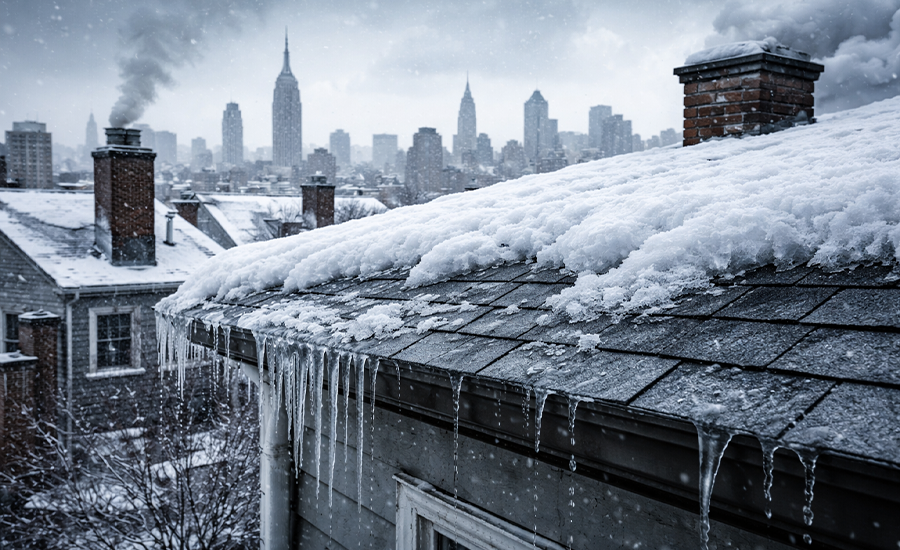
Winter is the season when roof leaks become far more common across New York City. Freezing temperatures, heavy snowfall, ice buildup, and repeated freeze-thaw cycles place constant stress on both residential and commercial roofing systems. Even roofs that perform well during warmer months can develop hidden weaknesses once winter conditions set in.
In NYC, flat roofs, aging structures, and dense urban construction face added challenges. Ice dams, blocked drainage systems, and expanding cracks allow water to penetrate beneath roofing materials, often leading to leaks inside ceilings and walls. This article explains how winter conditions trigger roof leaks in NYC, highlights early warning signs, and outlines why many buildings become more vulnerable during colder months.
What Are The Harsh Winter Climatic Conditions in NYC?
In NYC winters, residential and commercial properties face significant consequences due to constant freeze-thaw cycles, heavy snowfall, and high urban building density:
- Severe snowfall
- Icy precipitation
- Unstable temperature
- Heavy wind amplification
- Ice buildup on a flat roofing system
Why Does Winter Accelerate Roof Leak Problems?
Here are the causes why the winter season increases roof leak issues:
Freeze-melt stress on roofing materials
When the weather fluctuates, the Freeze-thaw cycles stand as the major roof leak problem in winter:
- The cracks in the roofs lead to water intrusion.
- When the temperature drops, cracks begin to expand.
- The flashing gets damaged due to enlarged cracks.
- When the ice starts melting, it seeps into the roofing.
These are the commonly observed damages:
- Cracked shingles
- Split flashing
- Weakened roof seams
- Membrane separation on flat roofs
Edge-of-Roof Ice Obstruction
The ice dam’s buildup leads to severe issues in the roofs of the older houses in NYC:
- Heat escapes from inside the building.
- Snow melts on warmer roof sections.
- Melted snow refreezes at colder roof edges.
- Ice blocks proper drainage.
These are the reasons why ice dams force water beneath roofing materials:
- Trapped water backs up under shingles.
- Water penetrates the roof decking and insulation.
- Leaks appear on ceilings and walls.
Heavy Snow Buildup
In NYC, heavy snowfall can accumulate several inches. These are the problems caused by snow buildup:
- Added structural stress on roof systems.
- Compressed roofing materials.
- Hidden damage beneath snow layers.
- Delayed drainage during melting.
These types of roofs are highly prone to winter failure:
- Flat roofs
- Low-slope commercial roofs
- Older buildings with aging structures
Ice Clogged Drainage System
Drainage issues are a major contributor to winter roof leaks, especially in NYC’s flat-roof buildings. The following are the reasons why a clogged drainage system causes leaks:
- Standing water has nowhere to go
- Water seeps into seams and flashing
- Prolonged moisture weakens roofing layers
These are the standard gutter and drain malfunctioning issues:
- Frozen roof drains
- Ice-blocked scuppers
- Clogged gutters from fall debris
- Ice buildup in downspouts
Red Flags Of Ice-Related Roof Leaks
Keep an eye on the red flags of roof leaks in winter before they worsen over time. Let’s have a look at the following signs:
- Visible watermarks on interior ceilings
- Active leaking during the freeze-thaw cycle
- Indoor air quality is affected by dampness
- Mildew-like odor
- Paint blistering
- Ice accumulation at roof perimeters

Proactive Measures To Minimize Winter Roof Leaks in NYC
Follow these preventive steps to reduce the risk of roof leaks during winter in NYC:
- Schedule a pre-winter roof inspection to identify weak areas before cold weather sets in.
- Keep gutters and drainage systems clear to prevent water backup and ice formation.
- Improve indoor temperature control to reduce heat loss that contributes to ice dams.
- Repair damaged flashing early to stop moisture from entering roof seams.
- Manage roof snow buildup safely to avoid excess weight and drainage blockage.
Why NYC Structures Face Higher Winter Risk?
Due to the following reasons, NYC buildings have to face a lot of unique challenges, which not only cause damage to the roofs but also to the pocket:
- High-density of low-slope roof designs.
- Structurally mature and old buildings.
- Increased wind pressure in city environments.
- Restricted roof accessibility in severe weather.
Final Thoughts
Winter roof leaks are a common issue in NYC due to freezing temperatures, heavy snow, ice dams, and blocked drainage systems. Taking preventive steps before and during winter helps reduce moisture intrusion, protects insulation, and keeps roofing systems functioning properly throughout the season. Addressing small issues early can prevent costly repairs and long-term structural damage.
NYC’s dense urban environment, flat roof designs, and older buildings make winter roof maintenance even more important. Regular inspections, proper drainage, timely flashing repairs, and controlled snow removal all play a key role in limiting water penetration and extending the lifespan of residential and commercial roofs.
Sardar Restoration Corp proudly serves all areas of NYC, including the Bronx, Manhattan, Brooklyn, Westchester, and Queens. Our team provides reliable roofing solutions tailored to local building conditions. To schedule an inspection or discuss your roofing concerns, contact us at (+1) 917-355-8556, email sardarrestoration@gmail.com, or visit us at 2770 Fish Ave, Bronx, NY 10469, United States.
FAQs
Why do roof leaks happen more often in winter than in summer?
Roof leaks occur more in winter than in summer due to continuous moisture ingress, freeze-thaw cycles, and a blocked drainage system that allows water to pool and lead to excessive roof leaks.
Can poor attic insulation increase winter roof leaks in NYC?
Yes, poor insulation allows heat to escape, which accelerates ice dam formation and increases water intrusion under roofing materials.
Are flat roofs more prone to winter leaks in NYC?
Yes! Flat roofs are more prone to water leaks because snow stays longer there, the drainage system freezes more easily, and accumulated water has limited escape routes.
Do winter roof leaks always start from visible roof damage?
No, many winter leaks begin from hidden issues like clogged drains, internal condensation, or small cracks that expand during freeze-thaw cycles.
Can small roof cracks really cause major winter leaks?
Yes! Due to freeze-thaw cycles, the masonry contracts and expands, which can cause small cracks that don’t seem dangerous to become major problems that lead to water penetration from the roofs.
What are the early warning signs of winter roof leaks?
Here are some of the frequently occurring early warning signs. Detecting these signs early can help prevent extensive damage:
- Water stains on ceilings
- Dripping during snow
- Musty indoor odors
- Peeling paint
- Ice buildup along the roof edges
Do older NYC buildings face higher winter leak risks?
Yes! Older buildings face a higher risk of winter leaks due to aging roof materials, blocked or outdated drainage systems, and improper insulation.