
 ChatGPT
 Perplexity
 Google AI
 Claude

Basement leaks are a common issue for both residential and commercial properties, especially during winter. Cold temperatures, snow accumulation, frozen soil, and repeated freeze-thaw cycles increase pressure on foundation walls, allowing moisture to enter areas that often stay dry for the rest of the year. As snow begins to melt and the ground remains frozen, water has limited drainage paths and is pushed directly toward the foundation. This added pressure exposes cracks, weak joints, and porous materials, leading to basement leaks during colder months.
Conducting inspections and addressing minor issues before winter arrives can significantly reduce the risk of basement leaks and long-term structural damage. This article explains why basements leak more in winter, highlights common leak-prone areas, and outlines practical steps homeowners can take to prevent water intrusion.
Key Winter Factors That Cause Basement Leaks
Several winter-related conditions increase the likelihood of basement leaks by forcing moisture into weak, exposed, or unprotected areas of the foundation. During colder months, natural drainage slows down, water pressure builds up around the structure, and even minor vulnerabilities can turn into active leak points.
The most common winter factors that contribute to basement leaks include:
- Freezing and thawing temperatures that stress foundation materials.
- Heavy snow buildup near the foundation walls.
- Frozen soil that prevents proper water absorption and drainage.
- Thaw-driven water release during temperature fluctuations.
- Increased hydrostatic pressure from saturated soil.
Why Basement Leaks Increase in Winter?
Basement leaks tend to increase during winter due to a combination of freezing temperatures, restricted drainage, and rising moisture pressure around the foundation. When water has limited escape routes, it is forced through existing cracks, joints, and porous materials. Taking early action on these conditions can help reduce the risk of foundation damage and worsening leaks.
Freezing Causes Cracks to Widen
- Water enters small foundation cracks.
- Temperatures drop below freezing.
- Water expands as it turns into ice.
- Repeated freeze-thaw cycles widen cracks.
- New micro-cracks form in concrete walls.
Frozen Soil Intensifies Groundwater Pressure
- Soil around the foundation freezes solid.
- Natural water absorption slows or stops.
- Moisture becomes trapped against the basement walls.
- Pressure builds up around the foundation.
- Water is forced through cracks and joints.
Snow Pack Surrounding the Foundation
- Snow accumulates near exterior basement walls.
- Melting snow releases large volumes of water.
- Water pools next to the foundation.
- Moisture seeps into porous materials.
Blocked Drainage from Ice Accumulation
- Heat escapes through the roof.
- Snow melts and refreezes at the roof edges.
- Ice dams block gutters and drainage paths.
- Water overflows down exterior walls.
- Moisture reaches the basement walls below grade.
Winter Weather Reduces Material Strength
- Cold temperatures reduce material flexibility.
- Concrete becomes brittle.
- Micro-fractures develop over time.
- Porous surfaces absorb more moisture.
- Freezing water expands within the material.
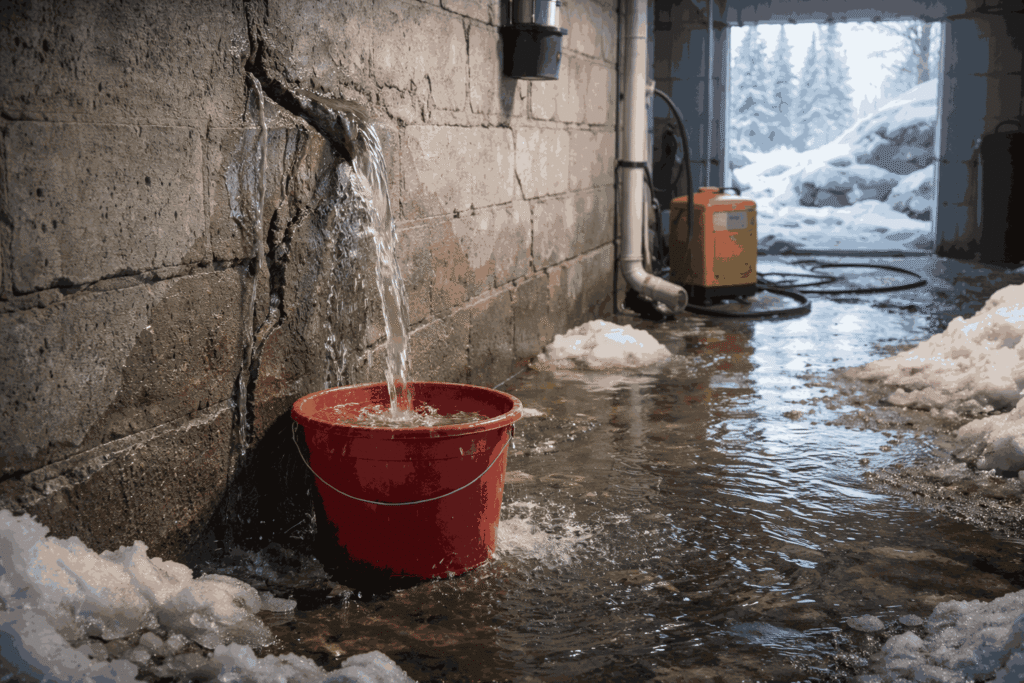
Freeze-thaw cycles do not only widen cracks but also weaken masonry materials over time. This issue is explained in more detail in Why mortar cracks faster in cold weather.
Frequent Leak Pathways in the Basement During Winter
During winter, basement leaks usually occur through specific weak points where water pressure increases due to snow buildup, frozen soil, and poor drainage. These areas may not cause issues in warmer months, but become vulnerable when moisture has fewer paths to escape. Identifying and sealing these entry points early helps limit winter-related water intrusion.
| Leak Pathways | Reason |
|---|---|
| Structural fissures | Cracks expand when trapped water freezes |
| Structural joint lines | Naturally weak zones under moisture pressure |
| Basement window wells | Snow buildup traps melting water |
| Joint concrete | Increased lateral groundwater pressure |
| High porosity concrete | Absorbs more moisture in cold conditions |
Early Signs of Basement Leaks During Winter
Basement leaks often start with minor warning signs during winter that are easy to ignore. Cold weather and increased moisture can cause these issues to appear gradually. If these signs are noticed early, timely action can help prevent more serious water damage.
- Visible moisture marks on the basement walls.
- A mildew-like or stale smell coming from the basement.
- White powdery residue (efflorescence) on walls.
- Blistering or peeling wall coatings.
- Stagnant water is collecting in corners.
- Increased moisture levels in indoor air.
Cold air can also affect how waterproofing materials respond to moisture and pressure during winter. You can learn more about this in How cold air impacts waterproofing effectiveness.
Preventive Steps to Avoid Basement Leaks in Winter
Preventing basement leaks starts with simple maintenance and early preparation, especially before winter sets in. These precautionary steps help reduce water pressure around the foundation and limit moisture from entering the basement.
- Seal basement cracks and vulnerable areas.
- Remove snow buildup near the basement and foundation walls.
- Extend downspouts away from the foundation.
- Adjust the ground slope to allow proper drainage.
- Clear debris from gutters before winter begins.
- Cover window wells to protect them from snow and ice.
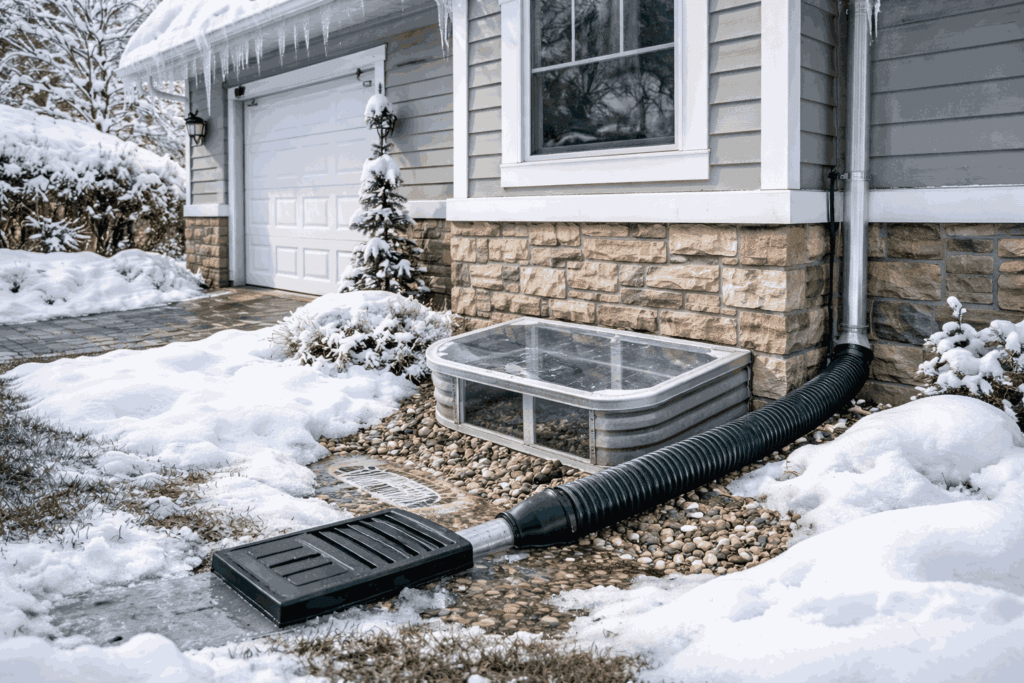
Some preventive measures and minor repairs may still need to be carried out during colder months. If timing is a concern, this guide explains Can masonry work be done in the winter?.
Long-Term Basement Waterproofing Solutions
For lasting protection against basement leaks, professionals rely on proven waterproofing methods that address both active leaks and ongoing moisture pressure. These solutions are designed to strengthen the foundation, control groundwater movement, and reduce the risk of future water intrusion.
| Waterproofing Option | Purpose |
|---|---|
| Resin-based crack sealing | Stops active leaks by sealing foundation cracks |
| Subsurface drainage system | Reduces hydrostatic pressure around the foundation |
| Exterior foundation sealing | Creates a protective moisture barrier |
| Active water discharge systems | Removes excess groundwater from around the basement |
| Water-repellent finishes | Limits moisture absorption through surfaces |
Final Thoughts
Basement leaks are more likely to occur during winter due to increased moisture pressure, freezing temperatures, and restricted drainage. If left unaddressed, these issues can lead to material damage, structural stress, and water accumulation in vulnerable basement areas. Regular drainage maintenance, early inspections, and timely repairs are key to keeping basements dry throughout the colder months.
Sardar Restoration Corp serves residential and commercial properties across NYC, including the Bronx, Manhattan, Brooklyn, Westchester, and Queens. Our services focus on identifying problem areas early and applying reliable solutions tailored to each property’s specific needs. You can explore our service areas to see how we assist homeowners across different locations.
For inspections or repair support, contact us at (+1) 917-355-8556 email sardarrestoration@gmail.com, or visit us at 2770 Fish Ave, Bronx, NY 10469, United States.
FAQs
Why do basement leaks appear only in winter?
Basement leaks often occur in winter due to freeze-thaw cycles, which widen cracks; soil traps moisture; and melting snow increases water pressure, leading to leaks in the basement.
Can basement leaks happen even if there is no visible snow?
Yes. Even without visible snow, frozen soil can trap moisture underground, increasing pressure against foundation walls and causing hidden leaks.
Can snowmelt alone cause basement flooding?
Yes! When the snow melts, especially when the drainage system is poor or gets frozen, the basement starts flooding.
Are small cracks dangerous?
Yes! Small cracks can be dangerous to your building because winter expansion can turn minor cracks into major leaks.
Does waterproofing help in cold climates?
Yes! If you apply high-quality, protective, and waterproofing systems to your residential and commercial buildings, it’ll help protect them from freezing-thaw conditions and harsh cold weather.
Do winter basement leaks always mean structural damage?
Not always. Early-stage leaks may start from small cracks or joints, but ignoring them can eventually lead to serious structural issues.
When should basement leaks be repaired?
Our waterproofing contractor in Yonkers advises you to repair all basement leaks before winter, when possible, but you can also perform repairs year-round.
Can poor insulation contribute to basement leaks in winter?
Yes. Poor insulation allows heat loss, which increases snowmelt and refreezing around the foundation, raising moisture pressure and leak risks.