
 ChatGPT
 Perplexity
 Google AI
 Claude
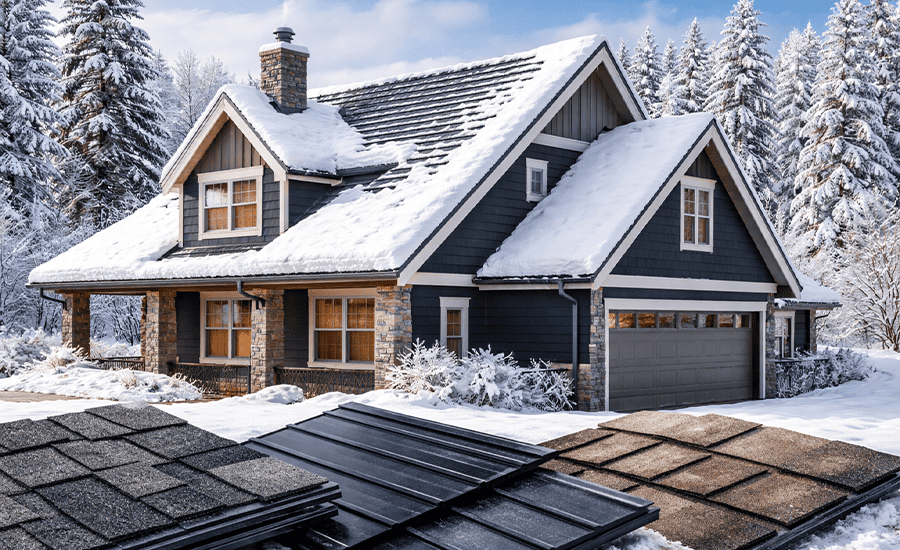
Cold-climate homes require roofing materials that can withstand heavy snow loads, repeated freeze-thaw cycles, and prolonged moisture exposure without compromising structural integrity. The right roofing system plays a critical role in preventing ice dams, reducing heat loss, and protecting the building during long winters. Based on performance in freezing conditions, durability, and maintenance requirements, metal roofing stands out as the most reliable option for cold climates, followed by slate and high-quality synthetic roofing systems.
- Ο Metal roofing offers the best overall performance for cold climates due to its snow-shedding ability and durability.
- Ο Slate roofing provides the longest lifespan but requires strong structural support and a higher investment.
- Ο Architectural asphalt shingles remain a practical choice when paired with proper insulation and ventilation.
- Ο Synthetic roofing materials balance lightweight construction with resistance to freeze-thaw damage.
- Ο Roofing material selection must always consider snow load, moisture control, and long-term maintenance needs.
What To Look For In Cold-Weather Roofing Materials?
Roofing materials used in cold climates must perform consistently under extreme winter conditions. The most suitable options are evaluated based on their ability to manage snow accumulation, temperature fluctuations, and moisture exposure without compromising structural performance.
Key factors to consider include:
- Strong load-bearing capacity to handle heavy snow buildup.
- Design that limits ice dam formation along roof edges.
- Resistance to repeated freeze-thaw cycles.
- Effective thermal insulation compatibility.
- Long-term durability with minimal weather-related wear.
- Low seasonal maintenance requirements in winter conditions.
Roofing Materials for Cold-Climate Homes
Selecting the right roofing material for cold climates depends on how well it manages snow load, moisture exposure, and repeated freeze-thaw cycles, especially in conditions where roof leaks increase in winter. The following roofing systems are commonly used in cold-weather regions due to their proven performance, durability, and compatibility with winter conditions.
1. Metal Roofing
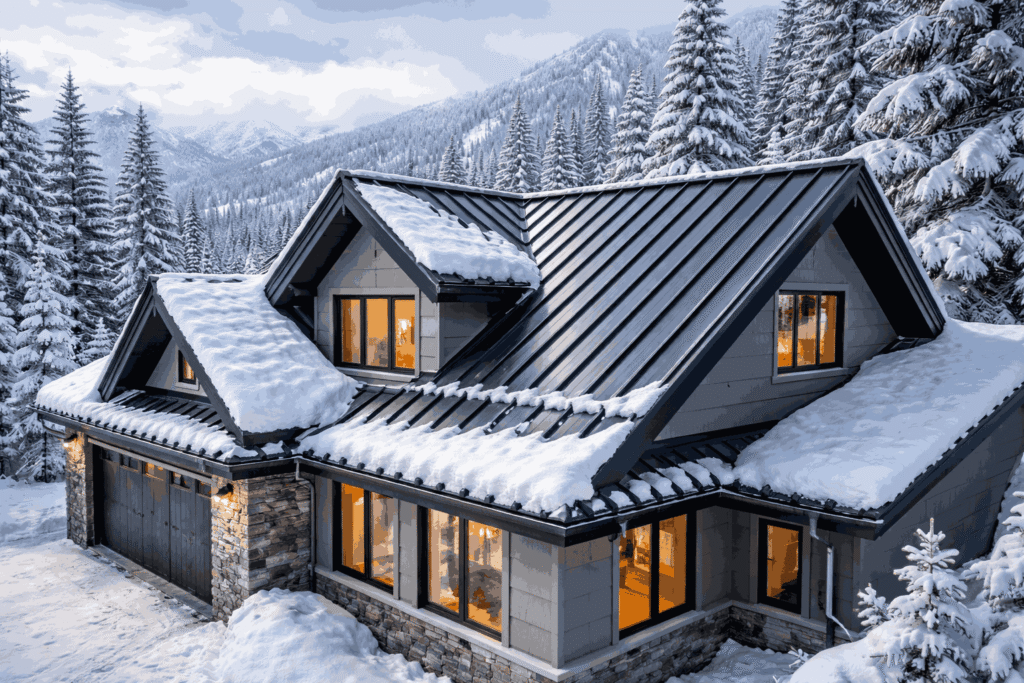
Metal roofing is one of the most reliable and durable choices for cold-climate homes, particularly in areas with heavy snowfall and fluctuating winter temperatures.
Advantages:
- Allows snow to slide off easily, reducing roof load.
- Lowers the risk of ice dam formation.
- Resistant to cracking, warping, and moisture penetration.
- Offers a long service life of approximately 40 to 70 years.
- Maintains stability under extreme temperature changes.
Drawbacks:
- Higher upfront installation cost.
- Requires proper insulation to reduce noise.
2. Architectural Asphalt Shingles
Architectural asphalt shingles are a widely used and cost-effective roofing option for cold climates when installed with proper underlayment and ventilation.
Advantages:
- Designed to accommodate thermal expansion and contraction.
- Thicker and more durable than traditional 3-tab shingles.
- Affordable and readily available.
- Compatible with ice-and-water shield underlayment.
Drawbacks:
- Shorter lifespan compared to metal or slate.
- Vulnerable to ice dams without adequate attic ventilation.
3. Slate Roofing
Slate roofing is a natural stone option known for exceptional longevity and strong resistance to cold-weather conditions.
Advantages:
- Built for long-term durability.
- Performs well against frost and moisture exposure.
- Non-combustible and resistant to mold growth.
- Commonly used on historic and high-end properties.
Drawbacks:
- Requires additional structural support due to weight.
- High material and installation costs.
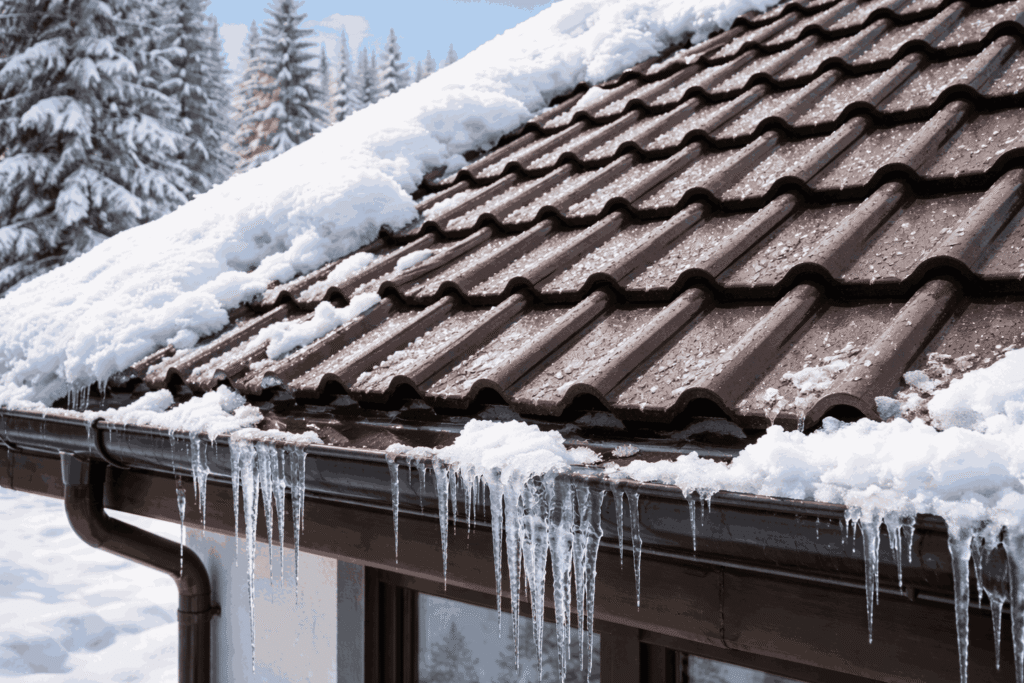
4. Heavy-Duty Roof Tiles
Roof tiles designed for freeze-thaw resistance can perform effectively in cold climates when installed correctly.
Advantages:
- Long performance lifespan.
- Good thermal efficiency.
- Highly resistant to insect damage.
- Offers a refined and structured appearance.
Drawbacks:
- Heavy material that may require structural reinforcement.
- Must be specifically rated for frost resistance.
- Improper installation can result in cracking.
5. Polymer-Based Roofing
Polymer-based roofing systems replicate the look of natural materials while improving performance in cold-weather environments.
Advantages:
- Lighter than slate or tile.
- Engineered to resist cracking in freezing temperatures.
- Lower cost compared to natural stone materials.
- Strong moisture resistance.
Drawbacks:
- Quality and performance vary by manufacturer.
- Visual appearance may differ from natural materials.
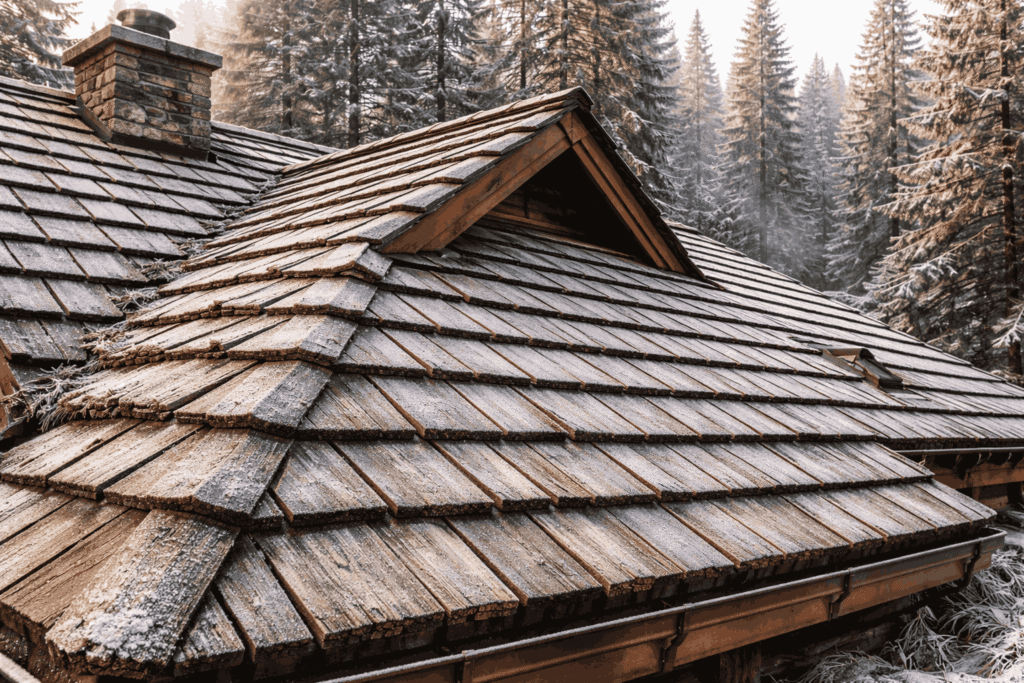
6. Traditional Wood Roofing
Wood shake roofing provides natural insulation benefits but requires careful maintenance in cold climates.
Advantages:
- Offers natural insulating properties.
- Provides a classic, rustic appearance.
Drawbacks:
- Susceptible to moisture absorption.
- Freeze-thaw cycles may cause splitting.
- Requires ongoing maintenance in winter conditions.
Even high-quality roofing materials can develop issues during extreme cold. See Why roof leaks increase during winter in NYC and how proper material selection helps reduce risks.
Best Roofing Options by Priority & Budget
After understanding the performance characteristics of different roofing materials, homeowners can narrow their choice based on specific priorities such as durability, cost, structural load, and visual appeal. The table below highlights the most suitable roofing options for cold climates based on common homeowner requirements.
| Selection Criteria | Best Roofing Option |
|---|---|
| Best overall cold-climate performance | Metal Roofing |
| Cost-effective winter solution | Architectural Asphalt Shingles |
| Long-term durability | Slate Roofing |
| Lightweight option for cold climates | Synthetic Roofing |
| Traditional aesthetic appeal | Wood Roofing (with proper care) |
Choosing the Right Roofing Material for Cold Climates
Selecting a roofing material for cold climates should be based on snow load management, resistance to freeze-thaw cycles, and long-term moisture protection. Materials such as metal roofing offer the most balanced performance in severe winter conditions, while slate and synthetic roofing systems remain strong alternatives depending on structural capacity and budget considerations. Regardless of material choice, proper insulation and ventilation play a critical role in maintaining roof performance and energy efficiency over time.
For residential and commercial properties across NYC, including the Bronx, Manhattan, Brooklyn, Westchester, and Queens. Sardar Restoration Corp provides roofing solutions designed to match local building conditions and seasonal challenges. Homeowners can review available service areas to find professional support suited to their location.
For more information or to discuss your property concerns, contact (+1) 917-355-8556, email sardarrestoration@gmail.com, or visit 2770 Fish Ave, Bronx, NY 10469, United States.
FAQs
What is the best roofing material for heavy snow areas?
Metal is considered the best type of roofing material as it sheds the snow in winter due to its smooth surfaces, while reducing the load stress on the roofs. Slate and synthetic roofing are also known as the best performing when properly installed.
Which roofing material lasts the longest in cold climates?
Slate roofing has the longest lifespan in cold climates, which lasts for 75 to 100+ years, but it also depends on the material type and maintenance.
Are asphalt shingles suitable for cold climates?
Yes! Asphalt shingles are suitable for cold climates when paired with proper attic insulation, Adequate ventilation, and ice-and-water shield underlayment.
What roofing material helps prevent ice dams?
Metal roofing materials are ideal for preventing ice dams from accumulating, as they shed the snow quickly, grip the surface lightly, and keep the roof temperature more consistent.
Is synthetic roofing good for winter conditions?
Yes! Synthetic roofing materials perform well in winters, as they resist cracking in freezing temperatures, handle freeze-thaw cycles better than natural materials, and provide lightweight alternatives to slate.
Does roof slope matter when choosing roofing for cold climates?
Yes, roof slope plays an important role in cold climates. Steeper roofs allow snow and ice to shed more easily, reducing load stress and lowering the risk of ice dam formation, especially when paired with materials like metal roofing.
Can poor ventilation affect roof performance in winter, even with the right material?
Absolutely. Without proper attic ventilation, heat buildup can cause snow to melt and refreeze at roof edges, leading to ice dams. Even high-performance roofing materials rely on correct ventilation to function effectively in cold-weather conditions.
Is roof insulation as important as roofing material in cold climates?
Yes, insulation is just as important as the roofing material itself. Proper insulation helps maintain consistent roof temperatures, reduces heat loss, and supports overall roof durability during freeze-thaw cycles common in cold climates.