
 ChatGPT
 Perplexity
 Google AI
 Claude
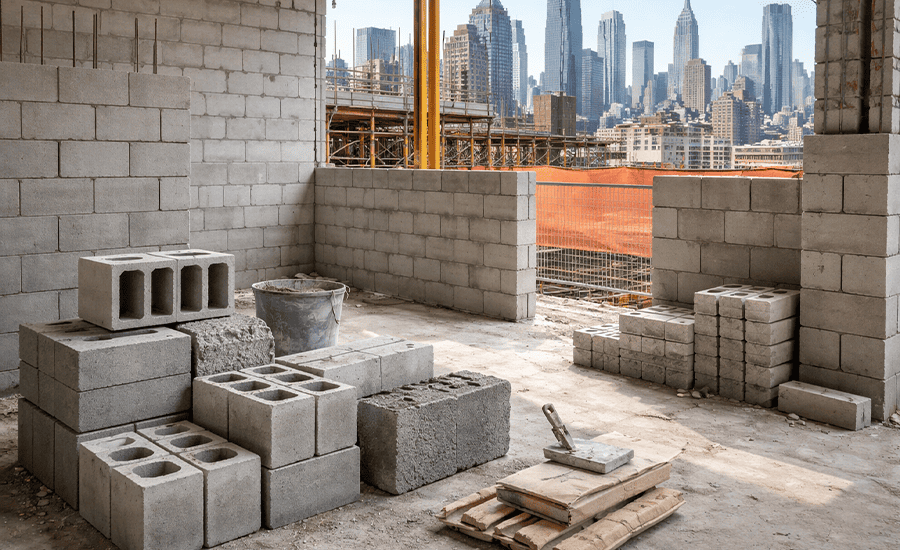
Concrete blockwork refers to the use of pre-manufactured concrete masonry units to construct both structural and non-structural elements, such as walls, foundations, partitions, and exterior surfaces. These blocks are manufactured using cement, aggregates, and water, and are selected based on load requirements, insulation needs, moisture exposure, and long-term durability.
In NYC residential and commercial construction, concrete blockwork is widely used due to its ability to handle structural loads, resist fire, manage moisture exposure, and perform well under repeated freeze-thaw cycles. Compared to traditional brickwork, concrete blocks offer faster installation, consistent quality, and reduced maintenance demands. When the correct block type is selected for the right application, concrete block work improves structural stability, energy performance, and overall building lifespan.
Quick Overview
Concrete block work plays a critical role in modern construction by supporting both structural integrity and building performance. Different concrete block types serve different purposes, ranging from load-bearing applications to insulation-focused and design-oriented solutions.
In NYC homes, commonly used concrete blocks include solid concrete blocks for structural support, AAC and lightweight blocks for thermal insulation, perforated blocks for faster construction, interlocking blocks for stability with reduced mortar usage, and paving blocks for exterior surfaces exposed to traffic and weather. Selecting the appropriate block type depends on factors such as structural load, exposure to moisture, insulation requirements, and architectural intent.
- Ο Solid concrete blocks are primarily used for load-bearing walls and foundations where high compressive strength and long-term stability are required.
- Ο AAC and lightweight concrete blocks are chosen for their superior thermal and sound insulation, especially in residential construction focused on energy efficiency.
- Ο Perforated concrete blocks reduce structural dead load and allow faster construction without compromising basic wall performance.
- Ο Interlocking concrete blocks improve construction speed and alignment while maintaining structural stability with minimal mortar use.
- Ο Concrete paving blocks are engineered for exterior applications where resistance to traffic loads, moisture, and surface wear is essential.
How Concrete Block Work Is Used in Construction
Concrete blocks are standardized masonry units manufactured from a controlled mixture of cement, aggregates, and water. These blocks are produced in consistent sizes and densities, allowing them to be used efficiently in both structural and non-structural construction. Depending on the project requirements, concrete blocks may be solid, hollow, lightweight, or engineered for specific functions such as insulation or exterior durability.
In residential and commercial construction, concrete blocks are commonly used as an alternative to traditional brickwork due to their faster installation, predictable performance, and lower long-term maintenance needs. When properly selected and installed, concrete block work supports structural loads, improves fire resistance, enhances sound control, and contributes to better thermal performance, helping property owners prevent concrete surface damage in winter, especially in urban environments like NYC, where buildings face moisture exposure and seasonal temperature changes.
Some of the key features of concrete blocks include:
- High compressive strength suitable for structural applications
- Fire-resistant composition that improves building safety
- Resistance to termites, pests, and biological damage
- Effective thermal and sound insulation when used correctly
- Cost-efficient installation with reduced labor requirements
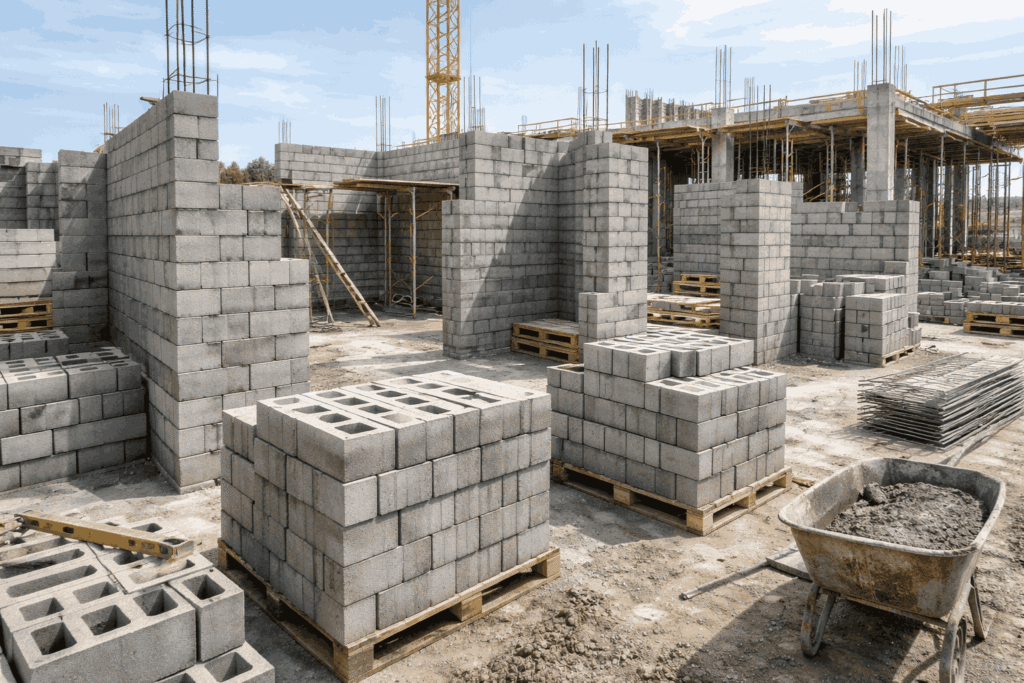
Concrete block work performs best when the block type, wall function, and exposure conditions are aligned. Structural walls, partitions, and exterior surfaces all require different block characteristics. Applying industry-appropriate materials and installation methods, along with proper cold-weather concrete safety practices, ensures long-lasting strength, stable performance, and visually consistent construction results.
Common Types of Concrete Blocks Used In NYC Homes
In NYC residential and commercial construction, the selection of concrete blocks is heavily influenced by climate conditions, structural requirements, and building usage. Factors such as moisture exposure, freeze-thaw cycles, and load distribution often lead to common concrete problems in NYC buildings, making proper block selection essential for long-term performance.
Concrete blocks vary in shape, density, strength, and function. When these characteristics are matched correctly with the building’s structural and environmental demands, they help reduce frost and snow damage to concrete floors while improving durability, energy efficiency, and long-term performance. The following are the most commonly used types of concrete blocks in NYC homes.
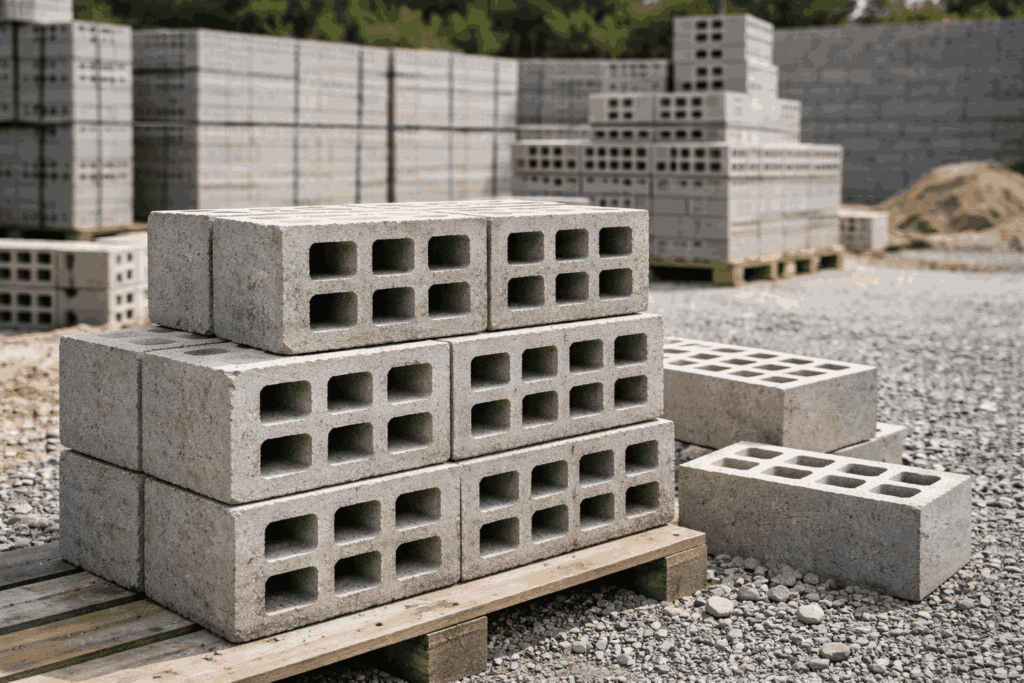
1. Perforated Concrete Blocks
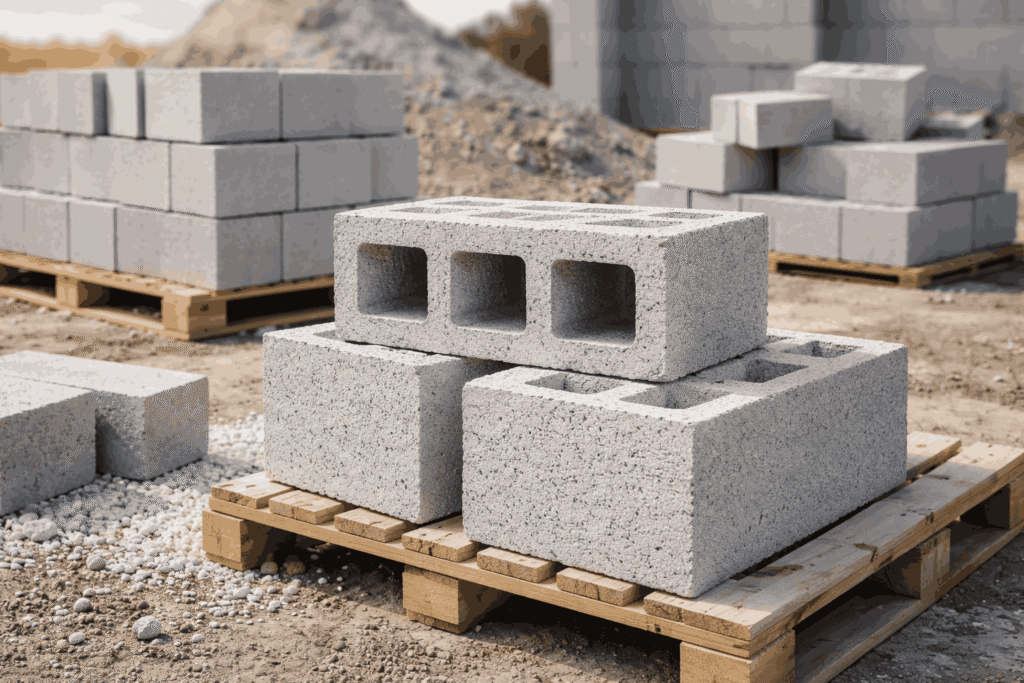
Perforated concrete blocks, often referred to as hollow blocks, contain cavities that reduce overall block weight while maintaining sufficient strength for non-structural applications. These cavities also allow easier handling and faster installation, making them a practical choice for interior construction.
Application:
- Partition walls
- Non-structural walls
- Projects requiring faster construction timelines
Key benefits:
- Lightweight and easier to handle on-site
- Reduces dead load on the structure
- Cost-effective for interior applications
2. Aerated Concrete Blocks
Autoclaved Aerated Concrete (AAC) blocks are lightweight masonry units manufactured using cement, lime, water, and aluminum powder. The autoclaving process creates a porous structure that improves insulation while maintaining adequate strength for residential construction.
Application:
- External and internal walls
- Fire-rated wall systems
- Insulated wall assemblies
Key benefits:
- Excellent thermal and sound insulation
- Lightweight, reducing overall structural load
- Fire-resistant and pest-resistant
3. Solid Concrete Blocks
Solid concrete blocks are dense, fully compacted units without cavities, designed primarily for structural use. Due to their high compressive strength, they are commonly used in areas where load transfer and long-term stability are critical.
Application:
- Load-bearing walls
- Foundations
- Columns and structural supports
Key benefits:
- High compressive strength
- Strong resistance to moisture penetration
- Long service life under heavy structural loads
4. Concrete Paving Blocks
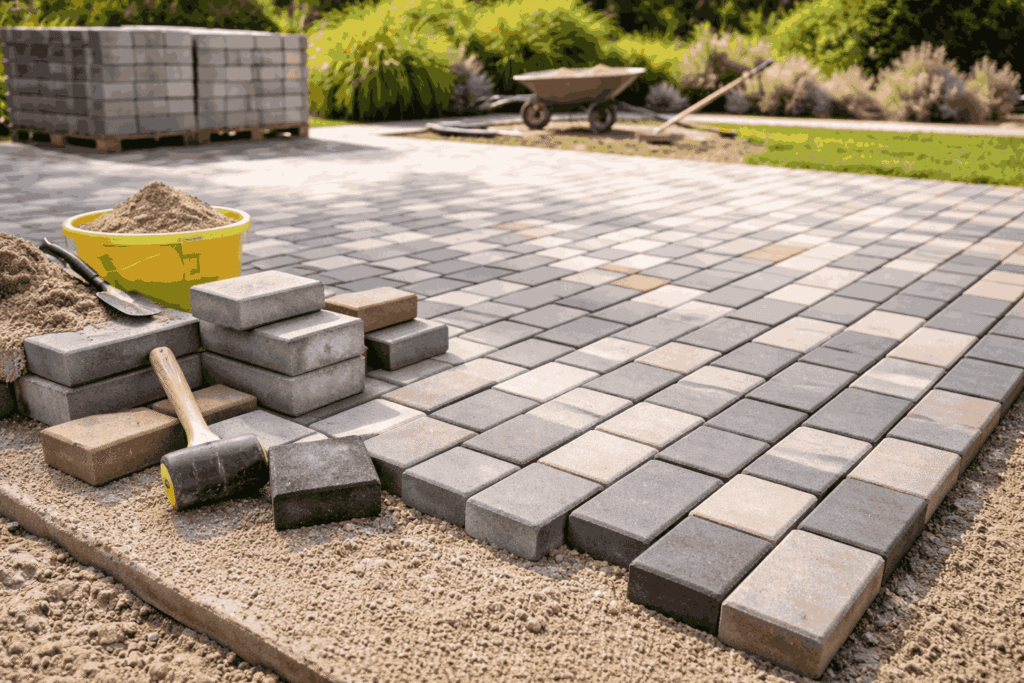
Concrete paving blocks are engineered for exterior ground surfaces exposed to traffic loads, weather conditions, and moisture, making them one of the best concrete options for durable driveways in residential and commercial properties. These blocks are manufactured using high-strength concrete to ensure surface durability and slip resistance, making them suitable for building durable concrete sidewalks in high-footfall areas.
Application:
- Driveways and road pavements
- Pedestrian walkways
- Landscaping and outdoor spaces
Key benefits:
- Durable under repeated traffic loads
- Anti-slip surface finishes
- Available in multiple surface patterns and designs
5. Architectural Concrete Blocks
Architectural concrete blocks are primarily selected for visual appeal while still offering functional performance. These blocks can be textured, colored, or patterned to enhance the appearance of residential and commercial structures.
Application:
- Feature and accent walls
- Garden and boundary walls
- Façade and design-focused elements
Key benefits:
- Enhances architectural appearance
- Available in a variety of textures and finishes
- Can be integrated with structural block systems
6. Interlocking Concrete Blocks
Interlocking concrete blocks are designed to fit together with minimal or no mortar, creating stable wall systems through mechanical interlock. They are commonly used where speed, alignment accuracy, and reduced labor are priorities.
Application:
- Retaining walls
- Temporary or permanent structures
- Budget-conscious residential projects
Key benefits:
- Faster construction with reduced mortar usage
- Improved alignment and structural stability
- Strong and durable under load
7. Lightweight Concrete Blocks
Lightweight concrete blocks are produced using lightweight aggregates such as pumice, expanded clay, or perlite. These blocks balance reduced weight with insulation performance, making them suitable for non-load-bearing applications.
Application:
- Non-load-bearing walls
- Interior partitions
- Insulated structural systems
Key benefits:
- Reduces overall structural load
- Provides good thermal and acoustic insulation
- Easy to transport and install
Things To Evaluate Before Choosing Concrete Blocks
Choosing the right type of concrete block is a long-term decision that directly impacts structural safety, durability, insulation performance, and maintenance costs, especially when planning concrete repairs during winter. In NYC residential and commercial buildings, block selection must account for load requirements, moisture exposure, climate conditions, and intended usage of the structure.
Concrete blocks perform differently based on their density, internal structure, and material composition. Evaluating these factors before construction helps avoid future structural issues, energy loss, and premature repairs.
The following considerations help determine which concrete block type best suits a specific construction need:
| Factor | Best Choice | Why It Works |
|---|---|---|
| Load-handling capability | Solid & interlocking concrete blocks | These blocks provide higher compressive strength and reliable load transfer for structural walls and foundations. |
| Insulating properties | AAC & lightweight concrete blocks | Their porous structure improves thermal efficiency and sound insulation, reducing energy loss. |
| Moisture and damp resistance | Solid & paving concrete blocks | Dense composition limits water absorption, making them suitable for moisture-prone and exterior areas. |
| Design compatibility | Architectural concrete blocks | Textured and colored finishes allow visual enhancement without additional cladding. |
| Cost efficiency | Perforated & interlocking blocks | Reduced material usage and faster installation lower overall construction costs. |
| Ease of installation | Perforated & interlocking blocks | Lighter weight and modular design reduce labor time and on-site complexity. |
Selecting concrete blocks based on these factors ensures that the structure meets both functional and environmental demands. When structural strength, insulation performance, moisture resistance, and installation efficiency are aligned with the correct block type, the result is a durable, cost-effective, and well-performing building suited to NYC construction conditions.
Conclusion
Concrete block work remains a reliable solution for modern residential and commercial construction due to its structural strength, durability, and adaptability across different building needs. Each concrete block type serves a specific function, and selecting the right option based on load requirements, insulation needs, moisture exposure, and design intent plays a key role in long-term building performance, energy efficiency, and reduced maintenance costs.
Sardar Restoration Corp serves residential and commercial properties across NYC, including The Bronx, Manhattan, Brooklyn, Westchester, and Queens, working as a trusted concrete block work contractor in NYC that property owners rely on. Each project approach is aligned with local building conditions, material requirements, and seasonal exposure to ensure long-lasting protection, structural reliability, and consistent construction quality.
For more information or to discuss your property concerns, contact (+1) 917-355-8556, email sardarrestoration@gmail.com, or visit 2770 Fish Ave, Bronx, NY 10469, United States.
FAQs
What is concrete block work used for?
Concrete block work is used for load-bearing and non-load-bearing walls, foundations, partitions, pavements, retaining walls, and walkways in residential and commercial construction.
Which type of concrete block is best for load-bearing walls?
Solid concrete blocks and interlocking concrete blocks are best for load-bearing walls because they provide higher compressive strength and stable load transfer.
Are hollow concrete blocks strong enough for construction?
Yes, hollow or perforated concrete blocks are suitable for non-load-bearing walls and low-rise structures, and can be reinforced when additional strength is required.
What are AAC blocks, and why are they popular?
AAC blocks are lightweight concrete blocks known for thermal insulation, fire resistance, and reduced structural load, making them popular in energy-efficient buildings.
Which concrete blocks provide the best insulation?
AAC blocks and lightweight concrete blocks offer the best thermal and sound insulation, helping reduce energy consumption and improve indoor comfort.
Are decorative concrete blocks structural?
Most decorative concrete blocks are non-load-bearing and used for visual enhancement, though some may offer limited structural support depending on design.
Can concrete block work be used in moisture-prone areas?
Yes, solid concrete blocks and paving blocks perform well in moisture-prone areas when properly sealed and installed.
Is concrete block work suitable for both residential and commercial buildings?
Yes, concrete block work is widely used in both residential and commercial buildings due to its durability, adaptability, and long-term performance.