 ChatGPT
 Perplexity
 Google AI
 Claude
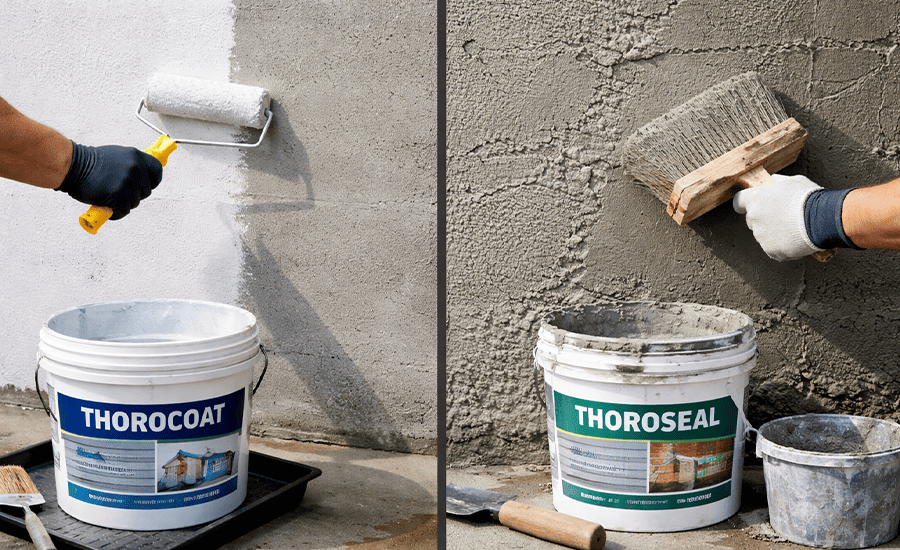
Waterproofing plays a critical role in protecting buildings from long-term damage caused by moisture intrusion. When water enters masonry or concrete, it can lead to structural weakening, mold growth, surface deterioration, and reduced property lifespan. In NYC residential and commercial buildings, two widely used waterproofing solutions are Thorocoat and Thoroseal.
Although both products are designed to prevent water infiltration, they serve very different purposes. Thorocoat focuses on surface-level protection and flexibility, while Thoroseal is intended for deeper, structural waterproofing where water pressure is a concern. Understanding how these systems work, where they perform best, and when they should be used together helps property owners choose the correct waterproofing approach for their specific conditions.
Quick Overview
Choosing the right waterproofing system depends on whether moisture exposure occurs at the surface level or from within the structure. Thorocoat and Thoroseal address different waterproofing challenges but can be combined to deliver complete protection when applied correctly.
Thorocoat is typically used on above-grade exterior surfaces where flexibility, crack coverage, and appearance matter. Thoroseal is applied where masonry faces continuous moisture or hydrostatic pressure, such as foundations and basement walls. Proper surface preparation, suitable weather conditions, and correct curing time are essential for both products to perform effectively and deliver long-lasting results.
- Ο Thorocoat is primarily used for above-grade exterior waterproofing and decorative protection.
- Ο Thoroseal is designed for structural and below-grade waterproofing where water pressure exists.
- Ο Thorocoat provides flexible crack-bridging on surfaces exposed to movement and weather.
- Ο Thoroseal penetrates masonry to block moisture from within the structure.
- Ο Both systems can be used together to protect structural integrity while maintaining exterior appearance.
What Is Thorocoat?
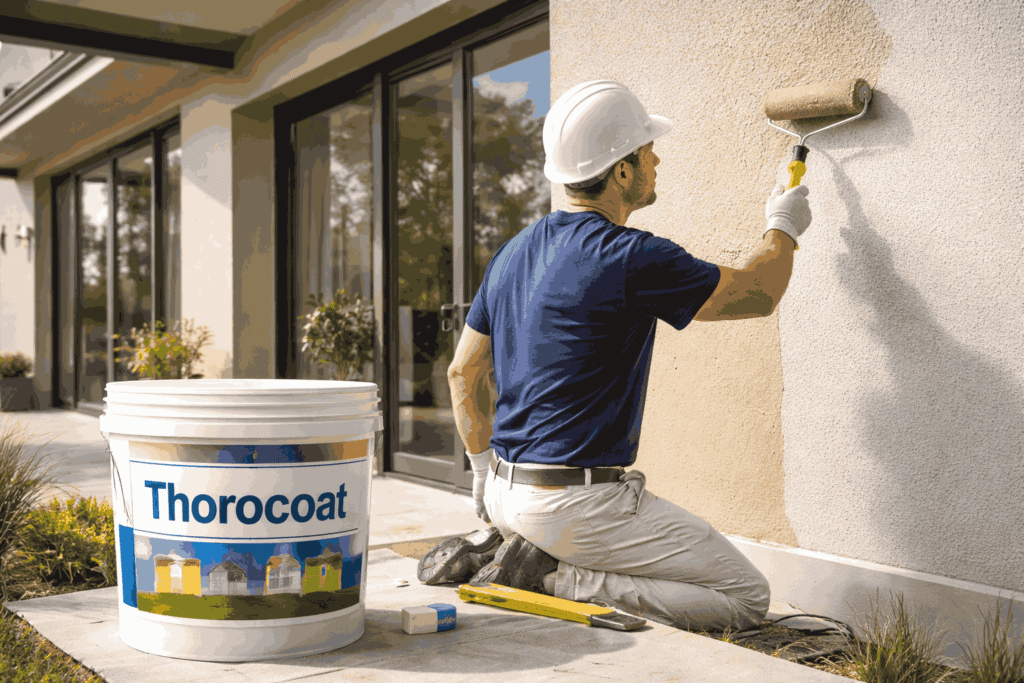
Thorocoat is a flexible, acrylic-based waterproofing coating designed for above-grade masonry and concrete surfaces. It works as a surface-applied barrier that prevents water penetration while allowing the structure to release trapped moisture vapor. Its elastomeric properties enable it to accommodate minor surface movement without cracking or peeling.
Unlike deep-penetrating waterproofing systems, Thorocoat focuses on protecting exterior walls from rain, wind-driven moisture, UV exposure, and environmental pollutants that contribute to long-term moisture damage in NYC homes. It also improves the visual appearance of facades, making it suitable for areas where both waterproofing performance and appearance are important.
Key Features of Thorocoat
- Elastomeric flexibility that bridges hairline cracks
- Forms a continuous waterproof barrier on exterior surfaces
- UV-resistant and suitable for long-term sun exposure
- Available in multiple colors and textures for decorative finishes
- Breathable coating that allows moisture vapor to escape
Where Is Thorocoat Used?
- Exterior walls and building facades
- Plastered masonry and concrete surfaces
- Above-grade areas exposed to rain and sunlight
- Decorative waterproofing applications where appearance matters
What Is Thoroseal?
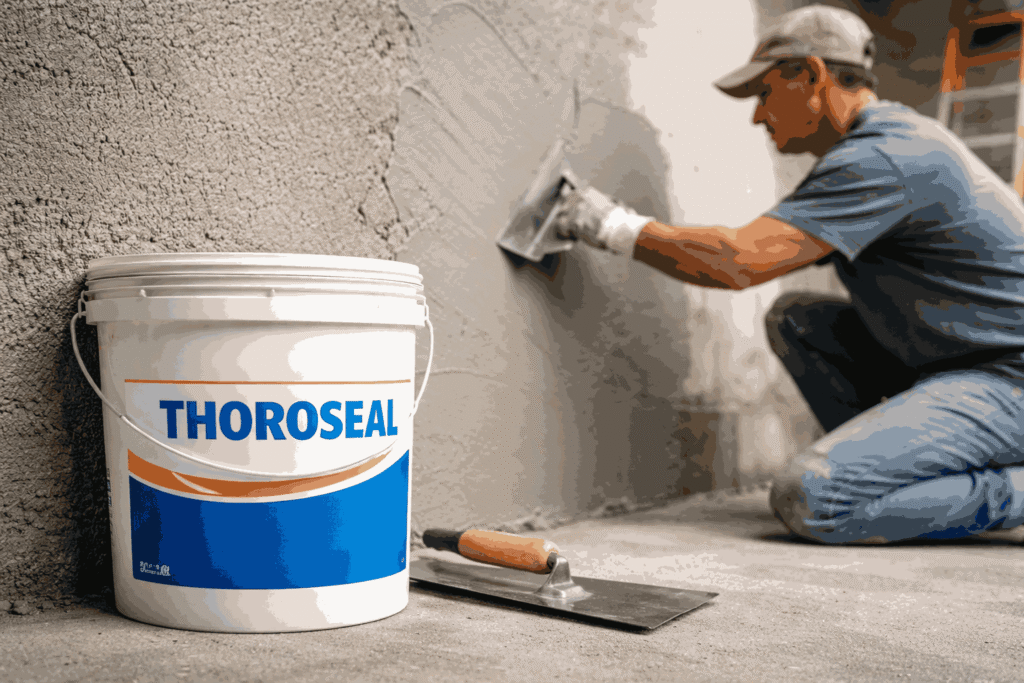
Thoroseal is a cementitious, crystalline waterproofing coating designed for structural masonry and concrete surfaces. Unlike surface-applied coatings, Thoroseal penetrates the substrate and chemically bonds with the pores of concrete and masonry. This process creates a dense internal barrier that blocks water movement while still allowing vapor transmission.
Thoroseal is specifically used in areas where hydrostatic pressure explains why basements leak more during winter, especially when the surrounding soil remains saturated, and moisture pushes through masonry walls. It is commonly applied to foundations, basement walls, and below-grade structures where long-term structural protection is required rather than surface-level flexibility or appearance.
Key Features of Thoroseal
- Cement-based waterproofing system for deep structural protection
- Resistant to hydrostatic water pressure
- Penetrates and bonds with concrete and masonry
- Breathable coating that allows vapor transmission
- Suitable for both above-grade and below-grade applications
Where Is Thoroseal Used?
- Basements and foundation walls
- Retaining walls and load-bearing masonry
- Below-grade structural elements
- Areas experiencing continuous moisture or water pressure
- Masonry surfaces requiring deep pore sealing
When Is Each Product Most Effective?
Both Thorocoat and Thoroseal perform best when selected according to the building’s exposure conditions, moisture source, and structural requirements. The correct choice depends on whether water intrusion occurs at the surface level or originates from within the masonry due to pressure or long-term saturation.
Thoroseal is most effective in areas where water actively pushes through masonry, such as basements, foundations, and below-grade walls. Its ability to penetrate and bond with the substrate makes it suitable for structural waterproofing where long-term moisture resistance is required. Thorocoat, by contrast, is better suited for exterior walls that face weather exposure, surface movement, and visible cracking, where flexibility and appearance are important.
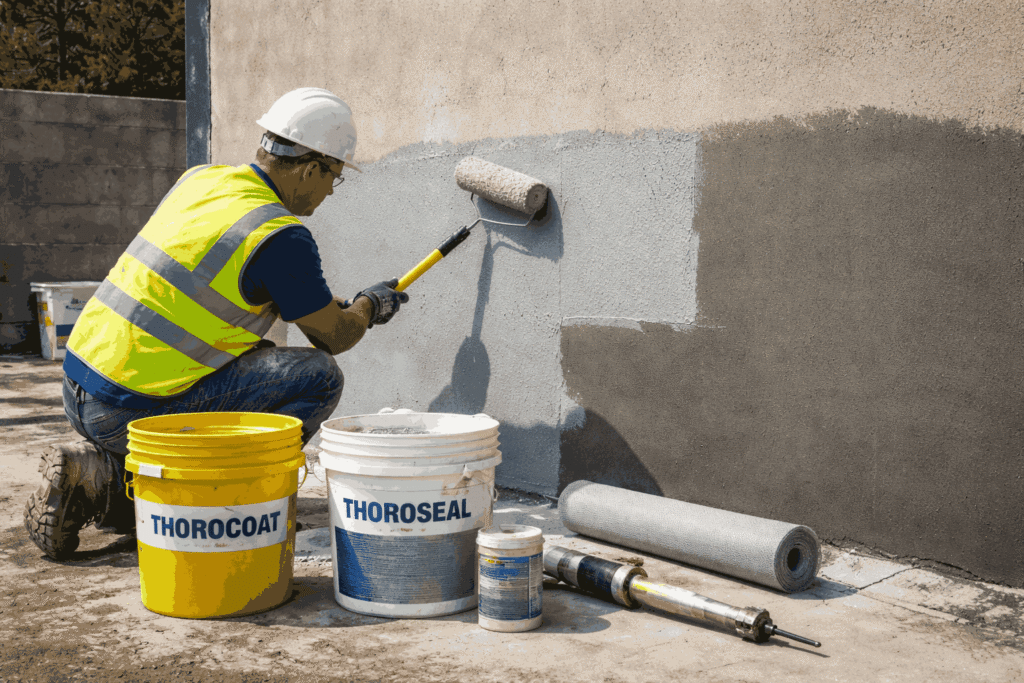
In many NYC residential and commercial buildings, both systems are used together to address winter moisture problems, as freeze-thaw cycles increase stress on masonry surfaces. Thoroseal protects the structure internally by blocking moisture at its source, while Thorocoat shields exterior surfaces from rain, UV exposure, and environmental wear. This combined approach delivers structural protection without affecting exterior appearance.
When Thorocoat Is Most Effective
- Waterproofing above-grade exterior walls
- Areas exposed to sunlight, rain, and temperature changes
- Surfaces that experience minor expansion or contraction
- Hairline cracks requiring flexible coverage
- Locations where visual finish is important
When Thoroseal Is Most Effective
- Waterproofing below-grade and foundation walls
- Areas subject to hydrostatic water pressure
- Structural masonry requiring internal moisture blocking
- Basements and retaining walls
- Surfaces with persistent moisture seepage
Step-by-Step Application Tips for Proper Waterproofing
Correct application plays a key role in the long-term performance of any waterproofing system. Even high-quality materials can fail due to common waterproofing mistakes that cause leaks, such as poor surface preparation, incorrect product selection, or improper curing conditions. Thorocoat and Thoroseal each require a specific application approach based on their material composition and intended function.
Before applying either system, surfaces must be structurally sound, clean, and free from contaminants that may affect bonding. Temperature, moisture levels, and curing conditions should always be evaluated, as understanding how cold air impacts waterproofing effectiveness helps ensure proper bonding and long-term protection.
Thorocoat Application Guidelines
Thorocoat is applied as a surface coating and depends on proper adhesion and flexibility for effective performance. Careful exterior preparation helps achieve a uniform and durable finish.
- Ensure the surface is clean, dry, and free of dust, grease, or loose material
- Repair visible cracks and surface defects before application
- Apply a suitable primer if required by surface conditions
- Apply a minimum of two coats for consistent coverage
- Avoid application during extreme temperatures or heavy moisture exposure
Thoroseal Application Guidelines
Thoroseal follows a different process as it penetrates and bonds with the masonry substrate. Proper surface condition and moisture balance are essential for successful application.
- Confirm the surface is structurally stable and sound
- Slightly dampen the substrate to support proper bonding
- Mix Thoroseal according to manufacturer guidelines
- Apply using a brush or trowel to allow deep pore penetration
- Apply multiple coats to achieve full waterproofing effectiveness
What Are the Upkeep Practices & Expected Service Life of These Products?
Periodic maintenance of waterproofed surfaces is essential to keep a structure durable and moisture-resistant over time. Regular inspections help identify early signs of surface wear, cracking, or joint failure before they develop into larger problems. While Thoroseal provides long-term structural protection due to its deep bonding with masonry, Thorocoat is more exposed to environmental conditions and may require reapplication after years of service.
| Product | Service life | Upkeep measures |
|---|---|---|
| Thorocoat | 8–15+ years | Conduct regular inspections and reapply the coating when surface wear or cracking is observed. |
| Thoroseal | Decades | Check masonry surfaces for cracking, joint movement, or structural changes that may affect performance. |
Scheduled evaluations after heavy rainfall or seasonal weather changes help maintain long-term waterproofing performance and support timely reapplication when required.
Recommended Application For Each Product
Selecting the correct waterproofing solution depends on the location, exposure level, and structural role of each surface. The table below outlines where Thorocoat and Thoroseal perform most effectively based on common building conditions.
| Function | Recommended Waterproofing |
|---|---|
| Outer walls and facade assemblies | Thorocoat |
| Subgrade surfaces | Thoroseal |
| Crack-prone flexible substrates | Thorocoat |
| Load-bearing waterproofing solutions | Thoroseal |
| For full-scope coverage | Use both in combination |
Conclusion
Both Thorocoat and Thoroseal play important roles in effective waterproofing, but selecting the right solution depends on where and how moisture affects the structure. Thorocoat is best suited for protecting above-grade exterior surfaces where flexibility, weather resistance, and appearance are important. Thoroseal seals and reinforces masonry from within, making it suitable for foundations and areas exposed to water pressure. Understanding the specific purpose of each system allows property owners to choose the correct waterproofing approach for long-term protection and structural durability.
Sardar Restoration Corp serves residential and commercial properties across NYC, including The Bronx, Manhattan, Brooklyn, Westchester, and Queens, as a trusted waterproofing contractor relied on by property owners. Each repair approach is tailored to local building conditions, material types, and seasonal exposure to ensure long-lasting protection and reliable performance.
For more information or to discuss your property concerns, contact (+1) 917-355-8556, email sardarrestoration@gmail.com, or visit 2770 Fish Ave, Bronx, NY 10469, United States.
FAQs
What is the main difference between Thorocoat and Thoroseal?
Thorocoat is a surface-applied acrylic coating for above-grade exterior walls, while Thoroseal is a cement-based waterproofing system designed for structural and below-grade protection.
Can Thorocoat be used on basement walls?
No. Basement walls are subject to hydrostatic water pressure, which requires a penetrating waterproofing system, such as Thoroseal, rather than a surface coating.
Can Thorocoat bridge hairline cracks?
Yes. Thorocoat is elastomeric and can bridge and seal hairline cracks on exterior walls exposed to weather movement.
Which waterproofing product lasts longer?
Thoroseal typically lasts longer because it bonds with the masonry, while Thorocoat usually lasts 8 to 15+ years, depending on exposure and maintenance.
How do I choose between Thorocoat and Thoroseal?
Use Thorocoat for above-grade exterior walls and Thoroseal for foundations, basements, and areas exposed to water pressure.
Is professional installation necessary for these waterproofing systems?
Thorocoat can be applied by a skilled DIY installer on exterior walls, but professionals should install Thoroseal due to its structural role.
Can Thorocoat and Thoroseal be used together?
Yes. Thoroseal is applied for internal structural waterproofing, while Thorocoat is used on exterior surfaces for added protection and appearance.
Does Thoroseal stop active water seepage?
Yes. Thoroseal is designed to resist hydrostatic water pressure and block active moisture seepage through masonry surfaces.