 ChatGPT
 Perplexity
 Google AI
 Claude
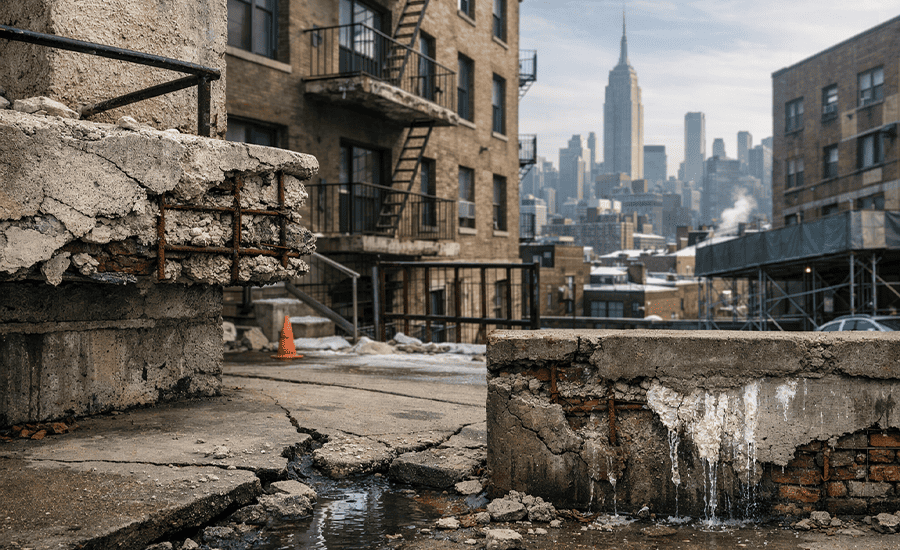
The majority of residential buildings in New York City are constructed using concrete due to its strength and long-term durability. Concrete is widely used in foundations, slabs, balconies, sidewalks, and structural frames. Despite its durability, concrete in NYC residential buildings remains highly vulnerable to environmental stress, moisture exposure, aging infrastructure, and heavy urban loads.
As NYC buildings continue to age, repeated exposure to freeze-thaw cycles, frequent rainfall, de-icing salts, and dense urban activity accelerates concrete deterioration beyond surface-level wear. When early warning signs are ignored, minor issues can progress into serious structural concerns that affect safety, stability, and property value. Identifying concrete problems early is essential to maintaining long-term performance and avoiding costly repairs.
Quick Overview
Concrete problems in NYC residential buildings affect both structural integrity and long-term durability. Issues such as cracking, spalling, scaling, efflorescence, and reinforcement corrosion often begin as surface-level defects but can quickly develop into deeper structural concerns when moisture intrusion is not controlled.
This guide explains the most common concrete problems found in NYC homes, why they occur, and how early intervention helps prevent expensive structural repairs. Understanding these warning signs allows homeowners to protect their buildings, improve thermal efficiency, and extend the lifespan of concrete surfaces in New York’s demanding climate. Early awareness and timely maintenance remain the most effective ways to reduce long-term damage and repair costs.
- Ο NYC’s climate and dense urban environment accelerate concrete deterioration
- Ο Cracking and spalling are the most frequently observed concrete issues
- Ο Moisture intrusion is the primary cause behind most concrete damage
- Ο Freeze-thaw cycles significantly weaken concrete over time
- Ο Early detection and routine inspections reduce repair costs and structural risk
To understand why these problems occur so frequently, it is important to examine the key factors that accelerate concrete deterioration in NYC residential buildings.
Why Concrete Deteriorates Prematurely in NYC Residential Buildings
Concrete deterioration in NYC residential buildings is primarily caused by a combination of environmental exposure, structural stress, and aging construction practices. These factors gradually weaken the concrete surface and internal structure, increasing the risk of long-term damage if preventive action is delayed.
When multiple stressors act together, concrete loses its durability, load-bearing capacity, and resistance to moisture. Repeated freeze-thaw cycles during colder months make cold-weather concrete pouring practices essential for limiting surface erosion and avoiding costly repairs in residential buildings.
Key Conditions That Accelerate Concrete Wear in NYC
- Repeated freeze-thaw cycles that expand and contract concrete
- Ongoing exposure to water, snow, and ice
- Use of de-icing chemicals that penetrate porous surfaces
- Continuous foot traffic and vehicle loads in residential areas
- Aging buildings built with outdated materials and methods
- High humidity levels combined with urban air pollution
Residential neighborhoods across NYC, including Manhattan, Bronx, Westchester, and Queens, experience higher concrete deterioration due to dense populations and older infrastructure. These conditions place sustained pressure on residential structures, making concrete damage more frequent and more severe without routine maintenance.
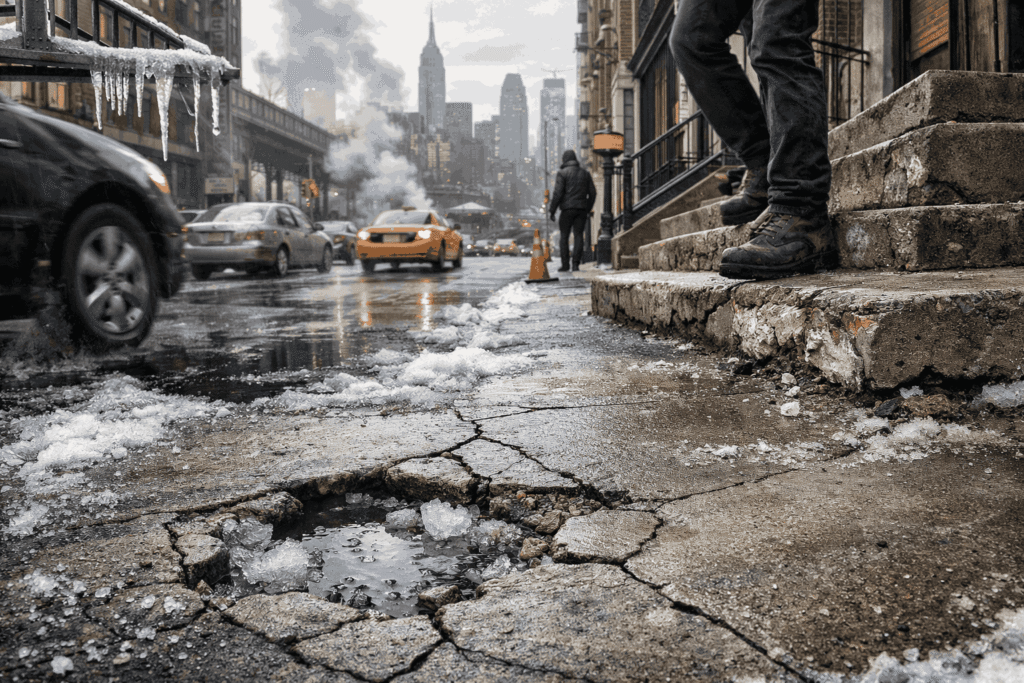
Why Concrete Fails in NYC Residential Buildings
Concrete failure in NYC residential buildings occurs due to constant environmental stress, heavy urban activity, and long-term exposure to moisture. Seasonal temperature changes cause concrete to expand and contract repeatedly, weakening both surface layers and internal reinforcement over time.
Because concrete is a porous material, water infiltration accelerates internal damage when cracks, joints, or surface defects are left unaddressed. Without timely maintenance, these conditions gradually reduce structural stability, safety, and compliance with local building standards.
1. Stress-Induced Cracking
Cracking is the most commonly observed concrete failure in NYC residential buildings. While some cracks remain superficial, others indicate underlying structural stress that worsens over time, explaining why concrete cracks more frequently during winter as temperatures repeatedly rise and fall.
Structural cracks often worsen gradually, making early identification critical for long-term stability.
Primary causes of cracking
- Repeated thermal expansion and contraction
- Shrinkage during curing and aging
- Differential foundation movement
- Excessive structural or occupancy loads
- Improper reinforcement placement
Why cracks should not be ignored
- Moisture enters through open cracks
- Internal steel corrosion accelerates
- Freeze-thaw cycles widen existing cracks
- Structural strength gradually decreases
2. Concrete Fragmentation (Spalling)
Spalling occurs when sections of concrete detach from the surface, often exposing embedded steel reinforcement beneath. In high-traffic areas like sidewalks, following strong concrete sidewalk practices becomes critical for long-term safety.
What causes spalling
- Freeze-thaw pressure within saturated concrete
- Water penetration into porous or damaged surfaces
- Corrosion of internal steel reinforcement
- Prolonged exposure to de-icing salts
Commonly affected areas
- Balconies and terraces
- Staircases
- Parking decks
- Exterior facades
- Sidewalk slabs
Warning signs
- Loose or falling concrete pieces
- Rust staining on surfaces
- Crumbling corners or edges
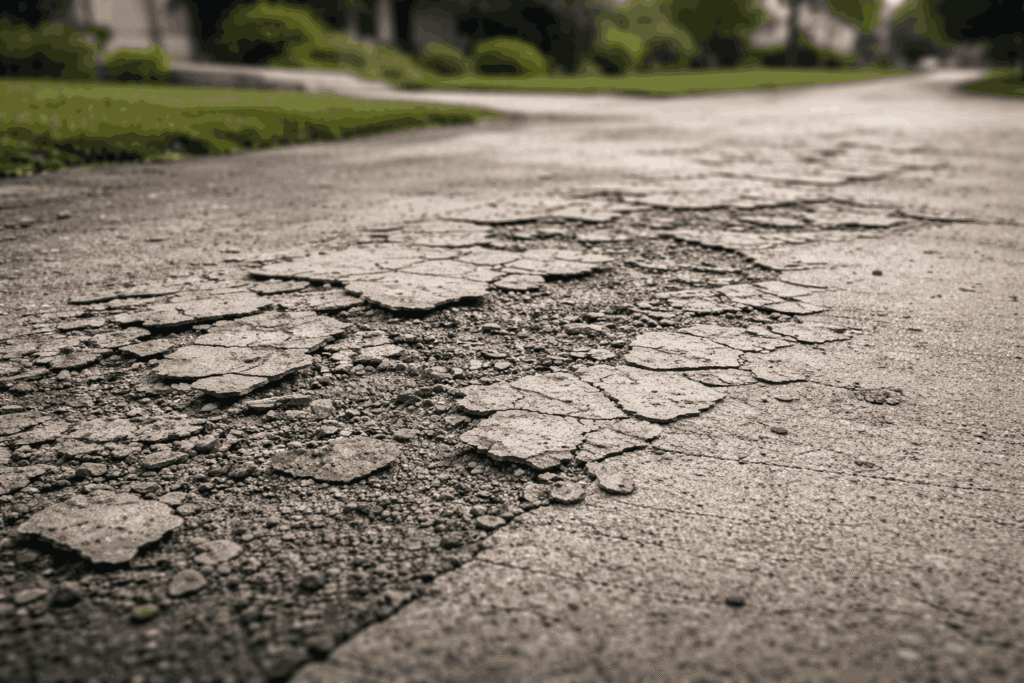
3. Progressive Surface Wear (Scaling)
Scaling refers to the gradual peeling or flaking of the top concrete layer, primarily affecting horizontal surfaces, making durable concrete choices for residential driveways important for long-term performance.
Why scaling develops
- Repeated use of de-icing chemicals
- Poor finishing during installation
- Low-strength concrete mixes
- Ongoing freeze-thaw exposure
Most impacted surfaces
- Driveways
- Walkways
- Garage floors
- Building entry areas
Structural impact
- Reduced slip resistance
- Increased water absorption
- Accelerated surface deterioration
- Shortened service life
4. Surface Mineral Staining (Efflorescence)
Efflorescence appears as a white, powdery residue caused by moisture carrying soluble salts to the concrete surface. It is frequently observed in NYC basements and foundation walls.
Underlying causes
- Persistent moisture movement
- Inadequate drainage systems
- Subsurface water seepage
- High ambient humidity
Structural significance
| Factor | Outcome |
|---|---|
| Visual condition | Surface discoloration |
| Safety risk | Low |
| Moisture indication | High |
| Long-term concern | Concrete surface damage |
Although efflorescence itself is not structurally harmful, it signals ongoing moisture intrusion that requires corrective action.
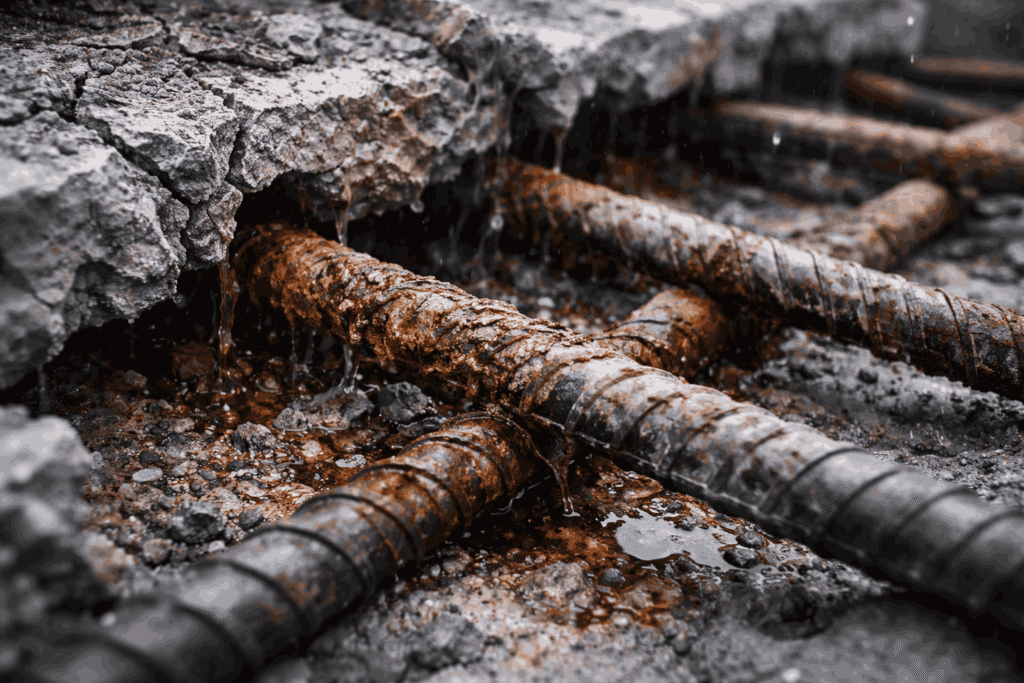
5. Reinforcement Corrosion
Steel reinforcement remains protected only while concrete maintains proper density and alkalinity. Once moisture and salts penetrate the surface, corrosion begins internally.
How corrosion develops
- Cracks permit water access
- Road salts speed up oxidation
- Carbonation lowers concrete alkalinity
Structural effects
- Steel expansion creates internal pressure
- Concrete cover fractures and separates
- The load-bearing capacity weakens
Visible indicators
- Rust staining
- Surface bulging or cracking
- Exposed reinforcement bars
6. Uneven Foundation Movement
Foundation movement occurs when underlying soil shifts unevenly, placing stress on concrete slabs and walls.
Key causes in NYC
- Inadequate soil compaction
- Aging foundation systems
- Nearby construction vibration
- Water erosion beneath slabs
Early warning signs
- Sloping or uneven floors
- Cracks near doors and windows
- Joint separation
Types of movement
| Movement Type | Explanation | Risk Level |
|---|---|---|
| Gradual settling | Uniform soil compression | Moderate |
| Uneven settlement | Irregular soil movement | High |
| Horizontal shifting | Lateral soil pressure | Severe |
7. Water-Driven Concrete Decay
Water remains the most destructive element affecting concrete in NYC residential buildings, particularly during winter when frost and snow contribute to concrete floor damage.
Common entry points
- Foundation cracks
- Poorly sealed joints
- Balcony and roof slabs
- Basement walls
Resulting damage
- Freeze-related cracking
- Mold growth in adjacent materials
- Accelerated concrete degradation
- Interior water intrusion
Without moisture control, concrete deterioration accelerates across multiple structural components.
Early-Intervention Maintenance Tips for NYC Homeowners
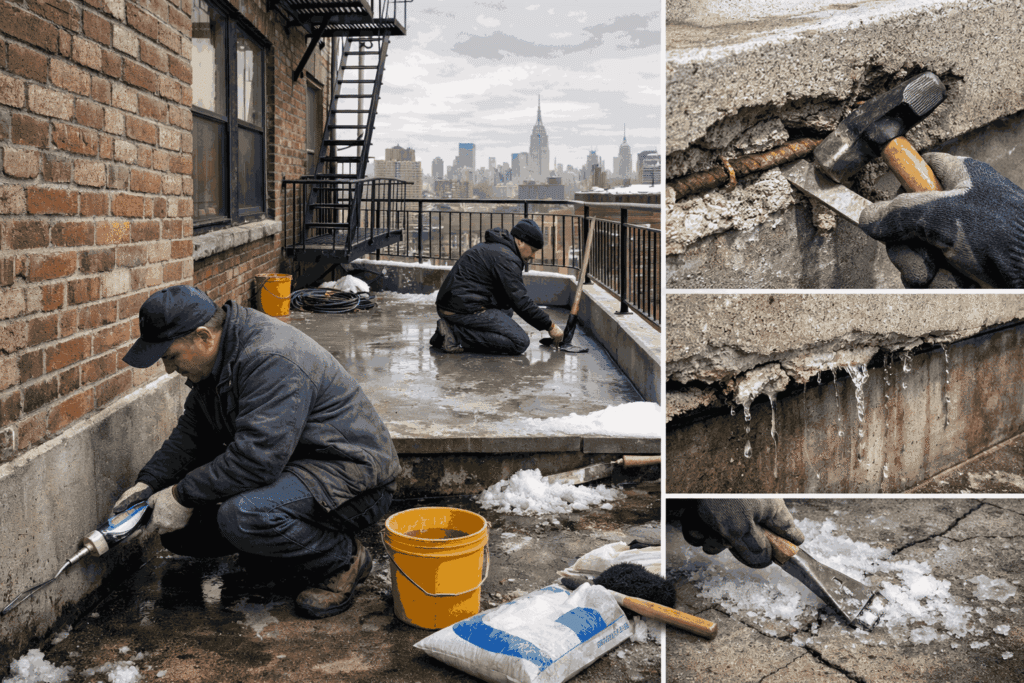
Early maintenance plays a critical role in protecting concrete structures in NYC residential buildings, especially when homeowners focus on steps that help prevent winter concrete damage. Addressing small issues at the right time helps prevent moisture intrusion, limits freeze-thaw damage, and reduces the likelihood of costly structural repairs caused by aging construction and harsh weather conditions.
Proactive maintenance allows homeowners to preserve structural stability, maintain daily usability, and minimize safety risks, even when considering whether winter is an appropriate time for concrete repairs. Preventive action taken early is significantly more effective than corrective repairs performed after visible damage appears.
Recommended Preventive Actions
- Seal minor cracks before water penetration occurs
- Apply waterproof coatings to exposed concrete surfaces
- Improve drainage to prevent standing water near foundations
- Schedule routine inspections to detect hidden deterioration
- Use winter-safe alternatives to harsh de-icing chemicals
Delaying maintenance allows moisture and temperature stress to compound over time, accelerating concrete breakdown. Regular inspections and timely upkeep remain the most reliable way to control long-term damage and manage repair costs in NYC residential properties.
Final Thoughts
NYC’s residential buildings face constant pressure from temperature fluctuations, moisture exposure, and aging construction materials, all of which accelerate concrete deterioration over time. When early warning signs are overlooked, surface-level damage can evolve into serious structural concerns that affect safety, performance, and long-term durability. Timely action remains the most reliable way to slow deterioration, protect structural stability, and avoid costly repairs in New York’s demanding urban environment.
Sardar Restoration Corp serves residential and commercial properties across NYC, including The Bronx, Manhattan, Brooklyn, Westchester, and Queens, working as a trusted concrete repair contractor in NYC that property owners rely on. Each repair approach is aligned with local building conditions, material behavior, and seasonal exposure to deliver reliable, long-term results.
For more information or to discuss your property concerns, contact (+1) 917-355-8556, email sardarrestoration@gmail.com, or visit 2770 Fish Ave, Bronx, NY 10469, United States.
FAQs
What are the most common concrete problems in NYC residential buildings?
The most common concrete problems in NYC residential buildings include cracking, spalling, surface scaling, efflorescence, and reinforcement corrosion caused by moisture exposure and weather stress.
Are all concrete cracks a structural concern?
No. Not all concrete cracks are structural, but any crack can allow moisture penetration, which may lead to corrosion and structural weakening if left uninspected.
Why does concrete deteriorate faster in New York City?
Concrete deteriorates faster in NYC due to frequent freeze-thaw cycles, seasonal temperature changes, high moisture levels, and prolonged exposure to de-icing chemicals.
What causes concrete spalling on balconies and facades?
Concrete spalling on balconies and facades occurs when moisture reaches internal steel reinforcement, causing corrosion that forces surrounding concrete to crack and break apart.
Is spalling concrete dangerous?
Yes. Spalling concrete is dangerous because falling debris can injure pedestrians, damage property, and result in violations from local building authorities.
How does moisture damage concrete structures?
Moisture damages concrete by entering through cracks and pores, leading to freeze-related cracking, rebar corrosion, surface deterioration, interior leaks, and reduced structural durability.
How can homeowners identify early signs of concrete damage?
Homeowners can identify early concrete damage by looking for hairline cracks, surface flaking, rust stains, uneven floors, and persistent moisture near concrete areas.
How often should concrete inspections be done in NYC residential buildings?
Concrete inspections in NYC residential buildings should be carried out regularly, especially after winter seasons, to detect moisture intrusion, cracking, and early structural movement.