
 ChatGPT
 Perplexity
 Google AI
 Claude
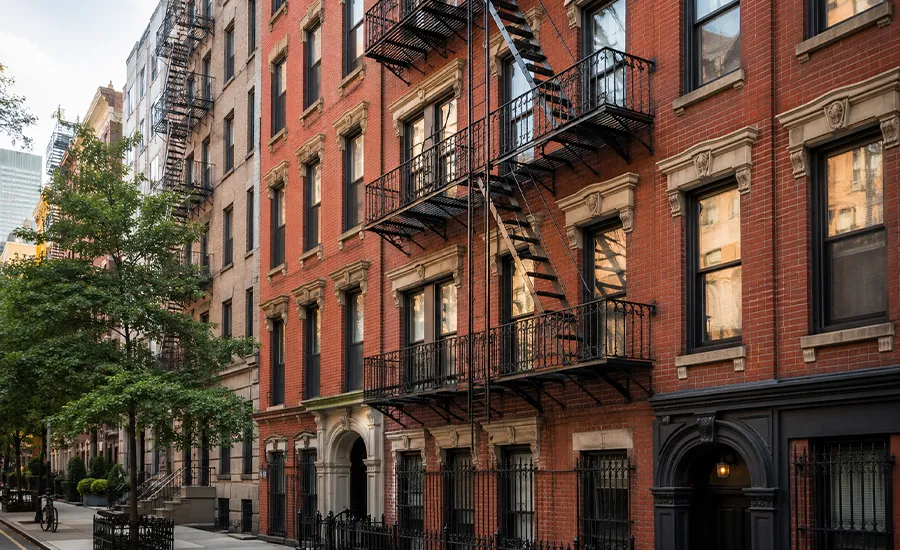
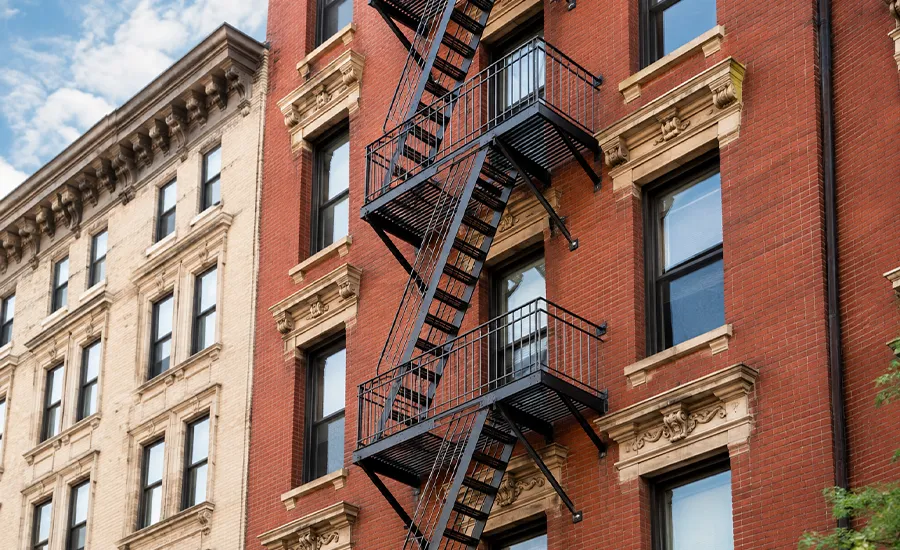
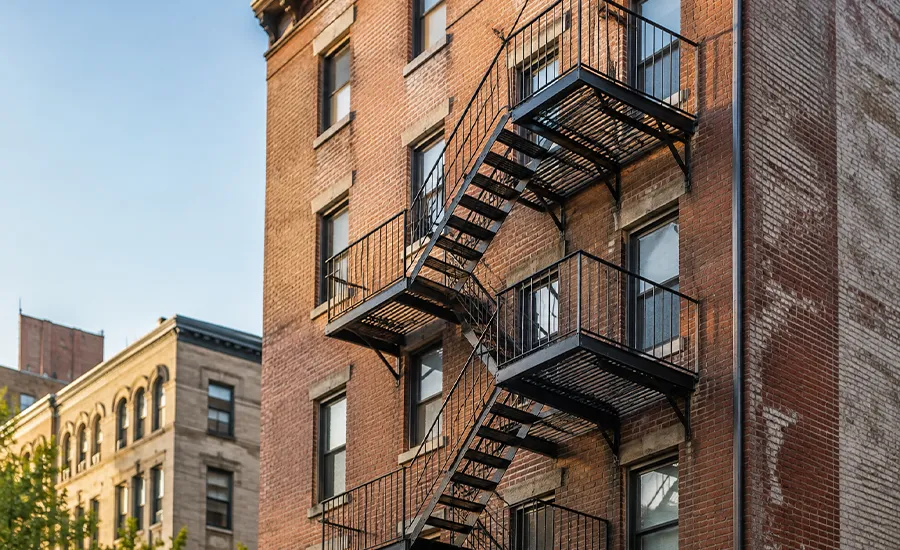
Fire escapes are common on many older New York City buildings, especially pre-war apartment buildings, walk-ups, mixed-use properties, and historic structures. They were widely used as a secondary emergency exit before modern fire-rated stairwells, sprinkler systems, emergency lighting, smoke control systems, and protected interior exits became standard.
Not every NYC building is required to have a fire escape. Whether one is required depends on the building’s age, approved means of egress, occupancy, construction history, and current safety conditions. If an existing fire escape is part of the building’s approved exit system, property owners must keep it safe, accessible, maintained, and ready for emergency use.
- Ο Fire escapes are not required on every NYC building.
- Ο Older residential and mixed-use buildings are more likely to have fire escapes.
- Ο Modern buildings usually rely on protected interior exits and fire safety systems.
- Ο Existing fire escapes must remain safe, accessible, and properly maintained.
- Ο Fire escapes should not be removed or altered without proper review.
- Ο Poor maintenance can lead to safety risks, violations, and costly repairs.
Why Older NYC Buildings Still Have Fire Escapes
Older NYC buildings often have fire escapes because they were built before modern fire safety systems became common. In many older apartments, tenement-style buildings, masonry walk-ups, and mixed-use properties, exterior fire escapes provided an additional way out when interior stairs were narrow, crowded, smoky, or unsafe.
Property owners dealing with older exterior fire escapes should first understand how these systems fit into the wider topic of NYC fire escape types, installation, laws, and safety. For owners focused on inspections, maintenance duties, violations, and code-related responsibilities, the broader NYC fire escape laws, codes, and compliance topic explains where this requirement fits within the full compliance picture.
New York’s older building stock also explains why exterior fire escapes are still so visible across the city. The history behind why New York has so many fire escapes is closely tied to older housing layouts, dense neighborhoods, and earlier emergency egress practices.
Common NYC buildings with fire escapes include:
- Pre-war apartment buildings
- Older multifamily residential buildings
- Historic tenement-style properties
- Mixed-use commercial and residential buildings
- Small walk-up buildings
- Certain landmark or masonry buildings
| NYC Building Category | Fire Escape Likelihood |
|---|---|
| Pre-war apartment buildings | Common |
| Historic tenement-style properties | Common |
| Older mixed-use buildings | Common |
| Small walk-up buildings | Common |
| Newer high-rise buildings | Less common |
| Modern Class A office buildings | Less common |
When a Fire Escape May Still Be Required in NYC
A fire escape may still be required when it is part of the building’s approved emergency exit system. This is especially important for older buildings that do not have the same interior egress systems found in newer construction.
A fire escape may need to remain in place when:
- It supports approved emergency egress
- Interior exit options are limited
- Occupancy conditions require a secondary route
- No approved alternative exit has been added
- Removing it would reduce occupant safety
- The building’s records still rely on that exterior exit
Property owners should compare this question with fire escape requirements for NYC buildings, because having a fire escape is one issue, while keeping it safe, accessible, and code-conscious is another.
Owners should also review NYC fire escape code requirements for property owners before assuming an existing fire escape can be ignored, enclosed, removed, or replaced.
Why Modern NYC Buildings Usually Do Not Need Fire Escapes
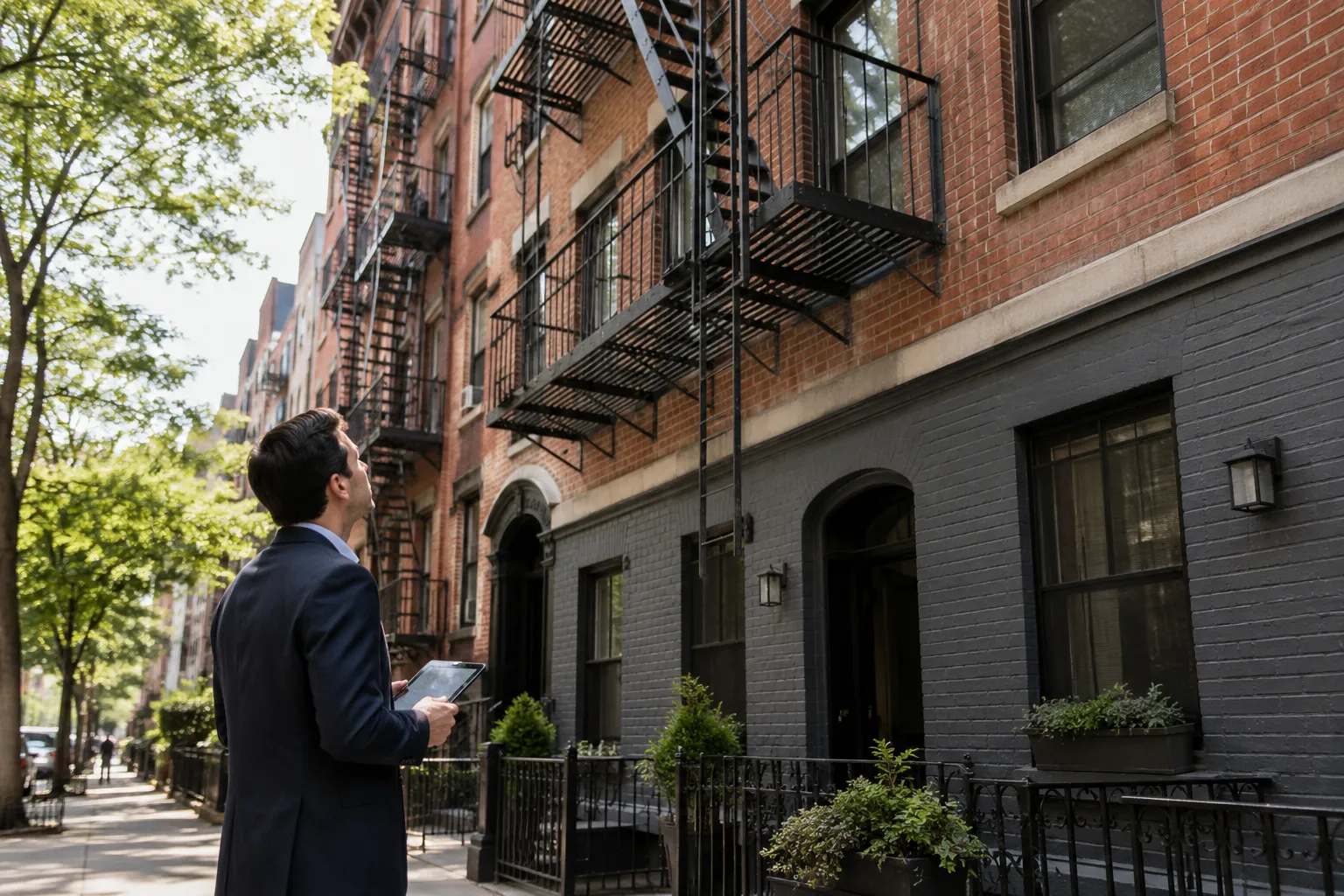
Modern NYC buildings usually rely on interior fire safety systems instead of exterior fire escapes. These systems are designed to support evacuation without requiring occupants to use outdoor stairs, platforms, or ladders during an emergency.
Newer buildings often include:
- Fire-rated stairwells
- Pressurized exit stairs
- Automatic sprinkler systems
- Fire alarm systems
- Smoke detection systems
- Emergency lighting
- Fire-resistant construction materials
These features are generally better suited for high-rise buildings, larger occupant loads, and modern life-safety planning.
| Modern Fire Safety Feature | Building Safety Purpose |
|---|---|
| Fire-rated stairwells | Protects interior evacuation routes |
| Sprinkler systems | Helps control fire spread |
| Fire alarms | Warns occupants early |
| Emergency lighting | Improves visibility during evacuation |
| Smoke control systems | Supports safer exit conditions |
Which NYC Buildings Are Most Likely to Have Fire Escapes?
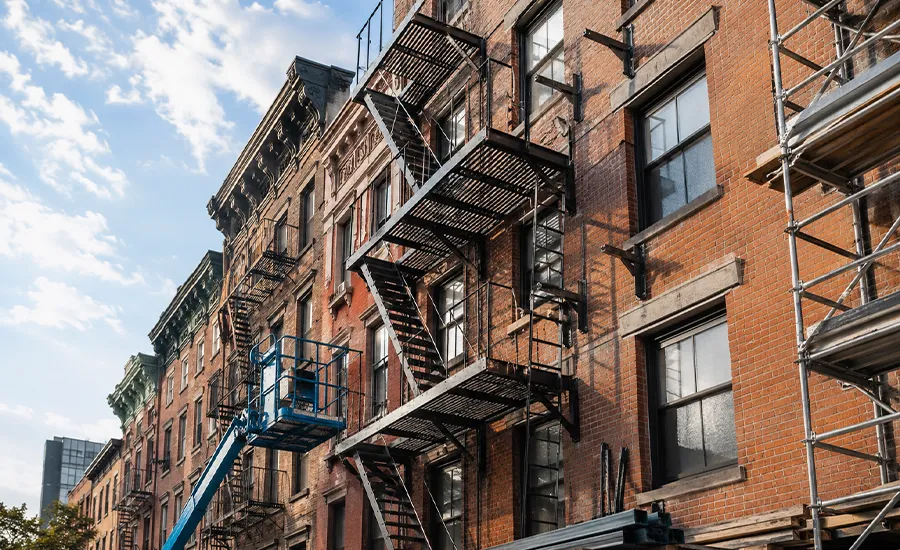
Fire escapes are most common on older buildings that were designed before today’s fire safety systems became standard. They are especially visible on brick apartment buildings, older walk-ups, mixed-use properties, and historic residential structures across Manhattan, Brooklyn, the Bronx, Queens, and other NYC areas.
The type of system can vary depending on the building’s age, height, layout, and available exterior space. Owners who want to identify what kind of system their property has can review the different types of fire escapes used in NYC buildings for better context.
Older properties may include:
- Rear-yard fire escapes
- Front façade fire escapes
- Balcony-style fire escapes
- Ladder-connected systems
- Platform-and-stair systems
If an older building needs a new or replacement exterior exit system, fire escape installation in NYC should be planned around approved egress, structural support, safe discharge, and long-term maintenance.
| Older Building Feature | Why Fire Escapes Are Common |
|---|---|
| Narrow interior stairs | Extra exit route may be needed |
| Older masonry construction | Exterior systems were commonly added |
| Walk-up layouts | Secondary egress may support evacuation |
| Multiple units per floor | Occupant safety planning becomes important |
| Historic building design | Existing systems may need preservation-sensitive care |
Can NYC Property Owners Remove an Existing Fire Escape?
Property owners should not remove, enclose, relocate, or significantly alter an existing fire escape without proper review. If the fire escape is part of the approved egress system, removing it can create safety risks and compliance problems.
Removal or alteration may involve review of:
- Approved building plans
- Existing exit routes
- Occupancy type
- Alternative means of egress
- Structural conditions
- Permit requirements
- Landmark or historic considerations
Before starting work, owners should understand when they can remove or alter a fire escape in NYC. Unauthorized changes can lead to violations, delays, repair costs, and increased liability.
Fire Escape Inspection Rules for Existing NYC Buildings
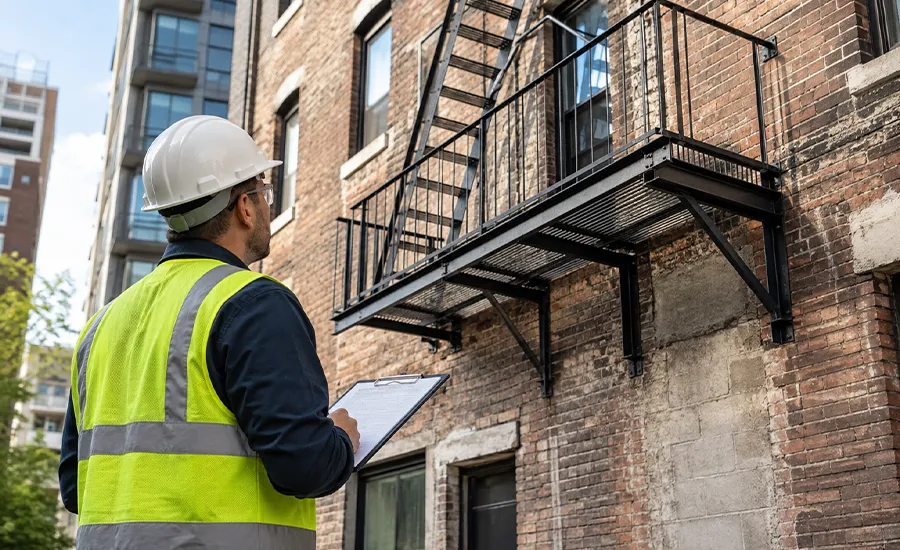
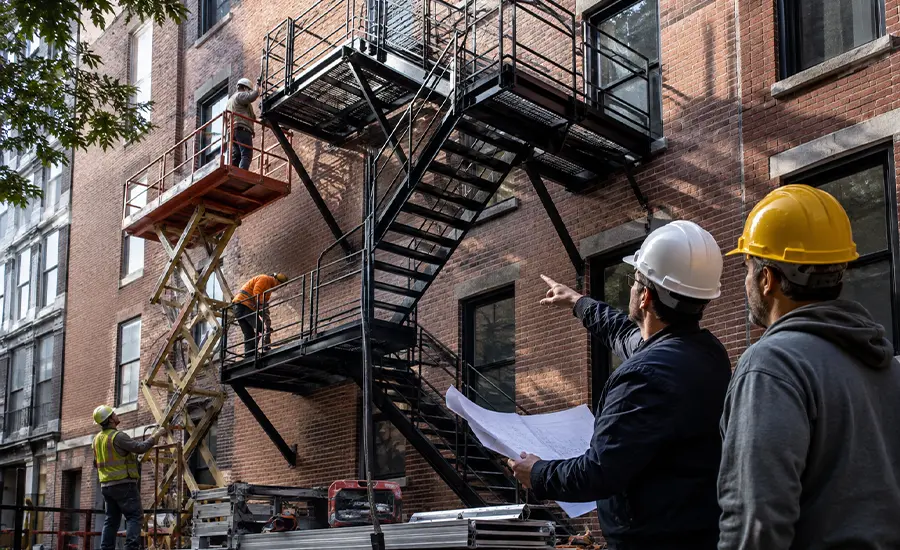
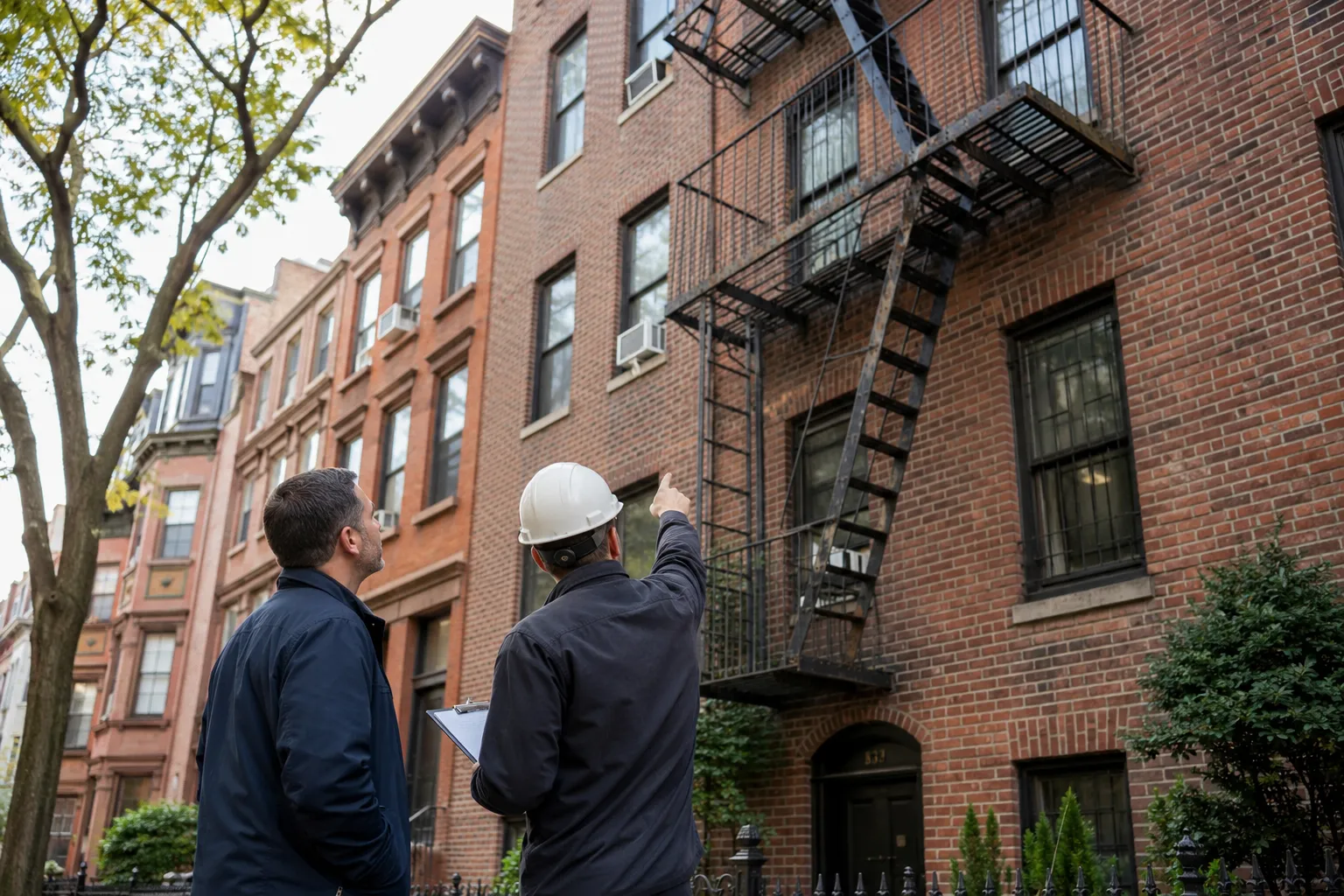
Even if fire escapes are not required on every building, an existing fire escape must remain safe and functional. Property owners should inspect visible conditions regularly and arrange a professional review when damage, rust, movement, or blocked access appears.
Inspection usually focuses on:
- Platforms
- Stair treads
- Railings
- Wall connections
- Anchors and fasteners
- Drop ladders
- Protective coatings
- Welded joints
A professional fire escape inspection in NYC can help identify unsafe conditions before they become more serious. For landlords managing older residential properties, winter fire escape inspections for NYC landlords can be especially useful when ice, moisture, rust, or loose components create seasonal risks.
| Fire Escape Inspection Area | What Should Be Reviewed |
|---|---|
| Platforms and stairs | Stability, damage, and safe movement |
| Railings and guards | Secure support and fall protection |
| Anchors and brackets | Firm connection to the building |
| Ladders and access points | Emergency operation and clearance |
| Coatings and rust | Surface protection and corrosion control |
Why Fire Escape Maintenance Matters for NYC Buildings
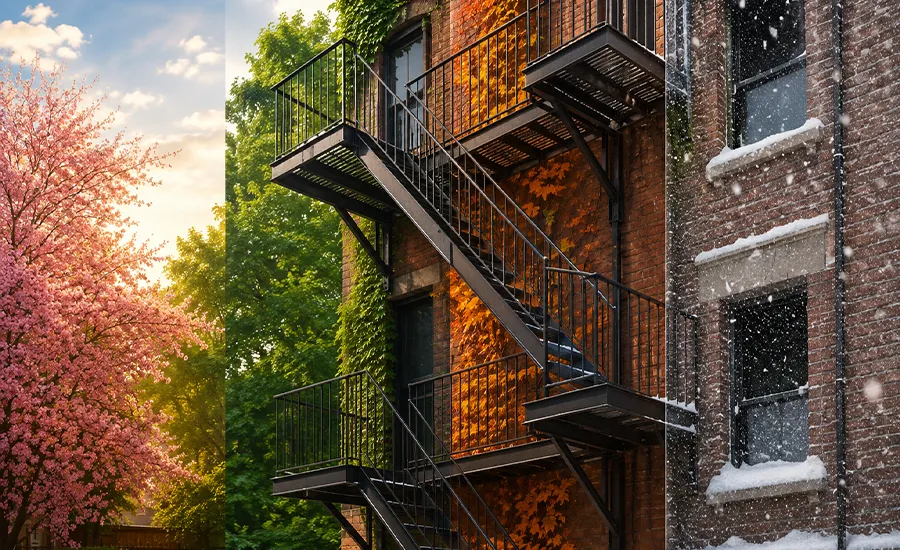
Fire escape maintenance matters because exterior metal systems face rain, humidity, snow, freeze-thaw cycles, pollution, and corrosion. Even if the fire escape was originally approved, poor maintenance can make it unsafe over time.
Maintenance usually includes:
- Removing rust and corrosion
- Keeping platforms and stairs clear
- Repairing damaged railings
- Tightening loose bolts and connections
- Restoring protective coatings
- Checking ladder operation
- Documenting inspections and repairs
Property owners should understand NYC landlord fire escape maintenance responsibilities, especially when tenants, managers, or inspectors report unsafe conditions.
A planned fire escape maintenance schedule in NYC can help reduce corrosion, blocked access, coating failure, and emergency repair costs. Since exposed metal systems can deteriorate quickly, fire escape painting in NYC also helps protect surfaces from moisture and rust.
Owners who want to plan ahead can also review the expected lifespan of fire escapes in NYC buildings when maintenance, weather exposure, and structural conditions are managed properly.
| Maintenance Task | Safety or Compliance Benefit |
|---|---|
| Rust removal | Helps protect metal strength |
| Protective coating | Slows moisture-related corrosion |
| Clear access routes | Keeps emergency paths usable |
| Fastener checks | Reduces movement and instability |
| Ladder operation checks | Supports emergency use |
Common Problems That Make Fire Escapes Unsafe
Fire escapes often become unsafe when small maintenance issues are ignored. Rust, blocked access, damaged stairs, loose railings, cracked welds, and weak wall connections can affect emergency use and create compliance concerns.
Common unsafe conditions include:
- Severe rust
- Loose railings
- Cracked welds
- Missing bolts
- Damaged stairs
- Blocked windows
- Inoperable ladders
- Weak wall connections
- Deteriorated platforms
Property owners should know what makes a fire escape non-compliant in NYC, because the main issue is often not whether the building has a fire escape, but whether the existing system remains safe and usable.
If damage is visible, timely fire escape repair in NYC may be needed. When brackets, joints, or connection points are weakened, fire escape welding in NYC can help restore safer support.
| Fire Escape Safety Problem | Why It Matters |
|---|---|
| Severe rust | Can weaken metal components |
| Blocked access | Can prevent emergency use |
| Loose railings | Increases fall risk |
| Damaged stairs | Affects safe movement |
| Weak connections | Reduces structural stability |
When to Call a Fire Escape Contractor in NYC
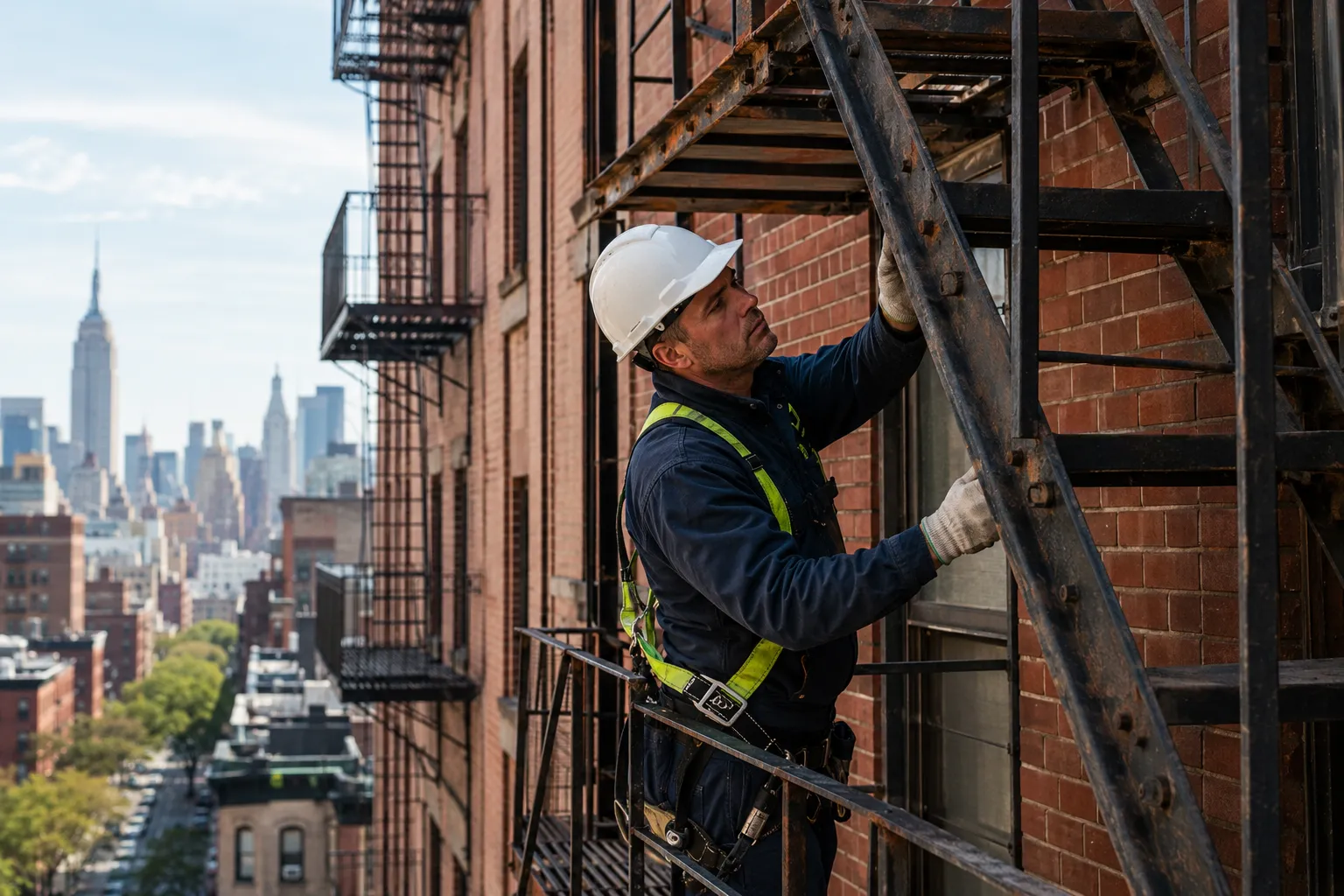
A professional contractor should be contacted when a fire escape shows visible deterioration, access problems, loose parts, or structural weakness. Owners should also seek help before buying, renovating, removing, replacing, or restoring a building with an existing fire escape.
You may need professional help when:
- Rust is visible on platforms or stairs
- Railings feel loose or unstable
- Bolts, brackets, or anchors appear damaged
- The ladder does not operate correctly
- A violation has been issued
- The building is being renovated
- The owner is considering removal or alteration
- The fire escape has not been inspected in years
For older or historic buildings, fire escape restoration in NYC may be appropriate when the system needs deeper structural correction. If the work is more focused on surface renewal, coating improvement, or limited component correction, fire escape refurbishment in NYC can help improve usable condition without unnecessary replacement.
Owners should also understand the next steps when a fire escape violates NYC building codes, because delaying corrective work can increase repair scope, documentation needs, and compliance pressure.
What NYC Property Owners Should Remember
Fire escapes are not required on every NYC building, but many older buildings still rely on them as part of their emergency exit system. Modern buildings often use enclosed stairs, sprinklers, alarms, emergency lighting, and protected interior exits instead. For older properties, the key responsibility is to keep any existing fire escape safe, accessible, maintained, and ready for emergency use.
Sardar Restoration Corp supports residential, commercial, mixed-use, and historic properties across NYC, including the Bronx, Manhattan, Brooklyn, Queens, Westchester, and nearby areas. If your property has an existing fire escape and you need help with inspection, repairs, maintenance, restoration, or code-related concerns, a trusted fire escape contractor in NYC can help protect the building before small issues become larger safety risks.
Contact Sardar Restoration Corp today at (+1) 917-355-8556 or sardarrestoration@gmail.com.
FAQs
Are fire escapes required on every building in NYC?
No. Fire escapes are not required on every NYC building. They are more common on older buildings that were designed before modern fire-rated stairs, sprinklers, and protected exit systems became standard.
Why do older NYC buildings have fire escapes?
Older NYC buildings often have fire escapes because they were built when exterior emergency exit systems were commonly used to provide a secondary route during fires or smoke events.
Can a property owner remove an existing fire escape?
A property owner should not remove or alter an existing fire escape without proper review. If it is part of the approved egress system, removal may require permits, professional review, and an approved alternative exit route.
Do modern NYC buildings need fire escapes?
Many modern NYC buildings do not need exterior fire escapes because they use enclosed stairwells, fire-rated exits, sprinkler systems, alarms, and other code-compliant safety features.
Who is responsible for maintaining an existing fire escape?
Property owners or responsible managing parties are generally responsible for keeping existing fire escapes safe, accessible, maintained, and ready for emergency use.
What makes an existing fire escape unsafe?
An existing fire escape may become unsafe when it has severe rust, loose railings, cracked welds, missing bolts, damaged stairs, blocked access, weak wall connections, or an inoperable ladder.
Can tenants use a fire escape as outdoor space?
No. A fire escape should not be used for storage, seating, plants, furniture, or personal items. It must remain clear and ready for emergency use.
When should a fire escape contractor be called?
A fire escape contractor should be called when there is rust, loose railings, damaged platforms, blocked access, cracked welds, missing bolts, or any concern that the fire escape may not be safe or compliant.