 ChatGPT
 Perplexity
 Google AI
 Claude
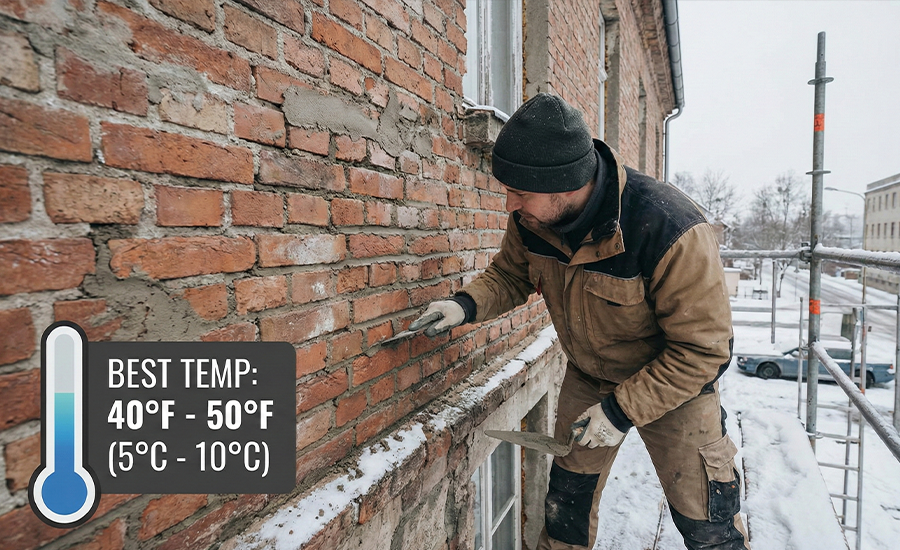
Brick pointing is the only masonry method that keeps your brickwork intact by sealing all the gaps and voids between mortar joints. It protects masonry from water infiltration, spalling, efflorescence, bacterial growth, and other structural hazards. But as winter arrives, so do new demands and complications: the mortar behaves differently in winter, and its consistency is more complicated to manage, as it cures too quickly and doesn’t fully dry. That’s why understanding the best temperature for brick pointing in winter is essential for homeowners and contractors.
In this blog, we’ll explore a detailed guide to brick pointing services in winter, including temperature ranges, safety measures, and the benefits of repointing bricks in optimal temperatures.
How Could Temperature Affect Brick Pointing Results?
Mortar only properly dries up when there’s hydration in the cement mixture. The following are the effects of severe winters on brick pointing and masonry:
- Hydration slows down.
- Mortar becomes weaker.
- Joints fail to bond properly.
- Moisture inside the mortar freezes and expands.
- Spalling, cracking, and gaps appear.
If you’re curious how cold weather impacts repointing outcomes, our article on whether repointing is safe in low temperatures will help clarify things.
Best Temperature Setting for Brick Pointing in Winter
Here is the breakdown of the best temperature setting for brick pointing in winters:
Perfect Working Temperature
The most reliable and safest temperature for brick pointing in winter is 40-50°F. At which,
- Mortar cures at a healthy rate.
- Hydration continues normally.
- No freezing occurs.
- Joint strength develops properly.
- Mortar adheres to brick surfaces without issues.
Baseline Temperature Limit
When the temperature drops below 32°F, the mortar begins to freeze, leading to failure and weakening.
Peak Temperature for Winter Work
50°F is the minimum temperature for brick pointing in winter, as mortar performs best at moderate temperatures, and excessive heating can also damage the masonry.
You can also explore how repointing decisions change when preparing for seasonal shifts in our guide on whether brick walls should be repointed before winter.
How Skilled Masons Perform Brick Pointing in Winter?
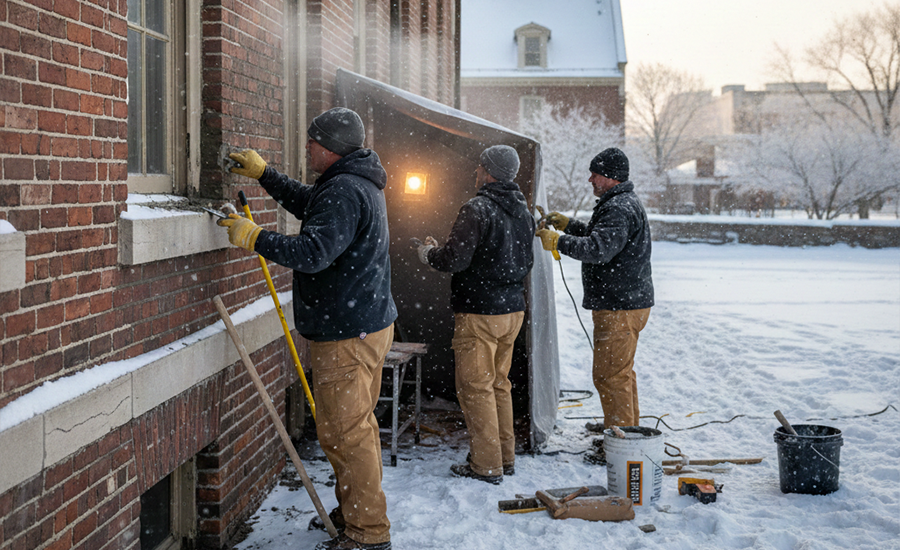
Skilled masonry contractors should follow safety guidelines and cold-weather masonry rules, using winter-grade materials and innovative techniques to maintain optimal temperature conditions:
- Heated working tents.
- Propane or electric heaters.
- Insulated curing blankets.
- Warm water for mixing.
- Anti-freeze mortar additives.
- Wind barriers or tarps.
- Staging covers.
- Nighttime insulation layers.
To compare seasonal performance, see our insights on whether winter or summer offers better conditions for brick pointing.
Anti-Freeze Mortar Additives
Here is the list of additives masons should use and avoid while repointing in winter. Let’s have a look at it:
Useful Additives
- Calcium chloride.
- Non-chloride accelerators.
- Air-entraining agents.
- Winter-grade admixtures.
Additives to Avoid
- Over-additized mortar results in cracking.
- Freeze-protection chemicals can be harsh to the masonry.
- High water content makes the mortar fragile.
For areas exposed to salt and freezing conditions, you may also find our guide on how brick pointing handles salt-heavy environments useful.
Condition Where Repointing Should Not Be Done
Make sure you don’t opt for repointing in the following conditions:
- When the temperature drops to zero.
- When severe snowfall is anticipated.
- When the temperature falls below 25°F, wind chill begins.
- When walls start dampening.
- When heating is sustained for multiple days.
Positive Results of Working In Optimal Winter Temperatures
Here are some of the benefits homeowners get when they execute repointing in optimal winter temperatures:
- Extended lifespan of mortar.
- Improved joint bonding.
- Better water repellency.
- Shields from freeze-thaw damage.
- Reduced cracking and deterioration.
- Stronger structural stability.
Conclusion
In conclusion, the best temperature for brick pointing in winter is 40°F, but it is essential to use all safety precautions and tools to keep your masonry insulated. Homeowners should call a professional masonry contractor who understands brick pointing in winter and employs techniques to prevent mortar from freezing and weakening.
Sardar Restoration Corp proudly serves every corner of NYC, including the Bronx, Manhattan, Brooklyn, Westchester, and Queens. Our services are designed to meet your specific needs, providing top-quality solutions wherever you are. Check our service areas to see how we can assist you in your location.
Contact us today at (+1) 917-355-8556 or sardarrestoration@gmail.com, or visit us at 2770 Fish Ave, Bronx, NY 10469, United States.
FAQs
What is the ideal temperature for brick pointing in winter?
The ideal temperature for brick pointing in winter is 40°F to 50°F, which allows mortar to cure properly and prevents surface cracking.
What happens if the mortar freezes during winter?
When mortar freezes during winter, it leads to:
- Brittles mortar
- Powdery surfaces
- Loses adhesion
- Starts cracking
- Should be removed asap
How long does mortar take to dry in winter?
In winter, the mortar-drying process and hydration rate are very slow, so the mortar may properly cure in 24-48 hours.
Is it safe to point bricks when snow or frost is present?
No! Repointing in snow or frost can be hazardous as it weakens the mortar bonding. So make sure to prep the surface properly before repointing.
Does winter brick pointing cost more?
Yes! Brick pointing in winter costs more because it requires extra labor, equipment, proper temperature monitoring, and the installation of tents.