
 ChatGPT
 Perplexity
 Google AI
 Claude
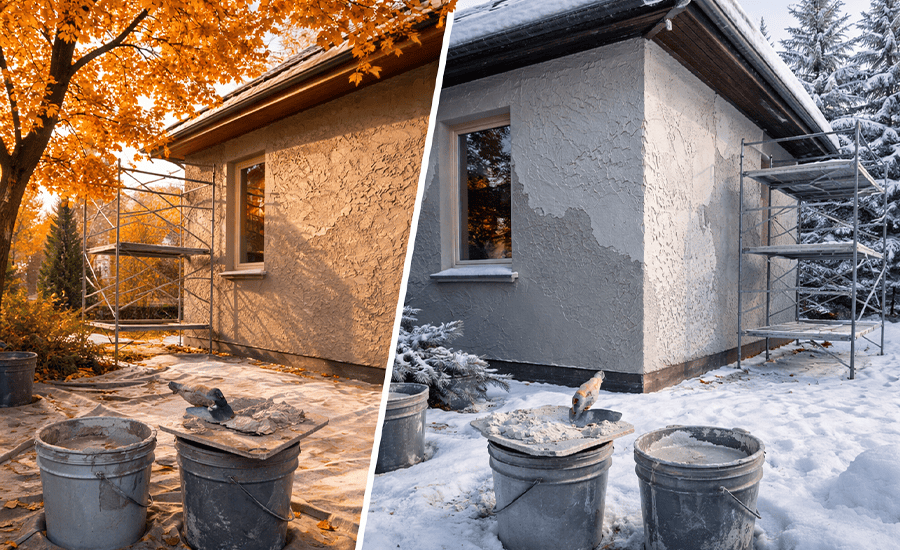
Stucco is a widely used exterior finish applied to brick, cement, and façade surfaces using high-quality lime-based or cement-based materials. Its durability, appearance, and long-term performance depend heavily on when the work is carried out. Temperature, humidity, and moisture levels play a direct role in how stucco sets and cures.
Fall is often considered the preferred season for stucco work due to its stable weather conditions, while winter presents a different set of challenges that require careful planning and additional precautions. Choosing the right season can be the difference between a smooth, crack-free finish and costly future repairs.
In this article, we compare fall vs winter stucco work in detail, covering climate impact, advantages, limitations, and best practices, so you can decide which season delivers better and longer-lasting results for your property.
Impact of Climate Conditions On Stucco Performance
Stucco is a cement-based plaster that can be applied to walls, brick, or masonry. It is essential to check the following elements before opting for stucco work, as all its performance depends on these factors:
- Temperature ranges: The temperature should lie between 50°F and 90°F.
- Relative humidity: Keep it moderate so the stucco cures evenly.
- Moisture retention level: Ensure surfaces are dry and the stucco mixture has low water content, as excess moisture can weaken adhesion.
To minimize long-term damage caused by temperature swings, proper Stucco weatherproofing for freeze and thaw cycles plays a critical role in protecting exterior walls throughout colder months.
Key Benefits & Limitations Of Stucco Work In Fall
Let’s have a look at the benefits and drawbacks of performing stucco work in the fall:
Key Benefits
- Moderate weather: Fall is the best season for proper curing, as it also reduces the risk of cracks.
- Optimal Humidity: It prevents shrinkage or uneven drying.
- Minimal precipitation: It minimizes water-related issues during application.
- Increased natural light: More working hours for contractors, ensuring proper application.
Limitation
- Unexpected Frost Formation: In colder regions, late-fall frost may damage freshly applied stucco.
- Rapid climate changes: Rapid day-night swings can affect curing.
Key Benefits & Limitations Of Stucco Work In Winters
Let’s have a look at the benefits and drawbacks of performing stucco work in winter:
Key Benefits
- Reduced moisture levels: The stucco sets instantly due to dry air.
- Improved contractor Access: Possible cost savings due to lower demand.
- Consistent Temperature: Predictable curing if the temperature stays above freezing.
Limitations
- Freeze Potential: Water in stucco may freeze before curing, causing cracks.
- Surface Obstruction: In winter, surfaces do not dry instantly; ensure they are sufficiently dry for adhesion.
- Reduced Workday hours: Days are shorter in winter, so working time is much longer.
- Cost Adjustments: In winter, it may demand heaters, insulated blankets, or additives.
If you are planning or have already completed winter stucco work, it is equally important to understand How to identify hidden stucco damage after winter before small cracks turn into costly structural issues.
Best Practices For Proper Stucco Installation
Make sure to implement the following practices, as they help in the proper stucco installation:
In Fall
- Monitor weather forecasts to avoid frost and rain.
- Prepare surfaces properly.
- Use light misting for dry air to prevent cracks.
- Schedule early in the fall to avoid a late-season cold.
In Winter
- Use heated blankets or enclosures to protect stucco.
- Add accelerators to help cure in cold temperatures.
- Apply in small sections for better control.
- Avoid surfaces with snow or ice.

Following proven best practices for repairing stucco in cold temperatures helps maintain surface strength, improves adhesion, and reduces the risk of early failure during winter conditions.
Seasonal Suitability: Which One’s Better?
Stucco work can be performed in both fall and winter, but the fall season is the winner for excellent stucco outcomes. Fall is considered an ideal season as it has a perfect temperature range and humidity control for proper stucco curing. On the other hand, winter can be risky for stucco work. If it’s essential to do stucco work in winter, make sure to use proper safety measures for lasting results.
Conclusion
Seasonal timing plays a critical role in stucco durability, but long-term results ultimately depend on correct surface preparation, material selection, and curing control. Ignoring these factors can shorten the lifespan of stucco, regardless of when the work is performed.
By understanding how temperature, moisture, and seasonal conditions influence stucco behavior, property owners can plan projects more effectively and reduce the risk of premature cracking or repairs.
Sardar Restoration Corp provides reliable stucco services across NYC, including the Bronx, Manhattan, Brooklyn, Westchester, and Queens. For expert guidance or seasonal stucco work, call (+1) 917-355-8556 or sardarrestoration@gmail.com, or visit us at 2770 Fish Ave, Bronx, NY 10469, United States.
FAQs
Is fall the best season for stucco work?
Yes! The ideal season for stucco work is fall. Be it repairs, restoration, or stucco installation, fall offers mild, stable temperatures that help stucco cure properly.
Can stucco be applied in winter?
Yes! Stucco can be applied in winter only if it is done with proper heated enclosures, on dry surfaces, and under stable temperatures. Winter stucco work carries higher risks and requires professional expertise.
Does humidity affect stucco curing more in fall or winter?
Yes, humidity plays a bigger role in fall. Moderate humidity in fall helps stucco cure evenly, while extremely dry winter air can cause rapid surface drying, increasing crack risk if not managed properly.
What happens if stucco freezes during curing?
The following condition occurs if the stucco freezes before it cures properly:
- Water in the mix expands.
- Cracks and surface weakness may develop.
- Adhesion to the wall can fail.
- Long-term durability is reduced.
Is winter stucco work more expensive?
Yes! Stucco work can be more expensive in winter because it requires more labor, insulated blankets, high-grade additives in the stucco mixture, and additional precautions, which can increase overall costs.
Can additives make winter stucco as reliable as fall application?
Additives can improve winter stucco performance by speeding up curing and reducing freeze risks, but they still cannot fully match the natural curing conditions provided by fall weather.
Should I postpone stucco work until spring instead of winter?
Yes! Our stucco patching contractor in NYC recommends postponing the stucco work if winter gets harsh. Make sure to wait until spring, as it may reduce the risk of stucco cracking.