
 ChatGPT
 Perplexity
 Google AI
 Claude
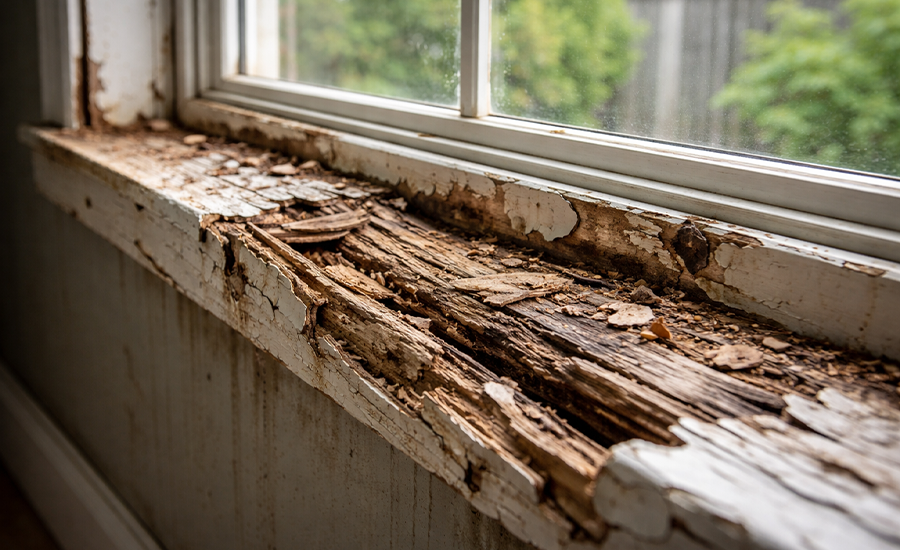
Window sills protect your home from moisture, air leaks, and long-term structural stress. When a sill starts to fail, the damage rarely stays visible on the surface. In many cases, moisture begins to work its way into surrounding walls, framing, or masonry before homeowners notice clear signs of deterioration.
Across many property types, a damaged window sill can quickly become an entry point for water intrusion. Left unaddressed, this often leads to interior wall damage, mold growth, and rising energy costs. Repairing window sills at an early stage helps maintain structural stability, supports proper drainage, and keeps indoor spaces dry and energy-efficient.
What You Need To Know
This guide outlines the 8 most common warning signs that indicate a window sill may need immediate repair. These indicators are frequently identified during routine property inspections, particularly in buildings exposed to repeated moisture, seasonal weather changes, and aging sealants.
You’ll also learn why these problems develop, how moisture damage spreads beyond the sill itself, and what can happen when repairs are delayed. Understanding these early signs allows property owners to take timely action, limit structural impact, and avoid more extensive repairs later on.
- Ο Early window sill damage can allow moisture to enter walls, framing, and interior finishes if not repaired in time.
- Ο Water exposure is the leading cause of wood rot, masonry breakdown, and concrete sill deterioration.
- Ο Each window sill material (wood, stone, concrete, masonry) requires a different repair method for long-term durability.
- Ο Mold or mildew near windows often indicates ongoing moisture intrusion behind the sill.
- Ο Regular inspections help catch minor sill damage before it turns into structural repairs or full replacement.
What Is the Role of Window Sills in a Home?
Window sills play a critical role in protecting both the exterior and interior of a building. They are designed to guide water away from the wall assembly and prevent moisture from entering through the window opening. When properly installed and maintained, window sills help preserve surrounding masonry, framing, and interior finishes.
Beyond water control, window sills also support the window frame and help maintain an airtight seal. A compromised sill can allow drafts, moisture, and debris to enter the wall cavity, which may gradually lead to insulation damage, material deterioration, and indoor moisture-related issues.
Key functions of a window sill include:
- Directing rainwater away from the building façade.
- Supporting and stabilizing the window frame.
- Protecting interior wall systems from moisture intrusion.
- Reducing air leakage around window openings.
Warning Signs: It’s Time To Repair Your Window Sills
Window sill damage should be addressed as soon as it is identified. Small cracks, peeling paint, or moisture marks can develop into major structural or moisture-related issues if ignored. During property inspections, contractors often find that early sill deterioration is linked to hidden water intrusion inside wall assemblies.
Below are the most common signs that indicate your window sill may need immediate repair.
Noticeable Seams and Voids
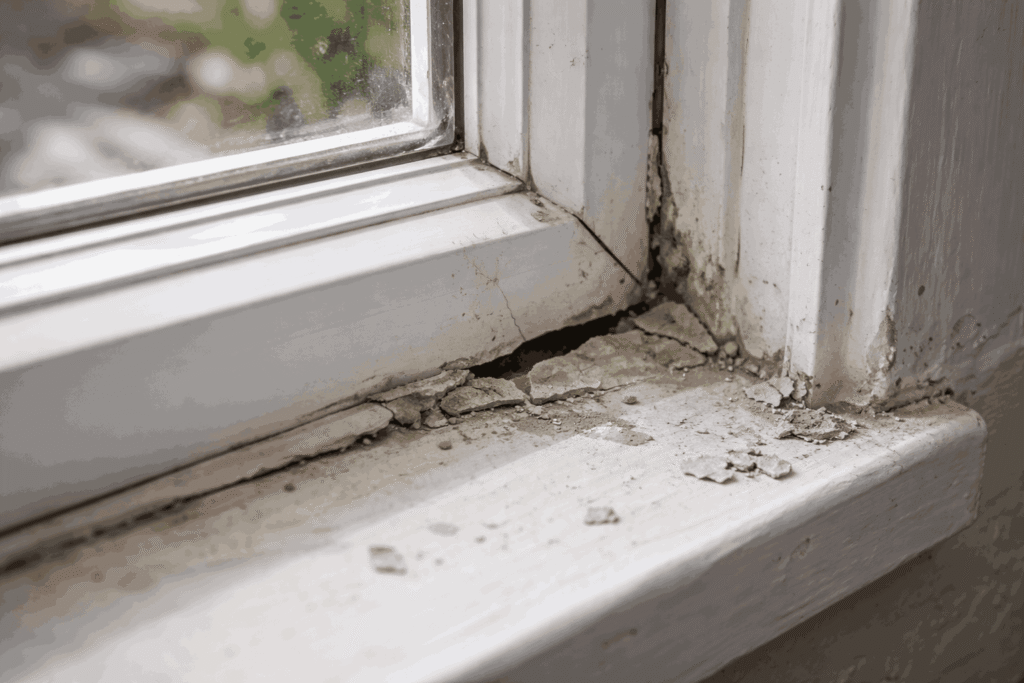
Cracks or gaps around a window sill are often the earliest visible signs of deterioration. These openings usually form due to material movement, moisture exposure, or aging sealants, with mortar cracks in cold weather becoming more visible as temperatures fluctuate.
Common indicators include:
- Hairline cracks along the sill surface
- Deeper fractures near corners
- Gaps between the sill and the window frame
These openings allow water to penetrate behind the sill, where cracks around windows in winter gradually expand with repeated temperature changes.
Paint Deterioration
Paint failure on a window sill is rarely just a cosmetic issue. Peeling, bubbling, or flaking paint often indicates moisture trapped beneath the surface.
Typical causes include:
- Water infiltration
- Poor drainage from the sill
- Aging or failed sealants
When moisture remains trapped, it accelerates material breakdown beneath the paint layer.
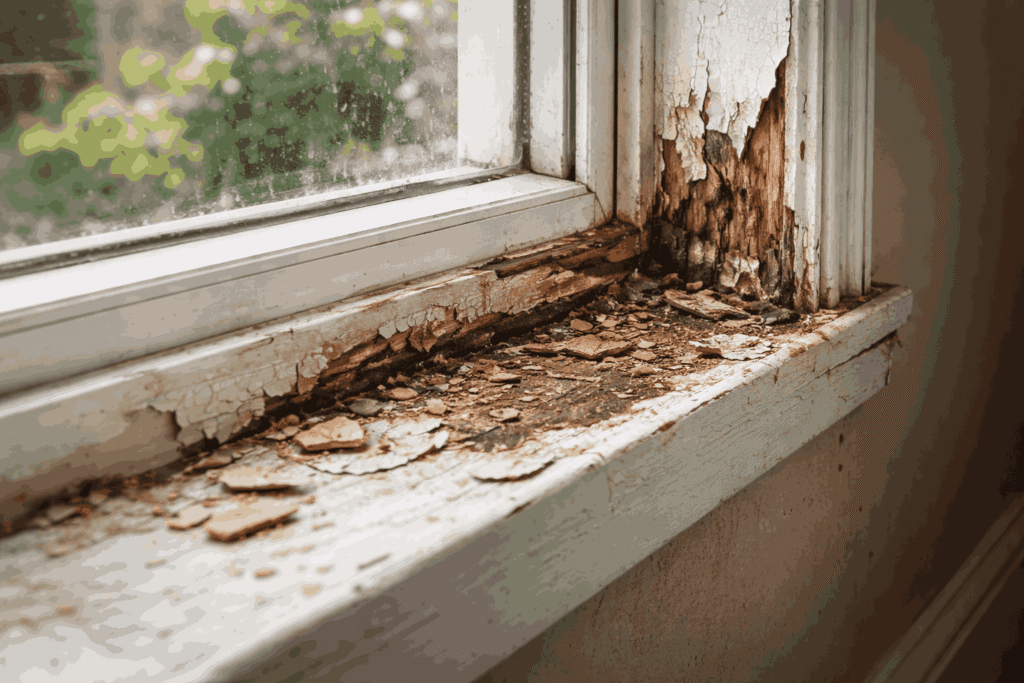
Wood Degradation
Wooden window sills are especially vulnerable to prolonged moisture exposure. A sill that feels soft or spongy often signals internal rot rather than surface wear.
Signs of wood deterioration include:
- Crumbling or uneven edges
- Dark discoloration
- A persistent musty odor near the window
If left untreated, rot can spread into the surrounding window framing.
Damp Stains Below Windows
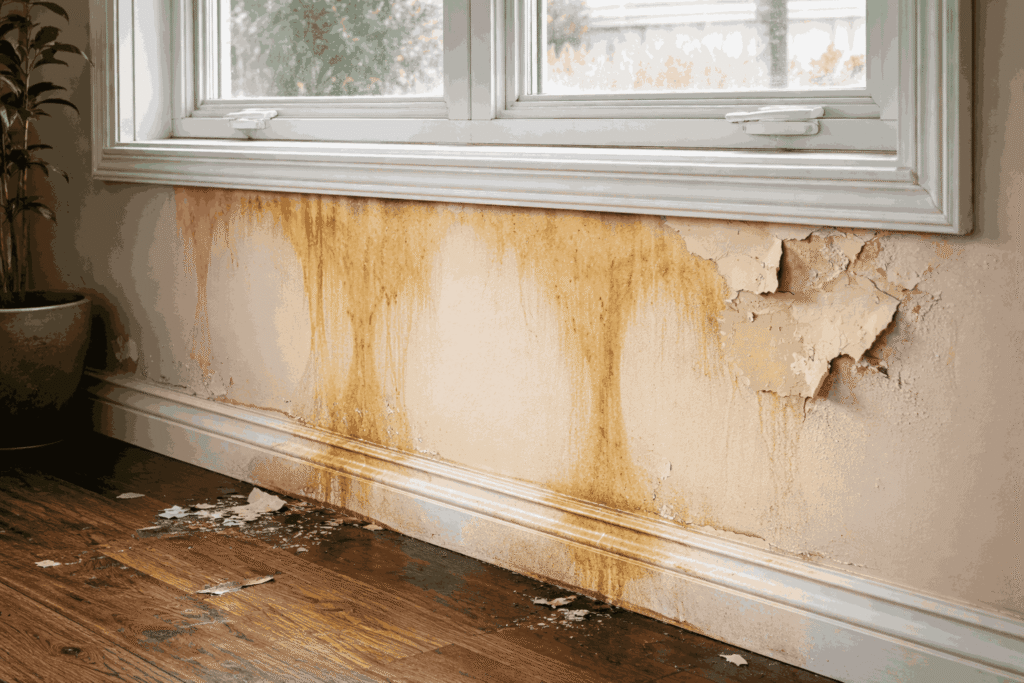
Water stains on interior walls beneath a window are strong indicators of sill failure. These marks often appear gradually and worsen over time.
Look for the following signs:
- Yellow or brown stains on the walls
- Damp drywall below windows
- Peeling interior paint
These symptoms usually indicate moisture entering the wall cavity rather than draining away from the structure, often linked to cold-weather lintel damage above the opening.
Fungal or Mold Growth
Mold growth around windows points to persistent moisture conditions. It often develops where water becomes trapped near the sill or frame.
Common locations include:
- Corners of the windowsill
- Joints between the sill and frame
- Interior walls directly below the window
Beyond structural concerns, mold growth can also affect indoor air quality.
Unsealed Openings and Air Drafts
Drafts felt around closed windows often indicate separation or cracking along the window sill. These openings disrupt indoor comfort and thermal control.
Draft-related issues may lead to:
- Higher energy usage
- Increased condensation near windows
- Added moisture stress on the surrounding materials
Drooping or Uneven Sill Surfaces
A window sill should remain level and firmly supported. Sagging or tilting usually indicates underlying material failure.
This condition is often caused by:
- Long-term moisture exposure
- Deteriorated support materials
- Structural movement
Over time, uneven sills can place stress on the window frame and affect window operation.
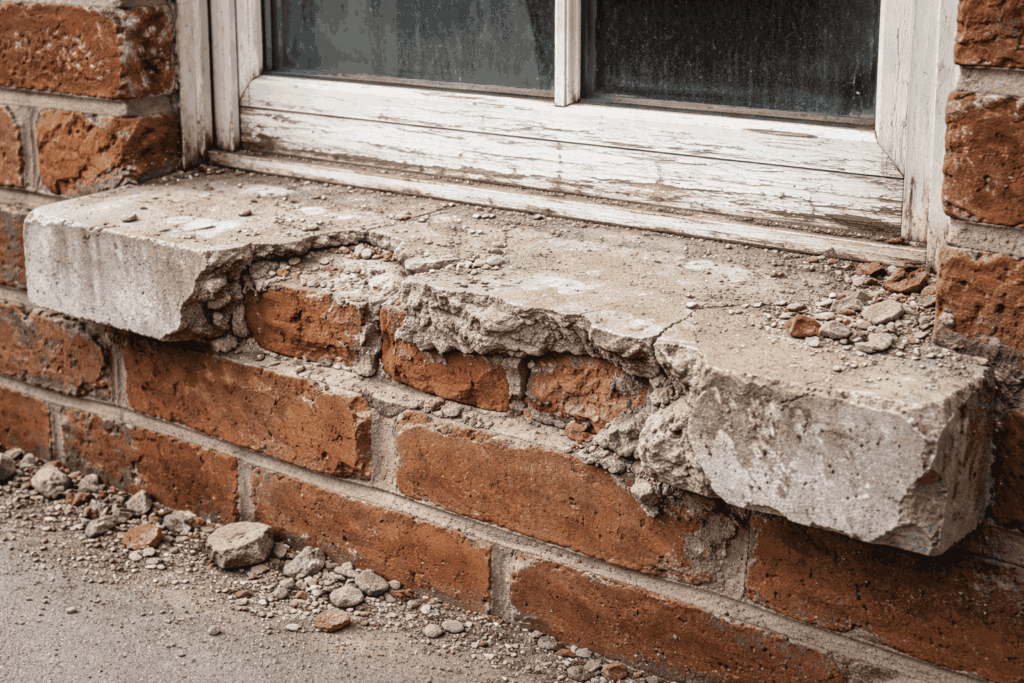
Spalling Brick, Stone, or Concrete
Masonry window sills can crack, flake, or crumble when exposed to repeated moisture and temperature changes. This surface breakdown is known as spalling and is closely linked to cold-weather masonry problems around window openings.
Early warning signs include:
- Chipped or broken edges
- Powdery residue on the surface
- Exposed aggregate or reinforcing material
Once spalling begins, water absorption accelerates and damage progresses more rapidly, especially alongside lintel failure in older NYC buildings.
The Risk Of Delaying Window Sill Repairs
Window sill damage rarely stays limited to the sill itself. When repairs are delayed, ongoing exposure shows how winter weather damages window sills, allowing moisture to move deeper into surrounding materials beyond what is immediately visible.
What starts as a minor crack, paint failure, or soft spot can gradually turn into widespread moisture damage inside walls, framing, and interior finishes. By the time visible symptoms worsen, repairs are usually more extensive and costly.
Delaying window sill repairs can lead to:
- Moisture penetration into wall cavities and insulation.
- Progressive wood rot or masonry deterioration.
- Mold growth that impacts indoor air quality.
- Increased strain on window frames and seals.
- Higher energy bills due to air leakage and heat loss.
In many cases, unresolved sill damage eventually results in partial wall repairs or complete window replacement. Addressing issues early helps contain the damage, reduce repair scope, and maintain long-term structural stability.
Final Thoughts
Window sills act as a critical barrier against moisture and environmental stress, and even minor damage can lead to broader structural and indoor issues if left unaddressed. Cracks, rot, staining, or surface deterioration are often early warnings of deeper moisture intrusion within walls and framing. Identifying these signs early and taking timely action helps protect the building envelope, maintain energy efficiency, and prevent avoidable repair costs over time.
Sardar Restoration Corp serves residential and commercial properties across NYC, including The Bronx, Manhattan, Brooklyn, Westchester, and Queens, working as a trusted window sill repair contractor in NYC that property owners rely on. Each repair approach is tailored to local building conditions, material types, and seasonal exposure to ensure long-lasting protection and reliable performance.
For more information or to discuss your property concerns, contact (+1) 917-355-8556, email sardarrestoration@gmail.com, or visit 2770 Fish Ave, Bronx, NY 10469, United States.
FAQs
Can I fix a window sill on my own?
We do not recommend DIY. While minor aesthetic problems like caulking or repainting can be fixed at home, structural damage, wood rot, or masonry deterioration call for expert repair to guarantee long-term durability and safety.
Can damaged window sills affect the structure of a wall?
Yes. When a window sill fails, moisture can travel into the wall cavity and weaken surrounding framing, masonry, or insulation. Over time, this hidden moisture may lead to structural deterioration that extends beyond the window area itself.
How can I determine whether my window sill has to be repaired?
Check for the following signs to determine the need for window sill repair:
- Cracks
- Peeling paint
- Soft wood
- Water stains
- Mold development
What is the price of window sill repair?
The material, the degree of damage, and labor all affect the cost. A complete replacement may be more expensive than a few hundred dollars for minor repairs. An exact estimate is provided by a professional inspection.
Is mold a result of broken window sills?
Yes! Mold and mildew can flourish in a moist environment created by water intrusion from a damaged sill, which can have an impact on indoor air quality and health.
How can I shield my window sills from further harm?
You can shield your window sills from further harm by applying the following safety measures:
- Maintain a clean sill.
- Frequently repaint or seal wooden sills.
- Make sure windows have enough drainage.
- Plan regular inspections to find cracks or decay early.
How long does it take to repair a window sill?
Depending on the complexity and quantity of windows, minor repairs like caulking cracks or painting can be completed in a few hours, but structural or material replacement may take one to three days.