 ChatGPT
 Perplexity
 Google AI
 Claude
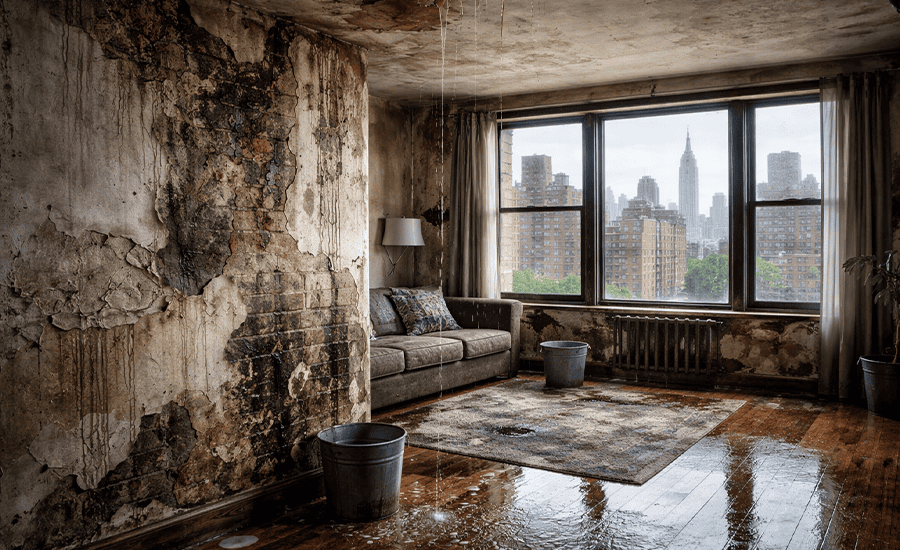
Moisture damage is one of the most underestimated threats to residential and commercial buildings across NYC. Due to frequent rainfall, seasonal temperature shifts, high humidity, and dense urban construction, moisture slowly penetrates exterior materials and worsens over time. When left unaddressed, it weakens masonry, accelerates spalling, encourages mold growth, and compromises indoor air quality, often turning minor water exposure into costly structural repairs.
What You Need To Know?
Across many city residential properties, moisture damage develops gradually, beginning at exterior walls, roofs, or foundations before spreading inward. Both older and modern buildings are vulnerable when persistent dampness remains untreated. Over time, this ongoing exposure impacts structural stability, reduces property value, increases long-term repair costs, affects occupants’ living conditions, and may lead to housing code violations if early warning signs are ignored.
- Ο Moisture damage develops slowly and weakens a building’s structural integrity over time.
- Ο Common moisture-prone areas include facades, roofs, basements, parapet walls, and mortar joints.
- Ο Basements in NYC are especially affected by groundwater pressure and drainage limitations.
- Ο Routine inspections and proper waterproofing help reduce long-term moisture-related damage.
Why Excess Moisture Is a Concern In NYC Homes?
NYC buildings face environmental and structural conditions that allow moisture to accumulate faster and remain trapped longer than in many other regions. Regular exposure to rain, snow, humidity, and temperature shifts causes moisture to seep into masonry, roofing systems, and foundations. Over time, this persistent dampness weakens structural components, accelerates surface deterioration, and creates unhealthy indoor living conditions if not properly managed.
Key contributing factors include:
- Frequent rainfall and snowfall throughout the year.
- High humidity levels, particularly during the summer months.
- Freeze-thaw cycles expand cracks and joints and worsen moisture issues caused by freezing temperatures.
- Aging masonry and deteriorating mortar in older buildings create challenges for masonry repairs during winter conditions.
- Flat roofs and parapet walls are common across NYC properties.
- Limited ventilation in basements and cellar spaces.
Frequent Moisture Penetration Points in NYC Homes
In NYC homes, moisture rarely enters through a single source. Instead, it typically infiltrates buildings through multiple vulnerable areas where materials have aged, shifted, or lost their protective seals. Over time, repeated exposure allows water to pass through these weak points and spread into interior spaces, increasing the risk of structural and moisture-related damage.
Common moisture entry points include:
- Cracked or deteriorated facades.
- Failing or eroded mortar joints.
- Roof leaks and damaged flashing.
- Basement foundation walls.
- Inefficient or blocked drainage systems.
- Gaps around windows and doors.
- Parapet walls and coping stones.
The Stages of Moisture Damage Development
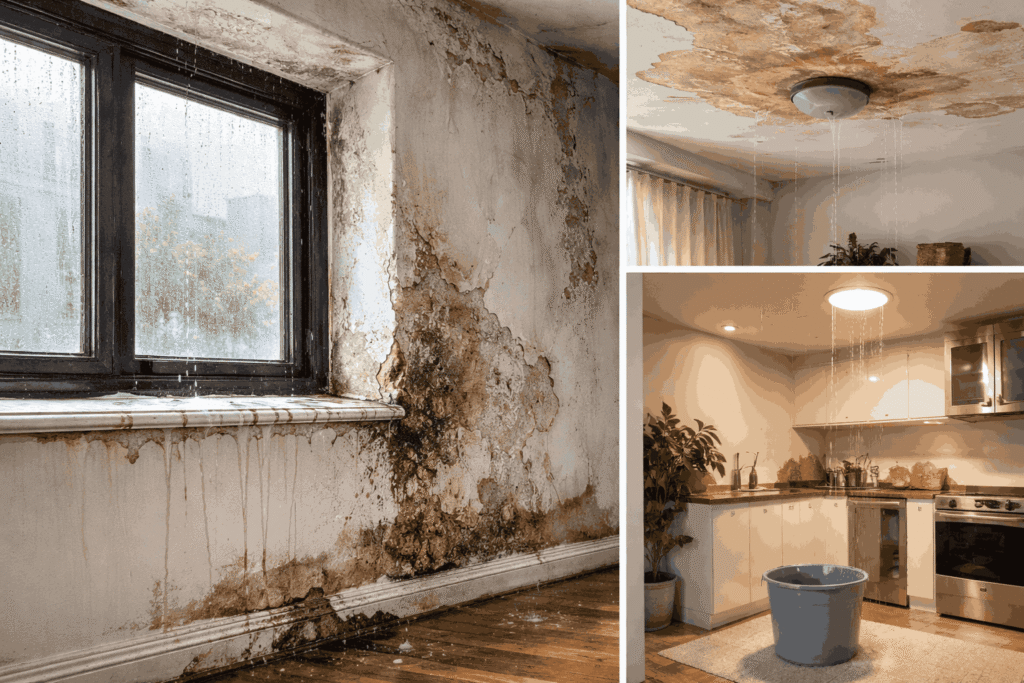
Moisture damage develops gradually in NYC buildings, often going unnoticed until visible deterioration appears. When early signs are ignored, moisture continues to migrate through masonry and structural components, increasing the severity of damage over time. Understanding these stages helps property owners recognize problems early and take corrective action before major structural risks emerge.
| Damage Stage | Primary Effect | Noticeable Symptoms |
|---|---|---|
| Preliminary stage | Dampness retention | Moisture spots and surface blemishes |
| Intermediate stage | Structural stress | Hairline cracks and paint flaking |
| Escalated stage | Material deterioration | Brick face damage and metal corrosion |
| High-risk stage | Structural instability | Wall failure or partial collapse |
Most NYC homeowners first become aware of moisture issues during the preliminary or intermediate stage, when surface damage begins to appear. By the time brick deterioration or metal decay is visible, repairs often become more complex and costly due to reduced waterproofing performance in cold conditions, making early inspection and intervention especially important.
How Does Moisture Affect The Interior Surfaces?
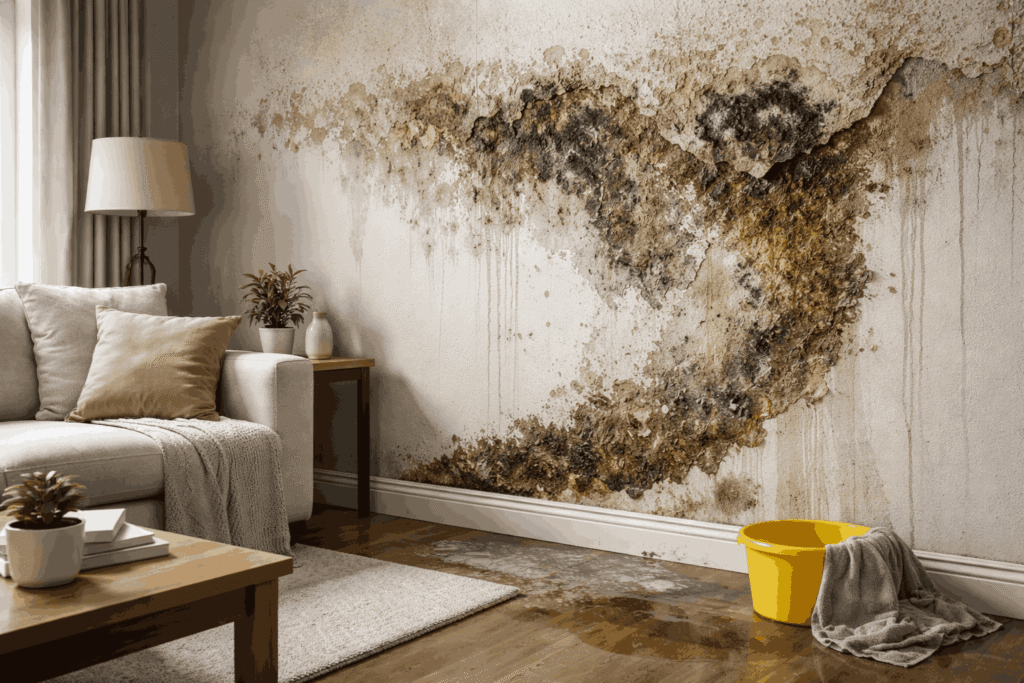
When exterior building materials absorb moisture over time, the moisture gradually moves inward through walls, floors, and concealed structural layers. In NYC homes, this internal spread often goes unnoticed until visible surface damage or indoor discomfort appears. Persistent dampness inside living spaces encourages mold growth, weakens interior finishes, and reduces overall indoor air quality, making the property less comfortable and less usable over time.
Common interior effects include:
- Mold growth on walls, ceilings, and hidden cavities.
- Warped flooring and gradual wood deterioration.
- Peeling paint and bubbling interior finishes.
- Persistent musty odors and indoor discomfort.
How Does Moisture Damage Impact Occupants’ Lives?
Across dense urban residential properties, long-term moisture problems do more than damage building materials; they directly affect the health, comfort, and daily routines of occupants. Prolonged damp conditions often create substandard living environments, especially in poorly ventilated apartments and basement units. Over time, persistent moisture exposure increases health risks and reduces overall indoor comfort, making living spaces difficult to maintain and inhabit safely.
Common health-related effects include:
- Increased asthma symptoms and allergic reactions.
- Breathing discomfort caused by excess humidity.
- Skin and eye irritation from prolonged damp exposure.
- Higher health risks for children and elderly residents.
Why Are Basements Most Vulnerable to Moisture Damage?
Because most basements sit below ground level, they are especially vulnerable to moisture damage in urban residential structures due to constant exposure to surrounding soil conditions. Elevated groundwater levels, aging foundation systems, and limited drainage options often result in seasonal basement water leakage, as moisture builds pressure against foundation walls. When waterproofing is inadequate or outdated, water gradually seeps through cracks and porous surfaces, leading to long-term structural and interior issues.
Common basement-related moisture problems include:
- Seepage through foundation and basement walls.
- Cracks caused by hydrostatic pressure.
- Mold growth in enclosed or poorly ventilated areas.
- Damage to stored belongings and interior finishes.
- Gradual weakening of foundation components.
Effective Ways To Prevent Moisture Damage
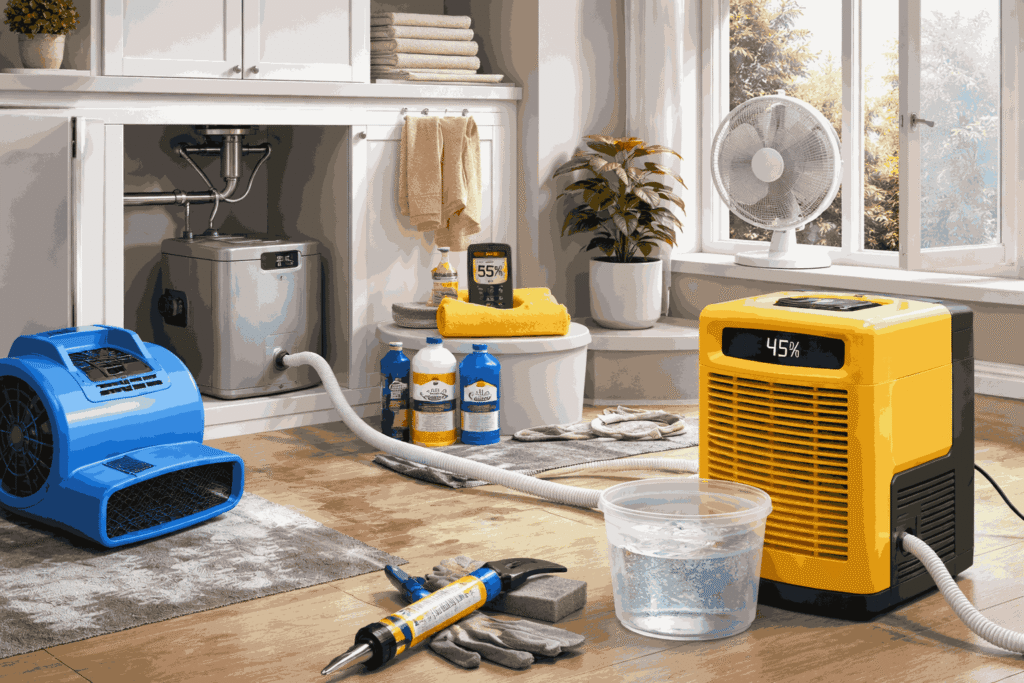
Preventing moisture damage in NYC buildings requires consistent maintenance and early intervention rather than reactive repairs. Older properties, in particular, are more vulnerable due to aging materials and constant exposure to seasonal weather changes. Regular inspections and timely corrective work help prevent waterproofing mistakes that often lead to leaks, reducing the risk of moisture-related structural and interior damage, as well as structural or health-related problems.
Effective preventive measures include:
- Routine roof and façade inspections to identify early wear.
- Timely brickwork repairs to seal deteriorating mortar joints.
- Professional waterproofing systems suited to NYC conditions.
- Proper drainage and gutter maintenance to redirect water.
- Subfloor and foundation waterproofing solutions were needed.
- Sealing gaps around windows, doors, and service penetrations.
In A Nutshell
Moisture damage in NYC buildings develops gradually and often remains unnoticed until visible deterioration appears. Over time, persistent exposure weakens masonry, affects structural stability, and creates unhealthy indoor conditions. Early inspections, timely repairs, and selecting the right masonry contractor are critical to protecting buildings, reducing long-term repair costs, and maintaining safe living environments.
Sardar Restoration Corp serves residential and commercial properties across NYC, including The Bronx, Manhattan, Brooklyn, Westchester, and Queens. Our work is tailored to local building conditions, seasonal weather challenges, and city construction standards.
For more information or to discuss your property concerns, contact (+1) 917-355-8556, email sardarrestoration@gmail.com, or visit 2770 Fish Ave, Bronx, NY 10469, United States.
FAQs
What does moisture damage mean for residences in New York City?
When water seeps through a building’s roof, façades, foundations, or cracks and stays trapped over time, moisture damage results. This deterioration, which affects both exterior and internal building components, is accelerated in NYC by frequent rain, snow, humidity, and freeze-thaw cycles.
What makes residences in New York City more susceptible to moisture damage?
Homes in NYC are more susceptible because:
- Older buildings and deteriorating masonry.
- Parapet walls and flat roofs.
- Dense urban drainage systems.
- Frequent downpour and high humidity.
- Conditions of freeze-thaw weather.
Can moisture damage occur even without visible leaks?
Yes. Moisture can build up behind walls, under floors, or inside masonry due to condensation or trapped humidity, even without visible water leaks.
What are the early indicators of moisture damage?
Typical early indicators consist of:
- Dark or damp areas on the walls.
- Paint that peels or bubbles.
- Musty smells.
- Masonry with hairline fractures.
- Small leaks in the basement.
How long does it take for moisture damage to become a serious problem?
In some cases, damage can begin within months. If ignored for years, it often leads to structural weakening, mold growth, and higher repair costs.
Is my home’s structure susceptible to moisture damage?
Yes! With time, moisture can:
- Weak stone and brick construction.
- Mortar joints that deteriorate.
- Induce rust in steel.
- Result in loose façade materials and spalling.
- This may lead to building infractions and safety hazards in NYC.
Does mold growth result from moisture damage?
Yes! The ideal environment for mold and mildew growth is created by persistent moisture. Mold can grow behind walls and ceilings, lowering indoor air quality and endangering people’s health, particularly young people and senior citizens.
Does moisture damage affect the value of my property?
Yes! Moisture can affect your property’s value. Damage from moisture can:
- Boost the negotiations for repairs.
- Do not pass property inspections.
- Impact financing and insurance.
- Diminish market appeal.
- Result in infractions.
Do newer NYC buildings also face moisture damage issues?
Yes. Newer buildings can still develop moisture problems due to drainage flaws, construction gaps, or improper waterproofing if not inspected regularly.