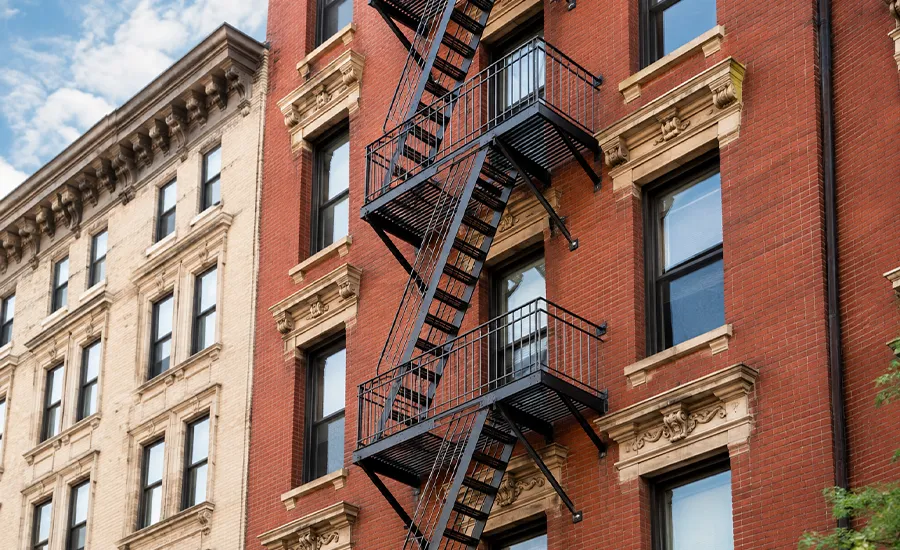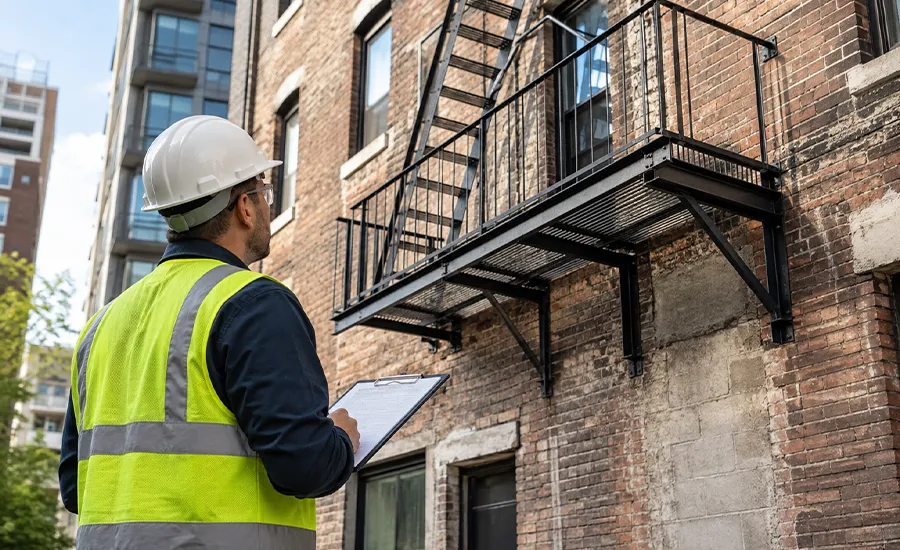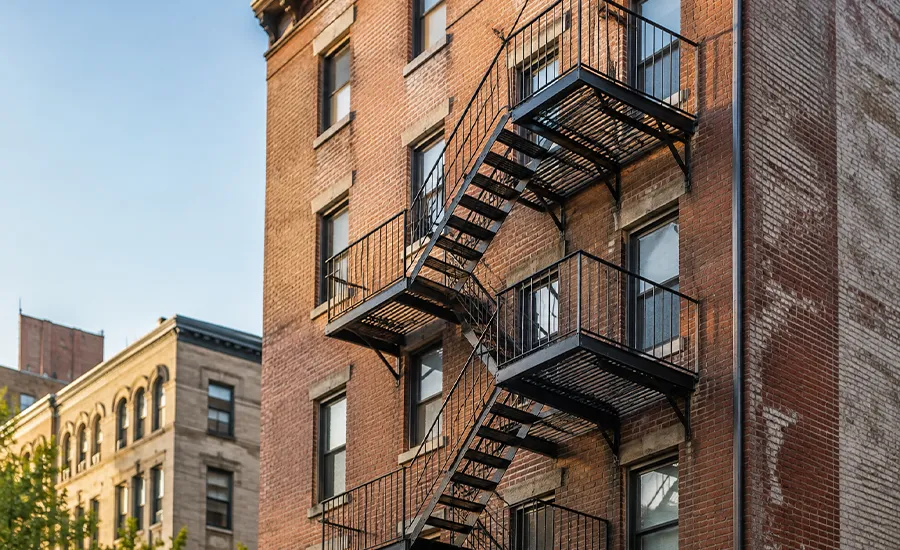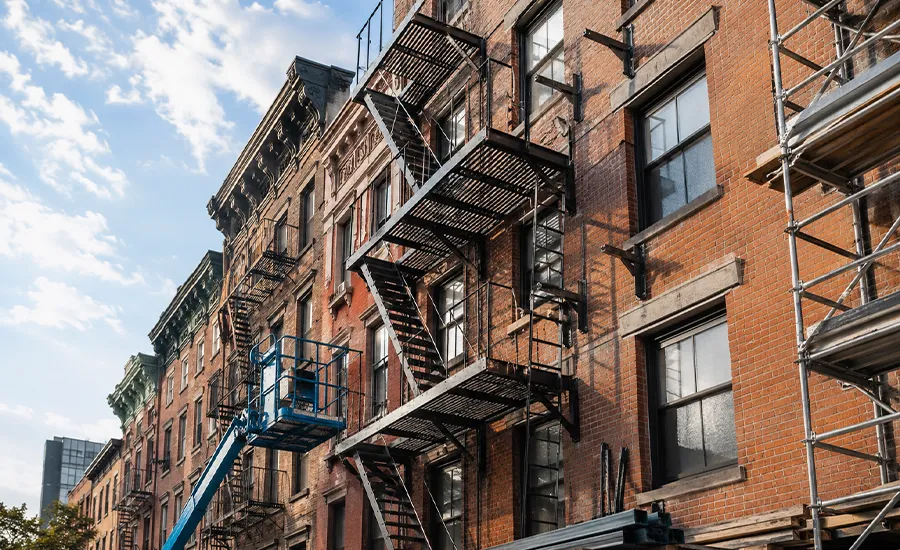

 ChatGPT
 Perplexity
 Google AI
 Claude
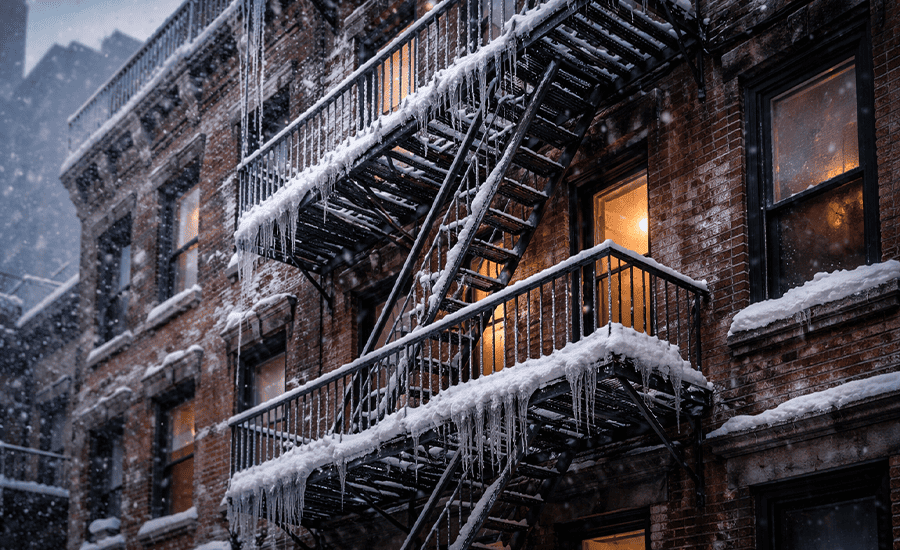
NYC winters are not ordinary seasonal changes; they are unpredictable, challenging, and hazardous for metal surfaces because consistent moisture and water absorption silently damage fire escapes through metal corrosion, structural weakening, and, most importantly, violations and impositions by DOB & LOCAL LAW 11. Unfortunately, many property owners delay maintenance until visible deterioration or a violation notice appears, which elevates the cost of repairs & paperwork approval.
In this blog, we’ll explore the importance of fire escape maintenance in winter, what the DOB compliance regulations are, and how the cost can accelerate when the maintenance is ignored:
Why are NYC Winters Harsh On The Fire Escapes Structure?
Fire escapes tend to corrode expeditiously when exposed to harsh winter conditions in NYC. The following are the results of the fire escape caused by the harsh winter conditions:
- Snow accumulation on platforms and stairs.
- Ice expansion inside joints and welds.
- Freeze-thaw cycles cause metal fatigue.
- Road salt and de-icing chemicals are accelerating corrosion.
- Blocked drainage leading to standing water.
For a detailed breakdown of seasonal risks, see our guide on How snow and ice can damage old fire escapes?
What Are The Factors That Intensify Fire Escape Deterioration?
Let’s have a look at the elements that accelerate the damage severity of fire escape:
Water Intrusion & Freeze-Thaw Stress
When moisture enters cracks or rusted areas and freezes:
- Metal expands and contracts
- Existing cracks widen
- Protective coatings peel away
- Rust spreads beneath paint layers
Accelerated Metal Degradation From Urban Pollutants
NYC streets are heavily salted during winter. Salt particles travel through air and water runoff, settling on fire escapes:
- Rapid rust formation
- Thinning metal sections
- Weak bolts, rivets, and connections
- Reduced the lifespan of paint coatings
You can also review a winter-specific inspection approach in Winter fire escape inspections: what nyc landlords must know.
Long-term Costs of Ignoring Winter Fire Escape Maintenance
Ignoring the maintenance task leads to higher expenses later. So, make sure to address the issues whenever you feel the framework is compromised:
Urgent threat to occupant safety
- Emergency repair requirements
- Sudden structural failures
- Unsafe egress during emergencies
- Tenant complaints and legal exposure
Extended cost implications over time
- Complete fire escape replacement instead of repairs
- Higher labor costs for emergency work
- Increased insurance premiums
- DOB violations and fines
NYC residents should also understand usage risks during winter in Is it safe to stand or store items on fire escapes in winter?
How Winter Damage Triggers DOB Citations?
NYC DOB officials demand that homeowners get their fire escape:
- In good structural condition
- Free from significant metal deterioration
- Firmly attached
- Meets the required load capacity
Typical Violations Caused by DOB Due to Winter-Related Damage:
- Deteriorated connections
- Significant rust delamination
- Hazardous walking surfaces
- Unsecured connection points
For broader safety context, read Why does New York have so many fire escapes?
Why are Emergency Fire Escape Repairs Always Expensive?
If the fire escape maintenance is ignored or delayed, it can lead to higher costs when it is later repaired:
- Repairs must be done immediately
- Work often occurs in unsafe winter conditions
- Contractors charge premium rates for urgent jobs
- Temporary safety measures may be required
Elements that Drive High Emergency Repair Cost:
- Extended labor hours with their premium rates
- Freeze-resistant work gear
- Short-term load support
- Emergency permit issuance
Emergency risks increase when snow is not handled properly, explained in Snow on your fire escape? Here’s how nyc residents should handle it safely.
Cost Advantages of Scheduled Preventive Maintenance
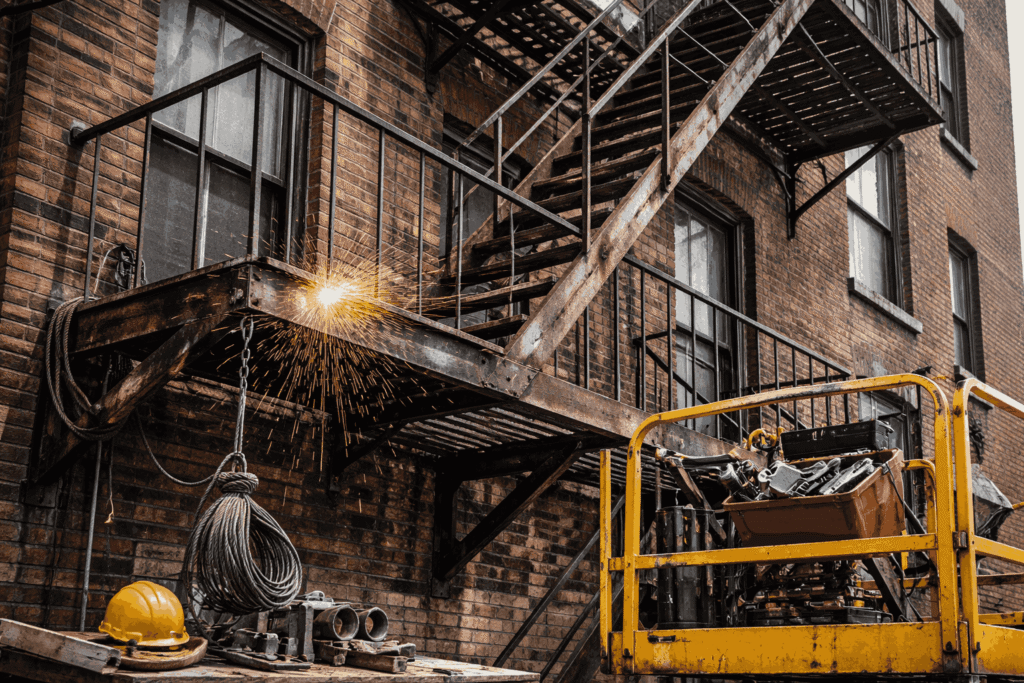
Let’s have a look at how timely preventive maintenance helps you save structural, financial, and compliance damages:
Routine Care:
- It cuts the major structural failures
- It increases the fire escape lifespan by 10–20 years
- It ensures violation-free structures
- It keeps properties DOB-compliant
- It preserves property value
Overall cost overview:
- Cost-effective maintenance planning
- Reduced need for reactive repairs
- Lower liability risk
- Stronger insurance standing
A practical seasonal checklist is available in Fire escape safety checklist for nyc apartments this winter.
Final Thoughts
Concluding this blog, addressing fire escape repairs early helps you prevent DOB violations, protect tenant safety, extend the structural lifespan, and save thousands in future repair costs. Make sure to invest in timely inspections, protective treatments, and minor repairs to prevent homeowners from incurring additional expenses later.
Sardar Restoration Corp proudly serves every corner of NYC, including the Bronx, Manhattan, Brooklyn, Westchester, and Queens. Our services are designed to meet your specific needs, providing top-quality solutions wherever you are. Check our service areas to see how we can assist you in your location.
Contact us today at (+1) 917-355-8556 or sardarrestoration@gmail.com, or visit us at 2770 Fish Ave, Bronx, NY 10469, United States.
FAQs
Why is winter the worst season for fire escape damage in NYC?
Winter causes significant damage to the metal fire escape, as persistent rain and moisture exposure lead to corrosion and rusting that deteriorate its structural strength. That’s why winter is considered the worst season for fire escape.
What happens if my fire escape fails a NYC DOB inspection?
Failing the NYC DOB inspection can lead you to the following issues, including:
- Class 1 or Class 2 violations
- Mandatory emergency repairs
- Fines and civil penalties
- Follow-up inspections
Can fire escape rust lead to immediate DOB violations in NYC?
Yes. Visible rust, metal flaking, or weakened connections can trigger DOB citations, especially if inspectors find safety or load-bearing risks.
How often should fire escapes be inspected in NYC?
Our fire escape inspection contractor in NYC recommends that you inspect the fire escape in the following manner:
- Visually checked seasonally
- Professionally inspected at least once a year
- Evaluated before and after winter
Can fire escape maintenance really be done during winter?
Yes! Fire escape maintenance can be done during winter. Still, it is advised to conduct inspections, rust treatment, minor welding, bolt tightening, and protective coating touch-ups before winter to prevent emergency repairs later.
Is preventive fire escape maintenance cheaper than emergency repairs in NYC?
Absolutely. Planned maintenance usually costs far less than emergency work, which often includes urgent permits, higher labor rates, and safety measures.
What are the early signs of winter-related fire escape damage?
The following are the signs of winter-related damage that appear early:
- Bubbling paint
- Scaling
- Railings
- Standing water on platforms
- Cracked welds
Does Local Law 11 apply to fire escape maintenance during winter?
Yes. While Local Law 11 focuses on façades, fire escapes are still subject to DOB safety rules and must remain structurally sound year-round.