
 ChatGPT
 Perplexity
 Google AI
 Claude
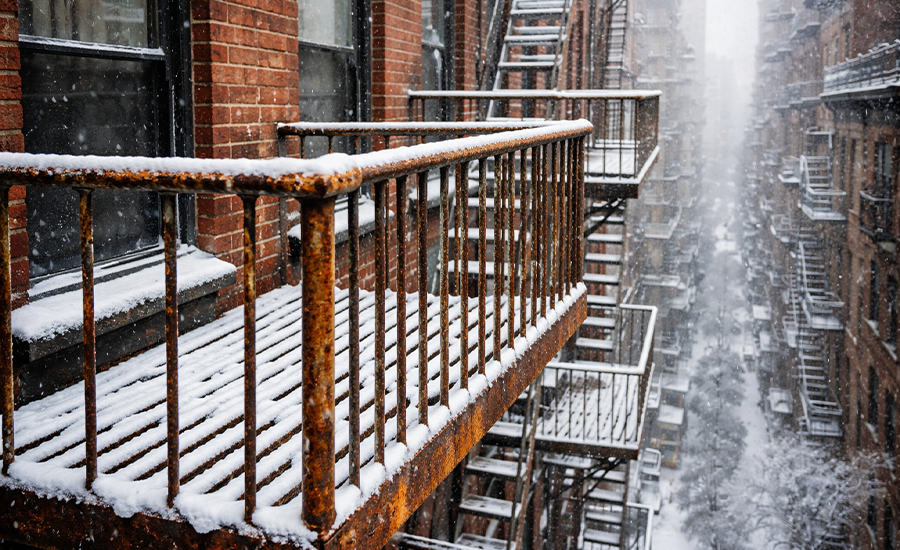
Fire escapes are life-saving units installed primarily in NYC homes, as mandated by local laws and regulations. However, NYC’s harsh winter conditions, like snow, ice, freezing rain, and road salt, make fire escapes vulnerable to rust and corrosion. If left unchecked, rust can weaken structural components, pose safety hazards, and result in costly DOB violations. But rust prevention doesn’t require much time or complex solutions; all you need to do is keep a close eye on the weather, apply rust-inhibiting paints, and perform routine maintenance to keep your fire escapes protected during cold weather in NYC.
In this blog, we’ll explore the most effective ways to prevent rust on fire escapes during cold weather, its lasting solutions, and maintenance tips.
Why Winter Accelerates Fire Escapes Rusting?
In Winter, the fire escape becomes the most sensitive structure, as it is constantly exposed to moisture, harsh winds, and rain, which can cause rust and corrosion. The following are the causes of rust on the fire escape in Winter:
- Snow and ice are sitting on metal surfaces.
- Freeze-thaw cycles force moisture into joints.
- Road salt and airborne pollutants are speeding up oxidation.
- Blocked drainage is causing standing water.
- Reduced winter maintenance and inspections.
For a deeper understanding of how freezing temperatures and moisture affect metal structures, you can also read How cold weather affects fire escapes in NYC.
What Issues Can Be Detected During Fire Escape Inspection?
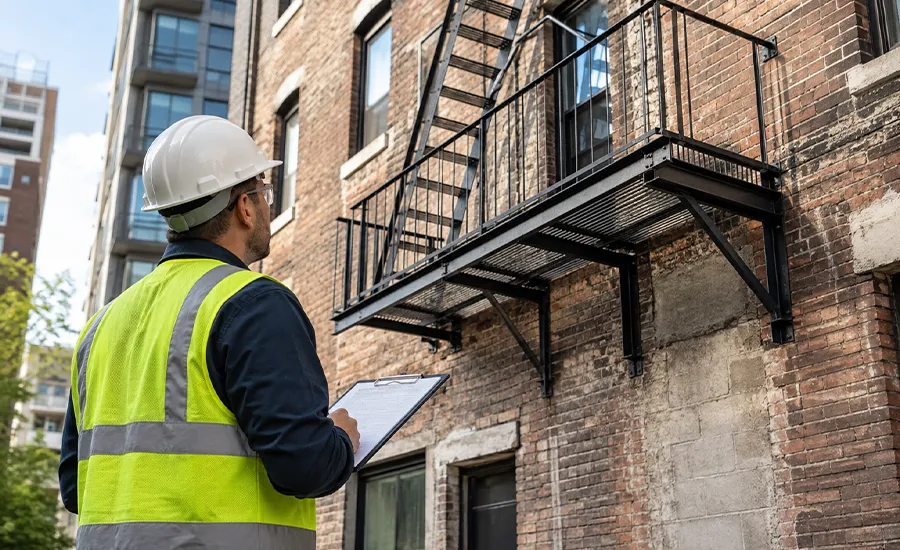
Early inspections are better than rust-related damage. Make sure to hire a professional fire escape inspector for accurate identification:
- Early surface rust or corrosion.
- Peeling or cracked paint.
- Loose bolts, railings, or brackets.
- Areas where water pools or drains poorly.
- Structural wear requiring reinforcement.
Property owners may also find it useful to review Fire escape safety checklist for NYC apartments this winter to identify common seasonal safety concerns.
What Are the Effective Rust Removal Methods Before Winter?
Rust spreads quickly when exposed to moisture and freezing temperatures. Addressing it early is essential. Here are some of the typical rust removal methods:
- Wire brushing or grinding.
- Sanding corroded areas.
- Applying rust-neutralizing solutions.
- Cleaning and drying exposed metal surfaces.
Importance of Addressing Rust Early:
- It stops corrosion from penetrating deeper.
- It improves paint adhesion.
- It extends the life of metal components.
If snow and ice are already present, proper handling becomes critical, which is explained in Snow on your fire escape? here’s how NYC residents should handle it safely.
What Are The Durable Treatments To Resist Rust?
Make sure to apply paint that acts as the primary defense between metal and moisture:
- Use industrial-grade rust-inhibiting primers.
- Apply weather-resistant enamel or epoxy coatings.
- Fully seal welds, joints, and exposed edges.
- Follow NYC-approved color and coating standards.
Easy Practices To Prevent Snow Buildup From Fire Escape
Make sure to take into account the following techniques, as the ice buildup increases environmental moisture and metal degradation risk:
- You should remove snow after storms when it is safe to do so.
- You should prevent ice accumulation on steps and platforms.
- You should keep exits and ladders fully accessible.
Conditions to avoid:
- Using harsh de-icing salts.
- Allowing snow to melt and refreeze repeatedly.
- Ignoring ice buildup in corners and joints.
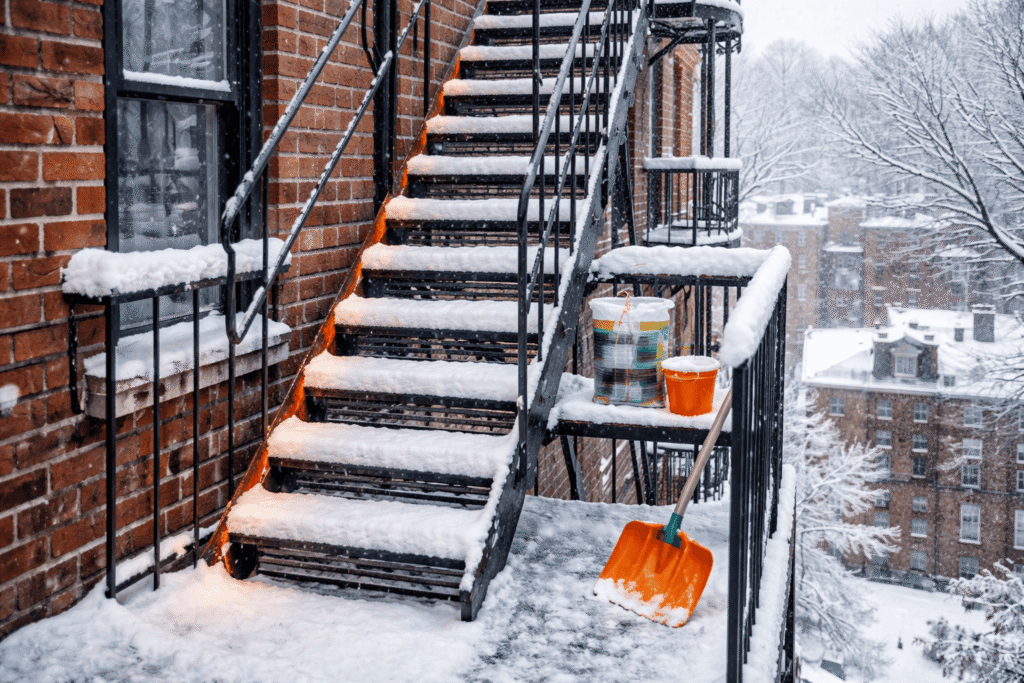
Improper snow removal can cause damage to aging structures, a topic covered further in How snow and ice can damage old fire escapes.
Which Areas of Fire Escapes Are Most Vulnerable To Rust Formation?
Let’s have a look at the areas where rust and corrosion buildup are common on the fire escape:
| Components | Conditions that promote rust |
|---|---|
| Stair steps | Prolonged moisture accumulation |
| Corner junctions | Trapped water |
| Anchoring bolts | Seasonal metal movement |
| Joint welds | Fractures enable water penetration |
| Façade connections | Improper drainage |
Plan Up Routine Fire Escape Maintenance
Here are the essential maintenance tips you can consider to prevent winter rust and have lasting benefits:
- Detailed inspections.
- Rust removal and surface prep.
- Structural repairs and reinforcements.
- Protective coating application.
- NYC compliance checks.
Durable results:
- It offers a long-lasting fire escape.
- It eliminates emergency repair costs.
- It improves building safety.
- It follows ongoing regulatory compliance.
Ongoing winter care is essential for safety and compliance, and The right way to keep your fire escape safe in NYC winters offers practical guidance on seasonal maintenance.
Final Thoughts
In conclusion, early detection and timely inspections are better than getting violation notices for your damaged fire escapes. Homeowners are requested to regularly check the condition of the fire escape and properly maintain it to protect themselves from rust and corrosion during Winter. By properly painting their fire escapes with rust-inhibiting coatings, property owners can protect both their investment and their occupants’ safety.
Sardar Restoration Corp proudly serves every corner of NYC, including the Bronx, Manhattan, Brooklyn, Westchester, and Queens. Our services are designed to meet your specific needs, providing top-quality solutions wherever you are. Check our service areas to see how we can assist you in your location.
Contact us today at (+1) 917-355-8556 or sardarrestoration@gmail.com, or visit us at 2770 Fish Ave, Bronx, NY 10469, United States.
FAQs
Why do fire escapes rust faster during Winter in NYC?
Metal Fire escapes are more prone to rust, especially in Winter. Because in NYC, Fire escapes are persistently exposed to snow, ice, freezing rain, and moisture, which accelerate corrosion on metal surfaces.
Is rust on a fire escape a safety concern?
Yes, it surely is! Rust on the fife escape indicates that the framework is weakened, structurally unstable, and has reduced load-bearing capacity. Immediate attention to damage prevents serious risks to occupants.
Are landlords responsible for maintaining fire escapes in NYC?
Yes! Landlords are obliged to maintain their fire escapes and conduct safety inspections to ensure they remain safe, structurally sound, and free from excessive corrosion.
How often should fire escapes be inspected?
Our fire escape inspection contractor in NYC advised us to inspect fire escapes at least once a year, especially before Winter, after severe weather, and when rust, loose components, or paint failure are visible.
What type of paint is best for preventing rust on fire escapes?
The best type of paint to prevent rust on fire escapes is:
- Rust-inhibiting primers.
- Industrial-grade enamel or epoxy coatings.
- Weather-resistant finishes approved for exterior metal.
Can rust on fire escapes lead to NYC DOB violations?
Yes. Excessive rust, peeling paint, or weakened metal can result in DOB or FDNY violations. NYC requires fire escapes to remain structurally sound and properly maintained year-round, especially during winter.
Does winter moisture damage fire escape paint faster?
Absolutely. Snow, ice, and freeze–thaw cycles allow moisture to seep under paint layers. This causes paint failure, exposing metal and speeding up rust formation if not addressed early.