
 ChatGPT
 Perplexity
 Google AI
 Claude
A building façade is the exterior envelope system that forms the outer face of a structure. It serves as the primary barrier against external environmental stressors such as wind, moisture, and temperature fluctuation while supporting structural integrity, thermal regulation, and overall building performance.
In a dense urban setting like New York City, façade systems must maintain moisture resistance, energy efficiency, and long-term durability under seasonal temperature shifts, high wind exposure, and continuous environmental wear. A properly engineered facade supports fire resistance, regulatory compliance, and sustained structural and environmental performance throughout the building’s lifecycle.
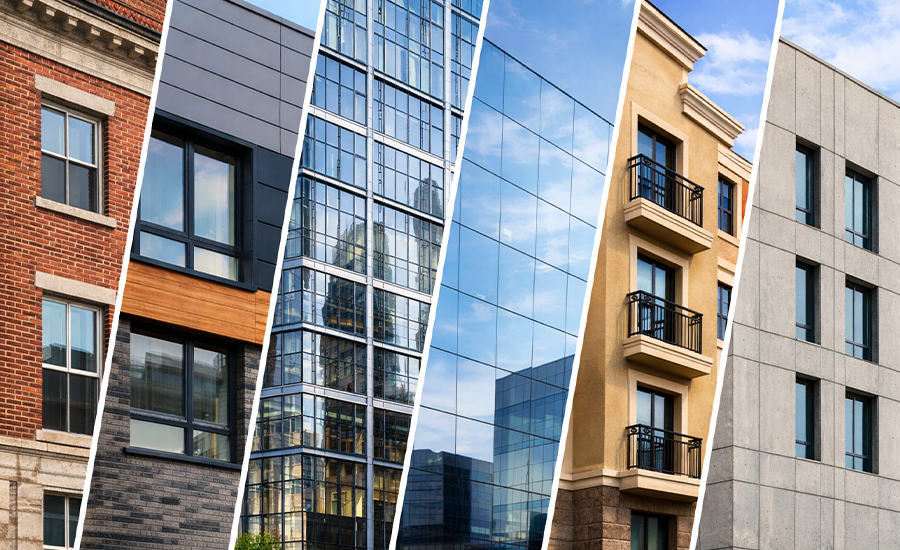
- Ο Masonry Façade – Brick or stone-based system recognized for structural durability and extended service life.
- Ο Cladding Façade – Non-structural exterior layer that enhances insulation and weather protection.
- Ο Curtain Wall System – A lightweight framed assembly commonly used in high-rise construction.
- Ο Glass Façade – Glazing-based exterior designed to maximize daylight and visual openness.
- Ο EIFS (Exterior Insulation and Finish System) – Insulated multi-layer cladding that improves thermal efficiency.
- Ο Precast Concrete Façade – Factory-manufactured concrete panels installed for strength and construction efficiency.
Main Types of Façade Systems Used in NYC Buildings
New York City architecture ranges from historic masonry townhouses to contemporary glass high-rise towers. The façade system selected for a property depends on structural design, height, environmental exposure, and long-term performance requirements. The following facade systems are widely used in NYC residential and commercial construction.
1. Masonry Façade
Masonry facades are constructed using brick, natural stone, or concrete masonry units integrated with the structural wall assembly. These systems are either load-bearing or veneer-based, depending on building design, and understanding what masonry construction involves and why it matters explains why it continues to be widely used in NYC buildings.
Where It’s Common in NYC
Frequently seen in brownstones, townhouses, and low-rise residential buildings, as well as older commercial properties throughout Brooklyn, Manhattan, and parts of the Bronx.
Advantages
- High compressive strength
- Strong fire resistance
- High resistance to weather and impact stress
- Long service life with proper mortar maintenance
Limitations
- Heavier structural load
- Longer construction timeline
- Mortar joints require periodic maintenance
2. Cladding Façade
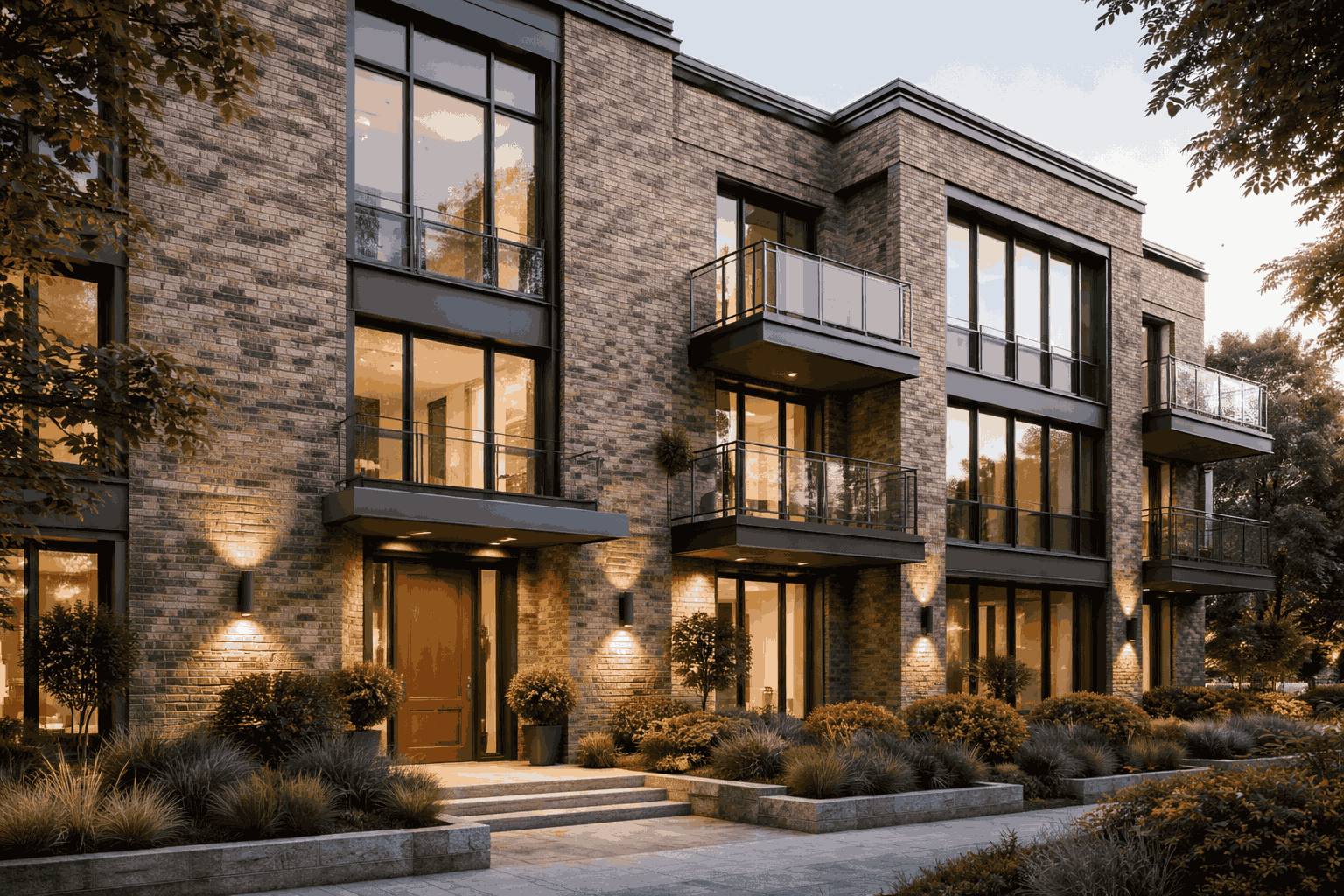
Cladding systems involve attaching a non-structural exterior layer over the primary wall structure as part of broader façade work in construction projects. Materials may include metal panels, stone veneer, composite panels, fiber cement boards, or engineered timber.
Where It’s Common in NYC
Widely used in mid-rise commercial buildings, mixed-use developments, and renovation projects requiring improved insulation performance.
Advantages
- Supports additional insulation layers
- Improves weather resistance
- Flexible architectural design options
- Faster installation compared to solid masonry systems
Limitations
- Requires secure anchoring systems
- Material performance varies based on the specification
3. Curtain Wall System
Curtain walls are lightweight, non-load-bearing façade systems attached to a building’s structural frame. They typically consist of aluminum framing with glass or metal infill panels.
Where It’s Common in NYC
Common in high-rise office towers and residential skyscrapers, particularly in commercial districts and newly developed urban zones.
Advantages
- Reduces overall structural load
- Engineered for large-span framed glazing assemblies
- Compatible with high-performance insulated glazing units
- Allows modern architectural expression
Limitations
- Higher initial cost
- Precision engineering required
- Ongoing cleaning and inspection are necessary
4. Glass Façade
Glass facades are exterior systems in which glass serves as the primary visible surface, whether framed within curtain wall assemblies or within standalone structural glazing systems.
Where It’s Common in NYC
Often selected for commercial and institutional buildings with high glazing requirements.
Advantages
- Maximizes natural light
- Modern aesthetic appeal
- Energy-efficient glazing options are available
Limitations
- Requires solar control solutions
- Thermal performance depends on the glazing specification
5. EIFS Facade System
EIFS is a multi-layered exterior wall system consisting of insulation boards, reinforcing mesh, and a protective finish coat. It is primarily designed to enhance thermal efficiency.
Where It’s Common in NYC
Used in residential retrofits and low- to mid-rise buildings where improved insulation and lightweight construction are priorities.
Advantages
- Lightweight system
- Improves exterior thermal performance
- Offers design flexibility
Limitations
- Requires proper moisture management
- Installation quality directly impacts durability
6. Precast Concrete Facade
Precast concrete panels are manufactured off-site and transported to the project location for installation. These panels may serve structural or architectural functions.
Where It’s Common in NYC
Common in institutional buildings, parking structures, commercial facilities, and projects requiring efficient construction timelines.
Advantages
- High load-bearing capacity and dimensional consistency
- Factory-controlled quality
- Efficient on-site installation
Limitations
- Transportation logistics required
- Crane access is necessary for installation
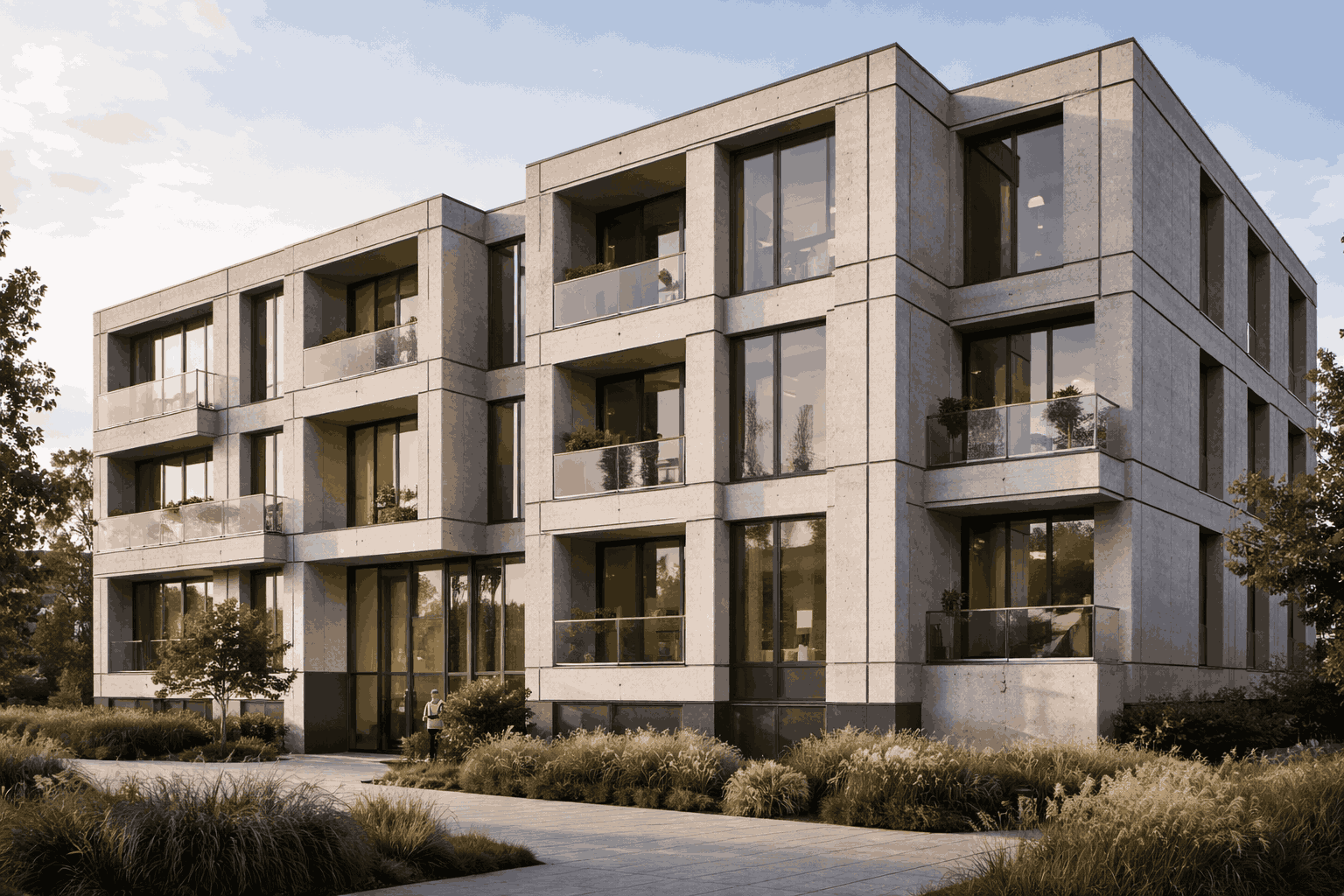
Facade System Comparison for NYC Buildings
Selecting the right façade system requires evaluating performance factors rather than appearance alone. Below is a structured comparison based on durability, maintenance needs, thermal performance, installation complexity, and typical building applications in NYC.
Masonry Facade System Comparison
Assesses structural resilience and long-term durability in NYC conditions.
- Durability Ranking: Among the highest in NYC façade systems
- Maintenance Needs: Periodic mortar repointing required
- Thermal Performance: Strong thermal mass benefits
- Installation Complexity: Labor-intensive construction
- Ideal For: Low-rise residential and historic buildings
Cladding Façade System Comparison
Compares insulation flexibility and weather resistance performance.
- Durability Level: Material-dependent performance
- Maintenance Needs: Low to moderate
- Thermal Performance: Enhanced with added insulation layers
- Installation Complexity: Moderate
- Ideal For: Mid-rise commercial and renovation projects
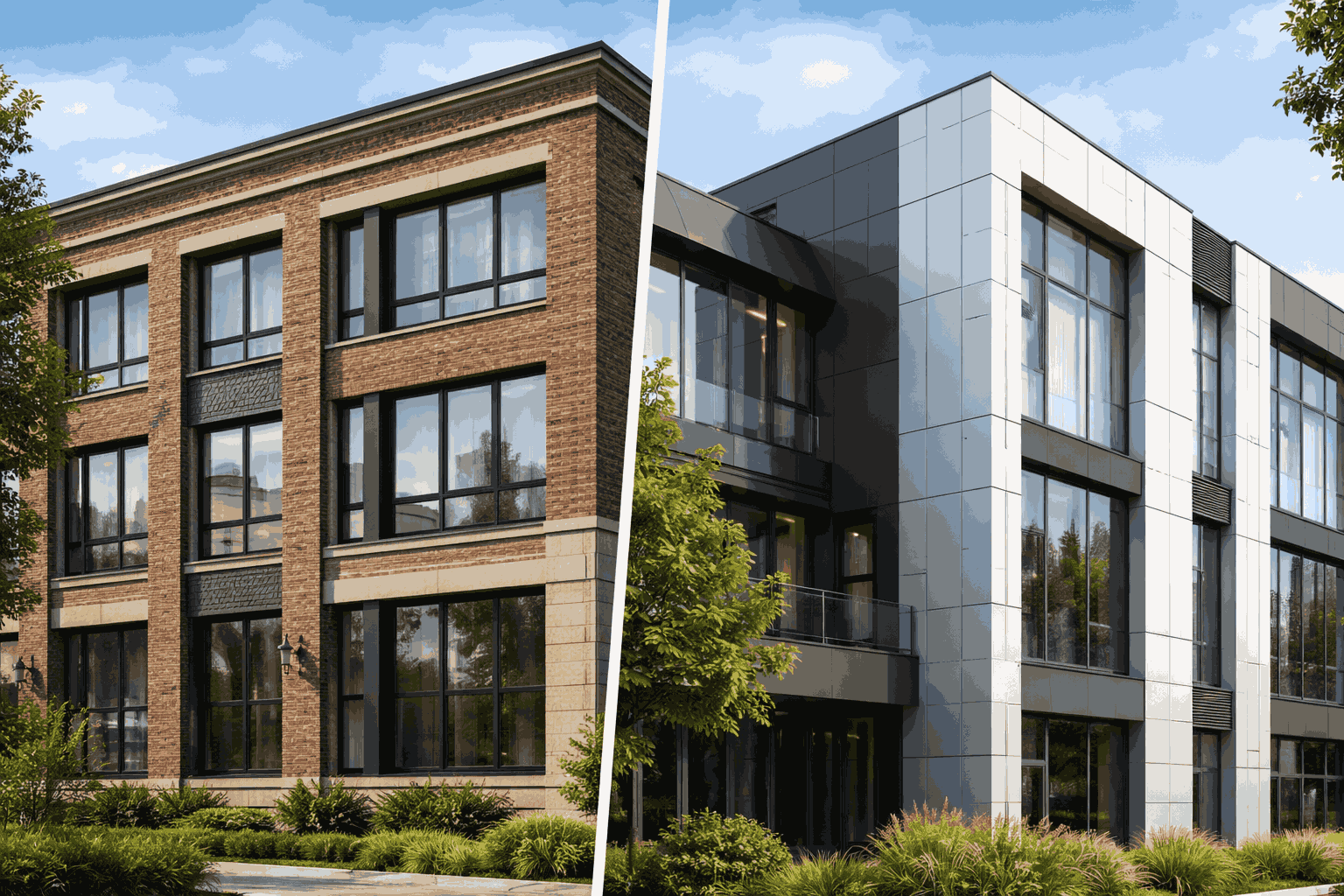
Curtain Wall System Comparison
Evaluates structural integration and high-rise performance.
- Durability Level: High when engineered correctly
- Maintenance Needs: Regular inspection and cleaning
- Thermal Performance: Dependent on system design and glazing configuration
- Installation Complexity: Requires structural precision
- Ideal For: High-rise commercial and residential towers
Glass Facade System Comparison
Reviews glazing-dominant envelope performance in contemporary structures.
- Durability Level: Strong with high-performance glazing
- Maintenance Needs: Routine cleaning
- Thermal Performance: Controlled through glazing specification
- Installation Complexity: Specialized design coordination required
- Ideal For: Commercial and institutional buildings with high glazing requirements
EIFS Facade System Comparison
Examines insulation efficiency and moisture management requirements.
- Durability Level: Moderate with proper moisture control
- Maintenance Needs: Low when correctly installed
- Thermal Performance: High thermal efficiency
- Installation Complexity: Requires skilled application
- Ideal For: Energy-focused residential and retrofit projects
Precast Concrete Facade System Comparison
Analyzes structural strength and construction efficiency.
- Durability Level: Very high structural resilience
- Maintenance Needs: Minimal
- Thermal Performance: Moderate unless insulated
- Installation Complexity: Crane-assisted placement required
- Ideal For: Institutional and large-scale commercial buildings
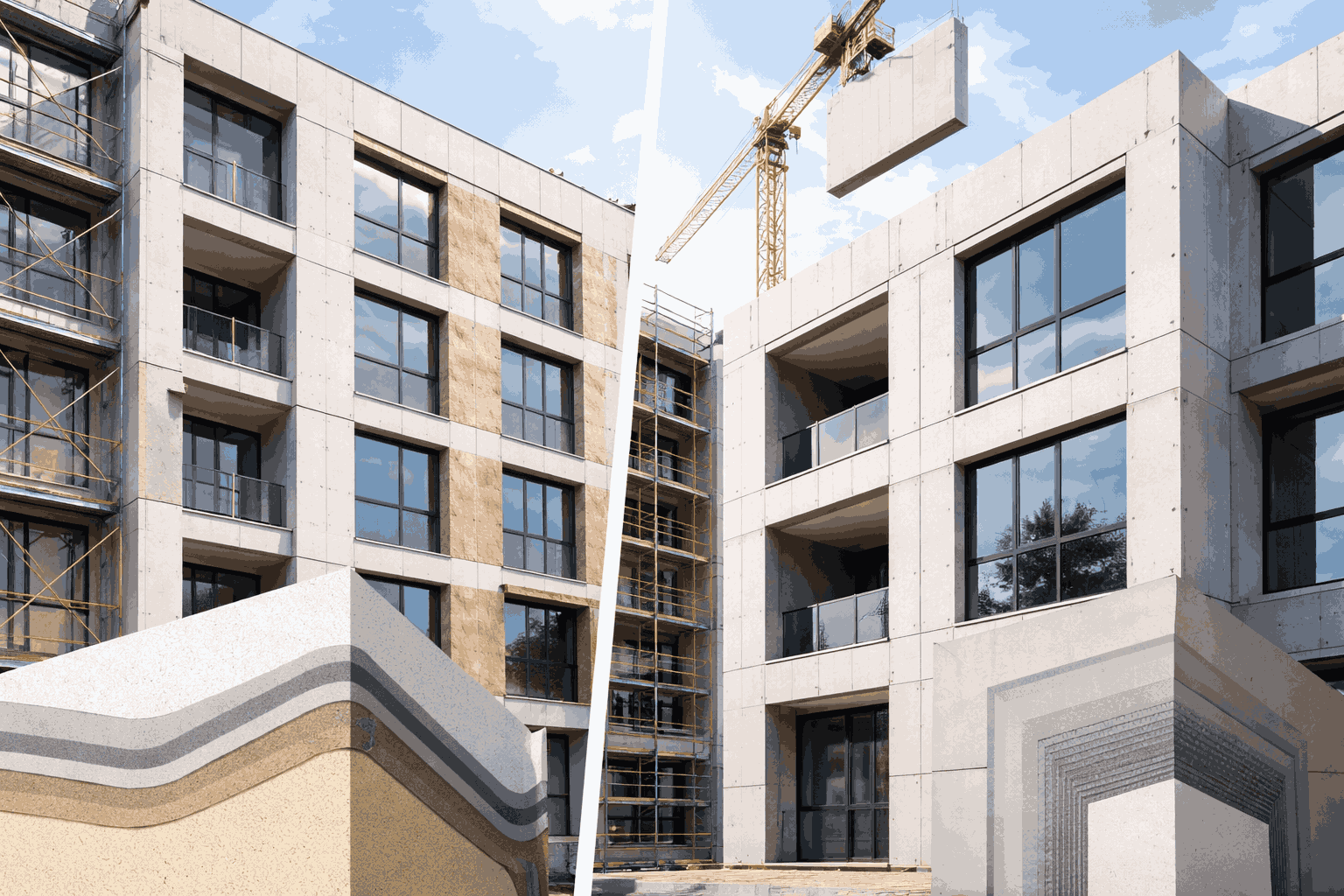
Which Façade Performs Best in the New York Climate?
New York City buildings are exposed to intense environmental conditions, including freeze-thaw cycles, coastal humidity, wind pressure in high-rise zones, and seasonal temperature swings. The right façade system must respond to climate stress, structural movement, and long-term durability requirements.
Freeze–Thaw Resistance
Repeated temperature fluctuations cause façade materials to expand and contract, increasing stress on joints and connections. In masonry systems, freeze-thaw damage in masonry structures can develop over time if mortar joints are not properly maintained.
- Masonry systems remain stable under repeated thermal expansion when mortar joints are properly maintained.
- Precast concrete panels maintain dimensional stability and resist cracking during prolonged cold-weather exposure.
Wind Load Performance in High-Rise Buildings
Tall buildings in Manhattan and other dense urban areas experience significant lateral wind pressure.
- Curtain wall systems are designed to accommodate lateral wind loads in high-rise environments.
- Structural anchoring and frame integration directly influence long-term wind resistance and stability.
Moisture & Humidity Control
Coastal humidity, wind-driven rain, and heavy seasonal rainfall increase the risk of moisture intrusion.
- EIFS systems require properly designed drainage detailing to prevent moisture intrusion in humid conditions.
- Cladding assemblies must incorporate drainage planes and vapor control layers to effectively manage water penetration.
Energy Efficiency Requirements
Seasonal heating demand and solar exposure significantly impact operating costs in NYC buildings.
- High-performance glazing helps regulate solar gain on exposed elevations while maintaining daylight access.
- Insulated facade systems reduce heat loss during colder months and improve overall envelope efficiency.
No single façade system performs best in all NYC conditions. Performance depends on exposure level, building height, structural design, and long-term maintenance strategy rather than appearance alone.
Key Technical Factors to Evaluate Before Choosing a Façade
Selecting a facade system is a technical decision that directly affects structural performance, regulatory compliance, and long-term operating costs. The following factors should be evaluated through engineering analysis before finalizing any exterior system in NYC.
1. Structural Load Compatibility
Every façade adds dead load and must resist wind pressure, movement, and structural deflection. Heavier systems require verified load transfer to foundations, while lightweight assemblies depend on secure anchoring and frame integration.
Load compatibility must be confirmed through structural calculations and coordination with the building’s primary structural system before selection.
2. Thermal Performance & Insulation
Thermal performance should be evaluated using measurable criteria such as U-values, glazing specifications, insulation continuity, and thermal bridge analysis.
Proper assessment ensures reduced seasonal heating demand, controlled solar gain, and improved long-term energy efficiency in NYC’s variable climate.
3. Water Penetration & Drainage Control
Moisture intrusion remains one of the primary causes of facade deterioration. Reliable exterior systems must incorporate engineered flashing, drainage planes, and vapor control layers.
Proper detailing is critical to preventing concealed structural damage and long-term envelope failure.
4. Fire Resistance & Code Compliance
Facade materials must meet fire safety standards and NYC Building Code requirements, particularly in multi-story residential and commercial construction.
Fire-rating verification and approved assembly testing are essential before installation.
5. Maintenance & Lifecycle Planning
Initial installation cost represents only part of the total ownership expense. Inspection frequency, cleaning requirements, repair cycles, and expected material lifespan significantly influence lifecycle performance.
Long-term planning should consider accessibility and maintenance feasibility in dense urban environments.
6. Installation Complexity & Urban Constraints
Urban construction in NYC often involves limited access, crane coordination, staging restrictions, and considerations for adjacent properties, particularly when performing masonry work during winter conditions that require temperature control and material protection.
Installation planning must account for logistical constraints, site access limitations, and construction sequencing before system selection.
Technical evaluation should guide façade selection, ensuring structural compatibility, regulatory compliance, and long-term performance under NYC environmental conditions.
How to Choose the Right Façade for Your NYC Property
Facade selection in NYC should follow a structured decision process rather than trend-driven preferences. Because buildings vary widely in height, structural system, exposure level, and intended use, exterior system selection must align with long-term performance goals instead of appearance alone.
A practical decision framework should consider the following:
- Identify the primary performance objective: structural resilience, energy efficiency, architectural expression, or cost control.
- Assess building typology: low-rise masonry, mid-rise mixed-use, or high-rise tower construction each requires different facade strategies.
- Align with long-term operational planning: evaluate lifecycle expectations, maintenance strategy, and ownership horizon.
- Confirm regulatory and approval pathway: ensure the selected system meets NYC Building Code and fire-rating requirements before specification.
- Evaluate budget against lifecycle value: compare initial installation cost with long-term durability and operating efficiency.

When these considerations are addressed systematically, facade selection becomes a strategic decision rather than a stylistic one. A well-chosen façade system supports structural integrity, regulatory compliance, and predictable long-term performance under NYC environmental conditions.
Conclusion
Façade systems directly influence structural resilience, regulatory compliance, energy efficiency, and long-term operational performance. From masonry and cladding to curtain wall and precast assemblies, each system serves a specific purpose depending on building height, structural configuration, and exposure conditions.
In NYC, façade selection must account for climate stress, code requirements, and project-specific structural demands. The most suitable exterior system is determined by performance objectives and long-term building strategy rather than architectural preference alone.
Sardar Restoration Corp provides façade assessment, repair, and installation services for residential and commercial properties throughout NYC, including The Bronx, Manhattan, Brooklyn, Westchester, and Queens. Property owners should prioritize selecting a qualified masonry contractor to ensure proper execution and long-term durability.
For façade consultation or project assessment, call (+1) 917-355-8556, email sardarrestoration@gmail.com, or visit our office: 2770 Fish Ave, Bronx, NY 10469, United States.
FAQs
What façade type is most durable for NYC buildings?
Durability depends on structural design and exposure level. In general, masonry and precast concrete systems are known for long service life in urban environments when properly maintained and installed according to code requirements.
Which façade system is best for high-rise buildings in New York?
High-rise structures typically use curtain wall assemblies because they are engineered to withstand wind pressure, accommodate structural movement, and integrate with steel or concrete frames.
Are glass facades energy efficient in NYC?
Glass facades can be energy efficient when high-performance glazing is used to control heat transfer and solar gain. Energy performance depends on insulation strategy and proper system specification.
How often should building facades be inspected in NYC?
Facade inspection frequency depends on building height and local regulations. Regular professional assessments help identify structural wear, joint failure, and moisture risks before they escalate.
Does the NYC building code restrict certain facade materials?
New York building regulations establish safety, fire-resistance, and structural-performance standards for exterior systems. Material selection must comply with local codes and project-specific requirements.
What factors increase façade maintenance costs?
Maintenance costs can increase due to environmental exposure, height-related access challenges, material aging, and delayed repairs. Proper installation and periodic inspections reduce long-term expenses.
Can upgrading a façade improve property value?
An updated façade can enhance energy efficiency, structural reliability, and visual appeal, thereby positively influencing market perception and long-term property performance.