
 ChatGPT
 Perplexity
 Google AI
 Claude
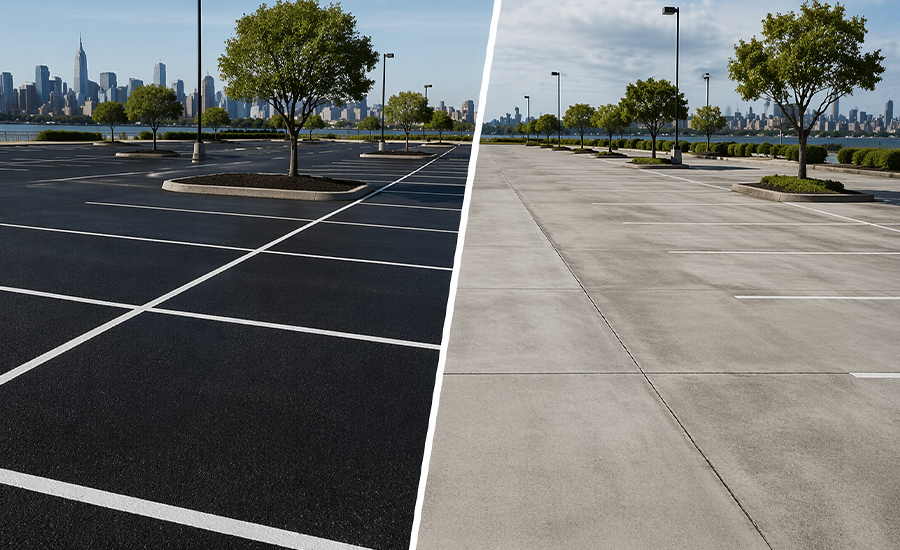
Choosing between asphalt and concrete for a parking lot is a key decision for property owners, especially in high-demand urban areas like NYC. Each material differs in cost, durability, and maintenance requirements, which directly affect long-term performance and maintenance needs.
Concrete parking lots typically last longer, often 30–40 years or more, while asphalt generally lasts 15–25 years. However, the right choice depends on traffic load, climate exposure, installation timeline, and overall budget.
In NYC, where heavy traffic, freeze-thaw cycles, and strict construction standards are common, choosing the right material becomes even more critical.
- Ο Concrete parking lots usually last 30–40+ years, while asphalt lasts 15–25 years
- Ο Asphalt has a lower upfront cost and faster installation time
- Ο Concrete requires less maintenance over time
- Ο Asphalt is more flexible but wears faster under heavy traffic and heat
- Ο Concrete is better suited for heavy traffic and long-term use
- Ο In NYC, traffic intensity and freeze-thaw cycles strongly affect material performance
What Are Asphalt and Concrete Parking Lots?
Asphalt and concrete are the primary materials used in parking lot construction, each suited to different usage conditions and performance needs. The choice between them depends on factors such as traffic load, durability expectations, and maintenance planning.
In cities like NYC, where parking lots are exposed to heavy traffic, weather fluctuations, and constant use, understanding how each material behaves is essential before making a decision, especially when evaluating the best concrete options for durable driveways for long-term performance.
Asphalt Parking Lots: Key Characteristics
- Made from aggregates bound with a petroleum-based binder
- Flexible surface that adapts to minor ground movement
- Absorbs heat, which can soften the surface under high temperatures
- Quick installation with faster usability compared to concrete
- Requires regular sealing and maintenance over time
Concrete Parking Lots: Key Characteristics
- Composed of cement, sand, gravel, and water
- Rigid structure designed for strength and long-term stability
- Reflects heat, helping maintain surface integrity
- Handles heavy traffic with minimal deformation
- Requires a longer curing time before full usability

Which Lasts Longer: Asphalt or Concrete Parking Lots?
Concrete parking lots generally last longer than asphalt when properly installed and maintained. On average, concrete can perform for 30–40 years or more, while asphalt typically lasts 15–25 years, depending on usage and maintenance.
The difference is primarily due to structural strength and resistance to environmental stress. Concrete provides a more rigid and durable surface, while asphalt remains flexible but more vulnerable to heat, traffic pressure, and surface wear over time. In NYC conditions, frequent traffic loads and seasonal temperature shifts can accelerate asphalt deterioration faster than concrete.
| Attribute | Asphalt Parking Lot | Concrete Parking Lot |
|---|---|---|
| Typical lifespan | 15–25 years | 30–40 years |
| Extended lifespan | Up to 30 years | 40–50+ years |
| Durability level | Moderate | High |
| Abrasion resistance | Lower | Higher |
Concrete is the more durable option, especially in high-traffic urban environments like NYC, where long-term performance is critical.
Why Does Concrete Have a Longer Lifespan?
Concrete lasts longer because of its rigid structure and ability to handle heavy loads and environmental stress without significant surface deformation. Unlike asphalt, which softens under heat and pressure, concrete maintains its shape and performance over time.
- Designed to support heavy vehicles such as trucks, buses, and commercial traffic
- Does not soften under high temperatures, maintaining surface strength
- Resistant to rutting, depressions, and surface distortion
- Maintains a stable and even surface under repeated traffic loads
- Requires fewer repairs and less frequent maintenance over time
In high-traffic environments like NYC, where constant vehicle pressure and seasonal temperature changes are common, concrete typically delivers more consistent long-term performance, although common concrete issues in NYC buildings can still develop over time without proper maintenance and inspections.
Why Does Asphalt Wear Out Faster?
Asphalt is a flexible material, but it is more sensitive to environmental exposure and continuous traffic stress. Over time, these factors lead to faster surface degradation compared to concrete.
- UV exposure breaks down the binder, reducing flexibility and causing early surface wear
- High temperatures can soften the surface, making it more vulnerable to traffic loads
- Moisture penetration through cracks weakens the base and leads to potholes or depressions
- Repeated vehicle loads accelerate surface fatigue, especially in high-traffic conditions
In cities like NYC, where traffic is constant and seasonal weather changes are frequent, asphalt tends to deteriorate more quickly without regular maintenance.
Asphalt vs Concrete: Cost and Long-Term Value
Asphalt and concrete differ in how costs are managed over time. Asphalt has a lower upfront cost, while concrete provides better long-term value due to reduced maintenance and longer durability.
| Pricing Element | Asphalt | Concrete |
|---|---|---|
| Initial cost | Lower | Higher |
| Installation cost | Economical | Higher |
| Maintenance cost | Higher over time | Lower over time |
| Long-term value | Moderate | Higher |
Asphalt is often preferred for projects with limited budgets or tight timelines because it is quicker to install and more affordable initially. However, it requires ongoing maintenance, including sealing and repairs, which can increase overall costs.
Concrete requires a higher initial investment but typically needs less maintenance and lasts longer. In high-traffic areas like NYC, where durability is essential, it often proves to be the more cost-efficient option over time.
Concrete is generally the better choice for long-term value, while asphalt is suitable for short-term or budget-focused projects.
How Climate Affects Asphalt and Concrete Performance
Climate conditions play a major role in how long a parking lot surface lasts. Temperature changes, moisture exposure, and sun intensity can directly affect the durability of both asphalt and concrete.
Asphalt performs better in colder environments due to its flexibility, while concrete is more stable in hotter conditions where heat resistance becomes important. However, extreme weather patterns can impact both materials differently over time.
Where Asphalt Performs Better
- Cold regions where flexibility helps prevent cracking
- Areas with frequent freeze-thaw cycles
- Locations with moderate temperature variations
Where Concrete Performs Better
- Hot climates with consistent sun exposure
- High-temperature environments where surface softening is a concern
- Areas requiring stronger load-bearing performance
In NYC, seasonal temperature shifts, freeze-thaw cycles, and varying moisture levels can put stress on both materials. Asphalt may crack and weaken faster without maintenance, while concrete generally maintains structural stability under these conditions, making preventing concrete surface damage in winter an important part of long-term maintenance planning.

Which Material Is Faster to Install?
Installation time is a key factor when choosing between asphalt and concrete, especially for projects that require minimal downtime.
Asphalt can be installed and used much faster than concrete. In most cases, asphalt is ready for light use within 24–48 hours, making it a practical option for projects that require quick turnaround. Concrete, on the other hand, requires a longer curing period before it reaches full strength and usability.
| Installation Factor | Asphalt | Concrete |
|---|---|---|
| Installation time | 1–2 days | A few days |
| Ready for use | 24–48 hours | 7–28 days |
| Downtime | Minimal | Extended |
Asphalt is the faster option for installation, while concrete requires more time but provides greater durability over the long term, especially when following proper cold-weather concrete safety tips during installation in lower temperatures.
Which Option Is Better for Your Parking Lot?
The right choice between asphalt and concrete depends on your project priorities, including budget, usage, installation timeline, and long-term expectations.
Concrete is generally the better option for long-term durability and reduced maintenance, especially in high-traffic environments. Asphalt, however, offers a faster and more cost-effective solution for projects where upfront cost and quick installation are the main concerns.
For NYC properties, where traffic load and environmental stress are higher, concrete is often preferred for long-term performance, while asphalt remains suitable for lighter use or short-term applications.
Choose Asphalt If:
- You need a cost-effective solution with a lower upfront investment
- The project requires quick installation and minimal downtime
- The parking lot will handle light to moderate traffic
- You can plan for regular maintenance over time
Choose Concrete If:
- You want maximum lifespan and durability
- Lower long-term maintenance is a priority
- The parking area will handle heavy or constant traffic
- You are planning a long-term investment

Concrete is typically the better long-term choice, while asphalt works well for short-term or budget-focused needs.
Conclusion
When comparing asphalt vs concrete parking lots, lifespan is only one part of the decision. Factors such as cost, installation time, climate conditions, and traffic load all play a role in determining the most suitable material.
Concrete offers longer durability and lower maintenance over time, making it a strong choice for high-traffic and long-term use. Asphalt remains a practical option for projects that require faster completion and lower initial costs.
For most NYC properties, where durability and performance are critical, concrete tends to provide more reliable long-term results.
Sardar Restoration Corp supports residential and commercial properties across NYC, including the Bronx, Manhattan, Brooklyn, Westchester, and Queens. As a trusted asphalt and concrete contractor in NYC, the team provides professional inspections and repair assessments tailored to your property’s needs. You can contact (+1) 917-355-8556, email sardarrestoration@gmail.com, or visit 2770 Fish Ave, Bronx, NY 10469, United States.
FAQs
Is asphalt cheaper than concrete?
Yes, asphalt has a lower upfront cost than concrete, making it a more budget-friendly option initially. However, it requires more frequent maintenance, which can increase long-term expenses.
Is asphalt or concrete better for hot climates?
Concrete performs better in hot climates because it does not soften under high temperatures. Asphalt, on the other hand, can become soft and more prone to surface damage in extreme heat.
Which parking lot material is better for heavy traffic?
Concrete is better suited for heavy traffic areas because of its strength and load-bearing capacity. It handles constant vehicle pressure more effectively than asphalt.
How often does asphalt need to be sealed?
Asphalt parking lots typically need sealing every 2–5 years to maintain durability and protect against water damage, UV exposure, and surface cracks.
Can concrete parking lots crack over time?
Yes, concrete can develop cracks, especially in areas with freeze-thaw cycles like NYC. However, it is generally more resistant to structural damage and lasts longer with proper installation and maintenance.
Which option is more cost-effective in the long run?
Concrete is usually more cost-effective over time due to its longer lifespan and lower maintenance requirements. Asphalt may cost less initially, but it often requires more repairs.
How long does a parking lot last in NYC conditions?
In NYC, concrete parking lots can last 30–40 years or more, while asphalt typically lasts 15–25 years. Weather changes and heavy traffic can impact both materials over time.