
 ChatGPT
 Perplexity
 Google AI
 Claude
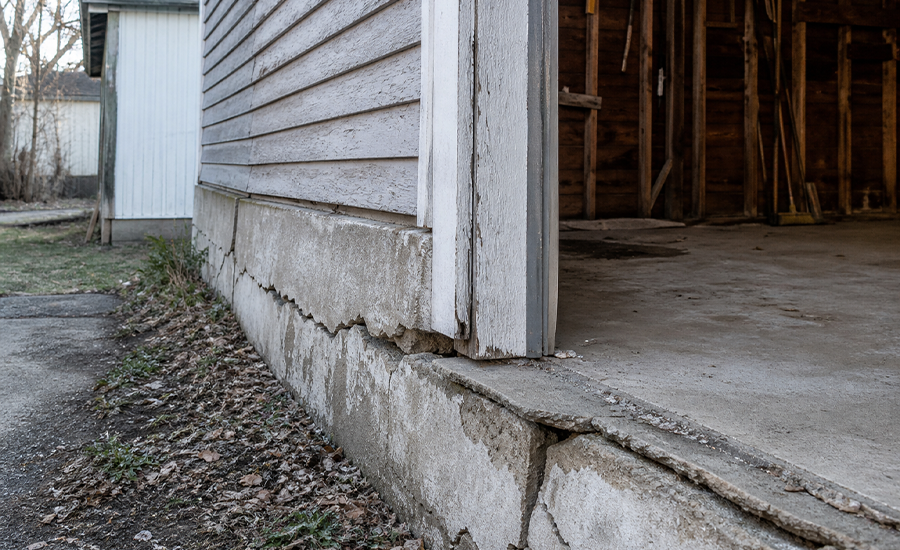
Garage foundation cracks in older buildings usually develop because of soil movement, poor drainage, aging concrete, repeated freeze-thaw cycles, and outdated construction methods. In NYC, many older garages were built before modern waterproofing, reinforcement, and load-bearing standards became common, which makes their foundations more vulnerable over time.
Small hairline cracks may only affect the surface, but wider, spreading, diagonal, or horizontal cracks can point to deeper structural movement. These issues are more common in long-standing residential and commercial properties where water collects near the foundation, soil shifts after heavy rain, or older materials begin to lose strength.
For NYC property owners, early inspection matters because garage foundation damage can affect floor alignment, wall stability, drainage performance, and long-term property safety. Understanding the causes helps homeowners spot warning signs early and avoid more expensive structural repairs later.
- Ο Garage foundation cracks are often caused by soil movement, water pressure, and aging materials.
- Ο NYC weather, including freeze-thaw cycles and heavy rain, increases foundation stress.
- Ο Poor drainage weakens nearby soil and adds pressure against garage foundations.
- Ο Horizontal, diagonal, or widening cracks may indicate serious structural movement.
- Ο Early inspection helps reduce repair costs and prevent wider structural damage.
Why Are Older Garage Foundations More Prone to Cracking?
Older garage foundations are more likely to crack because they were often built with weaker reinforcement, shallow footings, limited drainage protection, and materials that have aged under decades of weather exposure. Many older NYC garages also carry modern vehicle loads that were not always considered when the original structure was built.
Another major issue is the environmental movement. NYC garages face repeated freezing, thawing, rainwater exposure, and soil expansion throughout the year. When the soil beneath or around the garage shifts, the foundation can lose even support, causing cracks to form in floors, walls, or masonry joints.
Garages also tend to be more exposed than main buildings. They may have thinner slabs, weaker wall connections, or less protection from water entering around doors, driveways, and exterior walls. In older residential and commercial properties, these weaknesses can slowly turn minor cracks into larger structural concerns.
Older garage foundations commonly crack faster due to:
- Uneven soil settlement
- Poor exterior drainage
- Repeated freeze-thaw movement
- Aging concrete or masonry
- Limited reinforcement
- Shallow or outdated footings
- Added pressure from modern vehicle loads
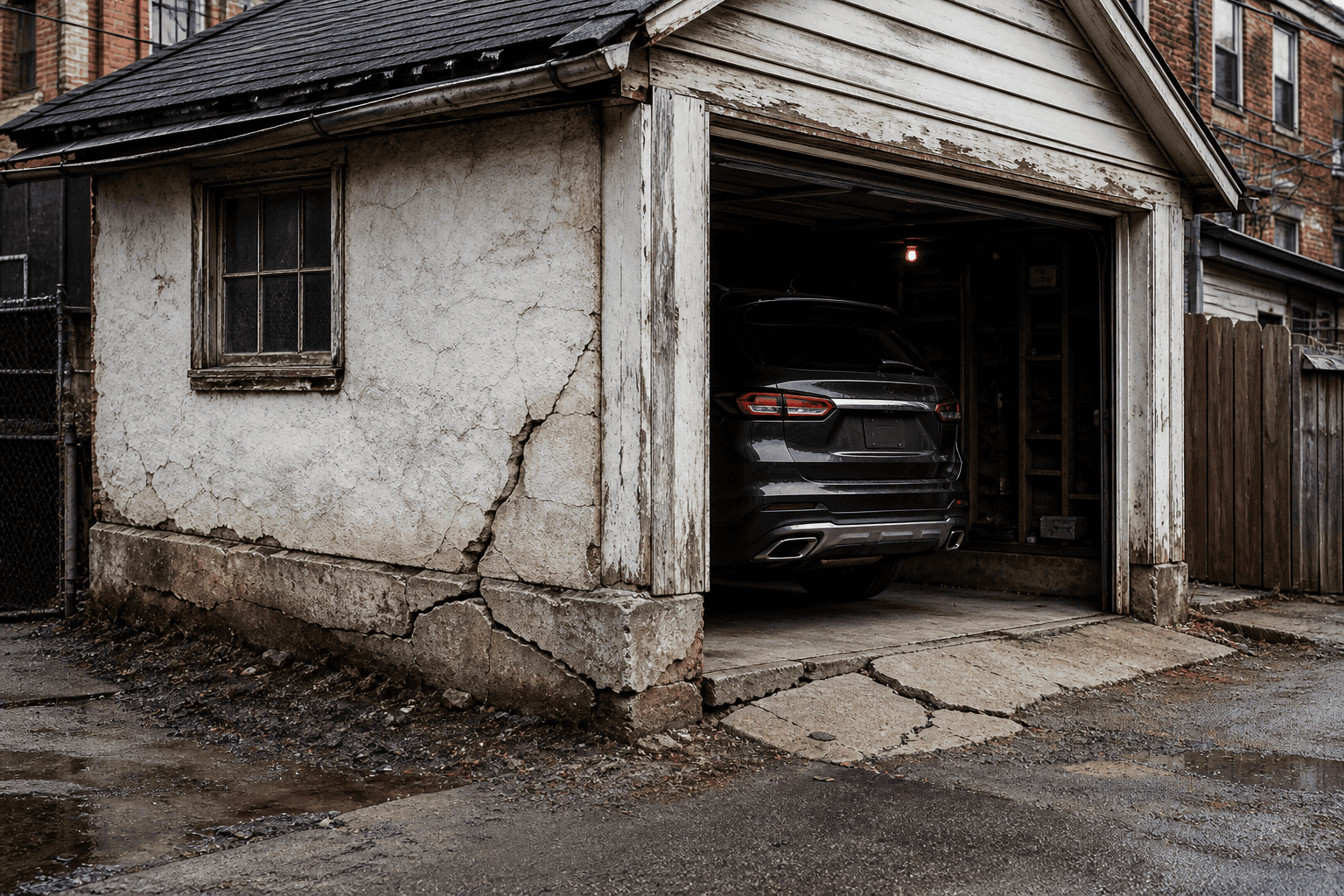
When cracking is connected to wider garage instability, property owners may need more than surface-level patching. In some cases, comparing garage repair with full reconstruction helps determine whether the existing structure can be safely restored or needs a more complete solution.
What Are the Main Causes of Garage Foundation Cracks in NYC?
Garage foundation cracks in NYC usually develop due to a combination of soil movement, water pressure, material aging, and structural limitations in older buildings. These factors do not act instantly. Instead, they gradually weaken the foundation until visible cracks start appearing in garage floors or walls.
In boroughs like the Bronx, Brooklyn, and Queens, mixed soil conditions, heavy rainfall, older construction styles, and seasonal weather changes increase the risk. When these environmental and structural pressures combine, even small weaknesses in the foundation can turn into larger cracking issues over time.
1. Uneven Ground Settlement
All structures settle over time, but uneven settlement creates stress within the foundation, leading to cracks.
How it happens:
- Soil compresses under the building’s weight
- Different sections settle at different speeds
- Internal stress builds within the slab
Common crack patterns:
- Diagonal cracks
- Stair-step cracks
2. Soil Movement and Expansion
Soil around the garage expands when wet and shrinks when dry, which causes movement beneath the foundation.
Why it matters in NYC:
- Rainfall and seasonal moisture changes affect soil stability
- Older garages often lack proper soil preparation
Impact on the foundation:
- Pressure builds against the walls
- Foundation shifts out of alignment
- Cracks form in floors and walls
Other contributing issues:
- Soil erosion from rainwater
- Poor exterior grading
- Weak or loose supporting soil
3. Poor Drainage and Water Pressure
Water buildup around the garage is one of the most common causes of foundation cracking. When drainage is poor, water collects near the structure and increases pressure against the foundation.
What happens:
- Water accumulates around the foundation
- Hydrostatic pressure increases
- Soil weakens beneath the slab
Common causes in older NYC properties:
- Blocked or damaged gutters
- Broken or short downspouts
- Improper slope directing water toward the garage
Poor drainage can also affect nearby concrete surfaces, especially when water repeatedly freezes, expands, and weakens the material. This is one reason concrete damage in NYC homes often appears around garages, driveways, walkways, and exterior foundation areas.
4. Aging Concrete and Material Breakdown
Over time, concrete and masonry lose strength due to long-term exposure to weather and moisture.
Why does this happen:
- Continuous moisture penetration
- Chemical and environmental wear
- Lack of modern protective coatings
Visible signs:
- Hairline cracks on the surface
- Flaking or spalling concrete
- Gradual widening of existing cracks
Additional stress factors:
- Daily vehicle load
- Constant pressure on garage floors
Winter exposure can make this breakdown worse because trapped moisture expands inside concrete during freezing weather. Property owners dealing with recurring surface damage should understand how frost and snow affect concrete floors, especially in older garages with limited moisture protection.
5. Outdated Garage Construction Methods
Many older garages in NYC were built using construction standards that are no longer considered sufficient today.
Typical structural limitations:
- Weak concrete mix
- Minimal reinforcement
- Shallow foundation footings
- Poor soil preparation during construction
Special case:
- Garages added later to existing buildings may settle differently, creating stress at connection points
6. Seasonal Temperature Changes
Temperature changes cause concrete to expand and contract, which weakens the structure over time.
NYC-specific impact:
- Freeze-thaw cycles during winter
- Rapid temperature changes between seasons
Effect on the foundation:
- Repeated expansion and contraction
- Micro-cracks that grow over time
- Surface and structural cracking
Freezing weather also creates moisture-related problems around foundations, slabs, and exterior walls. If a garage has repeated dampness, surface cracking, or winter water intrusion, it may be linked to broader cold-weather moisture issues around the property.
7. Tree Roots and Organic Growth
Nearby trees and vegetation can disturb the soil and foundation structure.
How roots cause damage:
- Grow beneath or alongside the foundation
- Apply pressure against concrete
- Absorb moisture from the surrounding soil
Resulting issues:
- Soil shrinkage and instability
- Foundation displacement
- Visible cracking in floors and walls
8. Structural Weakness in Garage Design
Garages are often structurally weaker than the main building, especially in older properties.
Common weaknesses:
- Built on fill material instead of solid ground
- Limited reinforcement in the slab
- Weak connection between the slab and the walls
Additional risks:
- Low soil stabilization
- Older construction standards that do not meet current load requirements
9. Delayed Maintenance and Minor Damage
Small issues can turn into major structural problems when ignored.
Common overlooked problems:
- Small cracks left unsealed
- Ineffective drainage systems
- Early warning signs ignored
What happens over time:
- Cracks continue to expand
- Repair costs increase
- Damage spreads deeper into the foundation
Minor cracks are easier to manage when they are inspected early. If cracks appear alongside wall movement, floor sinking, water entry, or door alignment problems, these may be early signs of garage structural damage that need professional evaluation.
Types of Garage Foundation Cracks in Older NYC Buildings
Not all garage foundation cracks carry the same level of risk. Some are surface-level and develop due to aging materials, while others indicate structural movement that may require immediate attention. In older NYC garages, identifying the crack type early helps prevent further damage to floors, walls, and surrounding structural elements.
Repair costs depend on the severity, root cause, and extent of the damage. Minor cracks may be inexpensive to fix, while structural cracks linked to settlement, water pressure, or lateral movement often require more advanced repair methods.
Here is a quick breakdown to help identify common garage foundation cracks:
| Crack Category | How It Looks | Root Cause | Damage Level |
|---|---|---|---|
| Hairline Cracks | Surface-level thin lines | Aging material | Low risk |
| Vertical Cracks | Straight top-to-bottom cracks | Normal foundation movement | Moderate attention needed |
| Diagonal Cracks | Angled or stair-step cracks | Uneven settlement | Elevated structural risk |
| Horizontal Cracks | Cracks along the wall length | Soil pressure against walls | High risk, urgent action |
Horizontal and widening cracks are the most serious because they often indicate external pressure or structural instability. These should be inspected by a professional contractor as early as possible, especially in older residential and commercial properties across NYC.
The total repair cost may vary depending on crack size, location, underlying cause, and the type of structural correction required.
Key Warning Signs of Garage Foundation Damage in NYC
Garage foundation damage usually develops gradually, but certain warning signs indicate that the issue is no longer minor. In NYC properties, where older construction and environmental exposure are common, early detection is critical to avoid structural risks and higher repair costs.
Watch for these signs in garage foundations:
- Cracks wider than 1/4 inch
- Cracks that continue to spread over time
- Water intrusion through foundation or floor cracks
- Uneven or sloping garage floors
- Doors that no longer close or align properly
- Outward bulging in walls
These signs often indicate deeper foundation movement, pressure imbalance, or water-related damage. If ignored, the problem can extend beyond the garage and affect nearby structural components of the property.
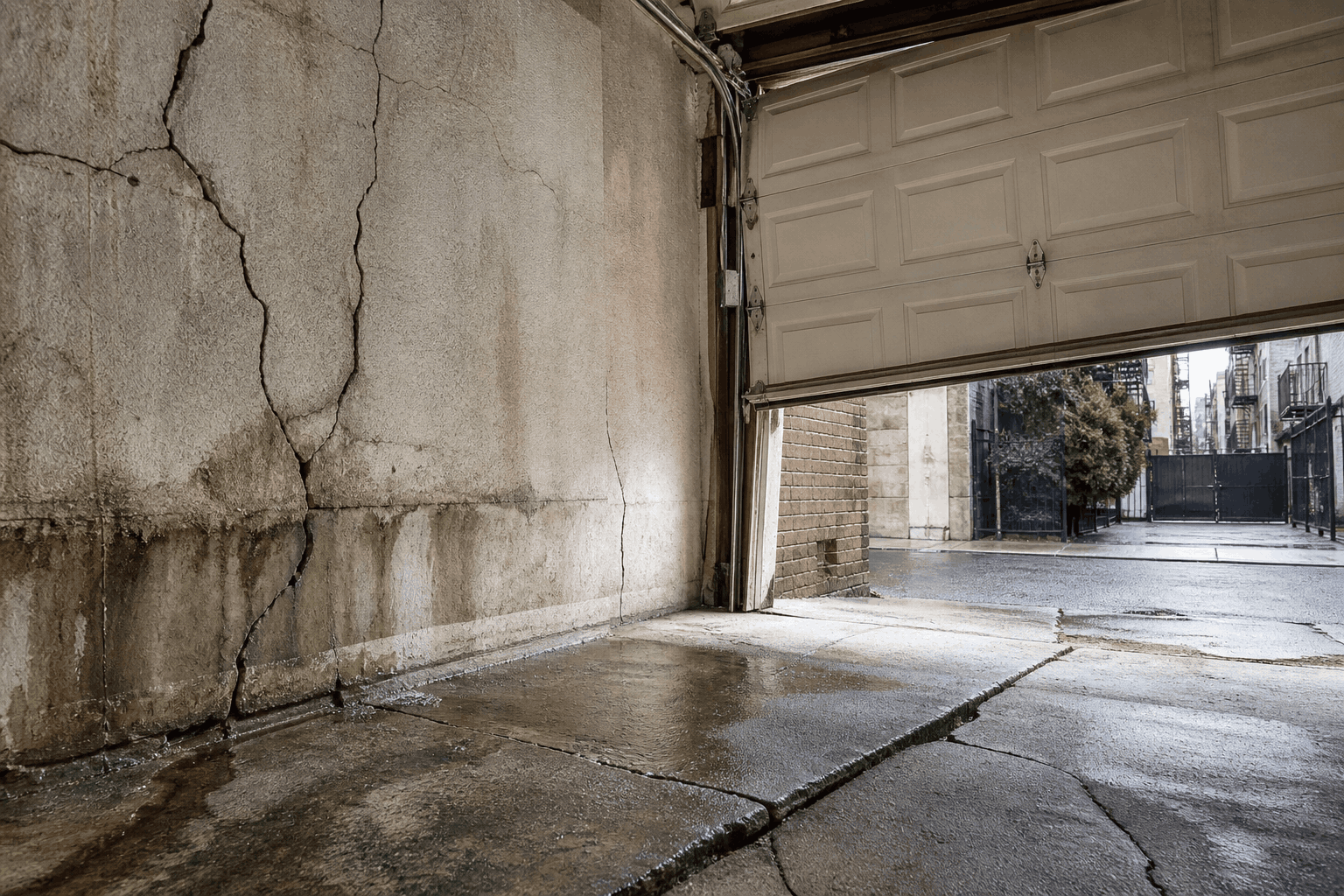
Timely inspection and repair help prevent further deterioration, reduce long-term costs, and maintain the safety of both residential and commercial buildings in NYC.
Final Thoughts on Garage Foundation Cracks
Garage foundation cracks in older buildings develop gradually due to soil movement, water pressure, aging materials, and structural limitations. In NYC, these risks are higher because of older construction, seasonal weather changes, and drainage challenges that affect both residential and commercial properties.
Small cracks may seem harmless at first, but ignoring them can lead to larger structural issues, higher repair costs, and safety concerns. Early inspection and timely repair help maintain structural stability, improve durability, and prevent damage from spreading beyond the garage.
Sardar Restoration Corp supports residential and commercial property owners across NYC, including the Bronx, Manhattan, Brooklyn, Westchester, and Queens. If you are dealing with garage foundation damage, working with a professional contractor for garage repair in NYC ensures proper diagnosis, code-compliant repairs, and long-term structural safety.
For expert inspections and repair solutions, call (+1) 917-355-8556, email sardarrestoration@gmail.com, or visit 2770 Fish Ave, Bronx, NY 10469, United States.
FAQs
Are garage foundation cracks normal in older NYC buildings?
Small hairline cracks are common in older NYC garages due to aging materials and long-term exposure. However, wider, spreading, or deep cracks are not normal and should be inspected to avoid structural issues.
Which garage foundation cracks are the most serious?
Horizontal and diagonal cracks are the most serious because they often indicate soil pressure or uneven settlement. These cracks usually require immediate professional inspection and repair.
How wide does a crack need to be before it becomes dangerous?
Cracks smaller than 1/4 inch are usually minor and manageable. Cracks wider than that, or ones that keep expanding, may indicate structural movement and should be addressed quickly.
Can water cause garage foundation cracks?
Yes, water is one of the leading causes. Poor drainage allows water to build up around the foundation, increasing pressure and weakening the soil, which leads to cracking over time.
Should I be concerned about small hairline cracks?
Hairline cracks are typically not urgent, but they should still be monitored. If they widen, spread, or allow moisture inside, they can develop into more serious structural problems.
Can garage foundation cracks be repaired permanently?
Yes, many cracks can be repaired using methods like epoxy injections, sealants, and structural reinforcement. The right solution depends on the root cause and severity of the damage.
Do garage foundation cracks get worse over time?
Yes, most cracks expand if the underlying cause is not fixed. Soil movement, water pressure, and temperature changes can make small cracks turn into serious structural issues.
Are garage cracks covered by insurance in NYC?
Coverage depends on the cause. Sudden damage may be covered, but gradual wear, poor maintenance, or soil movement is usually not included in standard policies.