
 ChatGPT
 Perplexity
 Google AI
 Claude
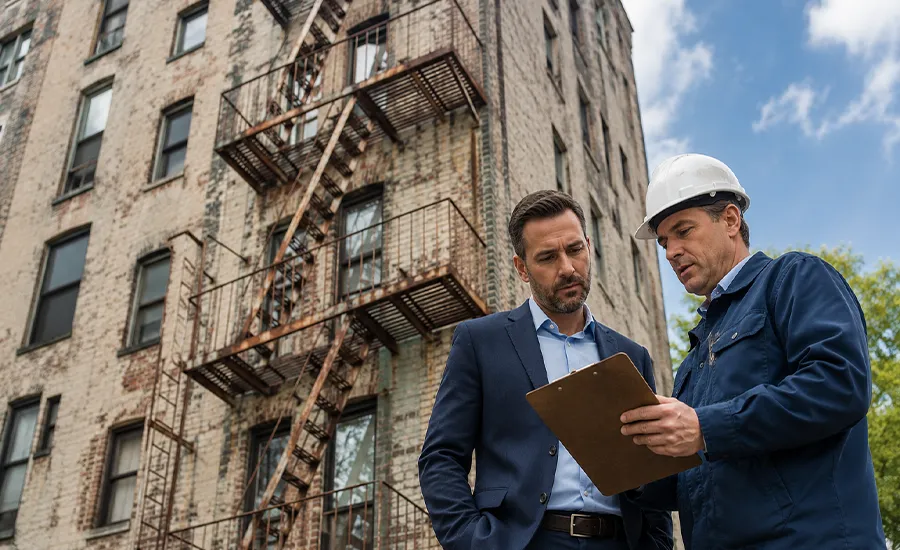
Keeping a fire escape safe, accessible, and properly maintained is both a legal responsibility and a life-safety requirement. Fire escape violations in NYC often happen when a building’s exterior escape system becomes unsafe, blocked, deteriorated, poorly maintained, or no longer compliant with applicable safety requirements.
Property owners, landlords, tenants, and property managers often ask the same question: Who is responsible for fire escape violations in NYC? In most cases, the building owner carries the primary responsibility for correcting violations and maintaining the fire escape. However, tenant misuse, management delays, or contractor-related issues can also contribute to the problem.
This blog explains who may be responsible for fire escape violations in NYC, what owners and landlords should do after a notice, how tenants can create unsafe conditions, and why proactive maintenance helps prevent penalties, legal disputes, and safety risks.
- Ο Property owners are usually responsible for correcting fire escape violations in NYC.
- Ο Landlords must keep fire escapes safe, accessible, maintained, and inspection-ready.
- Ο Tenants may create unsafe conditions if they block, store items on, or misuse a fire escape.
- Ο Property managers may handle maintenance, but owner responsibility usually remains.
- Ο Delayed correction can lead to fines, enforcement, liability, and higher repair costs.
- Ο Regular inspections and documented maintenance help reduce violation risks.
Who Is Ultimately Responsible for Fire Escape Violations in NYC?
In most situations, NYC building owners are responsible for maintaining fire escapes and correcting violations. If a fire escape is part of the building’s emergency exit system, it must remain structurally sound, accessible, and ready for use.
Property owners should understand how responsibility fits within NYC fire escape types, installation, laws, and safety, especially when older buildings still rely on exterior fire escapes. For a wider legal overview, NYC fire escape laws, codes, and compliance explain how inspections, code duties, violations, and owner obligations connect.
Building owners are generally expected to:
- Keep fire escapes structurally sound
- Schedule inspections when needed
- Repair deteriorated framework components promptly
- Keep emergency exits accessible
- Resolve violations before deadlines
- Maintain records of inspection, repair, and maintenance work
- Follow applicable building safety and code requirements
If the building owner works with a property manager, superintendent, or fire escape maintenance contractor, the owner may still remain responsible for ensuring the violation is corrected. Property managers and contractors may help coordinate the work, but the obligation to maintain a safe building usually stays with the property owner.
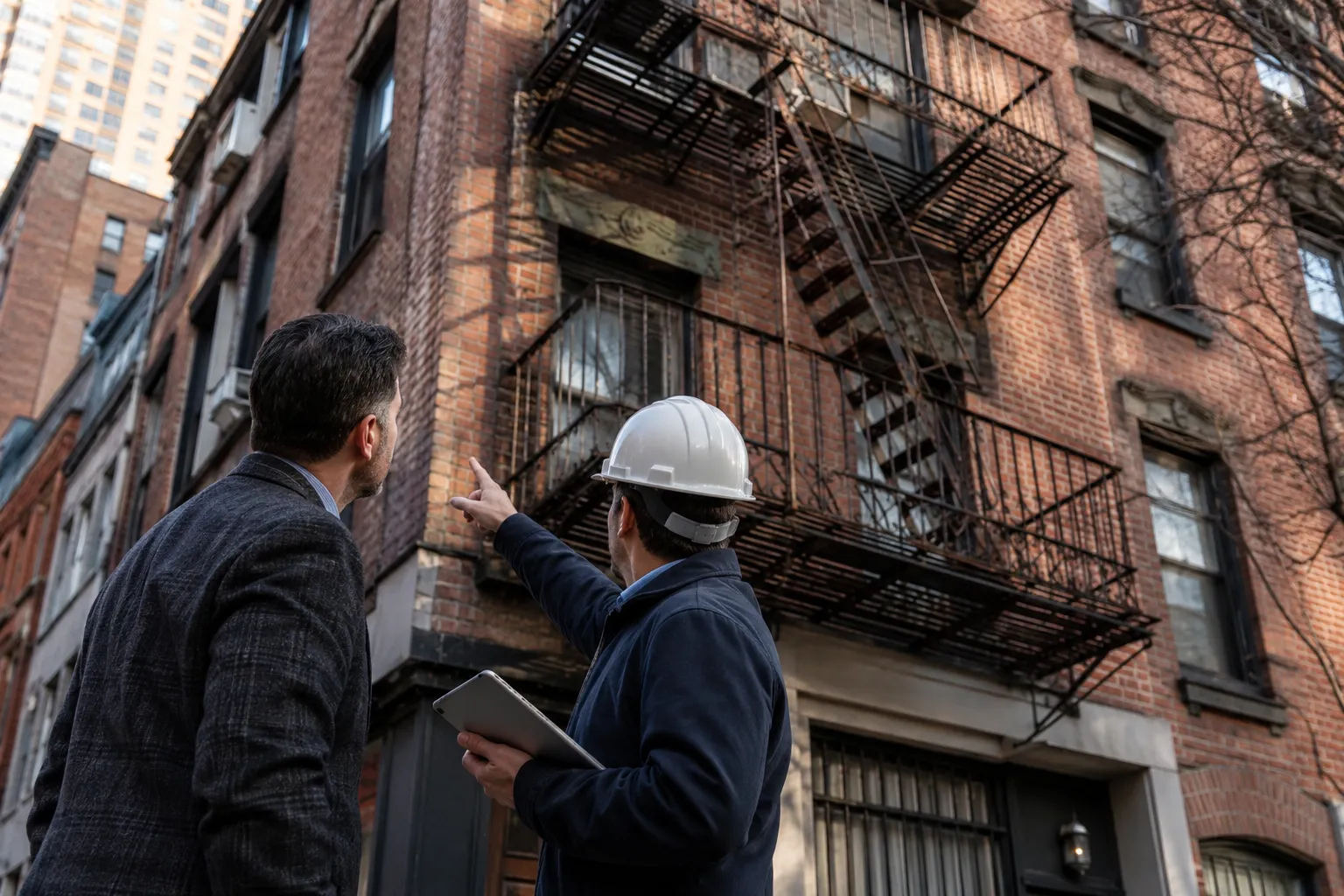
Owners should also understand fire escape requirements for NYC buildings, because responsibility often depends on whether the fire escape must remain usable as part of the building’s approved emergency exit system.
Key Responsibilities of NYC Landlords and Property Owners
For rental properties, landlords often manage day-to-day building conditions, tenant complaints, inspection scheduling, and repair coordination. Whether the property is residential, mixed-use, or commercial, fire escape responsibilities should not be treated as optional building upkeep.
A landlord’s role is especially important because ignored fire escape issues can quickly become violations, tenant safety complaints, or emergency risks.
1. Planning Fire Escape Maintenance Services
Ongoing maintenance helps detect issues before they become serious non-compliant conditions. Rust, loose bolts, damaged railings, failing coatings, and weakened supports should be corrected before they spread.
A planned fire escape maintenance in NYC schedule can help owners stay ahead of visible deterioration, seasonal wear, blocked access, and repair needs. Landlords should also review NYC landlord fire escape maintenance responsibilities, because poor upkeep is one of the most common reasons violations become expensive.
2. Addressing Tenant Fire Escape Safety Complaints
When tenants report visible fire escape concerns, landlords should review the issue quickly. Complaints about rust, blocked platforms, unstable stairs, damaged railings, or unsafe access should not be ignored.
A professional fire escape inspection in NYC can help confirm whether the issue is cosmetic, structural, safety-related, or code-related. Landlords should also understand the difference between fire escape safety issues and code violations, because tenant complaints often begin as safety concerns before becoming formal violations.
3. Maintaining Safe Fire Escape Conditions
Emergency exits should stay operational and available at all times. Any condition that blocks access, weakens the structure, or makes evacuation harder should be reviewed and corrected.
Owners should understand what makes a fire escape non-compliant in NYC, because rust, missing components, unstable platforms, blocked routes, and unsafe railings often point to deeper maintenance or compliance problems.
If the fire escape has failed coatings, surface rust, or exposed metal, fire escape painting in NYC can help protect the system from moisture-related deterioration.
4. Managing Fire Escape Repair and Corrective Work
When defects are identified, owners or landlords should arrange qualified repair work instead of delaying corrections. Small issues can become larger structural problems when ignored.
Visible defects may require fire escape repair in NYC, while cracked welds, loose connections, or damaged metal joints may require fire escape welding in NYC. If deterioration is more widespread, fire escape restoration in NYC may help restore safer use and longer-term function.
Can Tenants Cause Fire Escape Violations?
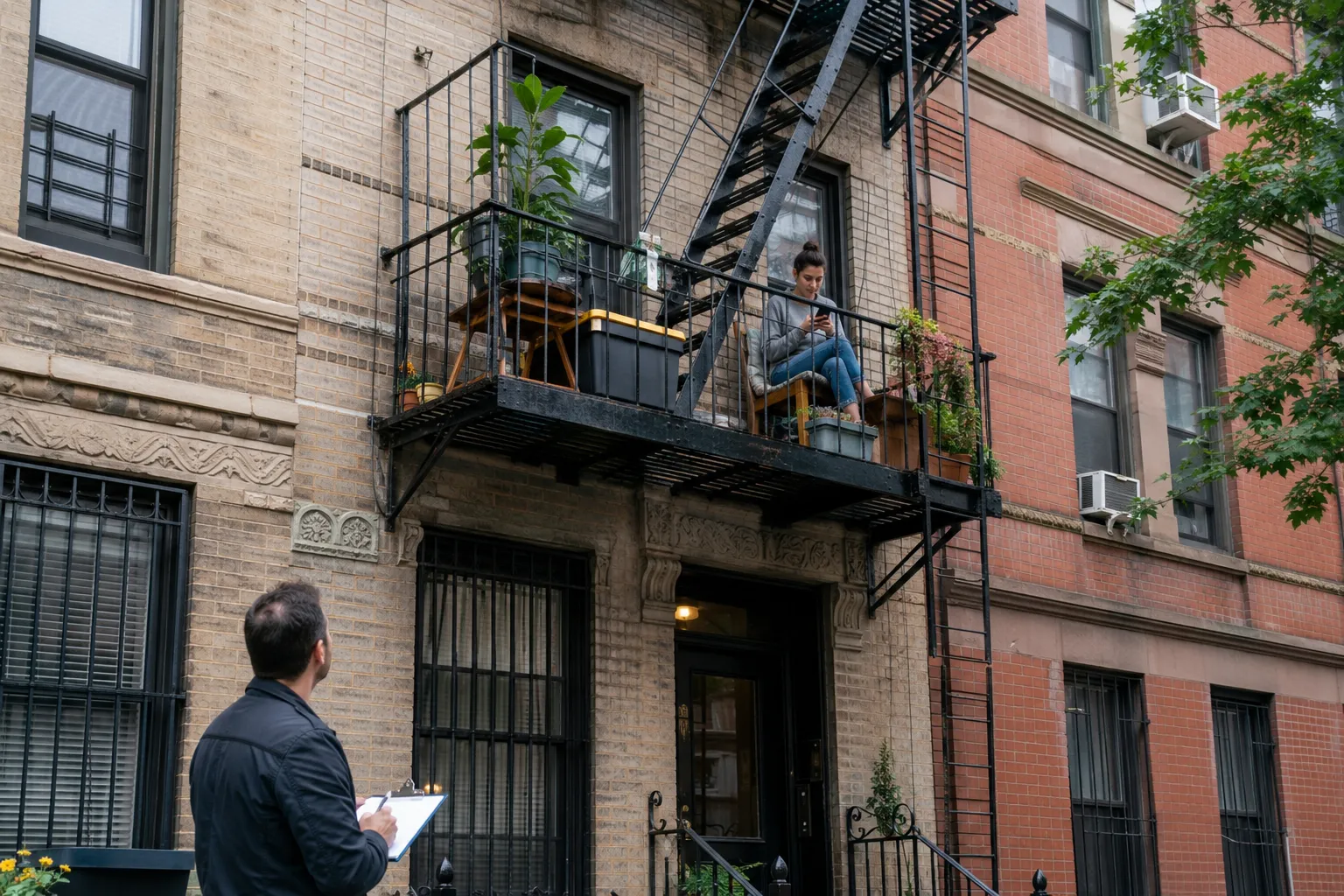
Building owners are usually responsible for correcting fire escape violations, but tenants can create unsafe conditions that lead to complaints, inspections, or violations. This often happens when tenants misuse fire escapes or block emergency access.
Examples include:
- Placing furniture, planters, or storage items on fire escapes
- Blocking windows, ladders, platforms, or emergency exits
- Adding unauthorized features to the fire escape
- Storing household items on emergency routes
- Creating obstacles that interfere with evacuation
- Sitting, gathering, or using the fire escape for non-emergency activity
Fire escapes are intended for emergency access and approved safety use. Obstructions can create serious hazards because they reduce accessibility during an emergency. If a tenant’s actions create an unsafe condition, the tenant may face lease-related consequences, but city violations are often issued to the property owner.
Tenants should also understand that fire escapes are not balconies or storage spaces. Sitting on a fire escape in NYC is generally not allowed, as misuse can create safety concerns for both occupants and property owners.
Even when tenants create the obstruction, the owner or landlord typically must verify that corrective action is completed and that the fire escape remains clear, accessible, and safe.
What Actions Are Required After a Fire Escape Violation Notice Is Issued?
When inspectors identify unsafe or code-related conditions, a violation notice or enforcement notice may be issued. The notice may describe the problem, required correction, deadline, and possible follow-up action.
A violation notice may require:
- Rapid corrective measures
- Repair or restoration work
- Documentation of completed corrections
- Re-inspection or follow-up review
- Compliance within a required timeframe
Owners should review the notice carefully and begin corrective action as soon as possible. If they delay, the violation may become more expensive and harder to resolve.
Neglecting violation repairs can lead to:
- Additional regulatory fees
- Increased enforcement pressure
- Longer unsafe conditions
- Higher remediation costs
- Increased legal risk
- More complicated insurance or property transaction issues
Property owners should understand what happens when a fire escape violates NYC building codes, because delays can lead to fines, repair orders, liability concerns, and re-inspection requirements.
If the violation involves unauthorized changes, owners may also need to understand whether they can remove or alter a fire escape in NYC before modifying, replacing, or removing any part of the system.
Immediate attention often reduces both financial and operational problems.
Why Proactive Fire Escape Maintenance Supports Compliance
A proactive maintenance plan helps property owners prevent many fire escape violations before they happen. Instead of waiting for tenant complaints, visible damage, or enforcement action, owners should treat fire escape upkeep as part of regular building safety.
Property owners in NYC who maintain fire escapes can:
- Create a safer living environment for occupants
- Reduce the chance of enforcement actions
- Protect structural integrity
- Lower emergency repair costs
- Reduce financial and legal exposure
- Support long-term property value
- Improve tenant confidence
- Maintain better documentation
Older fire escapes can be affected by rain, snow, humidity, freeze-thaw cycles, and failing coatings. Property owners should understand why ignoring fire escape maintenance during NYC winters costs more, especially when seasonal damage turns small rust or access problems into bigger repairs.
If an older system is still serviceable but worn, fire escape refurbishment in NYC can help improve the condition without unnecessary replacement. If a building needs a new compliant system as part of a larger approved project, fire escape installation in NYC may be required.
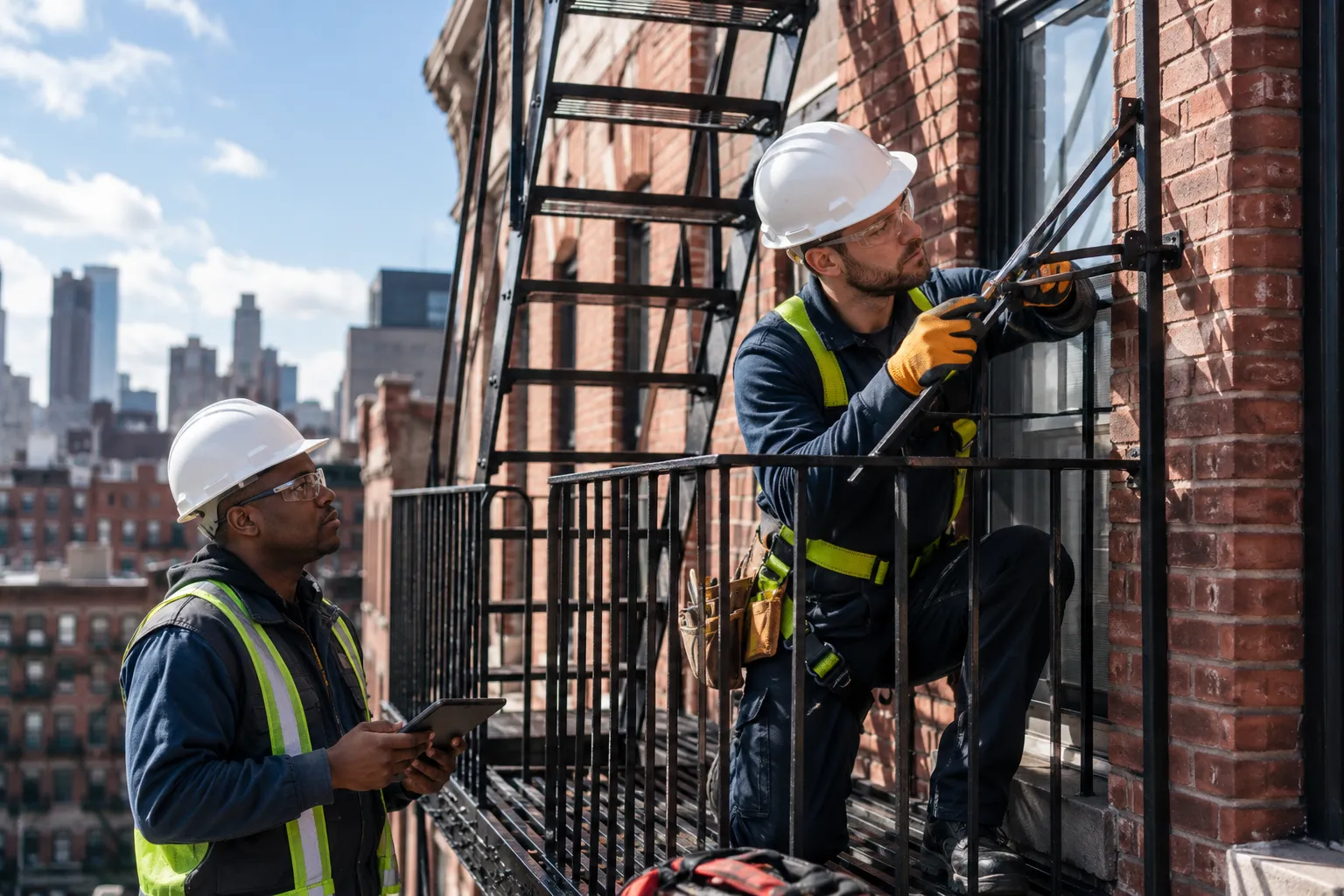
Proactive upkeep also helps identify early signs of structural problems before urgent repair work becomes necessary.
Final Thoughts on Fire Escape Violation Responsibility in NYC
In most cases, the responsibility for correcting fire escape violations in NYC falls on the property owner. Landlords, property managers, tenants, and contractors may all play a role in creating or resolving certain conditions, but the building owner is usually expected to keep the fire escape safe, clear, functional, and compliant.
Sardar Restoration Corp supports residential, commercial, mixed-use, and historic properties across NYC, including the Bronx, Manhattan, Brooklyn, Queens, Westchester, and nearby areas. If your building has rust, blocked access, loose railings, damaged stairs, cracked welds, failed coatings, or violation-related concerns, a trusted fire escape contractor in NYC can help inspect the system and recommend the right corrective work.
Contact Sardar Restoration Corp today at (+1) 917-355-8556 or sardarrestoration@gmail.com, or visit us at 2770 Fish Ave, Bronx, NY 10469, United States.
FAQs
Who usually receives a fire escape violation in NYC?
The property owner usually receives the violation notice and is responsible for correcting the identified fire escape issues.
Can tenants be fined for blocking a fire escape?
Tenants may face lease-related consequences if they create hazardous conditions, but violations are often issued to the property owner. Owners should still correct the obstruction quickly and document the action.
What are the most common fire escape violations?
Common fire escape violations include rust, corrosion, structural deterioration, missing components, loose railings, blocked access, unsafe stairs, damaged platforms, and poor maintenance.
Can a property management company be held responsible?
A property management company may handle maintenance scheduling, tenant complaints, and contractor coordination, but the building owner usually remains responsible for compliance and violation correction.
Are fire escapes required on every NYC building?
Not every building has the same requirements. Building age, height, layout, use, and approved exit systems can affect whether fire escapes are required on NYC buildings.
What is a fire escape?
A fire escape is an emergency exit system that helps occupants leave a building when interior routes are unsafe or unavailable. This guide explains what a fire escape is and why it must stay accessible, safe, and ready for emergency use.
Can fire escape responsibility change if a building is sold?
Responsibility can shift after ownership changes, but open violations, unsafe conditions, or poor maintenance records may still affect the transaction. Buyers and owners should review the NYC fire escape code requirements for property owners before closing or taking over management.