
 ChatGPT
 Perplexity
 Google AI
 Claude
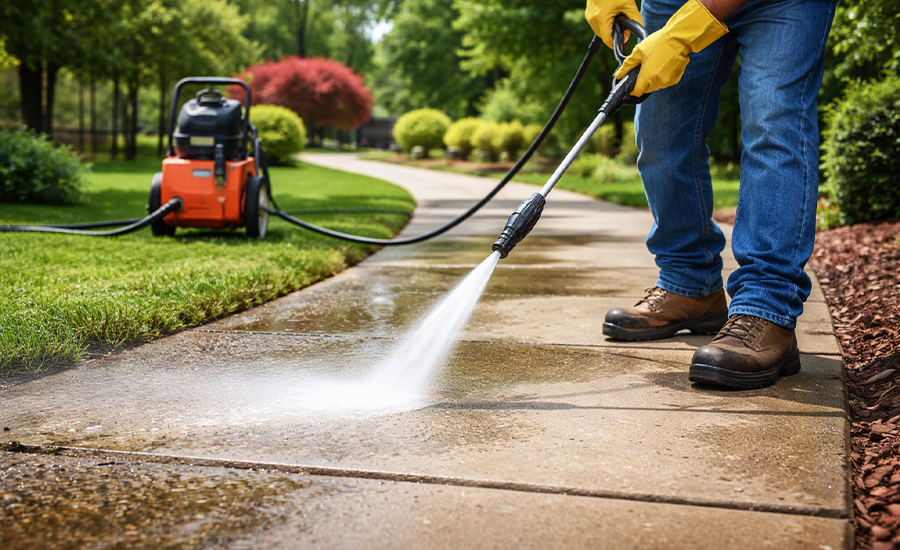
Concrete sidewalks handle constant foot traffic, weather exposure, oil stains, and moisture buildup throughout the year. In cities like NYC, poor drainage, freeze-thaw cycles, and algae growth can increase slip hazards and surface deterioration if not maintained properly. Regular power washing helps restore traction, remove contaminants, and maintain the structural integrity of both residential and commercial concrete sidewalks.
In this guide, you’ll learn the correct PSI range, nozzle settings, stain treatment methods, and safety considerations required to clean concrete safely without causing surface etching or long-term damage.
For most residential and commercial concrete sidewalks, a pressure range of 2,500 to 3,000 PSI is considered safe when used with proper technique and nozzle control. This range is strong enough to remove dirt, algae, and surface stains without damaging structurally sound concrete.
- Ο Below 2,000 PSI may not remove embedded grime or oil buildup
- Ο Above 3,500 PSI can cause surface etching or micro-fracturing
- Ο Older or cracked concrete requires lower calibrated pressure
- Ο Wider spray angles help distribute pressure more evenly
Maintaining the correct distance (8–12 inches) and keeping the wand moving continuously is essential to prevent concentrated pressure damage.
Why Proper Power Washing Matters for Concrete Sidewalks
Power washing is not just about improving appearance. When done correctly, it supports surface safety, prevents premature deterioration, and reduces long-term repair costs. Concrete is porous by nature, which means dirt, oil, moisture, and biological growth can penetrate the surface and accelerate wear if not removed regularly, especially before seasonal temperature shifts, similar to scheduling pressure washing driveways and patios before winter to reduce freeze-related surface stress.
When performed correctly, power washing helps:
- Reduce slip hazards caused by algae, mold, and moisture buildup
- Prevent surface discoloration from oil, rust, and organic stains
- Slow down surface scaling caused by freeze-thaw cycles
- Prepare the concrete for sealing or protective treatments
- Maintain compliance in high-traffic residential and commercial areas
When contaminants are removed without surface etching, concrete retains its strength and uniform appearance. Improper cleaning, however, increases the risk of cracking and spalling over time.
Common Power Washing Mistakes That Damage Concrete
Power washing can improve sidewalk performance when handled correctly. However, incorrect technique or equipment misuse can weaken the surface layer of concrete and lead to long-term structural issues. Many cases of surface damage occur not because of cleaning itself, but because of excessive pressure concentration and poor control.
The most common mistakes include:
- Using excessively high PSI that removes the surface cement paste and exposes the underlying aggregate
- Holding the nozzle too close to the surface, creating uneven etching
- Using a 0° (red) nozzle, which concentrates pressure into a narrow stream
- Stopping the spray in one spot, causing visible surface gouges
- Washing already cracked or spalled areas without first repairing them
Concrete sidewalks, especially older slabs, are more vulnerable to micro-fracturing when pressure is inconsistent. Surface etching is not always immediately visible, but over time, it can reduce durability and increase moisture penetration.
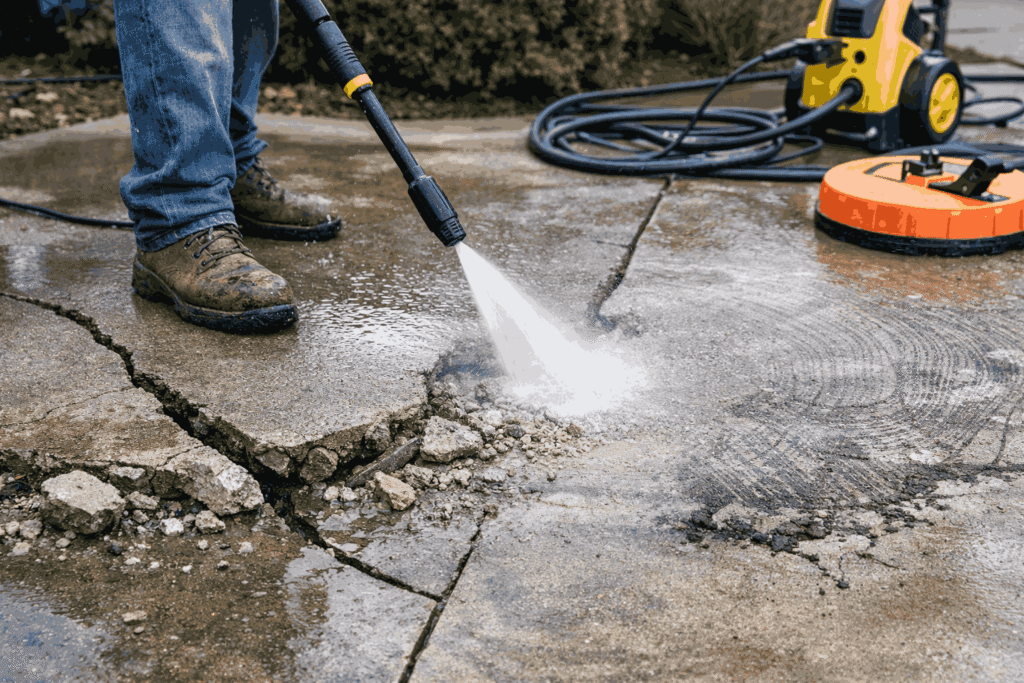
Controlled application and consistent technique are critical for preserving both the appearance and structural integrity of residential and commercial sidewalks.
Tip 1: Calibrate the Correct PSI to Protect Surface Integrity
Pressure selection determines whether power washing restores the sidewalk or damages it. Concrete is strong in compression but vulnerable at the surface layer if excessive force removes the cement paste. Maintaining the best water temperature for pressure washing in cold weather further helps prevent surface shock and micro-fracturing.
Safe Pressure Guidelines
For most residential and commercial concrete sidewalks:
- 2,500–3,000 PSI is effective for general cleaning
- Heavily stained areas may require pressure near 3,000 PSI
- Older concrete (10–15+ years) should be cleaned at reduced pressure
- Cracked or spalled surfaces require reduced pressure settings
Pressure exceeding 3,500 PSI increases the risk of surface etching, aggregate exposure, and long-term moisture penetration.
Application Control Measures
- Maintain an 8–12 inch nozzle distance
- Keep the spray moving continuously
- Avoid holding pressure in one spot
- Always test a small section before full cleaning
Correct calibration ensures contaminant removal without weakening the concrete matrix.
Tip 2: Choose the Proper Nozzle and Spray Angle
Nozzle selection controls how pressure is distributed across the surface. Even with the correct PSI, an improper nozzle can concentrate force and cause damage.
Recommended Nozzle Types
- 25° (Green) – Suitable for general sidewalk cleaning
- 40° (White) – Ideal for light dirt and surface rinsing
- 15° (Yellow) – Use cautiously for stubborn buildup
- Avoid 0° (Red) – High risk of gouging and surface cutting
Wider spray angles reduce localized pressure concentration.
Optimal Spray Technique
- Hold the wand at a 30–45° angle
- Maintain consistent side-to-side strokes
- Overlap passes slightly to prevent streaking
- Avoid spraying directly into expansion joints
Controlled spray geometry protects both surface texture and structural durability.
Tip 3: Pre-Treat Stains to Reduce Pressure Dependency
Deep stains often cannot be removed by water pressure alone. Increasing PSI to remove oil or rust may damage the surface unnecessarily. Proper pre-treatment improves cleaning efficiency while minimizing structural risk, especially when selecting appropriate winter-safe detergents for outdoor pressure washing in low-temperature conditions.
Common Sidewalk Contaminants
- Oil and grease from vehicles
- Rust stains from metal contact
- Mold and algae in damp areas
- Organic stains from leaves and debris
Pre-Treatment Best Practices
- Use concrete-safe degreasers for oil contamination
- Apply mildew or algae treatment for biological growth
- Allow solution to dwell for 5–10 minutes
- Prevent cleaners from drying before rinsing
- Rinse thoroughly using controlled pressure
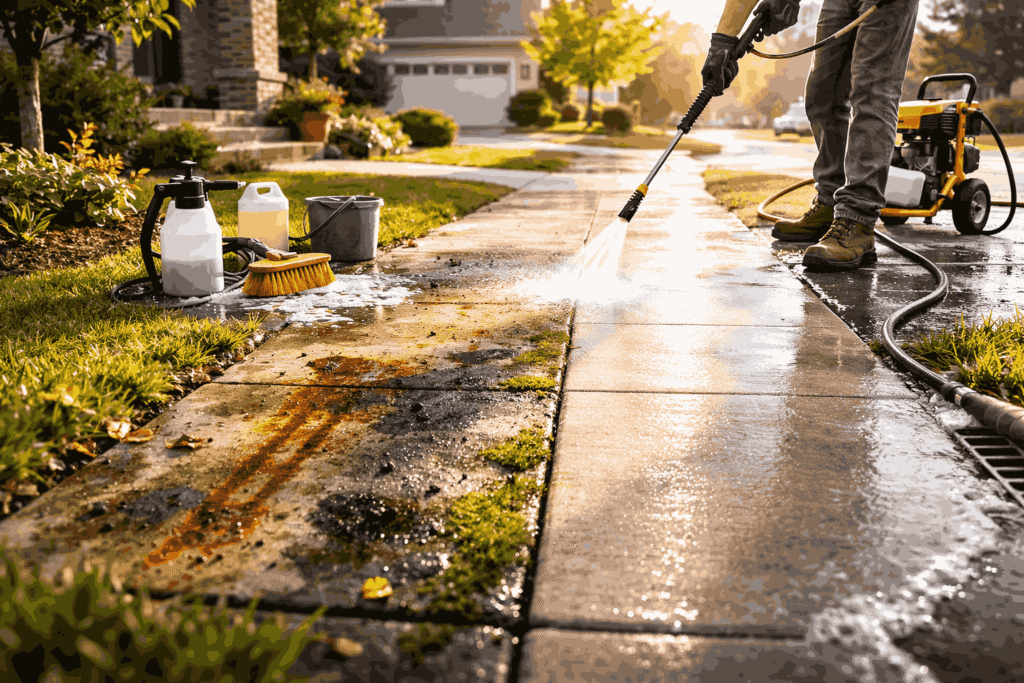
Pre-treatment reduces the need for excessive force and helps preserve the concrete’s top layer.
Tip 4: Follow a Systematic Cleaning Pattern for Uniform Results
Inconsistent spraying can cause visible streaking, uneven shading, and localized surface abrasion. A controlled cleaning sequence ensures even contaminant removal while protecting the concrete’s top layer from unnecessary wear.
Section-Based Cleaning Approach
- Divide large sidewalks into manageable zones
- Start from one fixed edge and move forward systematically
- Complete one section fully before moving to the next
- Rinse each zone thoroughly before shifting position
Stroke and Motion Control
- Use overlapping side-to-side passes
- Maintain a consistent walking pace
- Keep the nozzle distance uniform
- Avoid pausing the spray in one location
A predictable cleaning pattern maintains visual consistency and reduces surface stress.
Tip 5: Implement Safety Controls and Protect Adjacent Surfaces
High-pressure washing requires controlled handling to prevent injury and unintended surface damage. Safety preparation ensures effective cleaning without damaging nearby materials or weakening vulnerable concrete areas, particularly when following established winter pressure washing safety practices during colder conditions.
Operator Safety Measures
- Wear non-slip footwear on wet surfaces
- Use protective eyewear and gloves
- Maintain stable footing and balanced stance
- Never direct spray toward people or pets
Property and Structural Protection
- Cover nearby plants and landscaping
- Avoid spraying directly into expansion joints
- Do not force water into visible cracks
- Keep spray away from building foundations
Proper safety management preserves both surface durability and surrounding property integrity.
When to Avoid DIY Power Washing and Consider Professional Help
Many concrete sidewalks can be cleaned safely, but certain surface conditions increase the risk of structural damage if handled incorrectly. In these cases, uncontrolled pressure may worsen deterioration rather than improve surface appearance, especially when property owners question whether you can pressure wash in winter without increasing freeze-related risk.
Surface Conditions That Require Caution
- Deep cracks or active spalling
- Exposed aggregate or surface scaling
- Uneven slabs creating trip hazards
- Older concrete with visible wear
- Areas with significant moisture intrusion
These conditions indicate weakened surface integrity where aggressive washing may accelerate deterioration.
Situations That May Require Professional Assessment
- Commercial sidewalks with heavy pedestrian traffic
- Sidewalks are subject to local maintenance regulations
- Large surface areas requiring uniform cleaning
- Preparation before sealing or surface coating
- Repeated staining that does not respond to normal cleaning
In such scenarios, calibrated equipment and controlled application techniques help protect long-term durability while achieving consistent results.
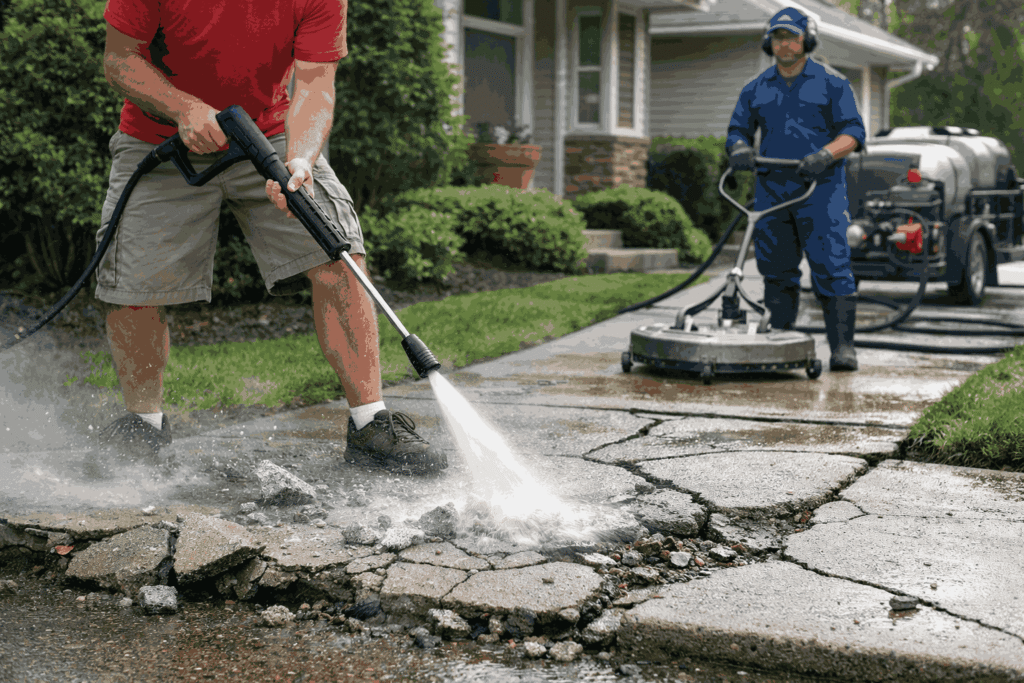
DIY vs Professional Power Washing: What’s the Difference?
Both DIY and professional power washing can clean concrete sidewalks, but the difference lies in pressure control, equipment quality, and risk management. Choosing the right approach depends on surface condition, size of the area, and desired durability outcomes.
| Factor | DIY Power Washing | Professional Power Washing |
|---|---|---|
| Equipment Type | Rental-grade machine | Commercial-grade calibrated system |
| Pressure Control | Manual adjustment | Surface-calibrated pressure output |
| Risk of Surface Damage | Higher if technique is inconsistent | Lower due to controlled application |
| Large Area Uniformity | May result in streaking | Systematic section-based cleaning |
| Stain Treatment | Limited chemical selection | Concrete-safe targeted pre-treatment |
| Safety Compliance | Basic personal safety | Structured safety and surface assessment |
DIY cleaning may be suitable for light surface dirt on structurally sound residential sidewalks. However, commercial sidewalks, older slabs, or surfaces with visible deterioration typically benefit from calibrated professional application to reduce long-term structural risk.
Conclusion: Safe and Effective Concrete Sidewalk Power Washing
Power washing concrete sidewalks is effective when performed with proper pressure calibration, correct nozzle selection, and controlled technique. Excessive force or inconsistent motion can weaken the surface layer and reduce long-term durability. Regular maintenance, combined with careful application, helps preserve surface integrity, improve traction, and extend the service life of residential and commercial concrete sidewalks.
For property owners who prefer calibrated equipment and controlled surface treatment, Sardar Restoration Corp provides concrete sidewalk power washing for residential and commercial properties throughout NYC, including The Bronx, Manhattan, Brooklyn, Westchester, and Queens. If your sidewalk shows surface deterioration, cracking, or scaling, our team also handles concrete sidewalk repair NYC services to restore structural integrity before cleaning. Each project is evaluated based on surface condition, age of concrete, and environmental exposure to ensure safe and consistent results.
To discuss your sidewalk maintenance needs, call (+1) 917-355-8556, email sardarrestoration@gmail.com, or visit 2770 Fish Ave, Bronx, NY 10469, United States.
FAQs
How often should concrete sidewalks be power-washed?
Concrete sidewalks should generally be power-washed once per year. High-traffic residential and commercial areas or locations exposed to moisture and algae may require cleaning twice annually.
Can power washing damage concrete sidewalks?
Yes, improper pressure settings or incorrect nozzle use can cause surface etching, aggregate exposure, and micro-cracking. Using calibrated PSI and maintaining consistent movement reduces this risk.
Is detergent necessary when power washing sidewalks?
Water alone can remove light dirt, but oil, grease, mold, and rust stains typically require concrete-safe cleaning solutions for effective removal without increasing pressure.
What PSI is too high for concrete sidewalks?
Pressure above 3,500 PSI increases the risk of surface damage, especially on older or deteriorated slabs. Most sidewalks can be cleaned effectively within the 2,500–3,000 PSI range.
Can water pooling damage concrete after pressure washing in winter?
Yes, standing water can increase surface risk during colder conditions. If runoff is not properly directed, water pooling after pressure washing in winter may freeze and expand within surface pores or minor cracks. This freeze-thaw pressure can accelerate scaling, micro-fracturing, and long-term deterioration.
Can old or cracked concrete be power-washed safely?
It can be cleaned cautiously using reduced pressure and wider spray angles. However, severely cracked or spalled surfaces may require repair before washing.
Should concrete sidewalks be sealed after power washing?
Sealing after cleaning can help repel moisture, stains, and contaminants. It is particularly beneficial for commercial sidewalks or areas exposed to heavy traffic and seasonal weather stress.
What nozzle is best for power washing concrete sidewalks?
A 25° (green) nozzle is generally suitable for standard sidewalk cleaning, while a 40° (white) nozzle works well for lighter dirt. Narrow 0° nozzles should be avoided due to high surface damage risk.
Can power washing remove oil stains from concrete sidewalks?
Yes, but deep oil stains often require a concrete-safe degreaser before washing. Pre-treatment reduces the need for excessive pressure and helps protect the surface layer.