 ChatGPT
 Perplexity
 Google AI
 Claude

Brick pointing is the process of renewing the external part of mortar joints in masonry walls, while stone pointing involves the process of renewing mortar between stones in a wall. Over time, weather, moisture, and aging cause mortar to deteriorate, threatening both the structure and appearance of stone or brick walls. In this way, it is essential to understand the use of both methods, with accurate mortar and stone ratios and compositions, and with expert artistry to achieve lasting results.
In this blog, we’ll compare stone and brick pointing, discuss their benefits, consider factors to help you choose between them, and offer maintenance tips for pointing walls.
Stone Vs. Brick Pointing Methods
Let’s have a look at some of the differences between stone and brick pointing, which makes you pick the best option for your property:
| Aspect | Stone Pointing | Brick Pointing |
|---|---|---|
| Base material | Marble, limestone, granite, sandstone, bluestone, slate | Clay bricks with inconsistent texture |
| Mortar composition | Lime-based mortar | Lime or cement mortar |
| Mortar joint dimension | Inconsistent & generally wider | Evenly sized & compact |
| Surface finish | Detailed workmanship on an uneven surface | Uniform workmanship on a refined surface |
| Architectural appeal | Showcases different patterns of natural stone | Offers contemporary & historic styles |
| Service scheduling | 20–50 years, depending on exposure | 10–30 years, depending on climate and brick quality |
Why Stone Pointing Matters?
Here are the advantages of stone pointing, which helps homeowners maintain their properties:
- It maintains historical authenticity.
- It protects against water and freeze-thaw damage.
- It elevates natural stone texture.
Why Brick Pointing Matters?
Here are the advantages of brick pointing, which helps homeowners maintain their properties:
- It strengthens the structure and prevents spalling.
- It protects against frost, moisture, and thermal expansion.
- It improves curb appeal with neat, uniform lines.
For properties exposed to seasonal cold, it is important to understand how temperature affects results. See best temperature range for brick pointing in winter for practical guidance.
What To Evaluate Before Pointing Work?
Make Sure to take into account these factors before performing brick or stone pointing:
- Masonry Assembly: If the walls are historical, they require lime-based mortar; for contemporary construction, cement-based mortar is required.
- Exposure to elements: Walls exposed to rain, snow, or freeze-thaw cycles need durable, water-resistant mortar.
- Styling objectives: Stone pointing emphasizes natural texture; brick pointing emphasizes uniformity.
- Investment Level: Stone pointing is more labor-intensive and expensive.
- Heritage protection: Heritage properties require specialized mortars and techniques.
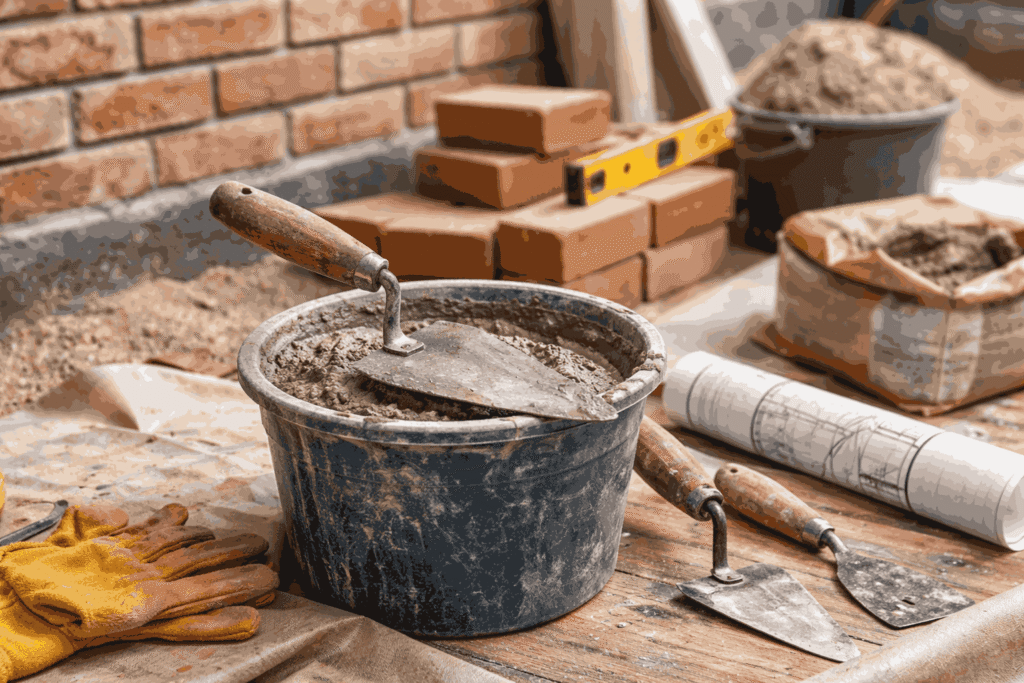
Cold-weather projects raise safety and durability questions. This guide on Is repointing bricks safe in cold weather? explains the risks and precautions involved.
Best Practices For Maintaining Pointed Walls
Here are some of the maintenance tips that homeowners should know when stone pointing and brick pointing the walls:
- Conduct regular inspections for cracks, loose mortar, or water damage.
- Immediately fix the small cracks before they worsen.
- Don’t use high-pressure cleaning, which can damage mortar.
- Make sure to use high-quality, accurate mortar that complements the stone and brick pointing.
- Keep drainage systems clear and properly manage moisture via gutters, downspouts, and drainage.
If you are planning repairs during colder months, this article on can you do brick pointing in winter? breaks down when winter work is feasible and when it should be avoided.
Conclusion
In conclusion, both stone and brick pointing play vital roles in maintaining structural integrity and visual appeal. Brick pointing requires proper mortar selection, which is critical for long-term durability, while stone pointing requires a flexible mortar ideal for historic or rustic walls. Make sure to use high-quality, appropriate mortar and let it cure at the correct temperature to achieve the desired results.
Sardar Restoration Corp proudly serves every corner of NYC, including the Bronx, Manhattan, Brooklyn, Westchester, and Queens. Our services are designed to meet your specific needs, providing top-quality solutions wherever you are. Check our service areas to see how we can assist you in your location.
Contact us today at (+1) 917-355-8556 or sardarrestoration@gmail.com, or visit us at 2770 Fish Ave, Bronx, NY 10469, United States.
FAQs
How long does stone and brick pointing last?
We skillfully handle all pointing work, ensuring the Stone pointing lasts 20–50 years and the brick pointing lasts 10-30 years, providing structural strength and architectural durability.
Can brick pointing be DIY?
Yes! You can DIY brick pointing, but only Minor repairs are possible. Major brick pointing damage requires skilled work and should be handled by professionals.
How to match old mortar?
Make sure to formulate the mortar that matches the color, strength, and consistency of the old mortar. Be it stone pointing or brick pointing, we ensure the mortar adheres perfectly to the joints between stones and bricks.
Does brick pointing improve insulation?
Yes! If brick pointing is done correctly and seals all joints, it prevents drafts and water ingress, improving insulation and reducing energy consumption.
Which is more expensive: stone pointing or brick pointing?
Stone pointing usually costs more than brick pointing because it requires detailed workmanship, custom mortar matching, and more time due to uneven stone surfaces.
Can improper stone pointing damage walls?
Yes! If stone pointing is done improperly, using hard cement on soft stone or old bricks, it results in trapping moisture and causing damage.