
 ChatGPT
 Perplexity
 Google AI
 Claude
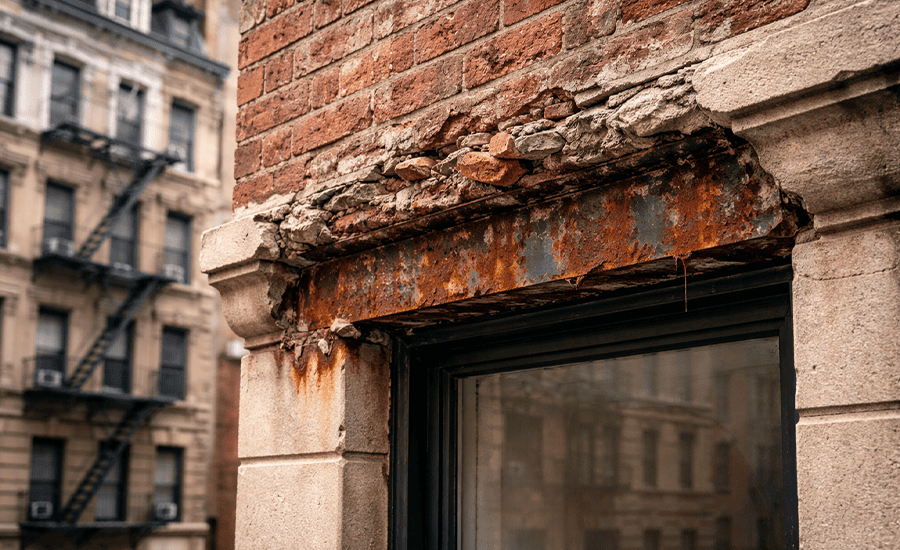
Lintels are horizontal structural supports installed above windows and doors to carry the weight of masonry above the opening. In many older NYC buildings, these components were installed decades ago using materials and construction methods that were not designed for long-term exposure to moisture, freezing temperatures, and modern building loads.
Over time, aging materials, repeated water intrusion, and seasonal weather cycles place excessive stress on lintels. When deterioration begins, it often appears around windows and doors as cracks, rust staining, and masonry movement. If left unaddressed, lintel failure can compromise façade stability, trigger building code violations, and pose serious safety risks to occupants and pedestrians.
This article explains why lintels fail more frequently in older NYC buildings, the early warning signs to watch for, how failure impacts structural integrity, and what property owners can do to reduce risk through timely inspections and maintenance.
- Ο Lintels play a critical load-bearing role in older NYC buildings, especially above windows and doors.
- Ο Aging materials, moisture exposure, and freeze-thaw cycles are leading contributors to lintel failure.
- Ο Early warning signs often appear as cracks, rust stains, or masonry movement around openings.
- Ο Lintel failure can result in safety hazards, façade violations, and costly emergency repairs.
- Ο Preventive inspections and timely repairs help protect building stability and reduce long-term liability.
Why Lintels Are Especially Vulnerable in NYC’s Climate
NYC’s climate puts unique stress on building façades year-round, particularly in older masonry structures. Seasonal temperature shifts, frequent rainfall, and extended winter conditions allow moisture to penetrate brickwork and mortar joints around window and door openings. Over time, this exposure often leads to structural lintel damage caused by cold weather, especially in buildings where flashing and waterproofing were never properly installed.
In older NYC buildings, these effects are amplified because drainage systems, moisture barriers, and corrosion protection were minimal or completely absent at the time of construction. As a result, lintels remain exposed to repeated freeze-thaw cycles for decades, making them one of the first structural elements to deteriorate before more widespread façade issues become visible.
Root Causes of Lintel Failure in Older NYC Buildings
Lintel failure in older NYC buildings is usually the result of long-term exposure to environmental stress combined with outdated construction practices. These buildings were constructed in an era when moisture control, corrosion protection, and modern structural standards were limited or nonexistent.
Below are the most common root causes that gradually weaken lintels and the surrounding masonry.
1. Material Aging and Wear
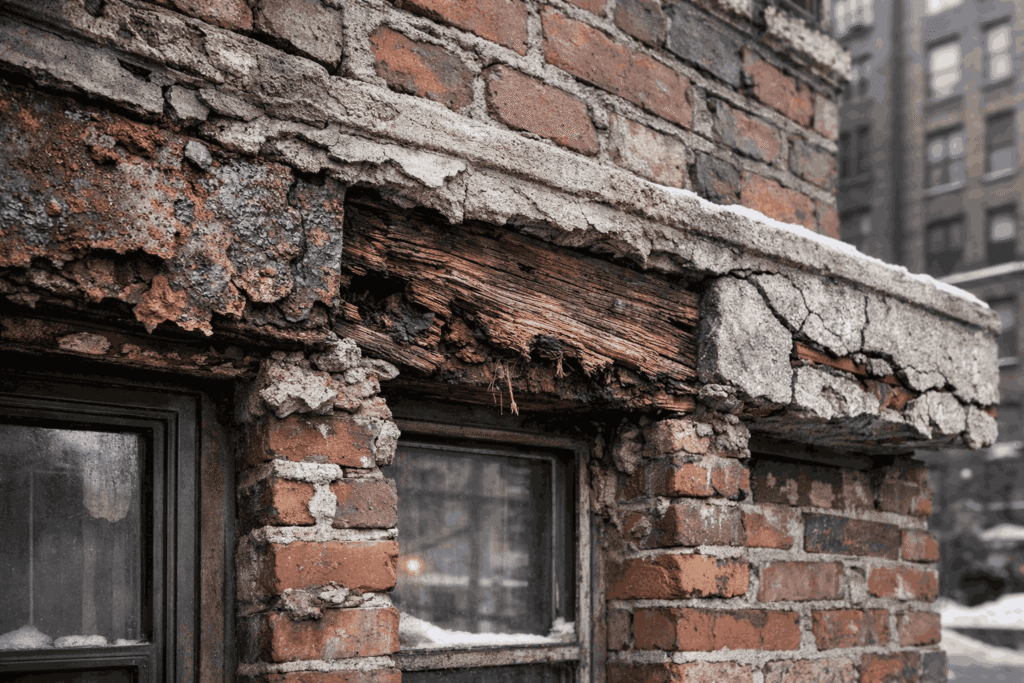
Most older NYC buildings contain lintels made of steel, wood, or early concrete materials that naturally degrade over time. Over the decades, these materials lose strength and become more vulnerable to environmental exposure.
- Steel corrosion and rust expansion
- Wood rot caused by trapped moisture
- Cracking in early concrete lintels
As deterioration progresses, expanding rust and decaying materials place outward pressure on masonry, often contributing to cold-weather masonry problems that become more visible during seasonal temperature shifts.
2. Ongoing Water Exposure
NYC’s climate creates persistent moisture challenges that directly affect lintels, especially in older masonry façades. Water penetration around windows and doors remains one of the most common contributors to lintel deterioration.
- Frequent rainfall
- Snow accumulation
- High humidity
- Freeze-thaw cycles
In many older buildings, the absence of proper flashing and drainage allows water to reach lintels, frequently resulting in cracks around windows in winter as moisture expands and contracts within the masonry.
3. Freeze-Thaw Stress
When water enters masonry near lintels, seasonal temperature changes significantly accelerate structural damage. This repeated process weakens both the lintel and the surrounding brickwork.
- Water freezes during cold weather
- Ice expands within existing cracks
- Mortar and brick bonds gradually break
Over time, this cycle reduces the lintel’s ability to support masonry loads, increasing the likelihood of visible damage above openings.
4. Obsolete Building Practices
Many lintels in older NYC buildings were installed before modern building codes and corrosion protection standards were introduced. As a result, these lintels often lack the structural capacity needed to withstand long-term environmental stress.
- Undersized lintels
- Inadequate bearing length
- No corrosion protection
- Poor integration with drainage systems
These design limitations leave lintels exposed to moisture and movement they were never designed to handle.
5. Foundation Settlement
As buildings age, natural movement and settlement place uneven stress on structural elements, including lintels, this movement is especially noticeable above windows and doors, where structural continuity is interrupted.
- Soil settlement
- Temperature-related expansion and contraction
- Adjacent construction activity
- Aging foundations
Over time, this uneven stress can cause lintels to deflect or crack, accelerating masonry damage around openings.
Early Red Flags of Lintel Structural Failure
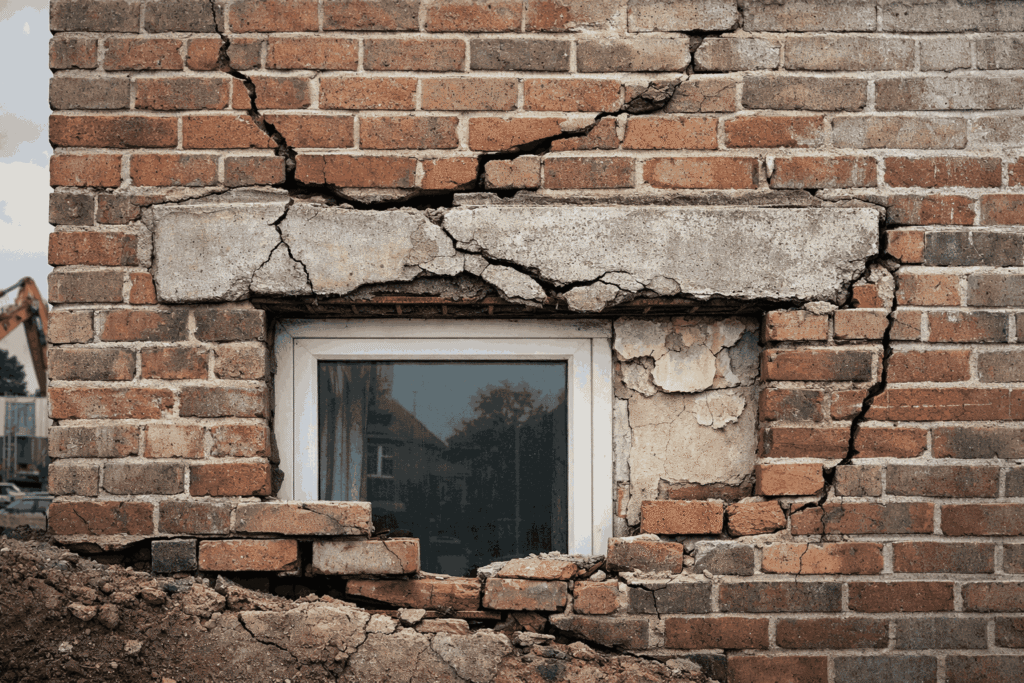
The earliest signs of lintel failure often appear subtly around windows and doors, especially in older NYC buildings exposed to harsh seasonal conditions. Identifying these warning signs early helps prevent further masonry damage, safety risks, and potential violations.
- Horizontal and stair-step cracks above openings
- Rust stains are bleeding through the brickwork
- Sagging or bowing masonry above windows
- Loose or spalled bricks near lintels
- Windows and doors that no longer open or close properly
In colder months, many of these symptoms are commonly mistaken for general wear. Still, they are often linked to winter weather damage to window sills and surrounding masonry, where moisture intrusion and freeze-thaw cycles accelerate visible deterioration.
How Lintel Failure Threatens Structural Integrity in NYC Buildings
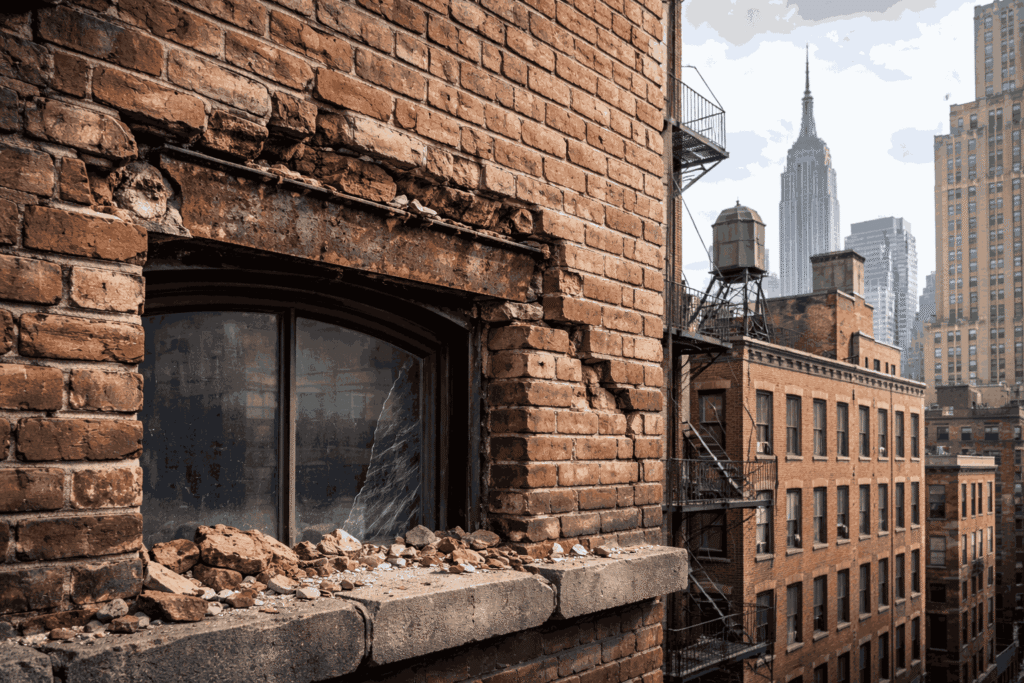
When a lintel begins to fail, the issue extends beyond cosmetic damage and becomes a profound structural and public safety concern. Lintels support masonry loads above openings, and once their capacity is compromised, the surrounding brickwork can become unstable.
- Falling masonry hazards
- Sidewalk shed requirements
- DOB violations
- ECB penalties
- Expensive emergency repairs
- Increased liability exposure for property owners
In many cases, unresolved lintel deterioration leads to broader façade issues that eventually require professional intervention. At this stage, property owners are often advised to hire a qualified masonry contractor to assess the structural risk, address violations, and prevent further damage from spreading across the building envelope.
Preventive Measures to Protect Lintel in Older Buildings from Failing
Preventive maintenance plays a key role in extending the life of lintels in older NYC buildings. When addressed early, minor issues can be managed through planned repairs rather than costly emergency interventions that disrupt occupants and trigger violations.
- Regular façade assessments should be performed.
- Prompt crack and rust treatment is essential.
- Upgraded waterproofing systems should be installed where needed.
- Flashing must be placed accurately around openings.
- Structural evaluations should be completed before renovations.
- Timely lintel repair or replacement should be scheduled.
In colder months, many repairs are delayed unnecessarily. However, with proper planning, masonry work performed safely during winter conditions can still be effective, preventing moisture intrusion from worsening before spring arrives.
Conclusion
Lintels are highly sensitive to environmental stress, especially in older NYC buildings where aging materials, moisture exposure, and seasonal freeze-thaw cycles are common. Without proactive care, early warning signs around windows and doors can escalate into serious structural and safety concerns. Regular inspections and timely repairs help reduce liability risks, maintain façade stability, and ensure long-term compliance with local building safety requirements, protecting both occupants and pedestrians.
Sardar Restoration Corp proudly serves residential and commercial properties across NYC, including the Bronx, Manhattan, Brooklyn, Westchester, and Queens. Our team delivers reliable, high-quality solutions tailored to local building conditions and seasonal challenges. You can review our service areas to find support available in your location.
For more information or to discuss your property concerns, contact (+1) 917-355-8556, email sardarrestoration@gmail.com, or visit 2770 Fish Ave, Bronx, NY 10469, United States.
FAQs
Why do lintels fail more often in older NYC buildings?
Lintels fail more often due to the age of the materials installed, exposure to moisture, outdated construction methods, and decades of building movement.
Are rusted lintels dangerous?
Yes, Rusted lintels can be dangerous because rust expands the steel, causing cracks in masonry and eventually leading to debris falling.
Can lintels be repaired instead of replaced?
Yes, in some cases, lintels can be repaired when there’s minor deterioration, but when they are heavily damaged or undersized, lintels may require complete replacement.
How often should lintels be inspected?
One should have it inspected during every routine façade inspection and call for inspection asap if you see cracks, rust stains, or window misalignment.
Does lintel failure lead to NYC violations?
Yes, it can trigger NYC violations that lead to Local Law 11 violations, resulting in ECB penalties and unsafe façade classifications.
How can you tell if a lintel problem is structural or cosmetic?
If cracks keep widening, rust stains spread, or windows stop aligning properly, the issue is likely structural rather than surface-level wear.
Can lintel issues be fixed without removing surrounding brickwork?
Minor issues can sometimes be stabilized, but advanced cases usually require window lintel repair specialists to address both the lintel and affected masonry safely.
Is it risky to delay lintel repairs in older NYC buildings?
Yes, delaying repairs can allow moisture and movement to worsen damage, increasing safety risks and the chance of façade violations.