 ChatGPT
 Perplexity
 Google AI
 Claude
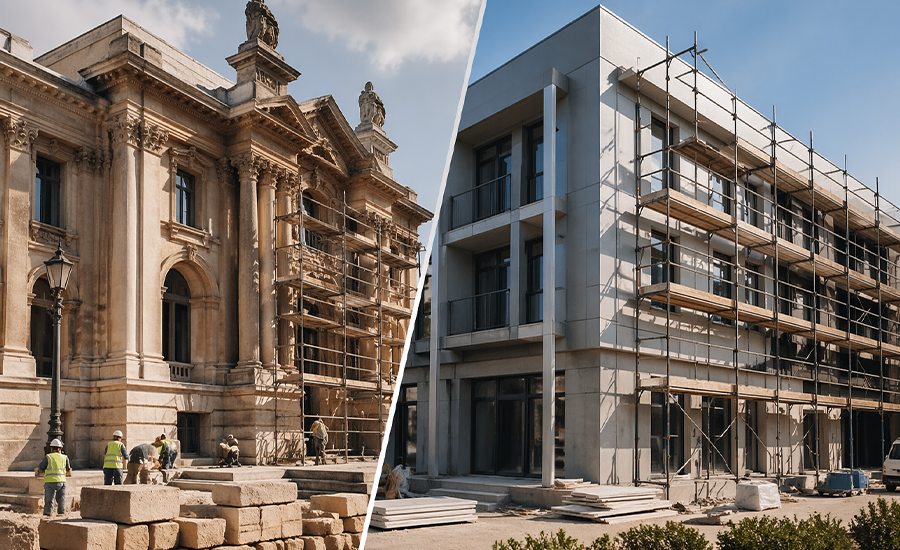
In New York City, building maintenance is closely tied to safety regulations, property value, and strict compliance requirements. For owners of older or historic properties, choosing between landmark restoration and standard building repair is a critical decision.
Landmark restoration focuses on preserving protected architectural features under the oversight of the Landmarks Preservation Commission (LPC), while standard building repair prioritizes structural performance, safety, and faster execution under Department of Buildings (DOB) codes.
Understanding these differences helps NYC property owners avoid violations, manage costs, and select the right approach based on their building’s condition and legal requirements.
- Ο Landmark restoration applies to designated buildings and focuses on preserving original architectural features
- Ο Standard building repair is used for non-landmarked properties and focuses on safety, performance, and cost-efficiency
- Ο Restoration projects require LPC approvals, strict material guidelines, and longer timelines
- Ο Standard repairs follow NYC building codes with fewer regulatory requirements
- Ο Choosing the wrong approach can result in DOB violations, fines, or failed inspections in NYC
What is Landmark Restoration in NYC?
Landmark restoration is the preservation and repair of buildings that are officially designated as historic landmarks or located within protected districts in New York City. These properties are regulated by the Landmarks Preservation Commission (LPC), which requires all work to maintain the building’s original design, materials, and architectural character.
Unlike general repairs, landmark restoration must follow approved methods and historically accurate materials, such as lime-based mortar or compatible replacements. It often requires an understanding of how brick repointing works in masonry repair to maintain structural compatibility and long-term durability. From planning to execution, the process involves documentation, permits, and formal approvals before work begins.
Key Characteristics of Landmark Restoration
- Preserves original architectural features and historic identity
- Requires LPC approval before starting work
- Uses historically accurate materials and techniques
- Involves detailed documentation and project review
- Requires skilled contractors experienced in heritage restoration
Examples of Landmark Restoration Work
- Restoring damaged façades on historic brownstones
- Repairing decorative cornices and masonry details
- Replacing windows with LPC-approved replicas
- Preserving stonework, carvings, and original design elements
What is Standard Building Repair in NYC?
Standard building repair covers the maintenance and correction of damaged structural or exterior elements in non-landmarked properties across New York City. The focus is on restoring safety, functionality, and durability without preserving historical features or following heritage-specific requirements.
Property owners often need to understand whether brick repointing is considered a structural repair when planning maintenance work. This helps determine the scope of repairs and required approvals.
Unlike landmark restoration, these repairs follow NYC Department of Buildings (DOB) codes, allowing the use of modern materials, faster construction methods, and flexible design options. This makes standard building repair the preferred choice for most residential and commercial properties that are not under landmark designation.
Key Characteristics of Standard Building Repair
- Focuses on structural safety, performance, and durability
- Governed by NYC DOB codes instead of LPC regulations
- Uses modern materials such as concrete, steel, and sealants
- Faster project timelines with fewer approval delays
- More cost-efficient than landmark restoration
Examples of Standard Building Repair Work
- Repairing cracked walls, foundations, and load-bearing elements
- Roof repairs, replacements, and waterproofing systems
- Basement waterproofing and moisture control solutions
- Replacing damaged cladding, façades, and drainage components
NYC Regulations: Landmark Restoration vs Standard Repairs
The key difference between landmark restoration and standard building repair in New York City lies in regulatory control, permit requirements, and inspection processes. Landmark restoration is regulated by the Landmarks Preservation Commission (LPC), while standard building repairs fall under the Department of Buildings (DOB). These requirements are closely tied to NYC Local Law 11 façade inspection requirements, especially for buildings that require periodic safety inspections and exterior maintenance.
Failing to follow the correct regulatory path can result in stop-work orders, fines, or violations, as compliance is strictly enforced across New York City.
Landmark Restoration Regulations (NYC)
- Requires approval from the Landmarks Preservation Commission (LPC) before any work begins
- Must comply with NYC preservation laws and historic guidelines
- Strict material and method approval to maintain architectural integrity
- Subject to ongoing inspections and compliance reviews
- Unauthorized changes can lead to penalties or legal action
Standard Building Repair Regulations (NYC)
- Regulated by the NYC Department of Buildings (DOB) codes
- Permits are required based on the scope of work (structural, façade, roofing, etc.)
- No requirement to preserve historical materials or design
- Simpler approval process compared to landmark projects
- Inspections focus on safety, code compliance, and structural performance
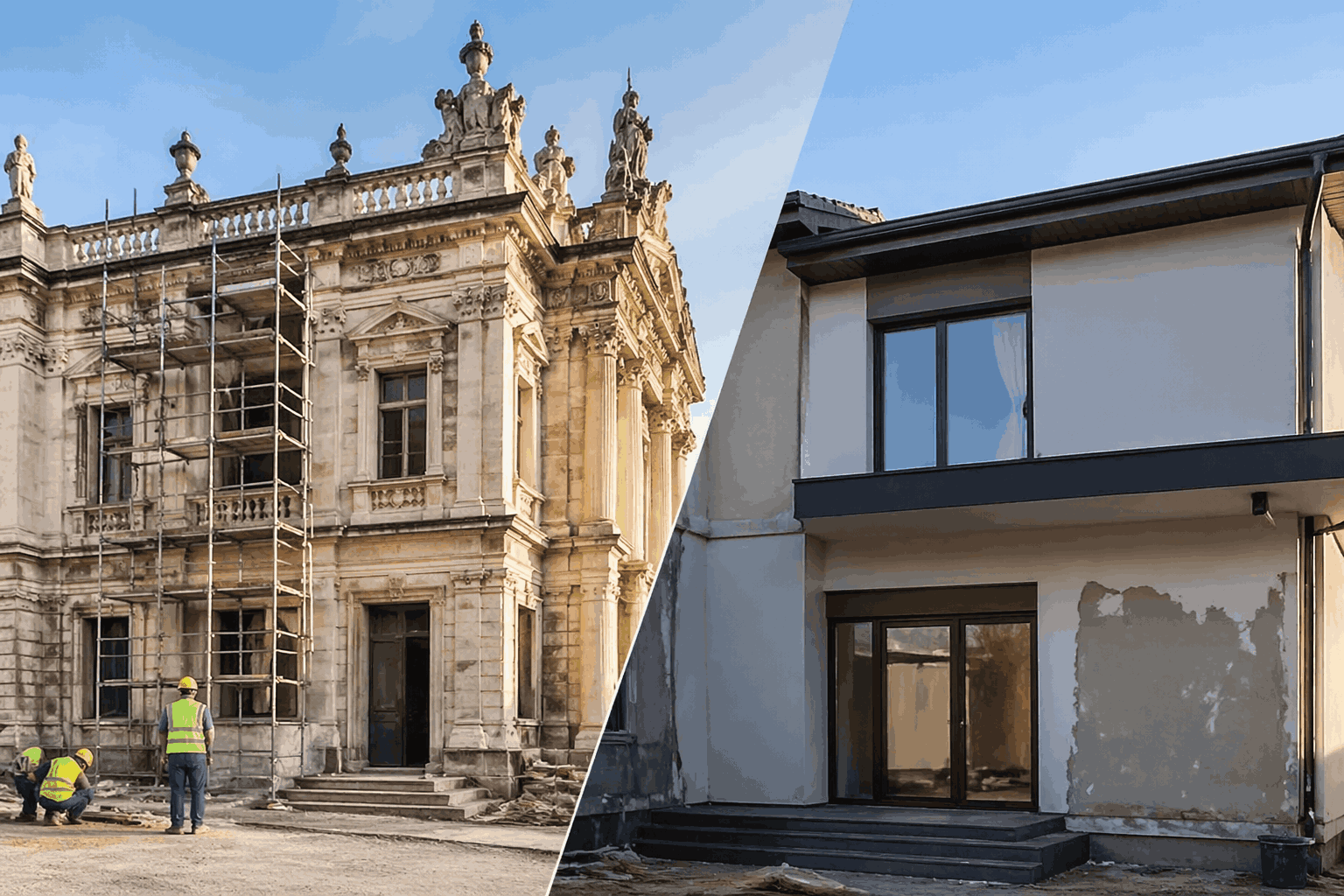
Materials & Techniques: Landmark vs Standard Repairs in NYC
Material selection and construction methods play a critical role in how landmark restoration and standard building repairs are carried out in NYC. These differences directly affect compliance approvals, durability, and long-term building performance.
Landmark restoration follows strict preservation rules set by the Landmarks Preservation Commission (LPC), requiring historically accurate materials and traditional construction methods. Standard building repairs, on the other hand, are governed by Department of Buildings (DOB) codes, allowing modern materials and faster, efficiency-focused techniques.
Landmark Restoration Materials & Methods
- Lime-based mortar is used instead of modern cement to match the original masonry behavior
- Custom-made bricks or stones to replicate historic materials
- Handcrafted wood, metal, or stone elements for architectural accuracy
- Traditional masonry techniques to preserve the original construction style
- Detailed workmanship is required to meet LPC approval standards
Standard Repair Materials & Methods
- Concrete, cement, and steel are used for structural strength
- Pre-engineered components for faster installation
- Modern waterproofing systems and protective coatings
- Machine-assisted construction methods for efficiency
- Flexible material choices based on budget and building needs
Cost Differences: Landmark vs Standard Repairs in NYC
For most NYC property owners, cost is a key factor when choosing between landmark restoration and standard building repair. The difference goes beyond pricing and includes timelines, approvals, and the level of expertise required. For example, understanding the average cost of brick repointing in NYC helps set realistic expectations when planning masonry work.
Landmark restoration projects are typically more expensive due to strict regulations and specialized craftsmanship, while standard repairs are faster and more cost-effective for non-landmarked properties.
Why Landmark Restoration Costs More
- Skilled artisans and specialized contractors are required
- Custom or historically accurate materials increase overall costs
- LPC approvals and documentation extend timelines and expenses
- Longer project durations due to regulatory processes
- Higher risk of penalties if compliance is not followed
Why Standard Repairs Are More Cost-Effective
- Easily available modern materials help reduce overall costs
- Faster execution minimizes labor expenses
- Fewer regulatory approvals compared to landmark projects
- Larger contractor availability across NYC
- Suitable for quick repairs and performance upgrades
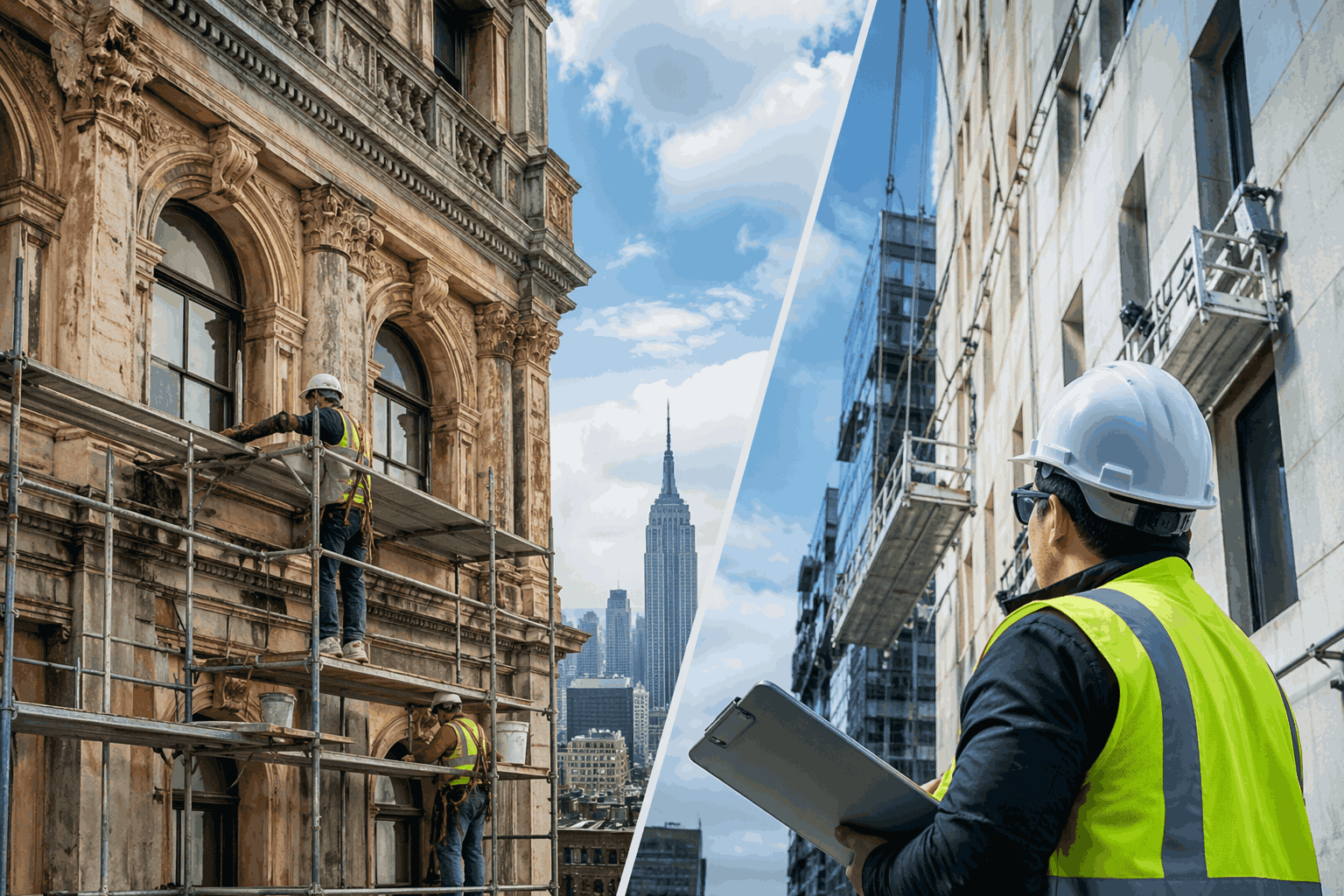
When Should You Choose Landmark Restoration in NYC?
Choosing landmark restoration in NYC is often a legal requirement for buildings within historic districts or official landmark designations. It is the right approach when preservation, regulatory compliance, and architectural integrity are the primary priorities.
You should opt for landmark restoration if:
- The building is designated as a landmark or is located in a historic district
- The Landmarks Preservation Commission (LPC) requires approval for exterior work
- You need to preserve original architectural features and design elements
- The property has historical, cultural, or long-term heritage value
- Compliance with NYC preservation laws is mandatory before repairs
When is Standard Building Repair the Right Choice in NYC?
Standard building repair is the preferred option for most non-landmarked properties in NYC. It allows faster execution, flexible material use, and cost-efficient solutions without requiring preservation approvals.
Standard repair is suitable when:
- The building is not under landmark designation or LPC control
- Quick repairs are needed to address safety or structural issues
- Cost and timeline are the primary decision factors
- The focus is on performance, durability, and modern upgrades
- Design flexibility is required for structural or exterior changes
Common Mistakes in Landmark Restoration and Standard Repairs
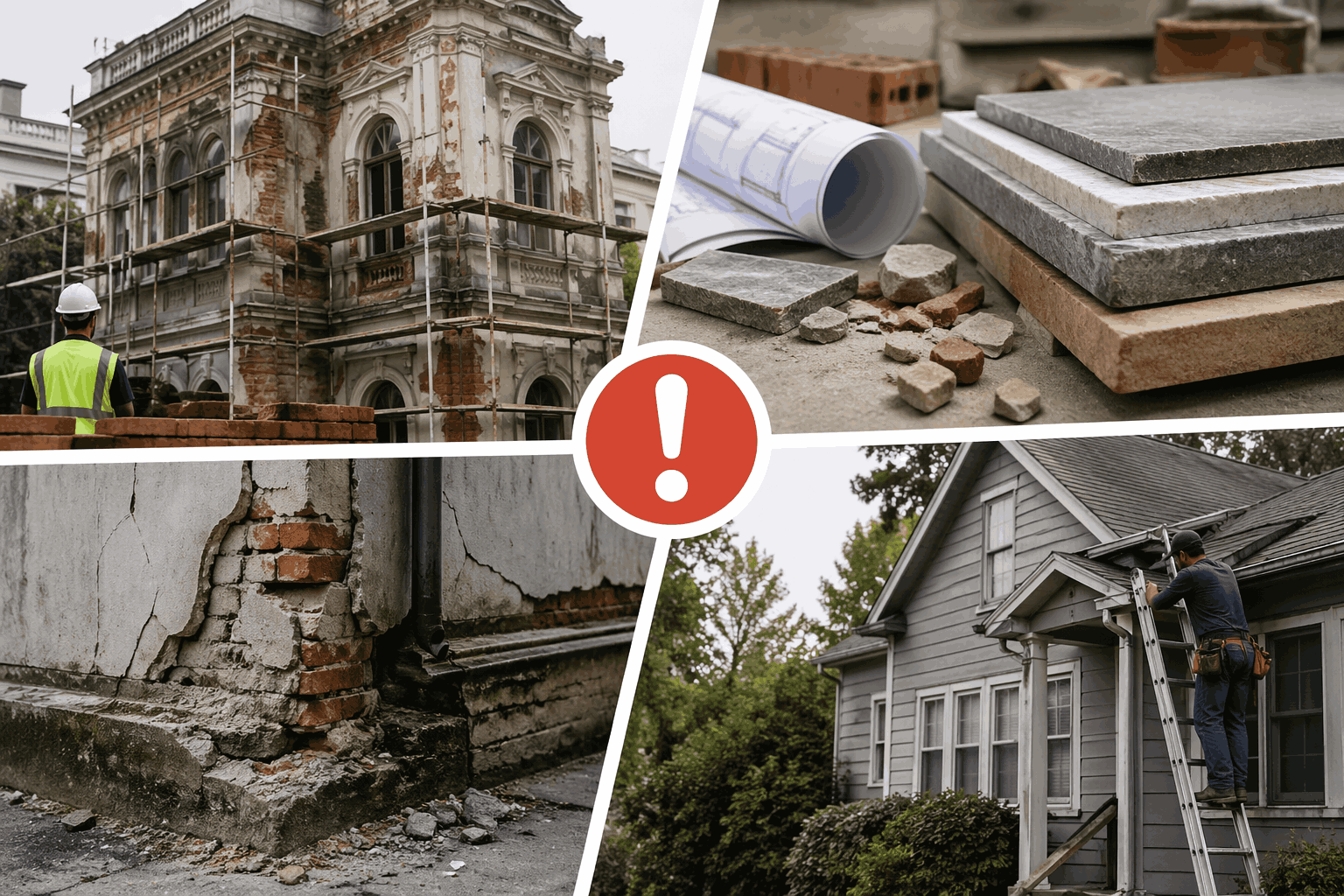
Many NYC property owners face costly issues due to poor decision-making and non-compliance. A common mistake is underestimating how delaying masonry repairs can lead to higher costs, especially in a city where weather exposure and strict regulations can quickly turn minor issues into major structural problems.
Avoiding these mistakes is essential to prevent violations, project delays, and long-term damage.
Mistakes in Landmark Restoration
- Using modern materials that are incompatible with historic construction
- Starting work without LPC approval or required permits
- Hiring contractors without landmark restoration experience
- Altering original features in ways that violate preservation rules
Mistakes in Standard Building Repairs
- Delaying minor repairs until they become major structural problems
- Using low-quality materials that reduce durability
- Ignoring hidden issues like water damage or foundation cracks
- Skipping regular inspections and preventive maintenance
Final Thoughts: Choosing the Right Approach in NYC
Choosing between landmark restoration and standard building repair in NYC comes down to your building’s legal status, condition, and long-term goals. Landmark restoration focuses on preserving historical value under strict LPC regulations, while standard repair offers faster and more flexible solutions for non-landmarked properties.
Before beginning any project, it is important to assess your property, confirm whether it falls under landmark protection, and understand the required approvals. Making the right decision early helps avoid violations, delays, and unnecessary costs while keeping your building safe and compliant.
Sardar Restoration Corp supports residential and commercial properties across NYC, including the Bronx, Manhattan, Brooklyn, Westchester, and Queens. If you are looking for a reliable landmark restoration contractor in NYC, our team offers expert inspections, compliance guidance, and high-quality repair solutions.
For professional assistance, contact us at (+1) 917-355-8556, email sardarrestoration@gmail.com, or visit 2770 Fish Ave, Bronx, NY 10469, United States.
FAQs
What is the main difference between landmark restoration and standard building repair?
Landmark restoration preserves original architectural features under LPC regulations, while standard building repair focuses on fixing structural or exterior issues using modern materials and methods.
Do all buildings require landmark restoration in NYC?
No, only properties that are officially designated as landmarks or located within historic districts require restoration. Most buildings in NYC qualify for standard repair under DOB regulations.
Why are permits required for landmark restoration in NYC?
Permits are required because the Landmarks Preservation Commission (LPC) reviews all work to ensure historical features are protected. Unauthorized work can lead to fines, violations, or stop-work orders.
Can modern materials be used in landmark restoration?
In most cases, LPC requires historically accurate materials. However, modern materials may be approved if they match the original appearance and do not affect the building’s integrity.
How long does a landmark restoration project take in NYC?
These projects usually take longer due to approval processes, detailed planning, and specialized work. Timelines can range from several weeks to months, depending on the scope.
How do I know if my building is a landmark in NYC?
You can check your property status through NYC zoning records or the Landmarks Preservation Commission database. A contractor can also help verify this during inspection.
Is landmark restoration more expensive than standard repair?
Yes, landmark restoration typically costs more due to specialized labor, custom materials, and regulatory approvals required in NYC.
What happens if I repair a landmark building without LPC approval?
You may receive violations, fines, or a stop-work order. In some cases, you may be required to redo the work to meet LPC standards.