 ChatGPT
 Perplexity
 Google AI
 Claude
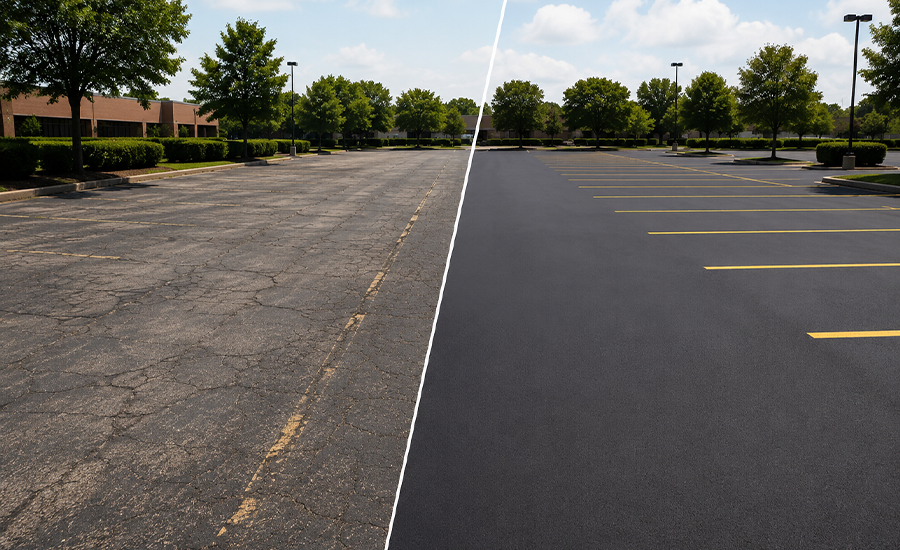
A well-maintained parking lot does more than support vehicles. It shapes the first impression of your property, improves safety, and helps visitors, tenants, customers, and staff move around with confidence. In NYC, parking lots deal with heavy traffic, freeze-thaw cycles, water exposure, oil stains, poor drainage, and daily surface wear.
When the pavement starts breaking down, property owners often face one important question: should the parking lot be resurfaced, or does it need full replacement? The right answer depends on the asphalt condition, base layer, drainage performance, age of the pavement, budget, and long-term use.
This guide explains the difference between parking lot resurfacing and full replacement, when each option makes sense, and how NYC residential and commercial property owners can make a practical decision without paying for unnecessary work.
- Ο Resurfacing is usually more affordable when the base is still stable.
- Ο Full replacement is better when damage reaches the foundation.
- Ο Resurfacing can add 8–15 years of service life in the right conditions.
- Ο Replacement can last 15–25+ years when installed correctly.
- Ο Drainage, cracking, potholes, and pavement age should be inspected first.
- Ο A professional inspection helps prevent short-term fixes from becoming repeat expenses.
What Is Parking Lot Resurfacing?
Parking lot resurfacing, also called asphalt overlay, involves applying a new asphalt layer over the existing pavement. Instead of removing the entire structure, contractors repair problem areas, prepare the surface, and install a fresh top layer to restore appearance and performance.
This option works best when the visible damage is mostly surface-level, and the base underneath is still strong. For residential and commercial properties in NYC, resurfacing can improve curb appeal, reduce minor surface hazards, and extend pavement life without full reconstruction.
If you are planning surface improvement work, it also helps to understand the early warning signs of parking lot damage before small issues turn into wider pavement failure.
What Resurfacing Usually Includes
- Adds a fresh asphalt layer, often around 1.5–3 inches
- Repairs early-stage cracking and surface wear
- Improves appearance without full pavement removal
- Reduces downtime compared to full replacement
- Extends pavement life when the base is still stable
What Is Full Parking Lot Replacement?
Full parking lot replacement involves removing the existing asphalt down to the base or subgrade and rebuilding the pavement structure from the ground up. This is a more extensive service, but it addresses deeper problems that resurfacing cannot fix.
Replacement is usually needed when the parking lot has severe cracking, repeated potholes, drainage failure, unstable base layers, or widespread structural damage. In NYC, where parking lots often serve high-traffic residential, commercial, and mixed-use properties, full replacement can provide better long-term value when the pavement has reached the end of its useful life.
Property owners comparing surface options may also want to review how asphalt and concrete perform in NYC parking lots before choosing the right long-term surface.
What Full Replacement Usually Includes
- Removes old asphalt and failed pavement layers
- Rebuilds the base and subgrade where needed
- Fixes deeper drainage and structural problems
- Creates a new pavement system
- Provides a longer service life than resurfacing

How Much Does Parking Lot Resurfacing and Replacement Cost in NYC?
Cost is one of the biggest differences between resurfacing and full replacement. Resurfacing is usually less expensive because it does not require complete excavation or full base rebuilding. Full replacement costs more upfront because it involves removal, disposal, grading, base preparation, drainage correction, and new pavement installation.
In NYC, pricing can vary based on lot size, access, traffic control, base condition, drainage needs, material choice, and the level of repair required before paving begins. Property owners should also consider long-term performance, not just the first estimate.
| Element | Parking Lot Resurfacing | Full Parking Lot Replacement |
|---|---|---|
| Average cost per sq. ft. | $1–$3 | $4–$10 |
| Upfront savings | 40–60% cheaper | Higher initial cost |
| Typical service life | 8–15 years | 15–25+ years |
| Project timeline | 1–3 days | 1–2 weeks |
| Downtime | Limited | More extensive |
| Best for | Surface wear | Structural failure |
Resurfacing is usually the more budget-friendly option when the existing base is healthy. However, replacement becomes more cost-effective when the parking lot has deep failure, because resurfacing over a weak foundation can lead to cracks returning quickly.
For smaller paved areas, the same planning logic applies. Understanding paver installation cost factors can help property owners think beyond upfront pricing and consider base work, drainage, and long-term durability.
When Should You Resurface a Parking Lot?
Resurfacing is the better choice when the parking lot has a strong foundation but needs a new wearing surface. This usually applies to lots with fading, shallow cracks, light raveling, or general surface aging.
Resurfacing May Be Right If:
- The pavement is not severely aged
- Damage affects less than 30% of the surface
- Cracks are mostly shallow
- The base is level and well-supported
- Drainage is working properly
- Potholes are limited and repairable
Resurfacing can quickly improve the look and usability of a parking lot. It is especially useful for NYC property owners who need a practical upgrade with less downtime for tenants, customers, or building operations.
Before resurfacing, contractors should still check whether the existing pavement was installed correctly. Poor base preparation, weak compaction, or incorrect slope can shorten pavement life, even after a fresh overlay. Reviewing the right way to prepare and install paving can make it easier to understand why preparation matters before any new surface is installed.
Benefits of Parking Lot Resurfacing
- Lower upfront cost
- Shorter project timeline
- Improved surface appearance
- Better driving and walking conditions
- Less disruption for active properties
- Extended pavement life when the base is sound
In simple terms, resurfacing is a smart short- to mid-term solution when the problem is mainly on the surface, and the structure underneath still performs well.
When Should You Replace a Parking Lot?
Full replacement becomes necessary when the damage is no longer limited to the top asphalt layer. If the base has shifted, drainage has failed, or deep cracks keep returning, resurfacing will only cover the issue temporarily.
Full Replacement May Be Right If:
- The parking lot is over 20–30 years old
- More than 30–60% of the pavement is damaged
- Alligator cracking is widespread
- Potholes are deep or recurring
- Water pools after rain
- The surface feels soft, uneven, or unstable
- Previous repairs have failed repeatedly
Replacement is a stronger option for parking lots that need a full reset. It allows contractors to correct hidden problems, improve drainage, rebuild the base, and install a new pavement system that can handle regular use.
For properties dealing with deeper pavement movement, cracked surfaces, or nearby structural concerns, professional structural crack repair services may also be relevant before finalizing the scope of work.
Benefits of Full Parking Lot Replacement
- Fixes deep pavement failure
- Improves long-term durability
- Reduces repeated repair costs
- Supports heavier traffic loads
- Improves safety and drainage
- Provides a cleaner, more reliable surface
If resurfacing is installed over a failing base, the new layer can crack again within a short time. That is why full replacement is often the better investment when the underlying structure is compromised.
Why the Base Layer Matters Before Parking Lot Work
The base layer is the most important factor when choosing between resurfacing and replacement. A parking lot can look worn on top but still have a strong foundation. It can also look manageable from the surface while hiding serious base failure underneath.
A simple rule applies:
- Stable base = resurfacing may work
- Failed base = replacement is usually required
In NYC, drainage and freeze-thaw cycles can weaken the base over time. Water enters cracks, expands during freezing weather, and breaks down the pavement from underneath. If that cycle continues, surface repairs will not solve the real problem.
Contractors should inspect the base, drainage slope, soft spots, pothole depth, cracking patterns, and previous repair areas before recommending either option.
What Should Contractors Inspect Before Resurfacing or Replacement?
A qualified contractor does more than look at the surface. The goal is to understand why the parking lot is failing and whether resurfacing will hold up.
Contractors commonly check:
- Soft or sunken areas
- Uneven pavement levels
- Drainage flow and pooling
- Crack depth and pattern
- Pothole severity
- Base stability
- Previous repair quality
- Traffic load and daily use
For NYC properties, compliance and safety also matter. Poor drainage, uneven surfaces, and damaged paved areas can create risks for pedestrians, vehicles, and property owners. If pavement issues connect with nearby sidewalks or open notices, working with a sidewalk violation removal contractor can help address compliance-related concerns properly.
Which Option Gives Better Long-Term Value?
The right option depends on the depth of the damage. Resurfacing saves money upfront and works well when the parking lot still has a strong base. Replacement costs more at the start but can provide better long-term value when deeper problems already exist.
Resurfacing Offers Better Value If:
- You want a cost-effective surface improvement
- The pavement has mostly cosmetic damage
- The base is still stable
- Drainage is working properly
- You need faster completion
- You want to extend the current pavement life
Replacement Offers Better Value If:
- You want a long-term solution
- The pavement has a base failure
- Cracks and potholes keep returning
- Water pooling is damaging the surface
- The parking lot is heavily aged
- Safety and durability are the main priorities
When measured by cost per year of service life, resurfacing and replacement can sometimes be closer than they first appear. Resurfacing wins on upfront savings, while replacement wins when the existing pavement is too damaged for another overlay.

Final Verdict: Is Resurfacing or Full Replacement Better?
Parking lot resurfacing is better when the surface is worn, but the base is still strong. Full replacement is better when the damage reaches the foundation, drainage has failed, or repairs no longer last.
For NYC residential and commercial property owners, the smartest decision starts with a proper inspection. A contractor should check the surface, base, drainage, traffic use, and long-term goals before recommending resurfacing or replacement.
Sardar Restoration Corp supports residential and commercial property owners across NYC, including the Bronx, Manhattan, Brooklyn, Westchester, and Queens. If your parking lot needs professional inspection, resurfacing, or replacement, working with a trusted parking lot paving contractor in NYC can help you choose the right solution, avoid repeat repairs, and protect your property’s long-term value.
For expert inspections and repair solutions, call (+1) 917-355-8556, email sardarrestoration@gmail.com, or visit 2770 Fish Ave, Bronx, NY 10469, United States.
FAQs
Is it better to resurface or replace a parking lot?
Resurfacing is better when the damage is only on the surface. Replacement is better when the base, drainage, or pavement structure has failed.
How long does parking lot resurfacing last in NYC?
Parking lot resurfacing can last around 8–15 years when the base is stable, drainage works properly, and the surface is maintained.
How long does a full parking lot replacement last?
A properly installed parking lot replacement can last 15–25+ years, depending on traffic load, drainage, materials, and maintenance.
Is parking lot resurfacing just a temporary fix?
No. Resurfacing can be a long-term solution when the damage is surface-level, and the pavement foundation is still strong.
Can every parking lot be resurfaced?
No. Parking lots with base failure, severe potholes, drainage problems, or widespread alligator cracking usually need full replacement.
What are the signs a parking lot needs replacement?
Deep potholes, water pooling, uneven areas, soft spots, and recurring cracks are strong signs that replacement may be needed.
Which option is more cost-effective for NYC property owners?
Resurfacing is more affordable upfront, but full replacement is more cost-effective when the parking lot has more serious structural damage.