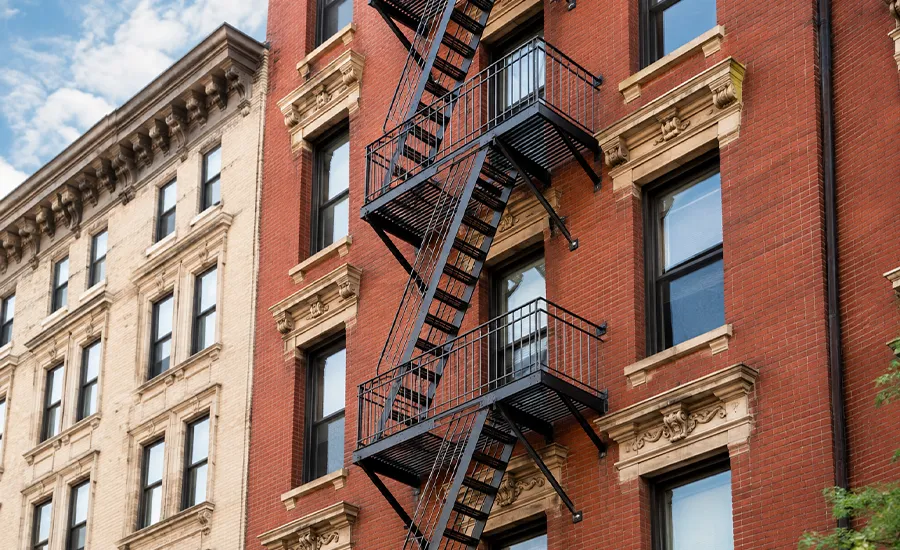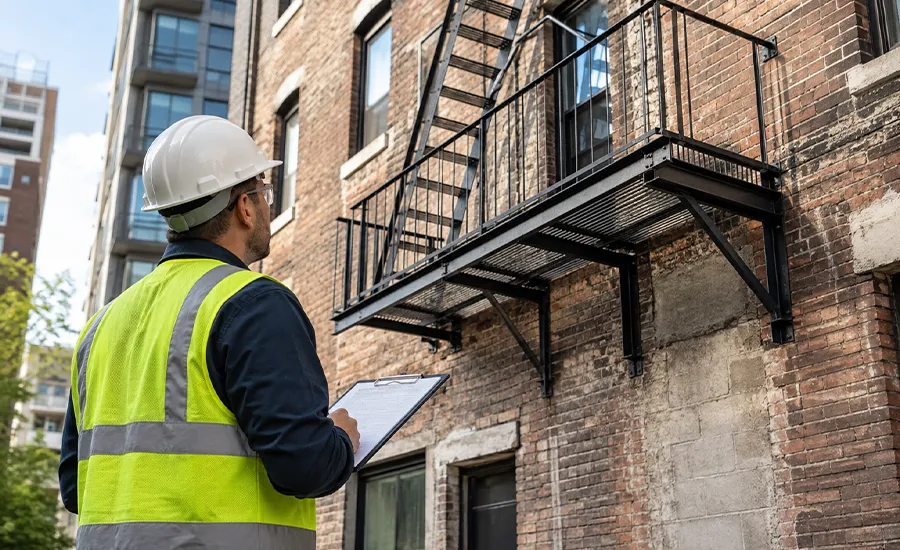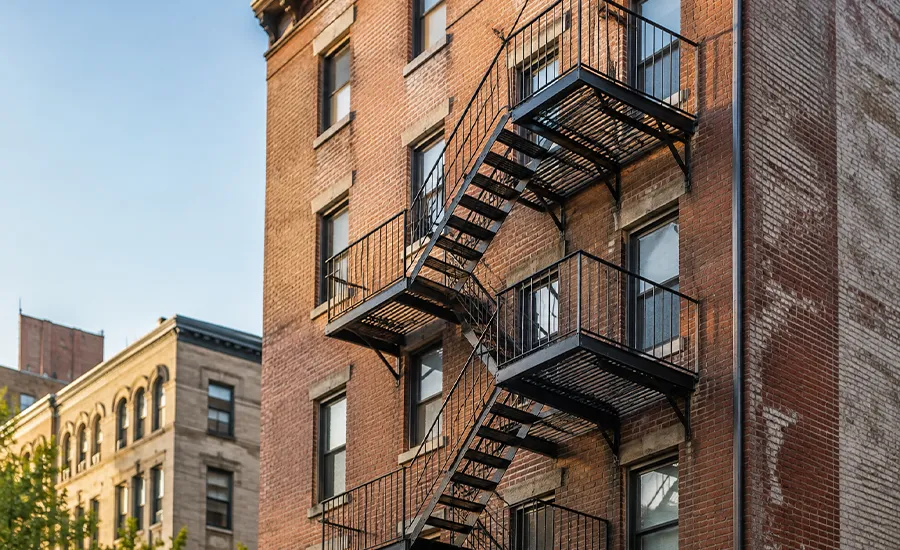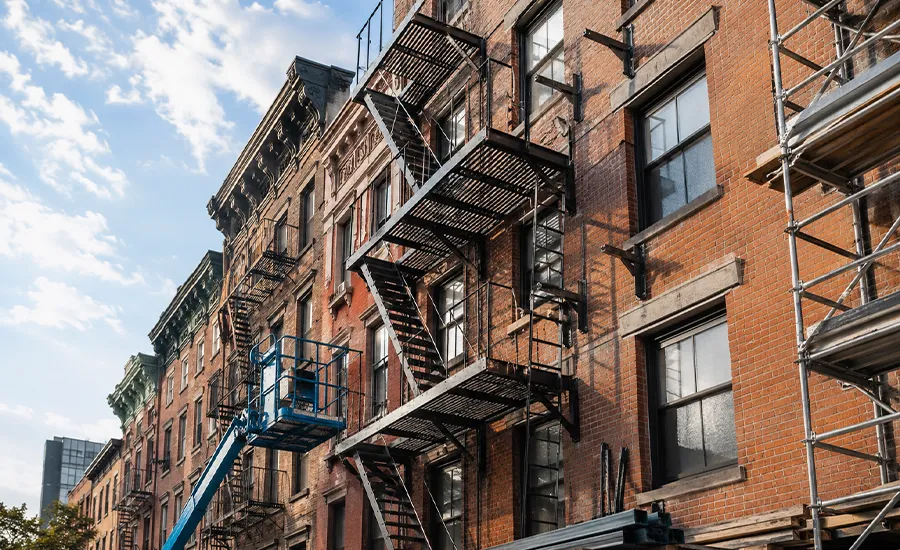
 ChatGPT
 Perplexity
 Google AI
 Claude
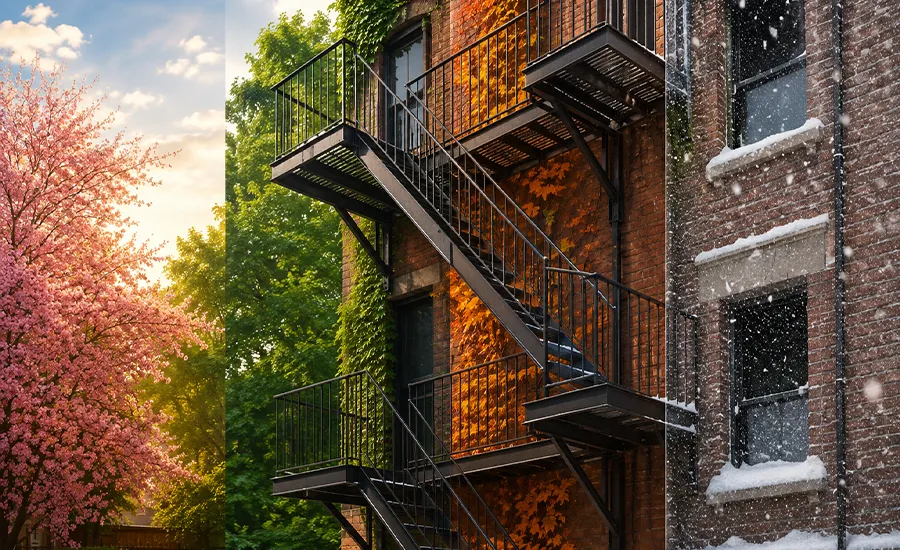
For planned fire escape installation in New York City, early fall is usually the strongest window, with late spring a close second. September through mid-October combines moderate temperatures, low risk of snow and ice, and manageable daytime heat, which makes exterior steelwork, facade access, and protective coating application easier to coordinate.
The reason has less to do with comfort than with chemistry. Most industrial coatings used on exterior steel require a substrate temperature near 50°F, with low temperature formulations rated to roughly 35°F, and the surface must stay at least 5°F above the dew point through application and curing. Masonry preparation at the anchor points carries a separate cutoff, since cold weather construction procedures apply once ambient temperature falls below 40°F. Those thresholds define the practical working window far more precisely than the calendar does.
This article compares spring, summer, fall, and winter fire escape installation in NYC, explains how property owners can choose a practical project window without compromising safety or construction quality, and identifies when the season should be set aside entirely.
- Ο Early fall, September through mid-October, is the strongest window, with late spring the next best option.
- Ο Coatings typically need a substrate temperature near 50°F and a surface 5°F above the dew point.
- Ο Masonry preparation at anchor points requires cold weather procedures below 40°F ambient.
- Ο Summer projects remain practical with heat planning and adjusted work schedules.
- Ο Winter installation is possible but requires additional weather precautions and added cost.
- Ο Urgent structural or safety work should not wait solely for a preferred season.
Why Weather Matters During Fire Escape Installation
A permanent exterior fire escape requires coordinated steel handling, structural connections, lifting equipment, bolting, welding, facade access, and protective finishes. These activities form part of the wider system covering NYC fire escape types, installation, laws, and safety.
The broader fire escape installation process in NYC also includes building assessment, engineering, approvals, fabrication, site preparation, and final review. Seasonal weather mainly affects the fieldwork portion of that process rather than determining whether the project is approved.
Weather influences:
- Safe use of scaffolding, lifts, cranes, and suspended equipment
- Worker exposure to heat, cold, rain, snow, and wind
- Surface preparation and coating application
- Material handling and hoisting
- Access to roofs, yards, alleys, and sidewalks
- Daily productivity and lost workdays
- Protection of occupied areas and public spaces
For a building owner, each of those items eventually reads as a line on an invoice. Lost workdays extend equipment rental, keep sidewalk protection in place longer, and prolong disruption for tenants in occupied walk-ups and pre-war multiple dwellings where the fire escape sits directly outside living space.
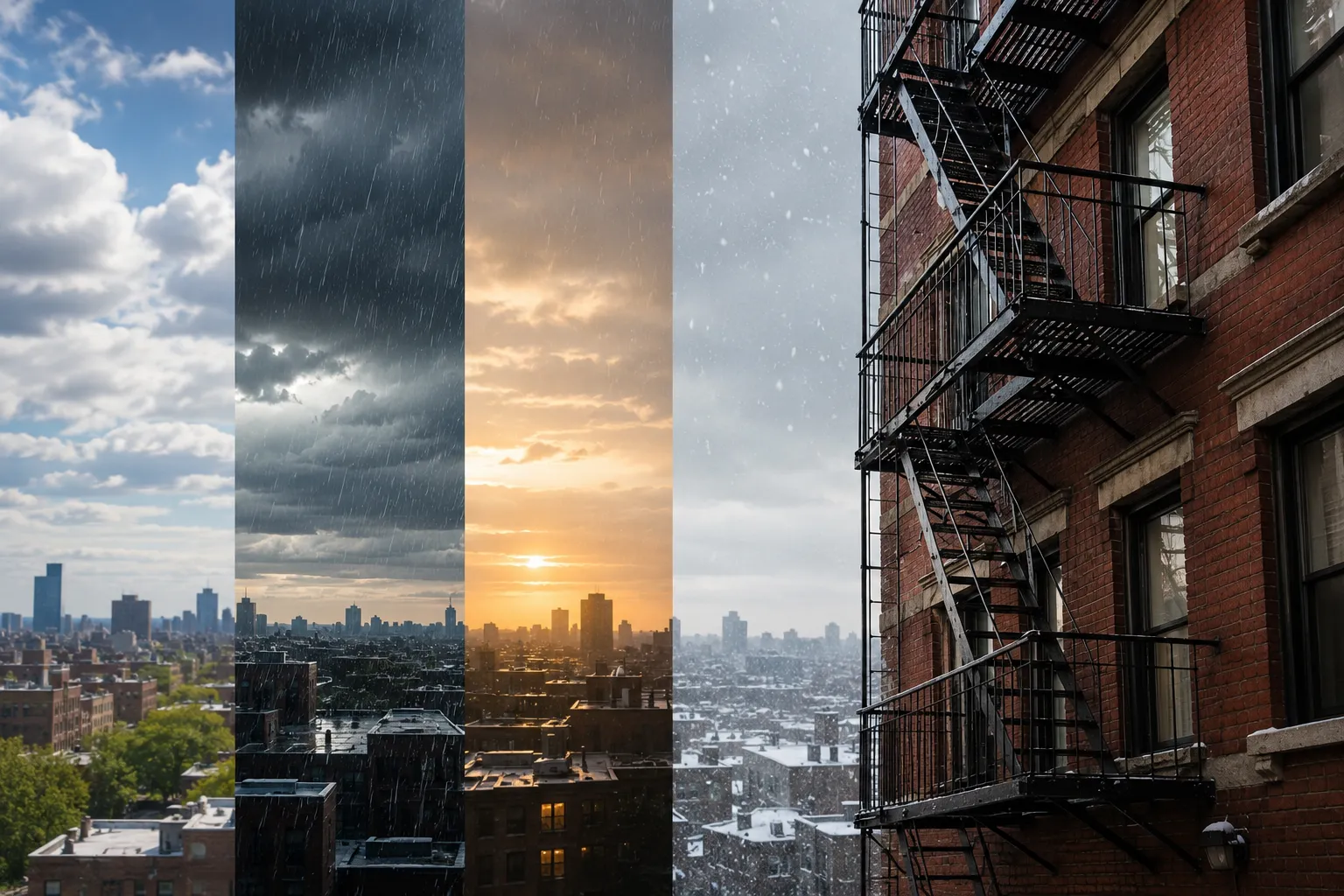
NYC DOB regularly directs contractors to secure construction sites and exterior equipment during severe weather. Its winter advisories also emphasize snow, ice, freezing temperatures, and high winds around scaffolds, hoists, cranes, and other exterior building elements.
Is Spring a Good Time to Install a Fire Escape in NYC?
Spring is often a practical installation season because temperatures become milder and crews gain longer daylight hours without the peak heat of midsummer.
Advantages of Spring Installation
Spring conditions often support:
- Easier exterior access than during icy winter periods
- Moderate temperatures for physically demanding work
- Longer daylight hours as the season progresses
- More workable conditions for surface preparation
- Fewer cold-weather limitations during coating application
Late spring is generally more predictable than March or early April. Early-season cold snaps, wind, and prolonged rain can still interrupt lifting, welding, facade work, and coating activities. Overnight lows in April frequently fall below coating minimums, which matters because a surface reading 42°F at 7 a.m. is not ready for a topcoat regardless of the afternoon forecast.
The condition of the building matters more than choosing a specific month. Completing pre-installation checks for a fire escape early gives the project team time to identify masonry deterioration, weak attachment areas, access restrictions, and other conditions before fieldwork is scheduled.
Spring Installation Limitations
Spring projects still face:
- Frequent rain, typically the wettest stretch of the NYC year
- Wet work surfaces
- Variable early-season temperatures
- Windy days
- Increased contractor demand as exterior construction resumes
Rain does not automatically stop every task, but wet surfaces and unstable weather can affect access, coatings, equipment use, and the daily work sequence. Coating in particular needs a dry surface and a dry curing period, not simply a dry hour.
Is Summer Suitable for Fire Escape Installation?
Yes. Fire escapes are installed during summer, and the season often provides long daylight hours and fewer freezing-weather concerns.
The main challenge is heat. OSHA identifies construction as an industry with significant outdoor heat exposure and recommends planning work schedules, rest, shade, hydration, and acclimatization to reduce heat-related illness.
Advantages of Summer Installation
Summer can provide:
- Longer usable daylight, roughly fifteen hours against nine in December
- Reduced snow and ice risk
- Easier access to exterior work areas
- More predictable fabrication and delivery coordination
- Fewer cold-temperature restrictions
Dry periods also help crews coordinate surface preparation and protective finishing, provided the actual temperature, humidity, substrate condition, and product instructions remain within acceptable limits.
Summer Installation Challenges
Hot weather can create:
- Worker heat-stress risks
- Hot steel and exposed work surfaces
- More frequent rest periods
- Schedule adjustments during peak afternoon heat
- High demand for exterior contractors
- Peak competition for sidewalk sheds and street occupancy permits
- Thunderstorms and sudden high-wind conditions
Summer does not inherently damage a properly designed steel fire escape. The practical concern is how extreme heat affects workers, equipment, coatings, and the safe execution of construction activities.
Coatings carry a maximum application temperature as well as a minimum, and dark steel in direct sun reaches surface temperatures well above the air temperature. Above that limit, the solvent flashes off too quickly, and the film can blister or fail to level out, so crews coat early in the day or work shaded elevations.
For an owner, heat protocols read as schedule rather than safety. Rest cycles and modified afternoon hours compress the productive part of a summer day, which stretches the same scope across more days and more mobilization cost even though nothing has gone wrong.
For projects involving field connections, professional fire escape welding in NYC needs to follow the approved details, inspection requirements, and applicable procedures regardless of the season. NYC project guidance identifies structural steel welding, bolting, and steel details among work that can require special inspection.
Is Fall the Best Season for Fire Escape Installation?
Yes, for a planned project. Early fall is the most practical period for fire escape construction in NYC. Temperatures sit comfortably inside normal coating ranges, rainfall is lower than in spring, and snow, ice, and prolonged freezing conditions are far less common than in winter.
Advantages of Early Fall Installation
Early fall often offers:
- Moderate daytime temperatures well above coating minimums
- Lower heat exposure for crews
- Stable access to exterior elevations
- Suitable working windows for steel installation
- Practical conditions for surface preparation and coatings
- Contractor availability after the summer scheduling peak
- Time to complete work before severe winter weather
These benefits make September and early October the strongest planning period, but they do not make fall automatically suitable for every project.
Fall Installation Limitations
As the season progresses, projects encounter:
- Shorter daylight hours
- Colder morning temperatures approaching coating minimums
- Increased wind
- Wet leaves and slippery access areas
- Greater risk of delays later in the season
- Pressure to finish coating work before colder weather
The window closes faster than most owners expect. By early November, overnight lows in most years fall below coating minimums and the usable coating period narrows to a few midday hours. A project targeting early fall needs approvals and fabrication settled by late summer rather than started then.
Coating products have their own temperature, moisture, humidity, and curing requirements. The contractor needs to follow the specified system and manufacturer instructions rather than assuming that all fall days are suitable. Where painted structural steel is part of the design, fire escape painting in NYC needs properly prepared surfaces and acceptable application conditions to create a reliable protective barrier.
Can a Fire Escape Be Installed During Winter?
Yes. Winter installation is possible, particularly when a damaged system, safety concern, enforcement deadline, or larger construction schedule requires prompt work.
Winter is usually less convenient for planned exterior installation because snow, ice, freezing temperatures, strong winds, and shorter daylight hours create additional site-management demands. Owners who already understand how cold weather affects fire escapes in NYC will recognize the same forces acting on a structure that is only partly assembled and not yet fully protected.
Winter Installation Challenges
Cold-weather projects often require closer attention to:
- Ice and snow removal
- Scaffold and lift access
- Worker cold-stress protection
- Temporary heating and heated enclosures for masonry work
- Coating temperature limitations
- Material storage
- Wind restrictions
- Shorter productive workdays
- Weather-related shutdowns
Masonry carries a firmer cutoff than steel. Once ambient temperature drops below 40°F, cold weather construction procedures apply to any repointing, brick replacement, or lintel work at the attachment points, which means heated enclosures, warmed materials, and maintained curing temperatures. All of it is achievable, and all of it adds cost and days.
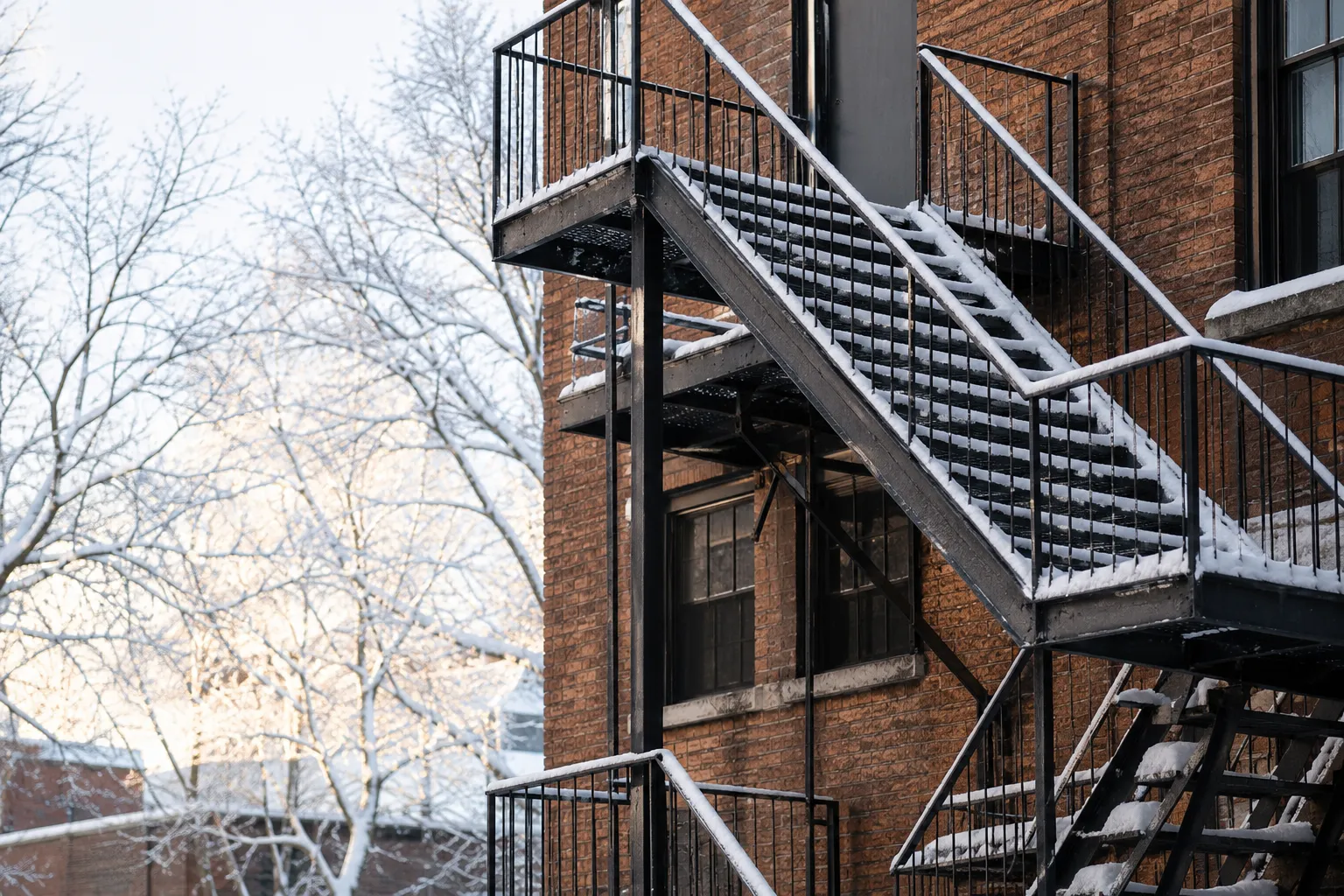
OSHA notes that outdoor construction workers face cold-stress risks and that wind increases the cooling effect of low temperatures.
NYC DOB also advises contractors to clear snow and ice, secure exterior equipment, monitor wind, and follow applicable safety requirements during severe winter weather.
When Winter Installation Makes Sense
Winter work remains appropriate when:
- An unsafe condition requires timely correction
- An existing fire escape is structurally unreliable
- The installation forms part of an active renovation
- A compliance deadline cannot be postponed
- The site can be safely protected and accessed
- Materials and coatings suit the expected conditions
A common winter approach is a phased scope, with structural steel erected under the permit and final coating held until conditions allow. That is legitimate when planned deliberately with the design professional, but it needs documenting, and it leaves new steel carrying only shop primer through its first winter. During that gap, the same measures used to prevent fire escape rust through NYC winter weather apply to a new installation as much as to an older one.
An urgent condition deserves professional review rather than waiting several months. A fire escape inspection in NYC helps determine whether temporary controls, immediate repair, or full installation work is necessary.
What Matters More Than the Season?
The calendar is only one planning factor. A well-prepared summer or winter project can perform better than a poorly coordinated spring or fall installation.
Permit and Approval Readiness
The preferred construction window has little value if drawings, filings, or approvals are incomplete. Property owners need to confirm whether a permit is required for fire escape installation in NYC before committing to fabrication and field dates. Objections or revisions during review can move a target date by a full season, and landmarked buildings carry a second approval track alongside the DOB filing.
Local Law 11 Facade Cycle Coordination
On buildings taller than six stories, the Facade Inspection Safety Program places scaffolding, sidewalk sheds, and inspection access on the same elevations at particular points in the cycle. Scheduling a fire escape installation alongside an active facade cycle can save an owner an entire mobilization, because the access equipment is already standing and permitted. Ignoring the overlap often means paying twice for the same scaffold on the same wall within the same year.
Building and Facade Condition
Weak masonry, damaged lintels, unstable attachment areas, and previous alterations can delay installation in any season. These conditions require resolution before new structural loads are connected to the building. Where that repair work is extensive, the 40°F masonry threshold rather than the steelwork usually determines which months are realistic.
Fabrication Lead Time
Custom platforms, stair sections, brackets, anchors, railings, and ladders need accurate measurements and coordinated fabrication. A delay in shop drawings or material production does not simply push the schedule by a few weeks. It can move fieldwork past the point where coating can be applied at all, turning a fall installation into a spring one. Those dependencies also shape how long fire escape installation takes in NYC.
Access and Site Logistics
Narrow yards, busy sidewalks, neighboring buildings, active businesses, and limited equipment space can affect installation more than moderate changes in temperature. Season still plays a part, because competition for sidewalk sheds, street occupancy permits, cranes, and boom lifts peaks between June and August when exterior work across the five boroughs is at its heaviest.
Coating Specifications
Primers, galvanized finishes, industrial coatings, and paint systems have specific application requirements. Standard systems generally need a substrate temperature near 50°F, low-temperature products extend that to roughly 35°F, and the surface must remain at least 5°F above the dew point during application and cure. Coat a cold platform on a damp morning, and moisture condenses beneath the film, which is how new steel begins corroding underneath its own paint. Hot-dip galvanized components reduce this exposure because their protection does not depend on a field-applied topcoat curing correctly. That single specification decision carries forward for decades, since coating integrity is one of the main factors in how long fire escapes last in NYC buildings.
Worker Availability and Productive Hours
Heat protocols in summer and cold-stress limits in winter both reduce the number of productive hours in a working day. For an owner, that appears as schedule and cost rather than as a safety line item. The same scope spread across more days means longer equipment rental, extended sidewalk protection, and a longer period of disruption for tenants, pedestrians, and ground-floor businesses.
What Is the Best Installation Window for NYC Properties?
For a planned, non-emergency project, early fall is the first choice and late spring the second.
A practical target could include:
- September through mid-October, the strongest overall window
- Late April through June, a workable alternative with more rain risk
These periods reduce the likelihood of freezing conditions and extreme summer heat, but they are not guaranteed weather windows. Rain, wind, unusual temperatures, and contractor availability still affect individual projects.
The final schedule also includes work completed before and after field installation. Engineering, filings, fabrication, access preparation, and close-out all influence the overall timeline, even when the physical installation occurs during favorable weather.
Should an Urgent Fire Escape Project Wait for Better Weather?
No. A serious structural concern, unsafe connection, missing component, failed access point, or required replacement should not remain unaddressed solely to wait for spring or fall. Delay rarely holds a condition steady, because snow and ice damage on old fire escapes accumulates through exactly the months an owner would be waiting out.
The contractor and design team can determine whether the project requires:
- Immediate stabilization
- Restricted access
- Temporary protection
- Localized corrective work
- Phased construction
- Full replacement
- Rescheduling of only weather-sensitive tasks
Installation can also be divided into coordinated stages. Fabrication, documentation, site preparation, masonry correction, and steel erection do not always need to occur at the same time.
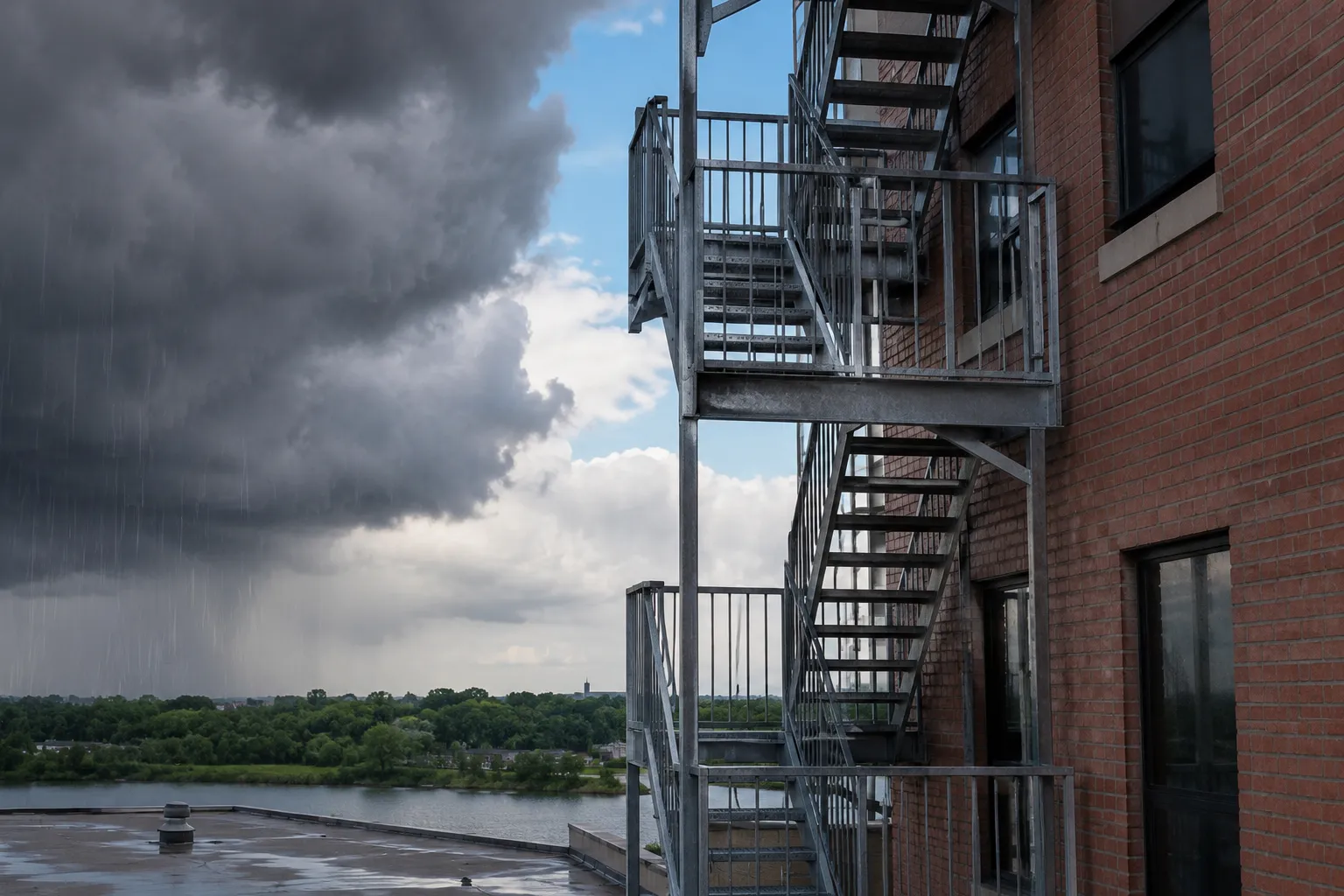
Property owners planning urgent fire escape installation in NYC need a building-specific schedule based on the structure’s condition, approved scope, access requirements, and current weather rather than a general seasonal rule.
Final Thoughts on the Best Season for Fire Escape Installation
Early fall provides the most favorable conditions for planned fire escape installation in NYC, with late spring the next best option. Moderate temperatures simplify worker protection, facade access, steel handling, and coating coordination, and they keep the work comfortably inside the thresholds that coatings and masonry actually require.
Summer installation remains practical with heat controls and suitable scheduling. Winter work also remains possible when the project team manages ice, snow, wind, cold exposure, access, and material limitations.
The best time is ultimately when the design is complete, permits are ready, fabricated components are available, the building is prepared, and weather conditions allow the work to proceed safely.
Sardar Restoration Corp supports residential, commercial, mixed-use, and historic properties across the Bronx, Brooklyn, Manhattan, Queens, and Westchester. Property owners can consult an experienced fire escape contractor in NYC to plan installation around building conditions, approvals, fabrication, access, weather, and project urgency.
Contact Sardar Restoration Corp at (+1) 917-355-8556, email sardarrestoration@gmail.com, or visit 2770 Fish Ave, Bronx, NY 10469, United States.
FAQs
What is the best season to install a fire escape in NYC?
Early fall, roughly September through mid-October, provides the most balanced conditions for planned exterior installation. Late spring is the next best option. The exact timing still relies on permits, building conditions, weather forecasts, fabrication, and contractor availability.
Is fall better than spring for fire escape installation?
Early fall is generally the better choice. It carries less rainfall than spring, temperatures sit further above coating minimums, and contractor availability improves once the summer peak has passed. Late spring remains a solid alternative when a project cannot wait until September.
What temperature is too cold to install a fire escape?
The limit comes from the coating rather than the steel. Standard systems need a substrate temperature near 50°F, low-temperature products extend that to roughly 35°F, and the surface must stay at least 5°F above the dew point. Masonry preparation requires cold weather procedures below 40°F.
Can fire escapes be installed during summer?
Yes. Summer installation is common, but contractors need heat-stress planning, hydration, rest, adjusted hours, and appropriate coating conditions during extreme heat. Competition for crews and street access is also at its highest.
Can a fire escape be installed during winter?
Yes. Winter installation is possible, though snow, ice, wind, cold stress, shorter days, and coating limitations often make the work more demanding. A phased scope, with steel erected in winter and coating completed in spring, is a common approach.
Does NYC require fire escapes to be installed during a specific season?
No general NYC rule designates one required installation season. Applicable permits, approved documents, construction safety rules, inspections, and product specifications remain controlling.
Can rain delay fire escape installation?
Yes. Rain can affect exterior access, lifting, surface preparation, coatings, and safe use of equipment. Coating in particular needs a dry surface and a dry curing period, not simply a dry hour.
Should unsafe fire escape work wait until spring?
No. A serious safety or structural concern needs prompt professional assessment. The project team can stabilize the condition, phase the work, or proceed with suitable weather controls.