
 ChatGPT
 Perplexity
 Google AI
 Claude
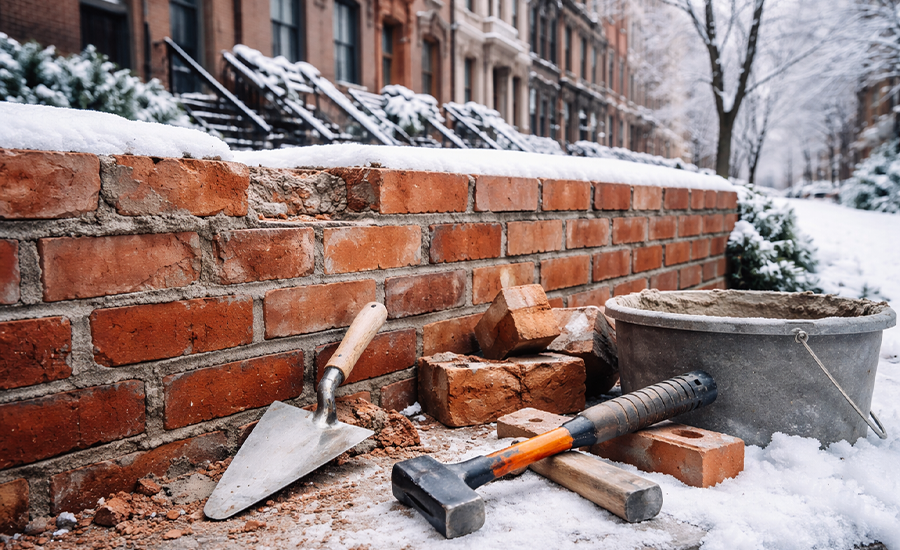
When it’s time to hit the Winters in NYC, homeowners get concerned about their brick structures, as the Winter season brings issues like snow, freezing rain, road salt, and constant freeze-thaw cycles that weaken brickwork and loosen mortar joint adhesion. Homeowners are advised to maintain their brickwork during winter, especially in older brownstones, townhouses, and multi-story buildings. Owners must take preventive action to avoid expensive emergency repairs; for that, they should follow proper winter brick repair tips and plan immediate repairs before the situation gets worse.
In this blog, we’ll discuss practical winter brick repair tips, early warning signs to watch for, and innovative maintenance strategies to protect your home in winter.
What Are The Most Frequently Occurring Brick Damage Issues?
Here is the list of the most frequently occurring problems in winter faced by NYC Homeowners:
Mortar Joint Failure
- Cracked or crumbling mortar joints
- Spalling (flaking or chipping bricks)
- Hairline and structural cracks
- Loose or shifting bricks
Dampness-related concerns
- Moisture patches on the interior walls
- Efflorescence
- Mold or mildew growth
- Interior plaster or paint peeling
Winter Red Flags That Signal Brick Damage
Keep an eye on the following signs and fix them immediately. Early identification of the problems prevents significant structural damage.
Noticeable Warning Signs
- Cracks are widening after freezing temperatures
- Bricks appearing loose or misaligned
- Mortar turning sandy or powdery
- Discoloration or surface staining
Indoor warning signs
- Cold drafts near exterior walls
- Moisture stains on interior surfaces
- Musty odors near masonry walls
Some warning signs are more common in older buildings, particularly those covered in common signs of mortar damage in Manhattan townhouses?
Winter Brick Repair Tips for NYC Homeowners That Actually Work
NYC Homeowners should follow these smart winter brick repair tips to make their brick structures sound and secure throughout the cold season.
Treat the Small Cracks Before They Spread
- Prevents water infiltration
- Stops freeze-thaw expansion
- Reduces the risk of brick displacement
Don’t Opt For DIY Repairs In Winters
- Incorrect mortar mixing weakens joints
- Improper curing leads to failure
- Safety risks on icy surfaces
Ensure Proper Water Runoff
- Remove snow buildup near walls
- Clear clogged gutters and downspouts
- Redirect melting snow away from masonry
Apply Non-Trapping Waterproofing Solutions
- Allows moisture to escape
- Reduces water absorption
- Prevents interior dampness
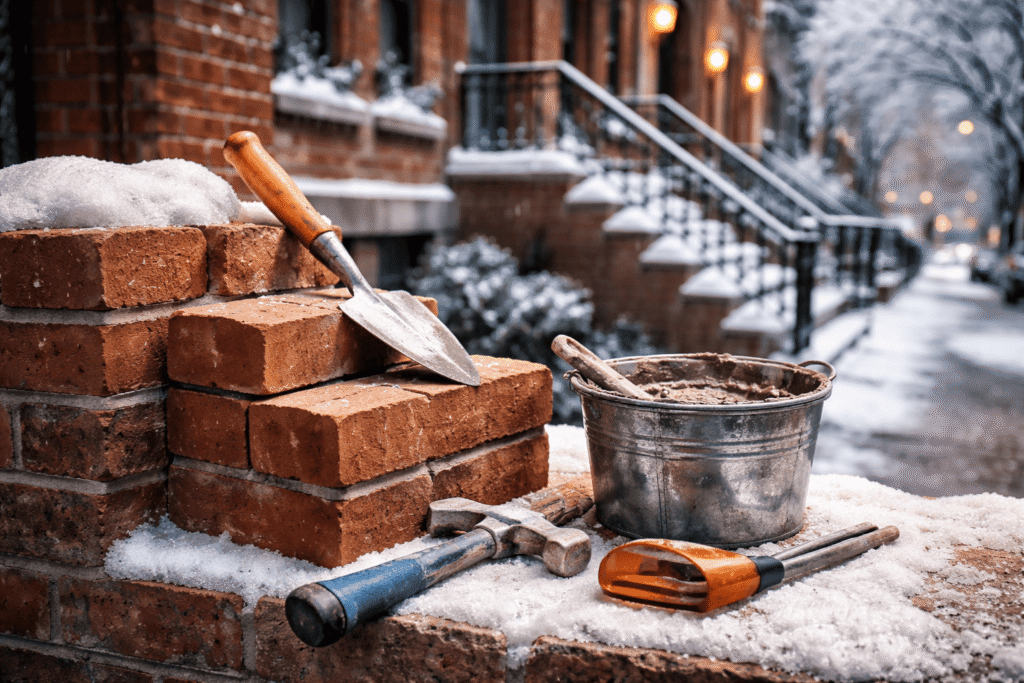
If you’re unsure whether winter conditions are suitable, this guide on can you do brick pointing in winter? explains what type of repairs are safe during cold months.
Seasonal Brick Damage vs. Lasting Structural Risks
These issues might look like short-term damages, but they come with long-term consequences:
| Temporary brickwork issues | Ongoing masonry damages |
|---|---|
| Fine surface cracks | Loss of load-bearing strength |
| Mortar separation | Masonry shifting’s |
| Water seepage | Drywall damages |
| Mineral deposit stains | Full-scale masonry repairs |
Overall Repair Outlay for Winter in NYC
Winter repairs may appear more expensive, but they often prevent higher future costs:
- Immediate repair demands
- Logistical access issues
- Short-term weather shielding
- Winter material durability
Planning repairs around seasonal conditions can help control costs, especially when following guidance on should you repoint brick walls before winter instead of delaying work until damage spreads.
What’s the Best Time To Repair Bricks In Winter?
A professional brick repair contractor in NYC recommends these timings as ideal for brick repairs and replacements. Let’s have a look at it:
- Pre-Winter: Preventive repointing and sealing
- In Winter: Emergency stabilization and crack repair
- Post Winter: Full masonry restoration
Final Thoughts
In conclusion, the above-mentioned winter tips are essential for homeowners to implement, as early repairs prevent escalating damage and control moisture intrusion. Addressing minor issues during winter can prevent major structural failures and expensive repairs once warmer weather returns. Make sure to schedule the brick inspections before winter, so you are stress-free year-round.
Sardar Restoration Corp proudly serves every corner of NYC, including the Bronx, Manhattan, Brooklyn, Westchester, and Queens. Our services are designed to meet your specific needs, providing top-quality solutions wherever you are. Check our service areas to see how we can assist you in your location.
Contact us today at (+1) 917-355-8556 or sardarrestoration@gmail.com, or visit us at 2770 Fish Ave, Bronx, NY 10469, United States.
FAQs
Can brick repair be done during winter in NYC?
Yes! Every type of brick can be repaired in winter, but with proper safety precautions and appropriate mortar type, ensuring adequate scheduling for timing of repairs and curing.
What happens if brick damage is ignored during winter?
If you ignore the brick damage during winter, it can lead to freeze-thaw damage and moisture intrusion into the walls, which results in higher repair costs.
How do freeze-thaw cycles damage brickwork?
When a freeze-thaw cycle occurs, it contracts and expands the mortar joints, allowing water to seep in and causing masonry deterioration, weak structural bonding, and surface flaking.
Does cold weather affect brick mortar curing in NYC winters?
Yes. Low temperatures slow down mortar curing, which is why contractors use cold-weather mortar mixes and controlled curing methods during winter repairs.
Is waterproofing brick safe during cold weather?
Yes, it surely is! Waterproofing brick structures is safe only when the temperature is above 40°F, as it provides water-repelling properties, keeps the interior dry, and reduces freeze-thaw damage.
Can snow and road salt damage brick walls in NYC?
Absolutely. Snow melt mixed with road salt increases moisture absorption, which accelerates mortar erosion and causes surface brick flaking over time.
What type of mortar is best for winter brick repairs?
Our brick pointing contractor in NYC recommends Type O and Type N mortar, as they are the best for brick repairs in winter.