
 ChatGPT
 Perplexity
 Google AI
 Claude
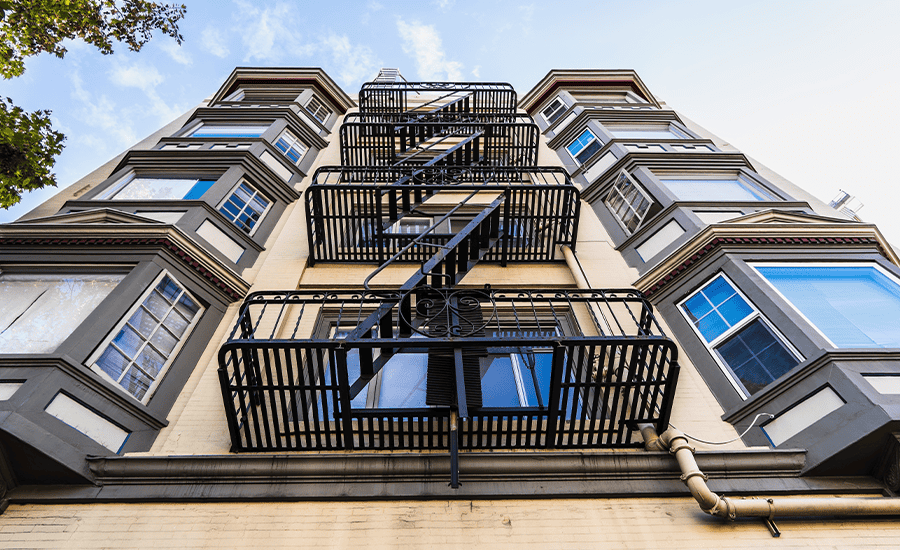
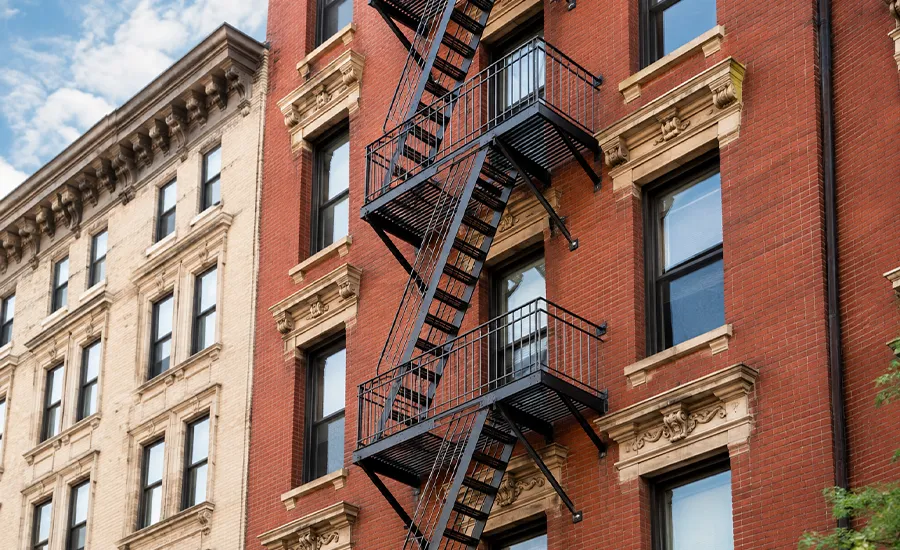
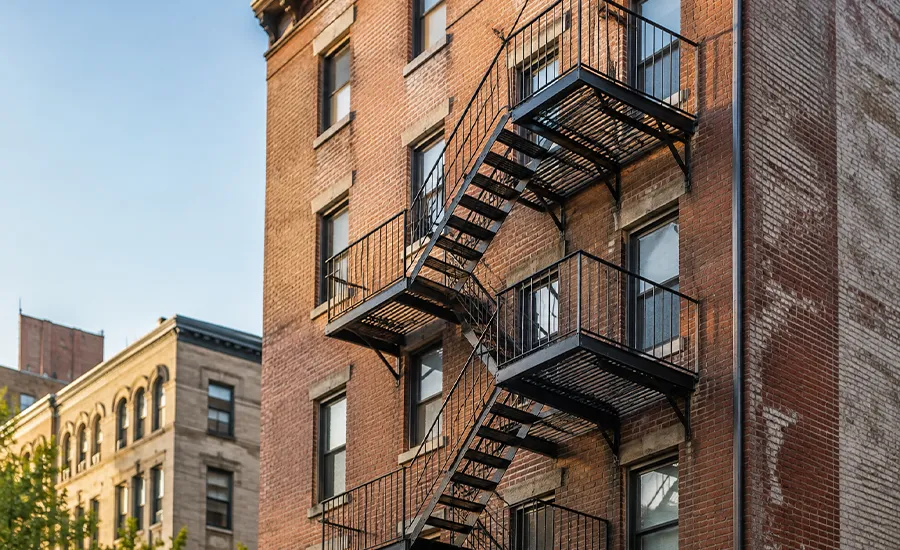
In most cases, fire escapes last between 20 and 50+ years, depending on the material, weather exposure, and maintenance. These structures are critical safety components in residential and commercial properties, making their long-term performance and maintenance extremely important.
Property owners often ask about the lifespan of a fire escape, but it is influenced by multiple factors such as construction materials, environmental exposure, usage patterns, and servicing practices.
It’s important to comply with Local Law 11 to safeguard fire escapes from violations while maintaining their structural integrity.
This guide explains fire escape lifespan, key influencing factors, maintenance practices, and when replacement becomes necessary.
- Ο Fire escapes typically last between 20 and 50+ years, depending on materials and maintenance
- Ο Galvanized steel and wrought iron offer the highest durability and longer service life
- Ο NYC weather conditions and environmental exposure directly impact longevity
- Ο Regular inspections help prevent major structural issues
- Ο Timely repairs extend lifespan and reduce long-term costs
What Is the Average Lifespan of Fire Escapes in NYC?
Fire escapes typically last between 20 and 50+ years. The exact lifespan depends on the material used and how well the structure is maintained, especially under NYC weather conditions.
| Material | Typical lifespan | Durability standard | Care demands |
|---|---|---|---|
| Steel | 20–30 years | Strong | Medium |
| Galvanized Steel | 30–50 years | Superior | Minimal |
| Wrought Iron | 40–60 years | Superior | Medium |
| Aluminum | 20–40 years | Medium | Minimal |
Galvanized steel is widely preferred due to its strong resistance to corrosion, making it suitable for long-term use in outdoor environments. Wrought iron offers high strength but requires consistent maintenance to prevent deterioration, while aluminum is lightweight but less suitable for heavy structural loads.
Which Factors Affect the Lifespan of a Fire Escape?
Several external and structural factors can significantly impact how long a fire escape lasts, especially in NYC, where buildings are exposed to varying weather conditions throughout the year. Understanding what a fire escape is and how it works also helps property owners better evaluate these factors and their impact on long-term durability.
1. Climate Exposure
Fire escapes are constantly exposed to outdoor elements, which directly affect their durability.
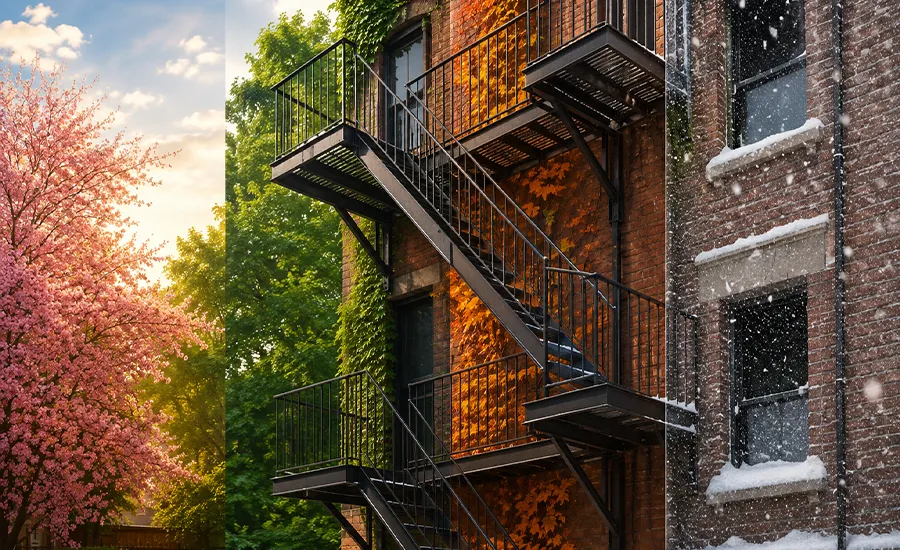
- Rain and moisture can lead to rust and corrosion
- Extreme heat and cold cause material expansion and contraction
- Coastal and humid conditions can accelerate corrosion over time
2. Material Composition
The initial construction quality plays a major role in determining lifespan.
- High-grade metals tend to last longer under stress
- Poor welding or fabrication can weaken structural integrity
- Protective coatings help prevent early deterioration
3. Usage Frequency
Although fire escapes are designed for emergencies, they are often used more frequently in urban buildings.
- Increased foot traffic leads to gradual wear and tear
- Heavy usage can loosen bolts and structural joints
- Improper use can reduce the overall lifespan
4. Maintenance Practices
Routine maintenance is one of the most important factors in extending the life of a fire escape.
- Regular inspections help detect early structural issues
- Cleaning removes debris, moisture, and buildup
- Repainting with protective coatings helps prevent rust formation
How to Tell If Your Fire Escape Needs Repair or Replacement
Ignoring early warning signs can lead to serious safety risks and potential violations in NYC properties. Identifying issues at the right time helps prevent structural failure and costly damage.
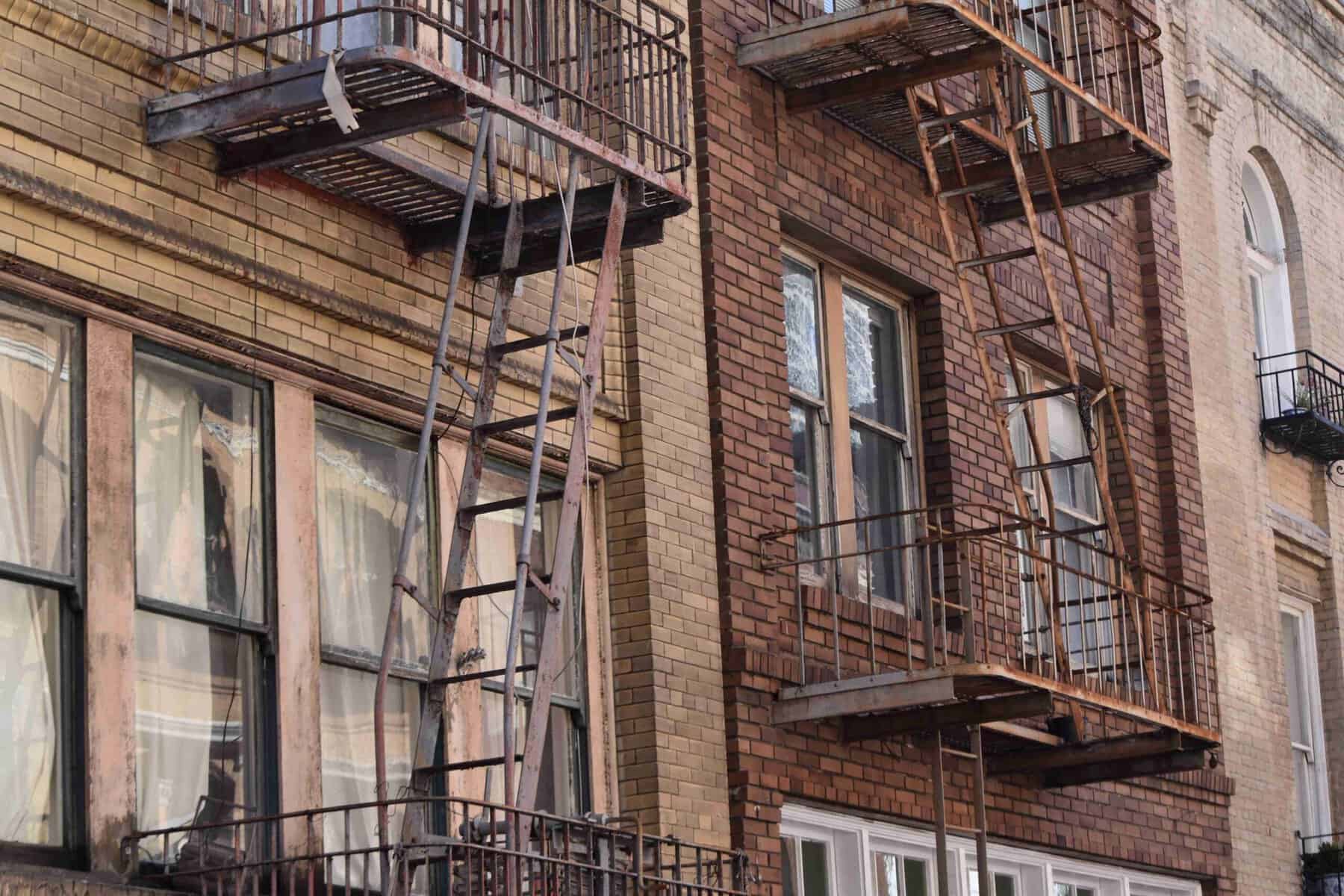
Common signs that indicate a fire escape may need repair or replacement include:
- Visible rust or corrosion
- Loose or missing bolts
- Cracks in metal components
- Unstable railings or stairs
- Peeling or chipped paint
- Water accumulation on platforms
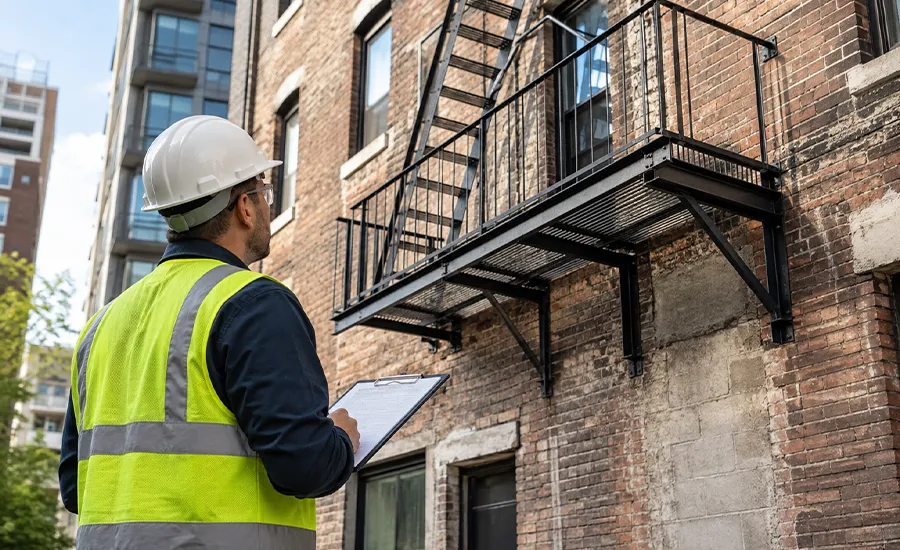
Regular inspections, including professional fire escape inspection, help identify these issues early and ensure the structure remains safe, compliant, and functional.
How to Extend the Lifespan of a Fire Escape
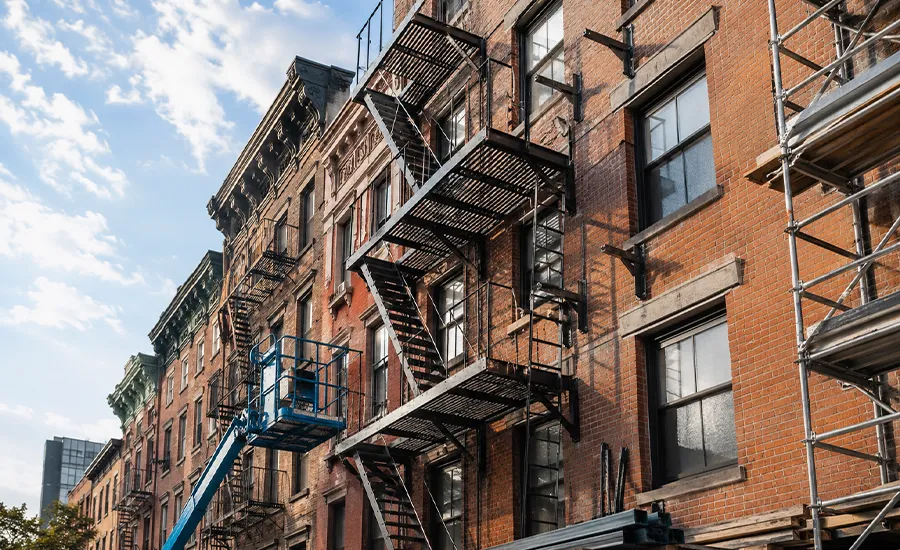
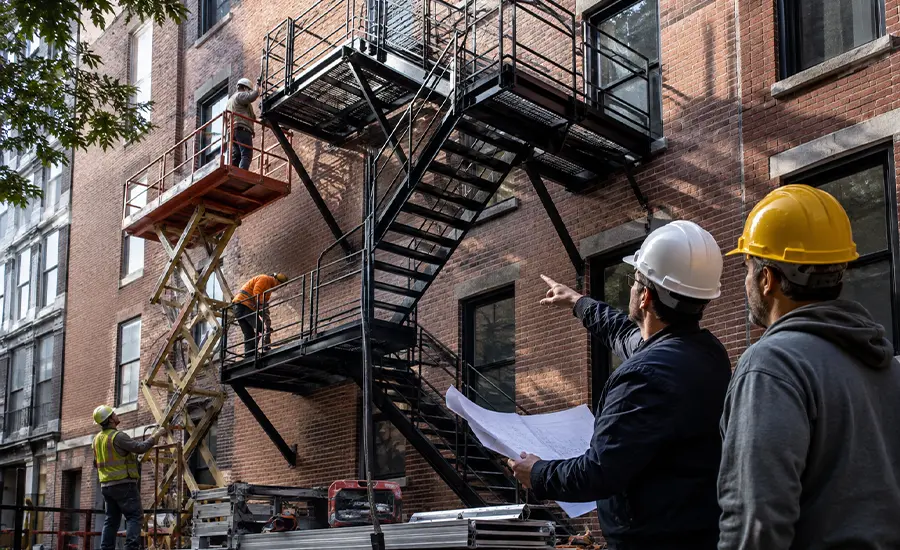
Proper care and maintenance can significantly extend how long a fire escape lasts, especially in NYC conditions where structures face constant environmental exposure. Choosing the right materials and understanding different types of fire escapes used in NYC buildings can also play a key role in improving long-term durability.
Following a consistent maintenance routine helps ensure long-term durability and safety:
- Inspect the structure at least once a year
- Remove debris such as leaves, dirt, and snow
- Repaint every 3–5 years using rust-resistant coatings
- Lubricate moving parts where applicable
- Ensure proper drainage to prevent water accumulation
Why Regular Fire Escape Inspections Are Important
Fire escapes must meet local safety regulations and building codes, particularly in NYC, where compliance requirements are strict. Regular inspections play a critical role in maintaining safety and avoiding violations.
Regular inspections help:
- Detect hidden structural issues early
- Ensure compliance with safety standards
- Prevent costly emergency repairs
- Protect occupants during emergencies
In NYC, fire escapes are required to undergo periodic safety inspections. Failure to comply can result in fines, violations, or legal consequences.
How Does a Fire Escape Meet Safety and Compliance Standards?
Safety should always remain a top priority. A fire escape meets safety and compliance standards when it is properly designed, installed, and regularly maintained according to NYC building codes and regulations. It is also important to understand the rules and restrictions for using fire escapes in NYC to ensure proper usage and avoid safety violations.
To maintain safety and compliance:
- Keep pathways clear of obstructions
- Do not use fire escapes for storage
- Ensure all exits remain easily accessible
- Install proper lighting for visibility
- Follow all applicable building codes and regulations
Compliance with regulatory authorities such as DOB, OSHA, NFPA, and Local Law 11 helps ensure that fire escapes remain safe, functional, and accessible at all times.
Final Thoughts
Fire escapes are built to last, but they are not maintenance-free. With proper care, regular inspections, and timely repairs, they can remain safe and functional for decades. In most NYC buildings, a well-maintained fire escape can last over 30 years or more, depending on the material and exposure conditions.
Ignoring maintenance can significantly reduce lifespan, lead to safety risks, and result in violations under Local Law 11. Understanding why fire escapes are so common in NYC buildings also highlights their importance in ensuring safe emergency exits in densely populated areas. For property owners managing residential and commercial buildings, consistent upkeep is essential to ensure compliance, structural integrity, and long-term reliability.
In many cases, working with a professional fire escape contractor in NYC can help identify structural issues early and ensure that your system meets all safety and compliance requirements.
Sardar Restoration Corp supports residential and commercial properties across NYC, including the Bronx, Manhattan, Brooklyn, Westchester, and Queens. For professional masonry inspections and repair assessments, property owners can contact our team at (+1) 917-355-8556, email sardarrestoration@gmail.com, or visit 2770 Fish Ave, Bronx, NY 10469, United States.
FAQs
How long do fire escapes typically last?
Fire escapes typically last between 20 and 50+ years, depending on the material, environmental exposure, and maintenance. Galvanized steel and wrought iron structures tend to offer the longest lifespan when properly maintained.
What is the most durable material for fire escapes?
Galvanized steel is considered the most durable option due to its strong resistance to rust and corrosion. Wrought iron is also durable but requires regular maintenance to prevent deterioration over time.
How often should fire escapes be inspected?
Fire escapes should be inspected at least once a year. In NYC, regulations often require more detailed inspections every 3 to 5 years to ensure structural safety and compliance.
Can regular maintenance significantly increase fire escape lifespan?
Yes, consistent maintenance can extend the lifespan of a fire escape by several years. Regular inspections, rust prevention, repainting, and timely repairs help protect the structure from deterioration and ensure long-term durability.
What are the signs that a fire escape is unsafe?
Common warning signs include:
- Rust or corrosion
- Loose or missing bolts
- Cracks in metal components
- Unstable stairs or railings
- Peeling or chipped paint
- Water accumulation
Are fire escapes required to meet building codes?
Yes, fire escapes must comply with local building and safety regulations. In NYC, failure to meet compliance standards can result in fines, violations, or legal issues.
Do fire escapes need to be replaced after a certain number of years?
Fire escapes do not have a fixed replacement timeline, but they may need replacement if structural damage, severe corrosion, or safety risks are identified during inspections. In NYC, replacement is usually required when repairs are no longer sufficient to meet safety and compliance standards.