
 ChatGPT
 Perplexity
 Google AI
 Claude
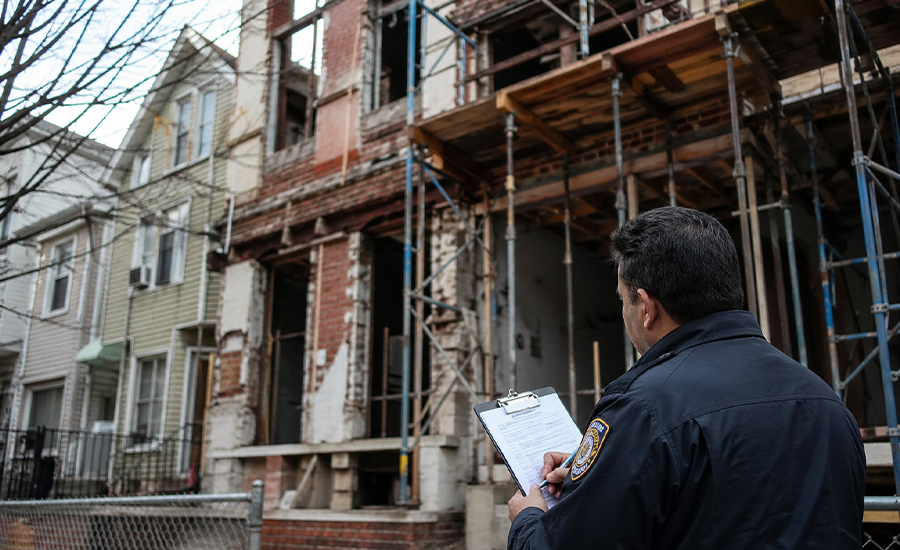
Ignoring a building violation in New York City can lead to serious consequences, including daily fines, stop-work orders, legal action, and increased safety risks for occupants and the public. NYC authorities, such as the Department of Buildings (DOB), strictly enforce compliance, and unresolved or open NYC building violations can quickly escalate into costly and legally complex issues for property owners.
In NYC, building safety is strictly regulated under Local Law 11 and DOB codes, and even minor violations can grow into major liabilities if left unresolved. Whether it involves structural damage, fire safety issues, or unpermitted work, ignoring violations can impact your property’s legal status, value, and usability.
If you currently have open violations on your property, understanding their impact and acting early can help prevent financial penalties, project delays, and enforcement actions.
- Ο Ignoring NYC building violations can lead to daily DOB fines and enforcement actions.
- Ο Class 1 violations are immediately hazardous and require urgent correction.
- Ο Open violations can block permits, stop construction, and delay approvals.
- Ο Unresolved issues can result in liens, legal claims, and insurance complications.
- Ο NYC property owners must maintain compliance to protect property value and safety.
What Counts as a Building Violation in NYC?
A building violation in NYC is a formal notice issued by the New York City Department of Buildings (DOB) when a property fails to meet required building codes, safety standards, or zoning regulations. These DOB violations in NYC are officially recorded in the system and must be resolved within a defined timeframe based on their severity.
For property owners, understanding what qualifies as a violation is critical, as even minor compliance issues can turn into open violations that affect permits, safety, and property transactions.
Common types of NYC building violations include:
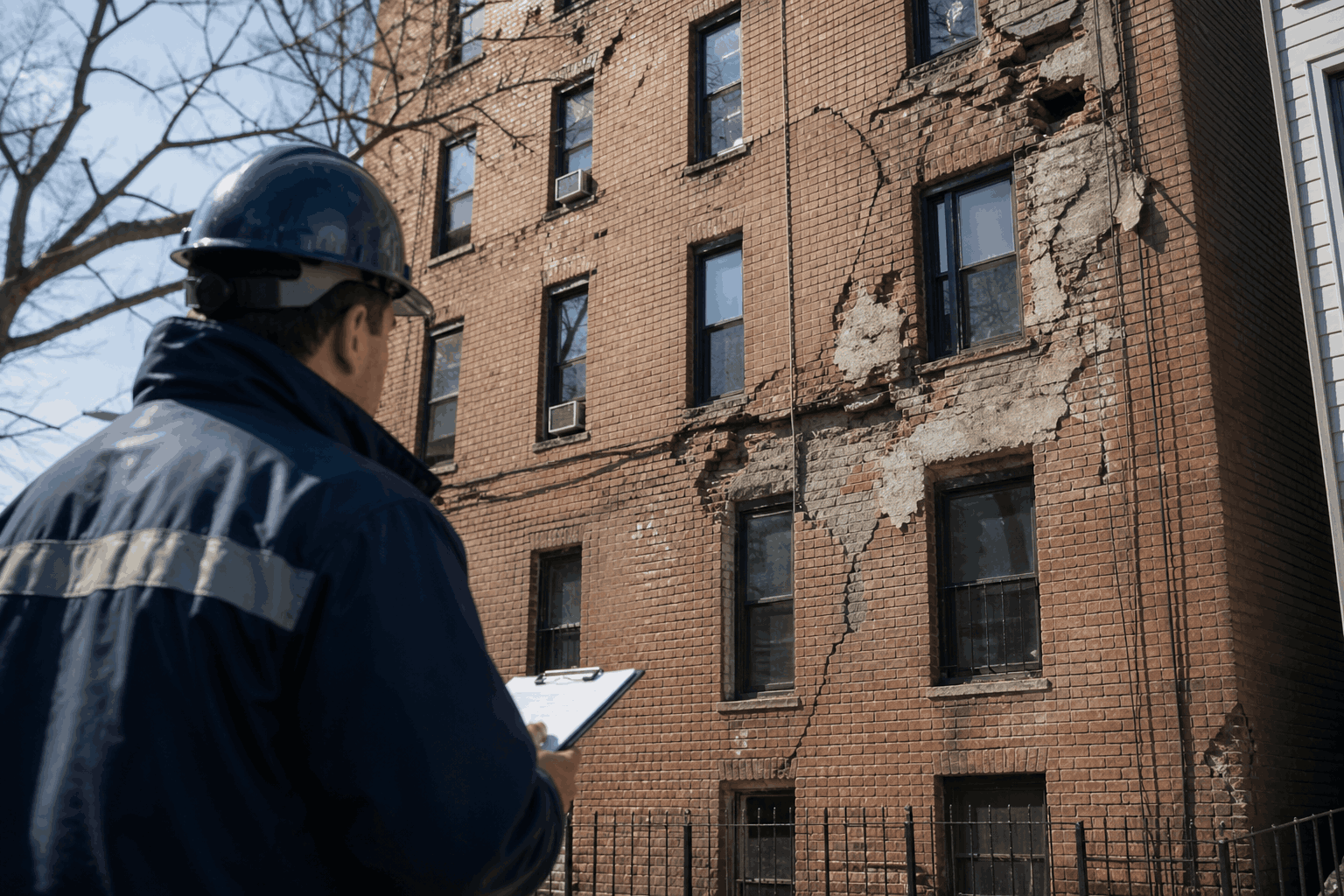
- Structural issues such as cracks, unstable walls, or foundation damage
- Fire safety violations, including blocked exits, faulty sprinklers, or missing fire escapes
- Illegal electrical or plumbing installations that do not meet code standards
- Zoning violations related to property use or unauthorized modifications
- Work completed without proper DOB permits or approvals
In NYC, building violations are classified based on the level of risk they pose to occupants and the public:
| Type of violation | Details | Case in point |
|---|---|---|
| Class 1 | Severe and immediately hazardous conditions | Unsafe scaffolding, structural instability |
| Class 2 | Moderate risk that can become dangerous if ignored | Fire safety non-compliance |
| Class 3 | Minor or administrative issues | Filing errors, paperwork violations |
Even minor or administrative violations should not be ignored, as they can quickly escalate into larger compliance issues, trigger penalties, and create delays in permits, inspections, or property transactions.
What Happens When NYC Building Violations Are Ignored?
Ignoring NYC building violations can trigger immediate enforcement actions that go far beyond simple penalties. The Department of Buildings (DOB) can escalate issues quickly, affecting construction activity, legal standing, and your ability to manage or upgrade your property. Property owners often try to fix issues on their own, but understanding the common mistakes property owners make when fixing violations can help avoid repeated penalties, delays, and compliance failures.
These consequences typically appear in several ways:
1. Daily DOB Fines and Penalties
Unresolved violations in NYC often trigger daily fines until they are corrected and officially cleared in the DOB system.
- Class 1 violations can result in penalties exceeding $10,000 per day
- Fines continue accumulating until compliance is verified
- Additional penalties may apply for repeated non-compliance
2. Stop Work Orders and Project Disruptions
If violations are linked to active construction or unsafe conditions, the DOB may issue a Stop Work Order.
- All renovation or construction activity must immediately halt
- Work cannot resume until violations are resolved and re-inspected
- Project timelines and contractor schedules are significantly affected
3. Permit Restrictions and Approval Delays
Open violations can block access to new permits or approvals in NYC.
- DOB may reject new permit applications until issues are resolved
- Renovation, extension, or change-of-use projects can be delayed
- Filing approvals through DOB NOW may be restricted
4. Legal Actions and Enforcement
Continued non-compliance can lead to formal enforcement actions through NYC regulatory systems.
- Property owners may receive summonses and court notices
- Cases can proceed to OATH (Office of Administrative Trials and Hearings)
- In severe cases, legal action may result in property-related claims
How Ignored Building Violations Affect Property Value and Ownership in NYC
Beyond fines and enforcement, unresolved NYC building violations can significantly impact your property’s financial value, marketability, and long-term ownership flexibility. In many cases, façade-related compliance plays a critical role, and understanding the key reasons buildings fail Local Law 11 inspections in NYC can help property owners avoid valuation issues and prevent costly delays.
1. Property Liens and Financial Holds
The City of New York may place a lien on properties with unpaid fines or unresolved violations.
- Liens are used to recover outstanding penalties
- They must be cleared before property transfer or refinancing
- They can complicate loan approvals and financial transactions
2. Escalating Financial Burden
Ignoring violations increases the overall cost of resolution over time.
- Daily penalties accumulate rapidly
- Repair costs may increase as conditions worsen
- Additional compliance costs may arise during inspections
3. Barriers to Selling or Transferring Property
Open violations directly impact property transactions in NYC.
- Violations must typically be resolved before closing a sale
- Buyers often avoid properties with unresolved DOB records
- Property value may decrease due to compliance risks
4. Insurance and Liability Complications
Unresolved violations can affect insurance coverage and risk exposure.
- Insurance claims may be denied if the damage relates to open violations
- Premiums may increase due to higher perceived risk
- Property owners may face liability claims for safety-related incidents
Unresolved violations not only reduce property value but can also limit your ability to sell, refinance, or safely manage your property in NYC.
How NYC Building Violations Put Occupants and Public Safety at Risk
Ignoring building violations in NYC directly increases safety risks for tenants, visitors, and the surrounding public, especially in dense areas like Manhattan, Brooklyn, and the Bronx, where buildings are closely spaced. These risks often escalate when exterior conditions are neglected, highlighting the importance of timely façade repairs in NYC buildings to maintain structural safety and protect public areas.
1. Structural Instability and Collapse Risk
Unresolved structural violations can weaken the integrity of a building over time.
- Cracks, shifting walls, or damaged supports may worsen without repair
- Load-bearing elements can fail under stress
- In severe cases, partial collapse or falling debris becomes a real risk
2. Fire Safety Hazards
Fire-related violations are among the most dangerous in NYC properties.
- Blocked exits can prevent safe evacuation
- Faulty sprinkler systems reduce fire control effectiveness
- Illegal electrical work increases fire outbreak risks
3. Injury Liability for Owners
Property owners in NYC are legally responsible for maintaining safe conditions.
- Tenants or visitors injured due to violations can file claims
- Liability increases if violations were previously recorded but ignored
- Legal exposure can extend to third-party contractors
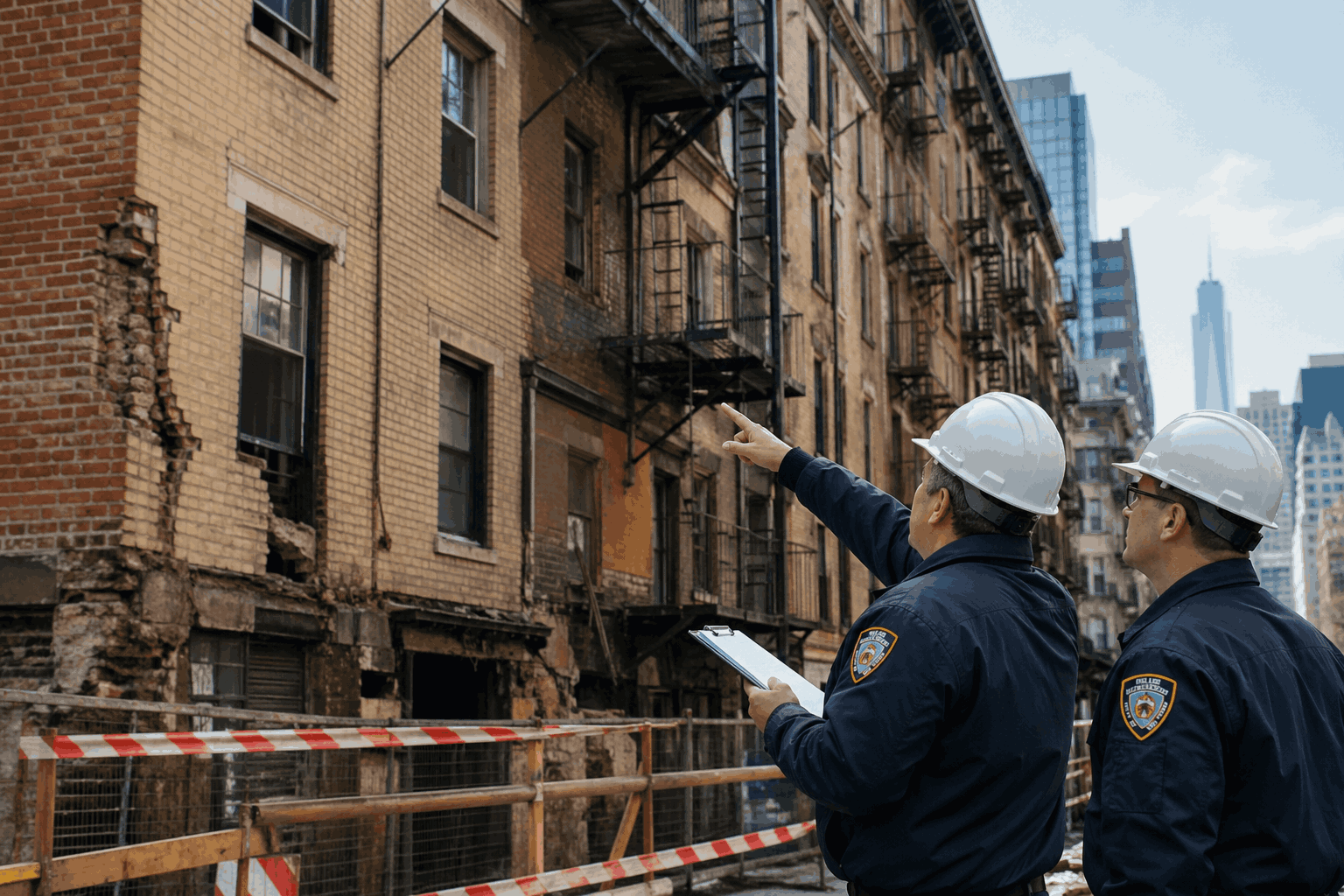
4. Public and Sidewalk Safety Risks
Certain violations extend beyond the building itself and affect the surrounding area.
- Unsafe scaffolding or façade damage can endanger pedestrians
- Falling materials can lead to injuries or property damage
- Violations tied to Local Law 11 façade issues are closely monitored in NYC
Unresolved violations not only endanger occupants but can also pose serious risks to public safety, increasing liability for property owners across NYC.
How NYC Building Violations Delay Sales, Loans, and Leasing
Open building violations in NYC can significantly slow down or block property transactions. Whether you are selling, refinancing, or renting, compliance status plays a major role in approvals and decision-making. For property owners dealing with inspections or financing delays, understanding Local Law 11 requirements, costs, and compliance in NYC can help property owners identify issues early and avoid unexpected delays.
| Case | Impact of NYC Violations |
|---|---|
| Property Sale | Open DOB violations must typically be resolved before closing. Buyers may withdraw due to legal and financial risks associated with non-compliance. |
| Loan Financing | Lenders require properties to be code-compliant. Open violations can delay or block mortgage approvals during underwriting. |
| Property Appraisal | Properties with violations often receive lower valuations due to risk exposure and repair uncertainty. |
| Property Leasing | Tenants may raise complaints or refuse occupancy if safety or compliance issues exist, affecting rental income stability. |
Conclusion
Unresolved building violations in NYC can quickly escalate into serious financial, legal, and safety risks. From daily DOB fines and stop work orders to property liens and blocked transactions, the consequences of non-compliance extend far beyond a simple notice. Left unaddressed, violations can reduce property value, delay sales, and increase liability for owners.
Staying compliant with NYC building codes, including DOB regulations and Local Law requirements, is essential for protecting both your investment and the people who rely on your property. Addressing violations early not only helps avoid penalties but also ensures your building remains safe, functional, and legally compliant.
Sardar Restoration Corp supports residential and commercial property owners across NYC, including the Bronx, Manhattan, Brooklyn, Westchester, and Queens. If you are dealing with open violations, working with a professional violation removal contractor in NYC ensures faster resolution, proper compliance, and fewer risks of recurring penalties.
For expert inspections and repair solutions, call (+1) 917-355-8556, email sardarrestoration@gmail.com, or visit 2770 Fish Ave, Bronx, NY 10469, United States.
FAQs About NYC Building Violations
How long do you have to fix a building violation in NYC?
The timeframe depends on the violation class. Class 1 violations in NYC require immediate action due to safety risks, while Class 2 and Class 3 violations may allow a limited correction period. However, delays can lead to daily fines and enforcement actions, so early resolution is always recommended.
What happens if you ignore NYC building violation fines?
Unpaid fines can escalate into liens against your property, increase your total debt, and restrict your ability to sell or refinance. Continued non-payment may also lead to legal action through NYC enforcement systems.
Can you sell a property with open violations in NYC?
Selling a property with open violations is difficult. Most buyers and lenders require violations to be resolved before closing, as open DOB records create legal and financial risks.
How do I check if my property has DOB violations in NYC?
You can check open violations using the NYC DOB Building Information System (BIS) or the DOB NOW portal. These systems show active violations, complaint history, and property compliance status.
Can a building violation in NYC be dismissed or removed?
Yes, violations can be dismissed if corrected properly or proven invalid. Property owners may need inspections, documentation, and, in some cases, hearings through OATH to resolve or remove violations.
Will building violations affect tenants in NYC?
Yes, unresolved violations can lead to unsafe living conditions, occupancy issues, and legal disputes. In some cases, tenants may file complaints or claims if safety standards are not maintained.
Who can help fix building violations in NYC?
Licensed contractors and compliance specialists can handle violation removal, inspections, and repairs. Working with experienced professionals ensures the issue is resolved according to NYC DOB requirements.