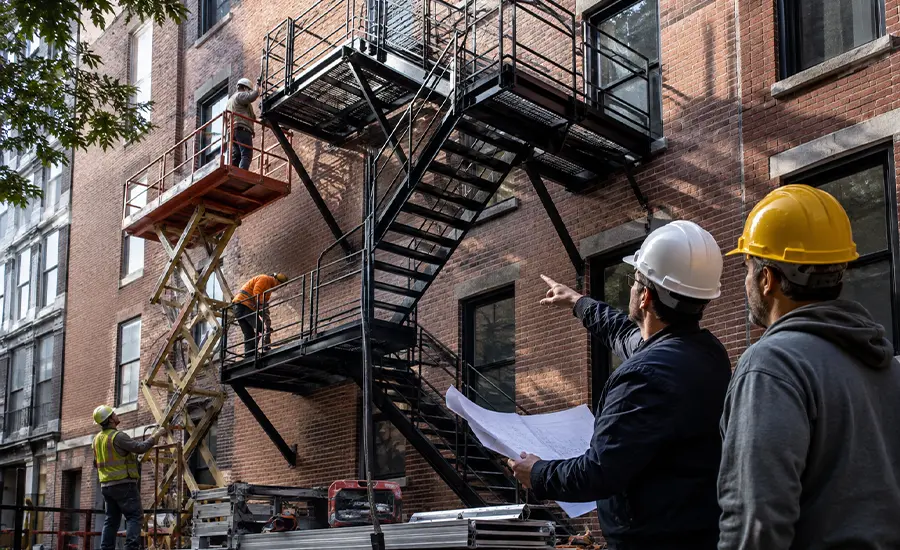
 ChatGPT
 Perplexity
 Google AI
 Claude
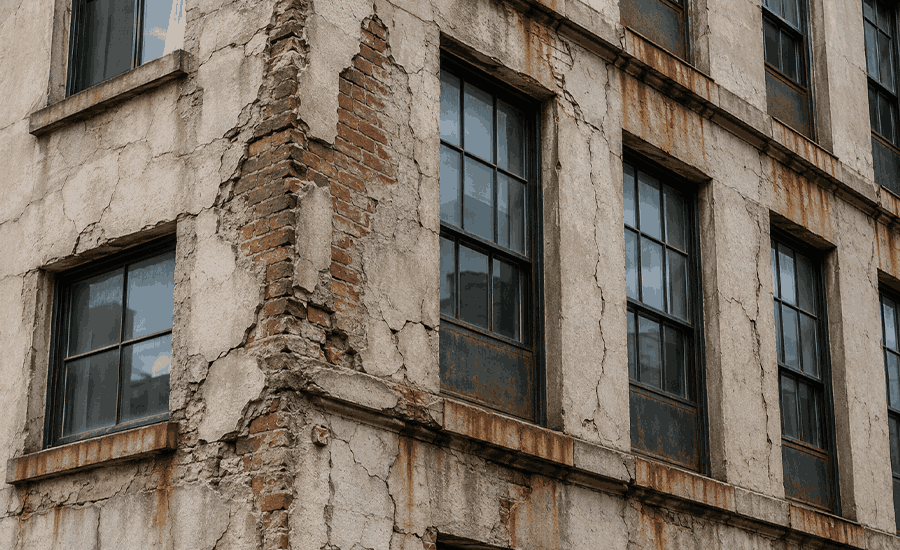
A building facade does more than shape the exterior appearance of a property. In New York City, it protects the structure from rain, snow, freeze-thaw cycles, wind exposure, moisture intrusion, and daily environmental wear. When the facade starts to fail, the issue can affect masonry stability, interior walls, energy performance, occupant safety, and long-term property value.
For residential and commercial buildings in NYC, early signs of structural facade damage should never be ignored. Cracked brickwork, bulging walls, loose masonry, rust stains, damp patches, and deteriorated mortar joints can point to deeper problems within the wall system. These issues are especially important for older buildings, high-rise properties, and structures subject to NYC facade inspection and safety requirements.
This article explains the most common warning signs of structural damage in building facades, what causes them, when to call a professional, and how timely facade repair can help prevent larger restoration costs.
- Ο Cracks, bulging walls, and loose masonry can signal facade failure.
- Ο Water infiltration is a major cause of masonry deterioration in NYC.
- Ο Rust stains may point to hidden steel corrosion inside the wall.
- Ο Spalling bricks and falling materials create serious safety risks.
- Ο Routine facade inspections help prevent costly emergency repairs.
- Ο Timely masonry repair supports safety, durability, and compliance.
Why Structural Facade Damage Is a Serious Concern
Structural facade damage is not only a cosmetic issue. A damaged facade can allow water to enter the wall system, weaken masonry, corrode embedded steel, and create unsafe exterior conditions. What begins as a small crack or a stained brick surface can turn into a larger structural repair if it is not handled early.
In NYC, facade damage is also a safety concern because buildings are close to sidewalks, streets, neighboring properties, and public spaces. Loose masonry, cracked parapets, displaced coping stones, and unstable wall sections can create falling debris hazards. For taller buildings, understanding the difference between safe and unsafe facade conditions can help owners respond before minor defects become serious violations.
Common risks linked to facade structural damage include:
- Water intrusion behind masonry
- Mold and mildew growth
- Interior wall damage
- Loose or falling facade materials
- Reduced insulation performance
- Corroded lintels, anchors, or reinforcement
- Building code concerns
- Higher long-term repair costs
Routine facade inspections and preventive masonry maintenance help property owners identify these issues before they become unsafe or expensive.
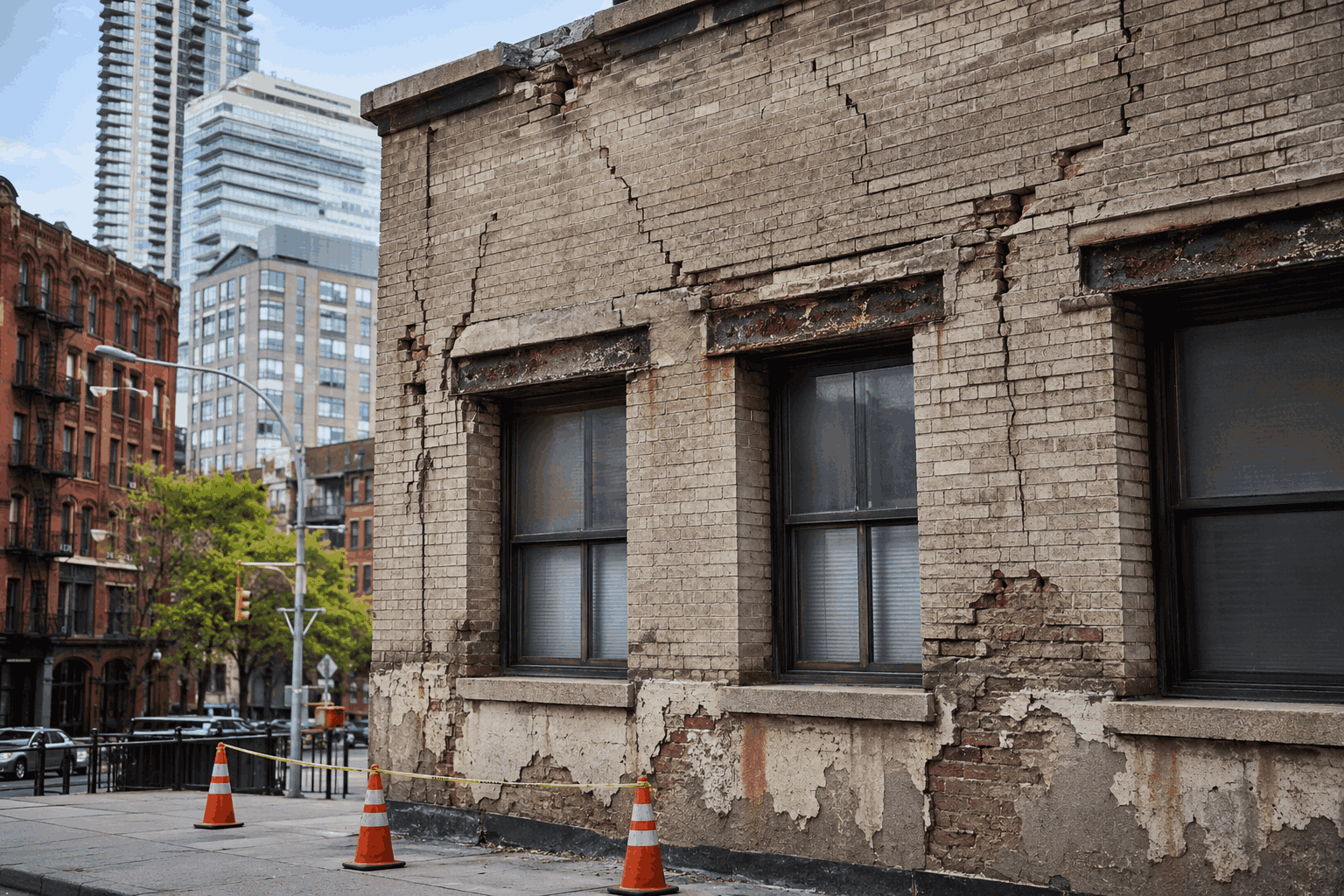
Warning Signs of Structural Facade Damage in NYC
Structural facade problems can appear in different ways depending on the building age, material, exposure, and maintenance history. In Brooklyn, the Bronx, Manhattan, Queens, and other NYC areas, masonry buildings commonly face moisture exposure, freeze-thaw damage, pollution, settlement, and aging mortar joints.
For larger buildings, many of these signs are also the same facade issues commonly reported during Local Law 11 inspections, especially when cracks, loose materials, or water-related deterioration are visible from the exterior.
1. Visible Brickwork Cracks
Cracks are one of the most common signs of facade distress. Some hairline cracks may come from minor settlement, but wider cracks, spreading cracks, or cracks that appear in groups may indicate structural movement, water damage, or masonry stress. In many cases, property owners should also review brick wall warning signs linked to structural repair so they can tell when cracking is more than a surface issue.
Types of Facade Cracks and Structural Risk Levels
| Type of Facade Crack | Possible Cause | Structural Risk Level |
|---|---|---|
| Hairline cracks | Minor settlement or surface aging | Low |
| Stair-step cracks | Foundation movement or mortar joint failure | Moderate to high |
| Vertical cracks | Settlement, expansion, or wall movement | Moderate |
| Horizontal cracks | Lateral pressure or structural stress | High |
| Diagonal cracks | Frame movement or uneven load transfer | High |
Warning Signs That Cracks Need Professional Inspection
- Cracks are widening over time
- Water leaks through cracked masonry
- Mortar is crumbling around the crack
- Multiple cracks appear in the same wall area
- Cracks appear near windows, lintels, parapets, or corners
Large or expanding cracks should be inspected by an experienced masonry contractor in NYC to determine whether structural crack repair NYC, brick repair, repointing, lintel repair, or structural stabilization is needed.
2. Bulging or Outward Wall Movement
A bulging facade is a serious warning sign. If an exterior wall appears to lean outward, bow, or separate from the building, the wall system may have lost support. This can happen when moisture builds up behind masonry, wall ties deteriorate, anchors fail, or structural movement affects the exterior wall.
In older NYC masonry buildings, visible movement should be reviewed with proper facade inspection NYC support before repair work begins. This helps identify whether the issue is limited to exterior masonry or connected to deeper structural movement.
Common Causes of Bulging Facade Walls
- Water infiltration behind brick or stone
- Corroded anchors, lintels, or steel supports
- Deteriorated wall ties
- Poor previous repairs
- Expansion caused by trapped moisture
- Long-term structural movement
Risks of Bulging Walls
- Falling masonry
- Wall instability
- Emergency repair conditions
- Unsafe sidewalk or entry areas
- Higher restoration costs if delayed
Bulging masonry should be assessed quickly. In many cases, the affected area may need stabilization before permanent facade repair work begins.
3. Crumbling Brick, Stone, or Masonry Surfaces
Brick, stone, concrete, and stucco surfaces can deteriorate over time due to weather exposure, moisture, pollution, and age. When materials begin to break apart, the facade may no longer protect the building properly.
For brick buildings, early surface failure often connects to weak joints, trapped moisture, or aging materials. Property owners dealing with loose brick faces, chipped units, or masonry gaps may need professional brick repair in NYC before deterioration spreads across the wall.
Signs of Masonry Surface Deterioration
- Spalling bricks
- Chipped or flaking surfaces
- Loose brick units
- Cracked stone or concrete
- Gaps between bricks and mortar joints
- Surface scaling after winter weather
Spalling often happens when moisture enters the brick surface, freezes, expands, and causes the face of the brick to break away. Once this starts, the damaged area can absorb more water and continue to deteriorate.
Damaged brickwork should be repaired before moisture spreads deeper into the wall assembly.
4. Eroded or Missing Mortar Joints
Mortar joints hold masonry units together and help keep water out of the wall system. When mortar becomes soft, cracked, powdery, or missing, the facade loses part of its structural and weather-resistant support.
Many owners ask whether repointing only improves appearance or if it also helps the building structure. In damaged masonry walls, repointing can support structural stability when the mortar joints are weak, open, or allowing water to enter the wall.
Common Signs of Mortar Joint Failure
- Missing mortar between bricks
- Deep gaps in joints
- Powdery mortar surfaces
- Crumbling joints
- Water entry around the brickwork
- Loose or shifting masonry units
Common Causes of Mortar Deterioration
- Freeze-thaw cycles
- Moisture exposure
- Natural aging
- Poor drainage
- Incorrect mortar was used in previous repairs
- Lack of maintenance
Masonry repointing helps restore joint strength, reduce water intrusion, and improve the long-term durability of the facade.
5. Damp Patches, Efflorescence, and Water Stains
Water intrusion is one of the biggest causes of structural facade deterioration in NYC buildings. Even small leaks can weaken masonry, damage interior finishes, and corrode hidden steel components.
When water enters through cracks, failed sealants, or open joints, it can also affect adjacent facade materials such as stucco. If cracks appear in stucco surfaces, understanding proper stucco crack repair methods can help owners identify the issue early, while timely stucco repair in NYC can help stop water from moving deeper into the wall system.
Visible Signs of Moisture Problems
- Dark stains on exterior walls
- White powdery deposits, known as efflorescence
- Damp interior walls near exterior surfaces
- Peeling paint
- Mold or mildew growth
- Water marks below windows, rooflines, or parapets
Common Sources of Water Intrusion
- Cracked brickwork
- Open mortar joints
- Failed sealants
- Damaged flashing
- Poor roof drainage
- Blocked gutters or downspouts
- Cracked coping stones or parapet caps
Moisture issues should be repaired at the source. Cleaning the stain alone does not solve the underlying facade problem.
6. Rust Stains and Corrosion Marks
Rust staining on a facade often points to corrosion of embedded steel elements inside the wall system. As steel corrodes, it expands and pushes against surrounding masonry. This can lead to cracking, displacement, and structural weakness.
Lintels are one of the common areas where corrosion and masonry cracks appear together. Cold weather can also increase movement around metal supports, which is why property owners should understand how low temperatures place stress on lintel areas before cracks widen.
What Rust Stains May Indicate
- Corroded lintels
- Deteriorated anchors
- Failing shelf angles
- Damaged reinforcement bars
- Water inside the wall cavity
Possible Structural Effects
- Cracked brickwork
- Bulging masonry
- Loose facade materials
- Staining around window heads or parapets
- Reduced wall stability
Rust-related facade damage can worsen quickly when moisture continues to enter the wall. A professional inspection can help identify whether lintel repair, waterproofing, or masonry replacement is needed.
7. Loose, Dislodged, or Falling Facade Components
Loose facade materials are a major safety concern for pedestrians, occupants, and neighboring properties. Falling brick, stone, stucco, concrete, or coping materials usually indicate advanced deterioration.
Cornices, parapets, and decorative facade features may look like design elements, but some damage can affect safety. Knowing the difference between surface-level and structural cornice damage helps property owners decide when professional repair is needed.
Warning Signs of Loose Facade Materials
- Cracked parapet walls
- Loose coping stones
- Detached facade panels
- Hanging masonry or stucco pieces
- Visible movement in exterior surfaces
- Debris found near the building base
Why Loose Facade Components Are Dangerous
Falling materials can cause:
- Serious injury
- Property damage
- Emergency violations
- Sidewalk safety issues
- Legal liability for property owners
If facade components appear unstable, the area should be inspected immediately and protected until repairs are completed.
Common Causes of Structural Facade Damage in NYC Buildings
Facade deterioration usually develops from a combination of weather exposure, material aging, moisture movement, and maintenance gaps. In New York City, seasonal temperature changes and dense urban conditions make regular facade maintenance especially important.
Cold weather is a major factor in masonry damage because trapped water expands during freezing conditions and places pressure on brick, mortar, stone, and concrete. This is also why many NYC buildings need timely exterior repairs after winter or long periods of moisture exposure.
Common causes include:
- Moisture infiltration
- Freeze-thaw cycles
- Aging brick, stone, stucco, or concrete
- Deteriorated mortar joints
- Poor drainage systems
- Failed flashing or sealants
- Corroded lintels, anchors, or steel supports
- Foundation settlement
- Improper previous repairs
- Lack of regular facade inspections
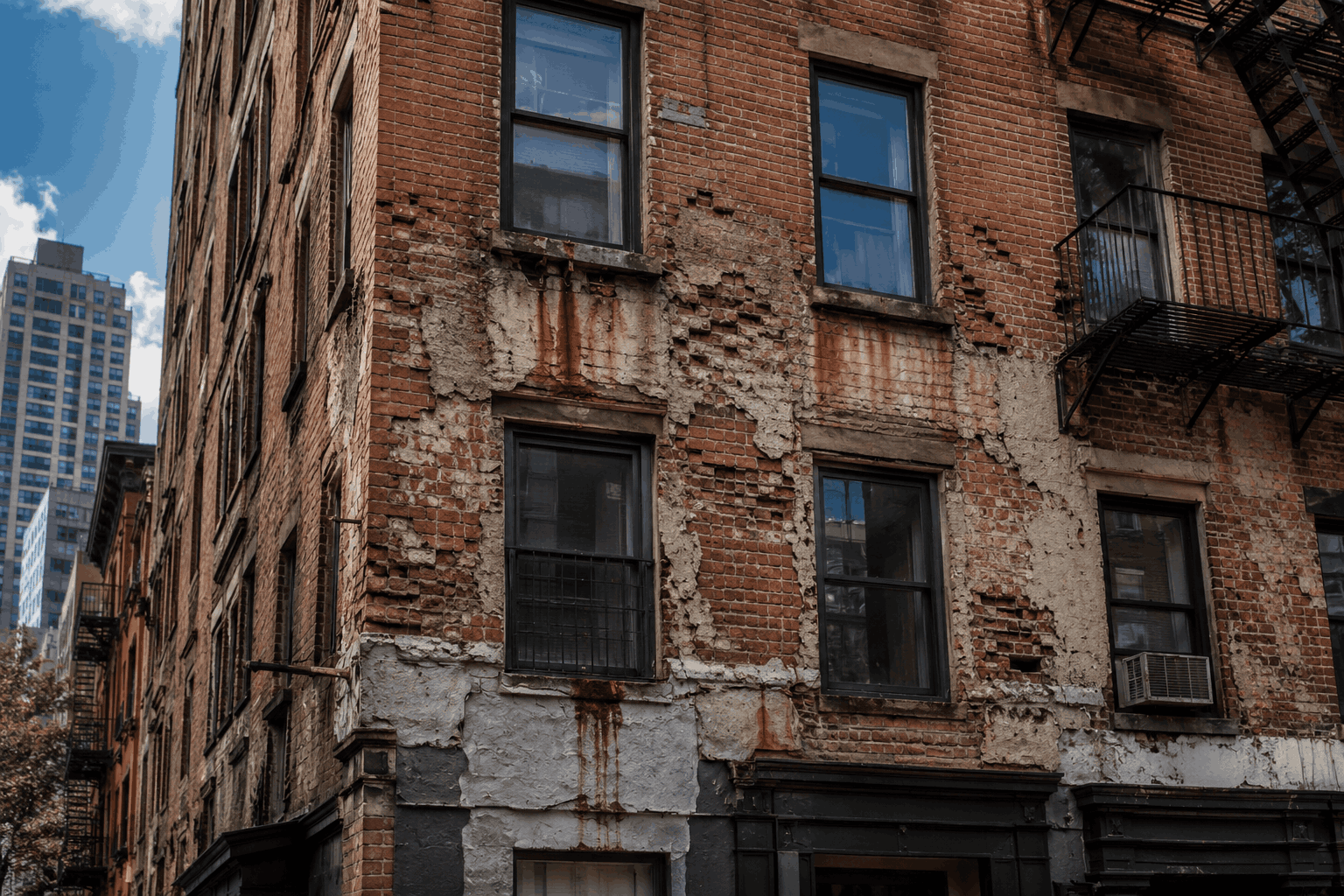
Identifying the root cause is important. Without a proper assessment, surface repairs may only hide the problem for a short time.
Why Preventive Facade Inspections Matter in NYC
Preventive facade inspections help property owners catch early warning signs before they turn into major repairs. This is especially important for older masonry buildings, multi-family properties, commercial buildings, and high-rise structures.
For buildings subject to NYC facade inspection requirements, owners should understand NYC facade inspection law, how the Local Law 11 inspection process works, and what conditions can affect the final report. Regular inspections are also useful for buildings that are not part of a required cycle because they help identify cracks, moisture issues, and unstable materials early.
Benefits of Preventive Facade Inspections
| Facade Inspection Benefit | Why It Matters for NYC Property Owners |
|---|---|
| Early damage detection | Finds cracks, loose mortar, stains, and movement before damage spreads |
| Improved safety | Reduces the risk of falling masonry or unstable wall sections |
| Lower repair costs | Helps address small issues before full restoration is needed |
| Moisture control | Identifies leaks, failed sealants, and drainage problems early |
| Longer facade lifespan | Protects brickwork, stone, stucco, and structural components |
| Code and compliance support | Helps owners stay aware of facade safety responsibilities |
Many facade issues become expensive because they are left untreated until the inspection stage. Understanding the common reasons NYC buildings fail facade inspections can help owners correct problems before they become urgent.
Recommended Repairs for Structural Facade Damage
The right repair method depends on the type of damage, building material, structural condition, and source of moisture. A qualified contractor should inspect the facade before recommending any repair plan.
For masonry buildings, repairs may involve brick replacement, repointing, waterproofing, lintel work, or full exterior stabilization. When the damage affects older brick walls or decorative masonry, experienced brickwork in NYC services can help restore both strength and appearance without unnecessary replacement.
Common facade repair solutions include:
- Masonry repointing
- Brick replacement
- Structural crack repair
- Lintel repair or replacement
- Waterproofing and sealant replacement
- Parapet wall repair
- Facade anchoring systems
- Stone repair and repointing
- Stucco repair
- Exterior wall stabilization
For long-lasting results, repairs should address both the visible damage and the underlying cause. For example, replacing damaged bricks without fixing water intrusion can lead to the same problem returning.
How to Prevent Future Facade Damage in NYC
Preventing facade damage is easier and more cost-effective than waiting for emergency repairs. Property owners should schedule routine checks, repair small defects early, and keep water away from the building envelope.
For buildings with ongoing DOB concerns or required exterior wall cycles, a trusted local law 11 contractor in NYC can help identify repair needs before inspection issues become more serious. This is especially important for older properties where cracks, loose mortar, and water damage may be present in several areas at once.
Practical prevention steps include:
- Inspect exterior walls regularly
- Repair cracks before they widen
- Repoint deteriorated mortar joints
- Maintain gutters, drains, and downspouts
- Replace failed sealants around windows and joints
- Monitor damp patches after rain or snow
- Repair roofline, flashing, and parapet issues early
- Correct small wall movement before it spreads
Consistent maintenance protects the building structure, improves safety, and helps preserve the value of residential and commercial properties.
When to Call a Professional Masonry Contractor in NYC
Property owners should contact a contractor when facade damage appears active, spreading, or unsafe. Some issues may look minor from the ground, but they can point to deeper deterioration inside the wall system.
If damage affects the building envelope, timely facade repair in NYC can help stop moisture intrusion, stabilize loose materials, and reduce the chance of emergency repair work. In uncertain weather or changing property conditions, many owners also benefit from knowing why timely facade repairs are important for NYC buildings before waiting for damage to worsen.
Call a professional if you notice:
- Bulging or leaning exterior walls
- Loose bricks, stone, or stucco
- Cracks near windows, parapets, or corners
- Rust stains around masonry
- Water entering interior walls
- Missing or crumbling mortar
- Falling debris near the building
- Recurring damp patches after rain
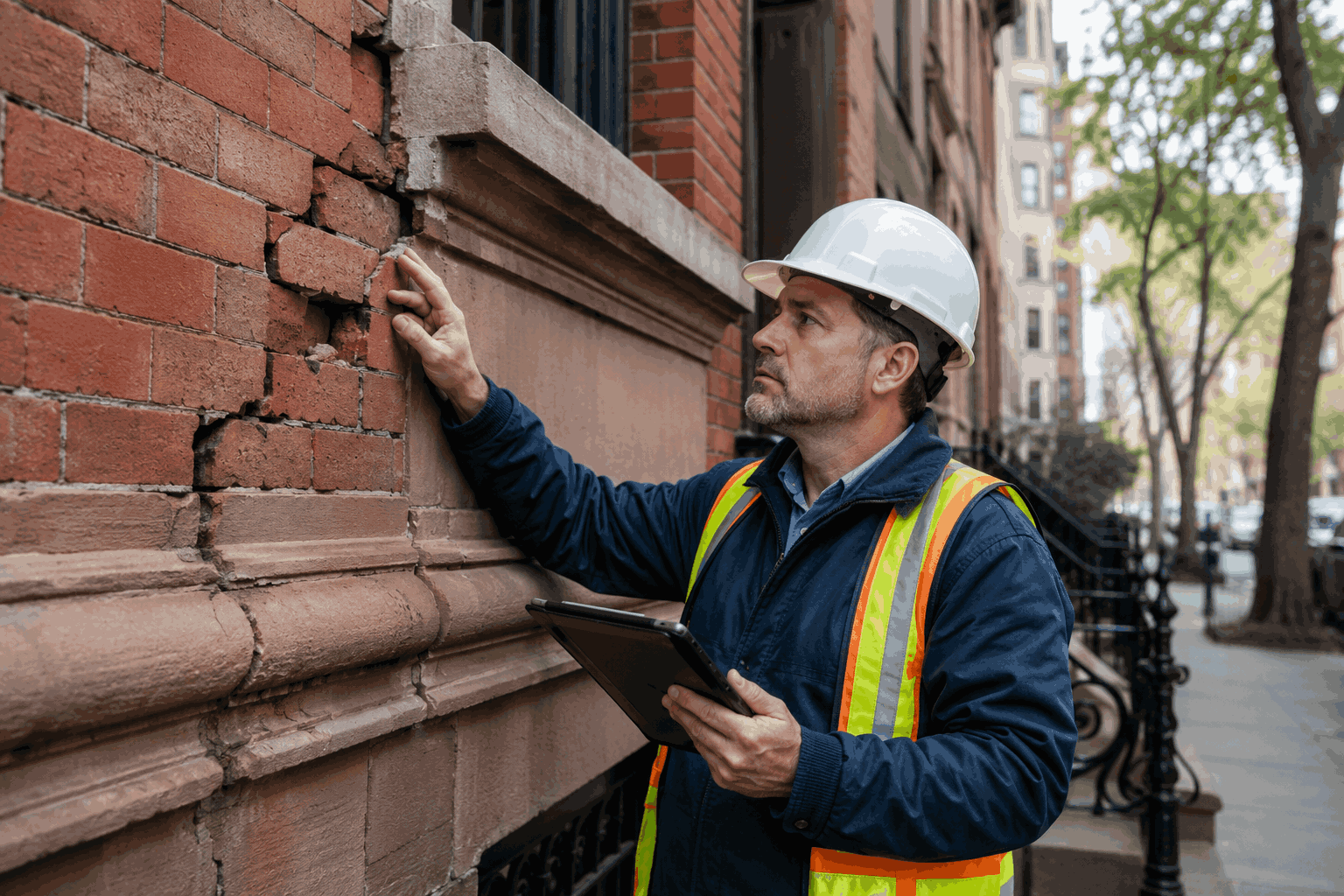
A professional masonry contractor in NYC can inspect the facade, identify the cause, and recommend repair options that fit the building’s condition.
Final Thoughts on Structural Facade Damage in NYC
Structural damage in building facades should be addressed early because small cracks, loose mortar, damp patches, rust stains, and damaged brickwork can turn into larger safety and structural concerns when ignored. Timely facade inspection and repair help NYC property owners protect the building envelope, reduce safety risks, support compliance, and avoid expensive restoration work.
Some facade problems may also connect with other exterior structural areas, including chimneys, garages, cornices, and parapets. Property owners should not ignore chimney damage that may affect structural safety, and garages with concrete or steel deterioration may require a planned structural restoration repair process before the damage spreads. Whether the issue affects a residential building, commercial property, historic masonry structure, or high-rise facade, the right repair plan starts with a professional assessment.
Sardar Restoration Corp supports residential and commercial property owners across NYC, including the Bronx, Manhattan, Brooklyn, Westchester, and Queens. If you are dealing with cracked bricks, leaning masonry, moisture damage, loose facade materials, or violation concerns, working with a professional masonry contractor in NYC can help restore safety, improve durability, and prevent larger repair costs.
For expert facade inspections and repair solutions, call (+1) 917-355-8556, email sardarrestoration@gmail.com, or visit 2770 Fish Ave, Bronx, NY 10469, United States.
FAQs
What Are the Early Signs of Structural Facade Damage?
Early signs include cracked brickwork, crumbling mortar joints, damp patches, rust stains, loose masonry, and small pieces of material falling from the exterior wall. These issues should be checked early because they can point to deeper water or structural problems.
What Causes Bricks to Crumble or Break Apart?
Bricks usually crumble because of moisture infiltration, freeze-thaw cycles, aging materials, poor drainage, or weak mortar joints. Once the brick surface starts to spall, it can absorb more water and deteriorate faster.
Why Is Water Infiltration Harmful to Building Facades in NYC?
Water can enter through cracks, open joints, failed sealants, damaged flashing, or roof drainage issues. Over time, moisture weakens masonry, corrodes steel components, damages interior walls, and increases the risk of structural facade deterioration.
How Often Should Building Facades in NYC Be Inspected?
Inspection needs depend on the building’s height, age, condition, and exposure. Older masonry buildings and properties with visible cracks, leaks, or loose materials should be inspected regularly by a qualified professional.
Can Structural Facade Damage Be Repaired?
Yes. Many facade problems can be repaired through masonry repointing, brick replacement, crack repair, waterproofing, lintel repair, parapet repair, or wall stabilization. The correct method depends on the cause and severity of the damage.
Is a Bulging Exterior Wall Dangerous?
Yes. A bulging wall can indicate weakened anchors, trapped moisture, deteriorated wall ties, or structural movement. The area should be inspected quickly to determine whether temporary protection or immediate stabilization is needed.
Who Should Repair Structural Facade Damage in NYC?
Structural facade damage should be handled by an experienced masonry or facade repair contractor familiar with NYC buildings, masonry systems, waterproofing, and safety requirements. For regulated facade inspections, property owners may also need guidance from qualified inspection professionals.