 ChatGPT
 Perplexity
 Google AI
 Claude
Buildings in New York City face constant exposure to changing weather, aging materials, moisture, pollution, and daily structural stress. Over time, these conditions can weaken exterior walls, loosen façade elements, and increase safety risks around sidewalks, entrances, and nearby properties.
Local Law 11, also known as the Façade Inspection and Safety Program, requires certain NYC buildings taller than six stories to undergo regular façade inspections. The purpose is to identify unsafe exterior conditions before they lead to falling debris, DOB violations, tenant disruption, or costly emergency repairs.
A Local Law 11 inspection must be performed, supervised, or reviewed by a Qualified Exterior Wall Inspector, also known as a QEWI. The inspection classifies the building as Safe, SWARMP, or Unsafe and helps property owners understand what repairs, filings, and follow-up actions are required.
- Ο Local Law 11 applies to NYC buildings taller than six stories.
- Ο Façade inspections follow a recurring five-year cycle.
- Ο A QEWI, usually a licensed PE or RA, must handle the inspection.
- Ο The inspection report is submitted to the NYC Department of Buildings.
- Ο Buildings are classified as Safe, SWARMP, or Unsafe.
- Ο Unsafe conditions require prompt protection, repairs, and amended filing.
- Ο Late filing, failure to file, and unresolved façade conditions can lead to DOB penalties.
What Is Local Law 11 in NYC?
Local Law 11 is a New York City façade safety regulation enforced by the Department of Buildings. It requires eligible building owners to inspect exterior walls and related façade elements on a recurring cycle to reduce the risk of falling materials and unsafe conditions.
The law applies across all five boroughs, including the Bronx, Brooklyn, Manhattan, Queens, and Staten Island. It was created to improve public safety after incidents involving falling building materials from aging exterior walls.
Property owners should understand the full NYC façade inspection requirements before their filing window begins, because missed deadlines or delayed repairs can lead to DOB penalties and more expensive restoration work.
Why Local Law 11 Matters for NYC Buildings
- Protects pedestrians and occupants
- Identifies façade defects early
- Reduces falling debris risks
- Supports exterior wall stability
- Helps maintain long-term building compliance
- Prevents avoidable DOB enforcement actions
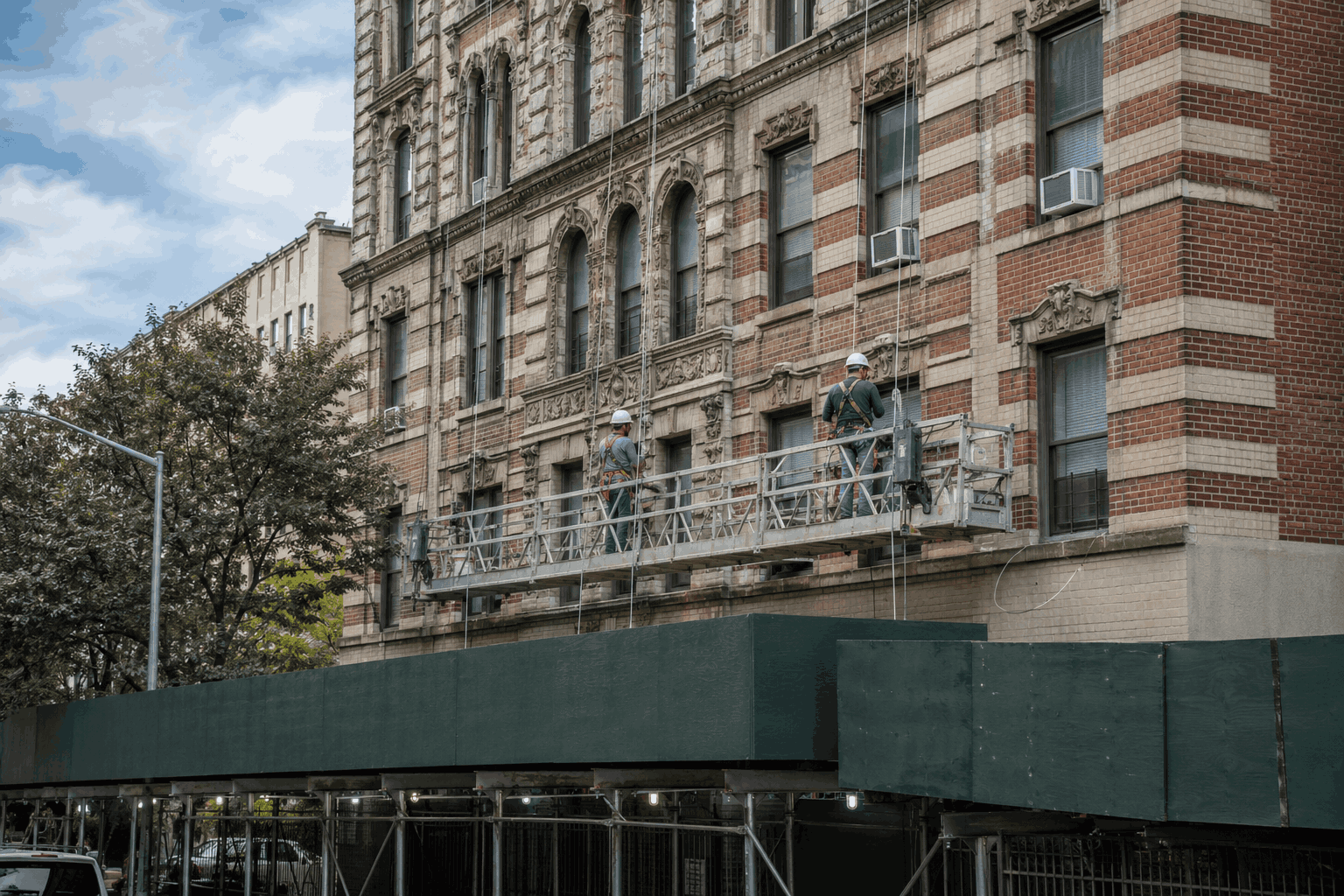
What Happens If Owners Miss Local Law 11 Requirements?
Local Law 11 penalties and filing costs can become expensive when owners miss deadlines or delay required repairs. Penalties may include late filing charges, failure-to-file fines, SWARMP correction penalties, unsafe condition penalties, public DOB violations, stop-work complications, and additional repair costs.
Local Law 11 Inspection Cycle and Filing Timeline
Local Law 11 follows a five-year inspection cycle. Each eligible building is assigned to a sub-cycle based on its block number, and the inspection report must be filed within the applicable DOB filing window.
The inspection must be completed by a QEWI, and the final report must be submitted through the DOB filing system. If defects are found, the owner may need repair planning, protective measures, follow-up inspections, or amended filings, depending on the building’s final classification.
Key Filing Cycle Requirements
- Buildings are grouped by assigned sub-cycle.
- Each eligible building requires one inspection per cycle.
- Reports must be filed within the applicable DOB window.
- Late filing can trigger monthly penalties.
- Unsafe conditions require immediate safety planning.
Local Law 11 Inspection Cycle Breakdown
| Inspection Requirement | What NYC Property Owners Should Know |
|---|---|
| Inspection cycle | Every 5 years |
| Covered buildings | NYC buildings taller than 6 stories |
| Enforcing authority | NYC Department of Buildings |
| Required inspection frequency | One required facade inspection per cycle |
| Filing deadline | Based on the building’s assigned sub-cycle |
| Qualified inspector | QEWI, usually a licensed PE or RA |
| Final report outcome | Safe, SWARMP, or Unsafe classification |
Step-by-Step Local Law 11 Inspection Process
The Local Law 11 inspection process helps NYC property owners confirm façade safety, identify repair needs, and maintain DOB compliance. It usually includes document review, access planning, close-up inspection, condition classification, report submission, and follow-up repair work.
Common issues found during inspection include cracks, spalling, loose masonry, water infiltration, deteriorated mortar joints, corroded metal, damaged lintels, and failing cornice elements. Many of these problems are also common reasons NYC buildings fail façade inspections, especially when routine maintenance has been delayed.
1. Hire a Qualified Exterior Wall Inspector
The process begins with hiring a Qualified Exterior Wall Inspector. A QEWI is typically a licensed Professional Engineer or Registered Architect who can inspect, classify, and file façade conditions under DOB requirements.
Who Can Be a QEWI?
- Licensed Professional Engineer
- Registered Architect
Main Responsibilities of a QEWI
- Review building history
- Inspect exterior walls
- Identify façade defects
- Classify building conditions
- Prepare the inspection report
- Submit required DOB documentation
2. Review Existing Building Records and Façade History
Before the physical inspection starts, the QEWI reviews the building’s past reports, drawings, repair history, and known defect areas. This step helps identify where close-up access may be needed.
For older NYC buildings, this stage is important because previous repair patterns can reveal recurring moisture problems, masonry movement, or façade elements that need closer review.
Common Records and Areas Reviewed
- Prior FISP reports
- Building drawings
- Repair records
- Parapets
- Balconies
- Cornices
- Window lintels
- Masonry joints
Property owners with older exterior details should also understand how cornice inspections are handled on NYC buildings, since damaged cornices are a common issue during façade reviews.
3. Complete the Close-Up Façade Inspection
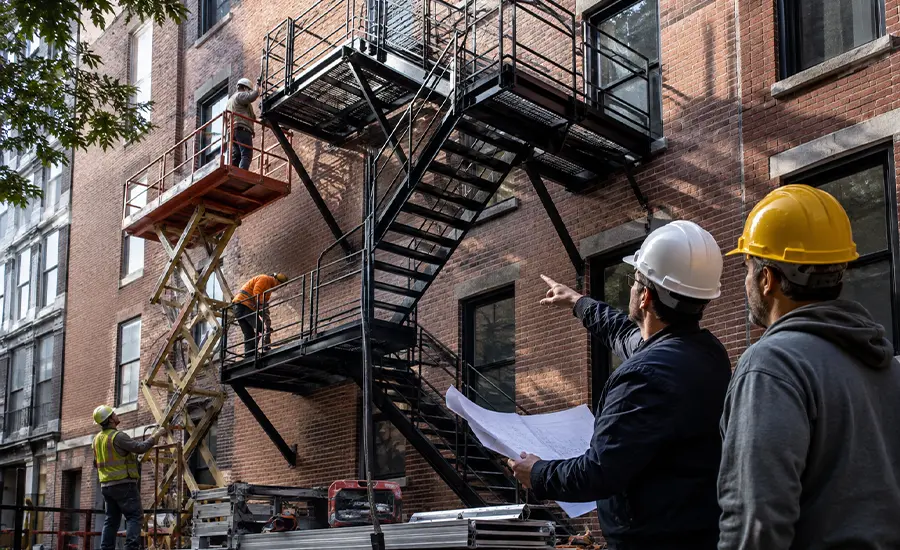
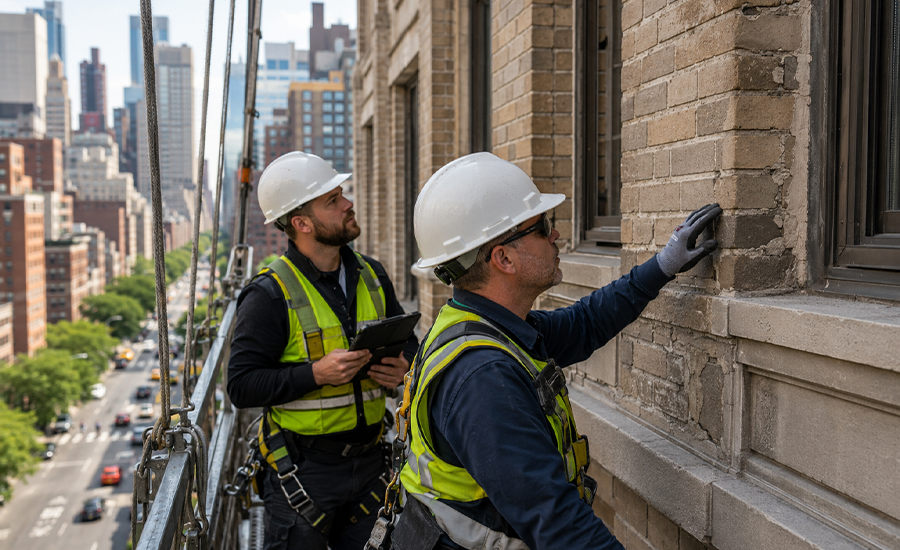
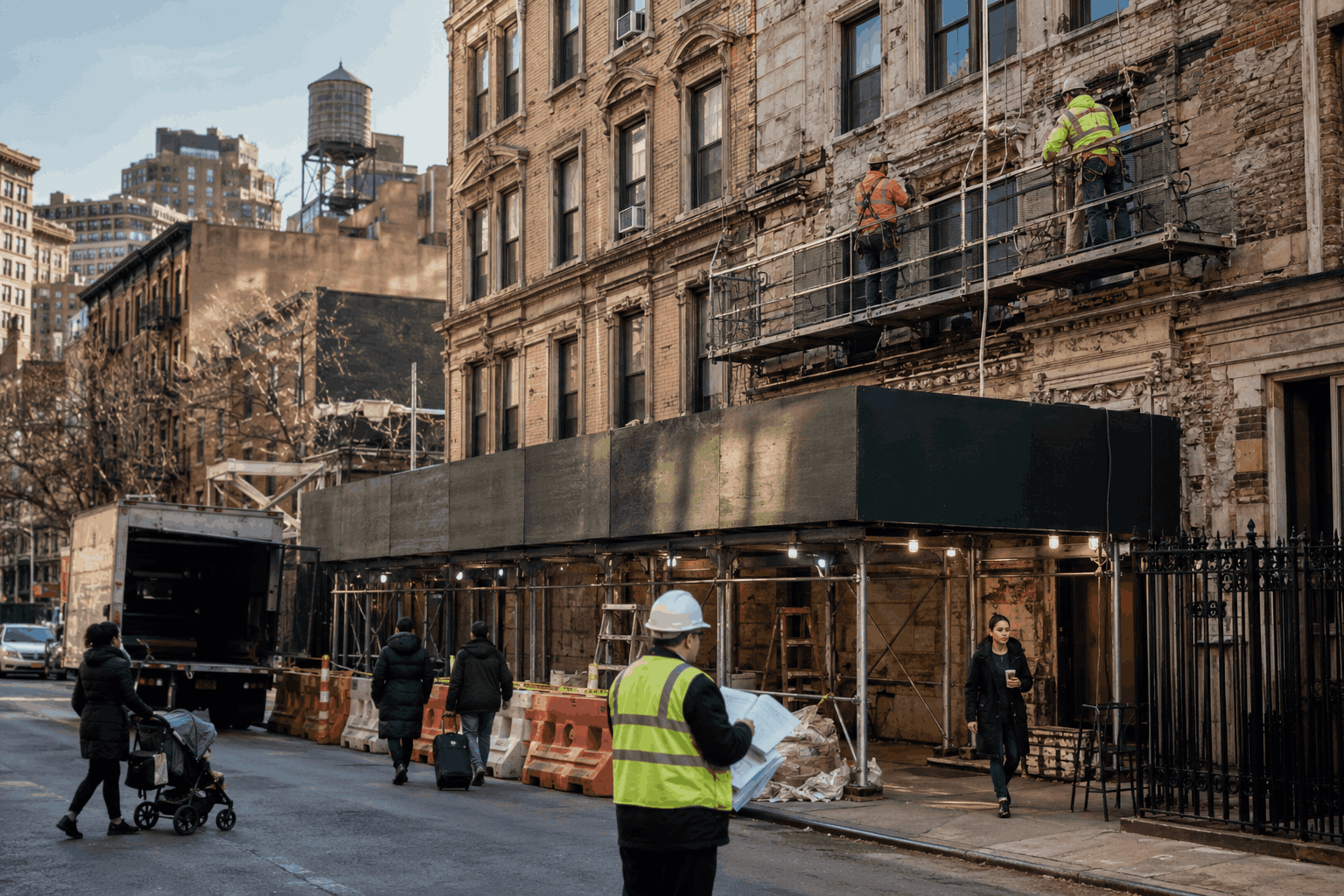
A close-up physical inspection is one of the most important parts of the Local Law 11 process. The QEWI must observe representative exterior wall areas directly and document visible defects that may affect public safety or long-term façade performance.
Access methods vary depending on building height, façade layout, sidewalk conditions, and surrounding site limits. In dense areas such as Manhattan, Downtown Brooklyn, the Bronx, and commercial corridors in Queens, access planning often needs careful coordination to reduce disruption.
| Inspection Access Method | How It Supports the Façade Review |
|---|---|
| Scaffolding | Provides stable access to larger façade sections |
| Rope access | Supports targeted close-up inspection on difficult areas |
| Suspended platforms | Helps inspect taller or more complex exterior walls |
| Drones | Supports visual review but does not replace close-up inspection |
Common Façade Defects Inspectors Look For
- Cracked masonry
- Loose or missing bricks
- Deteriorated mortar joints
- Water stains or leaks
- Bulging walls
- Damaged lintels
- Corroded metal components
- Loose façade attachments
- Open joints around windows
When the inspection reveals cracks, loose façade sections, damaged masonry, or exterior wall defects, property owners may need professional façade repair in NYC before the issue becomes unsafe or more expensive to correct.
4. Classify the Building Condition
After inspection, the QEWI classifies the building as Safe, SWARMP, or Unsafe. This classification determines whether the building needs routine maintenance, planned repairs, immediate protection, or urgent restoration work.
Understanding the difference between safe and unsafe façade conditions is important because the classification affects repair timing, tenant safety planning, DOB filings, and future inspection risk.
| Building Classification | What It Means | Required Owner Action |
|---|---|---|
| Safe | No unsafe façade conditions found | Continue routine maintenance |
| SWARMP | Safe now but repair is needed before the next cycle | Complete required repairs within the allowed period |
| Unsafe | A hazardous façade condition is present | Take immediate safety action and repair the condition |
For buildings with visible deterioration, stained masonry, loose exterior materials, or long-term surface damage, façade restoration in NYC may be needed to restore both safety and appearance while supporting future compliance.
5. Submit the Local Law 11 Report to DOB
After completing the inspection, the QEWI prepares and submits the report to the NYC Department of Buildings. The report documents the building’s condition, inspection method, observed defects, photos, repair recommendations, and final classification.
A complete report helps DOB confirm that the building has been reviewed properly and that unsafe or repair-required conditions are being handled through the correct compliance process.
What the Inspection Report Usually Includes
- Building details
- Inspection method
- Photos of defects
- Location of problem areas
- Repair recommendations
- Final condition classification
- QEWI statements and filing details
Report accuracy matters because the repair plan, amended filing, and future compliance record depend on clear documentation. If the report identifies damaged cornices, loose decorative elements, or weakened upper façade sections, façade cornice repair in NYC may become part of the corrective work.
6. Complete Required Façade Repairs and Maintenance
Once issues are identified, the required repair timeline depends on the classification. SWARMP conditions must be corrected within the allowed timeframe before they become unsafe. Unsafe conditions require immediate action to protect the public and restore compliance.
If a building is classified as Unsafe, owners may need sidewalk sheds, safety netting, emergency stabilization, repair permits, contractor coordination, and amended filing after repairs are completed.
SWARMP Conditions: Required Repair Timeline
- Schedule repairs within the required timeframe
- Complete work before the next inspection cycle
- Keep repair records for future filings
Unsafe Conditions: Immediate Repair Actions
- Take immediate protective action
- Notify DOB as required
- Install sidewalk protection if needed
- Complete repairs within the required timeline
- File an amended report after correction
Repair planning should match the building’s actual defect type. Minor surface wear, cracked masonry, damaged parapets, deteriorated cornices, and deeper façade movement all require different repair methods, especially on residential and commercial properties with active entrances or heavy sidewalk traffic.
7. Confirm Compliance After Repair Completion
After required repairs are complete, the QEWI may perform a follow-up review to confirm that the unsafe or SWARMP condition has been corrected. The updated report or amended filing is then submitted so the building can move toward compliance.
This final step is important because repair work alone is not enough if the documentation is incomplete. The owner must make sure the corrected status is properly reflected in the DOB record, especially when repairs involve masonry, lintels, parapets, cornices, or other exterior wall components.
For NYC buildings, proper completion means the repair work, site photos, follow-up review, and filing documentation should all support the final compliance status. This helps reduce confusion in future inspection cycles and gives owners a clearer record of completed façade work.
Why the Local Law 11 Inspection Process Is Important
Local Law 11 inspections protect pedestrians, tenants, building staff, and property owners from risks caused by aging façades. In NYC, where many buildings sit directly above busy sidewalks, even a small loose façade element can create a serious safety concern.
Regular inspection also helps owners plan repairs before defects become more expensive. Cracks, open mortar joints, water entry, and corroded metal can worsen quickly when they are left unresolved through multiple weather cycles.
A well-managed inspection process can also protect property value, reduce emergency repair costs, and lower the risk of DOB violations. For older or architecturally significant buildings, owners should also understand how repair decisions may affect landmark building requirements in NYC.
Main Benefits of Timely Inspection
- Reduces falling debris risks
- Helps prevent façade failure
- Supports long-term building safety
- Protects tenants and pedestrians
- Maintains property value
- Helps avoid DOB penalties
- Creates a clear repair record
Common Local Law 11 Challenges for NYC Property Owners
NYC property owners often deal with more than one compliance issue at the same time. A façade inspection may reveal repair needs, while the property may also have sidewalk, fire safety, environmental, access, or tenant coordination concerns.
For example, façade repairs can become more complicated when sidewalk protection, scaffolding, access permits, asbestos awareness, lead paint concerns, or FDNY-related building safety systems are involved. These issues can increase planning time and repair costs.
Sidewalk conditions may also affect façade access and public safety planning. Property owners facing exterior compliance issues should understand how DOT sidewalk violations in NYC can overlap with repair scheduling and pedestrian protection.
Common Compliance and Repair Challenges
- High inspection and repair costs
- Tight DOB filing deadlines
- Sidewalk shed and access planning
- Tenant and occupant disruption
- Multiple agency requirements
- Contractor scheduling delays
- Recurring façade maintenance needs
Final Thoughts on Local Law 11 Inspection and Compliance
Local Law 11 inspections are essential for NYC buildings taller than six stories. The process helps property owners identify façade defects, classify building conditions, plan repairs, and maintain compliance with DOB requirements.
The best approach is to start early, keep repair records updated, and address visible façade issues before they become unsafe. Delayed maintenance can increase repair costs, trigger penalties, and create avoidable risks for pedestrians and occupants.
Sardar Restoration Corp serves residential and commercial properties across NYC, including the Bronx, Manhattan, Brooklyn, Queens, and Westchester. If you need façade repair, masonry restoration, exterior maintenance, or a trusted local law 11 contractor in NYC, our team can inspect visible issues, recommend the right repair plan, and complete quality work based on local building conditions.
For more information or to discuss your property concerns, contact (+1) 917-355-8556, email sardarrestoration@gmail.com, or visit 2770 Fish Ave, Bronx, NY 10469, United States.
Local Law 11 Inspection Process FAQs
How often are Local Law 11 inspections required in NYC?
Local Law 11 inspections are required once every five years, based on the building’s assigned DOB sub-cycle. The filing window depends on the building’s block number.
What happens if a building is classified as Unsafe?
If a building is classified as Unsafe, the owner must take immediate protective action, complete required repairs, and file the proper amended report after the condition is corrected.
Can drones replace physical Local Law 11 inspections?
No, drones may support visual review, but they cannot fully replace the close-up inspection required by Local Law 11. A QEWI must still handle the required inspection process.
Who can perform a Local Law 11 inspection?
A Local Law 11 inspection must be performed, witnessed, or supervised by a Qualified Exterior Wall Inspector, usually a licensed Professional Engineer or Registered Architect.
What does SWARMP mean?
SWARMP means Safe With a Repair and Maintenance Program. It means the condition is not immediately unsafe, but repairs are required before it becomes a greater risk.
What should owners do before their Local Law 11 filing window opens?
Owners should review previous reports, check visible façade conditions, plan access early, and speak with qualified professionals before the deadline gets close. Early planning helps avoid rushed inspections and higher repair costs.
Are Local Law 11 repairs required after every inspection?
Not always. If the building is classified as Safe, routine maintenance may be enough. If the report identifies SWARMP or Unsafe conditions, repairs are required within the proper timeframe.