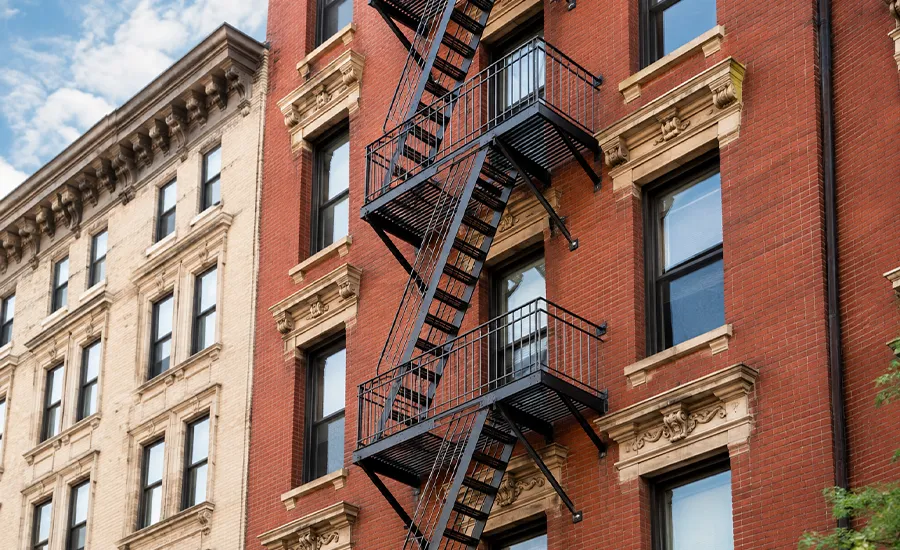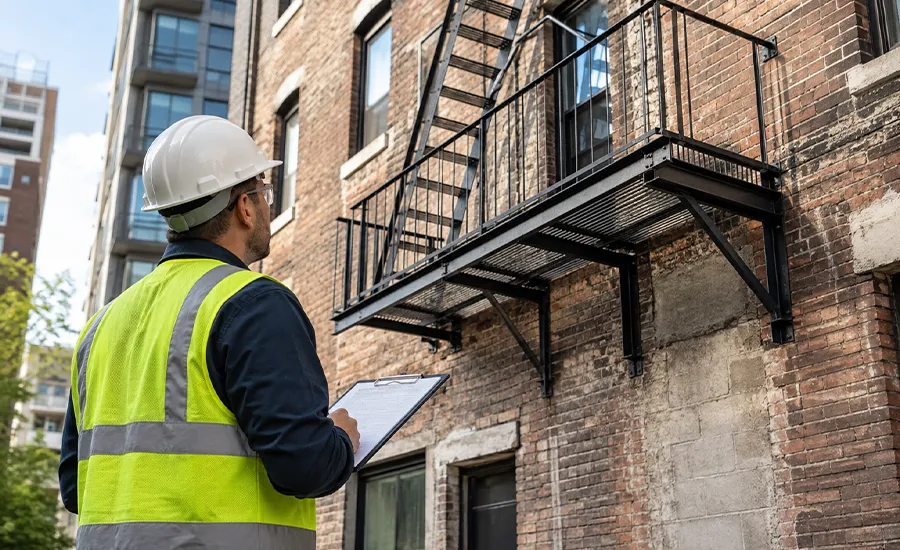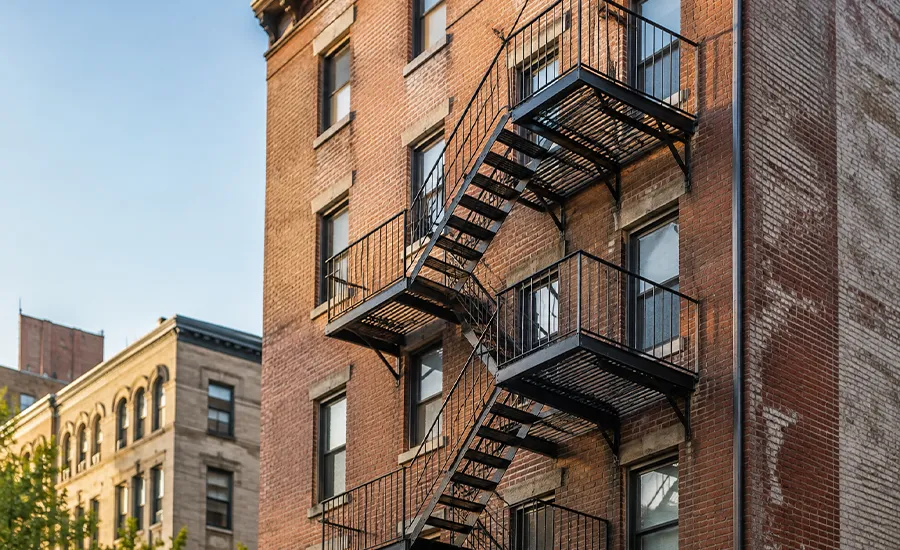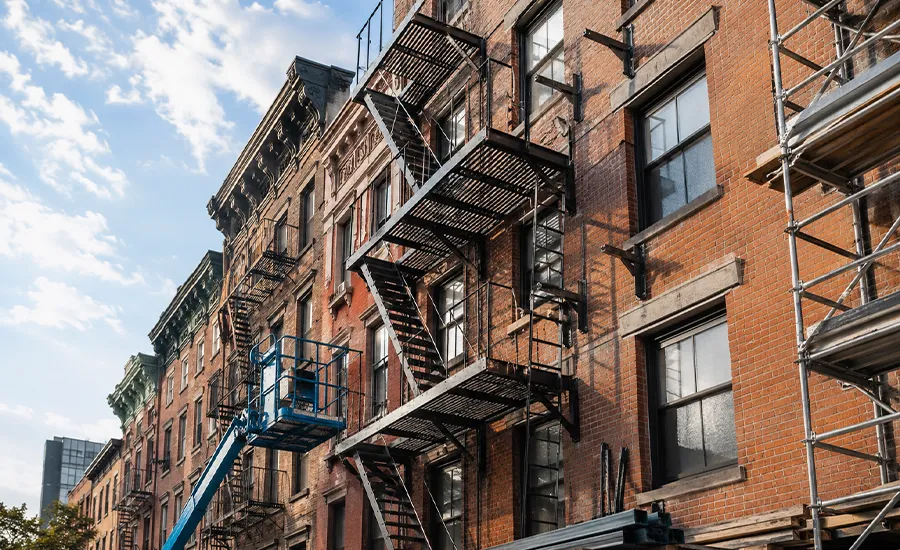

 ChatGPT
 Perplexity
 Google AI
 Claude
As a long-standing safety feature, a fire escape is an exterior emergency exit system that helps occupants leave a building when interior routes become unsafe. However, simply having a fire escape on a building does not automatically mean it meets NYC safety and compliance expectations.
A fire escape can become non-compliant when access is blocked, structural parts are damaged, corrosion weakens metal components, railings are missing, connections loosen, or unapproved changes affect safe use. For NYC property owners, identifying these issues early can help reduce safety risks, violations, repair costs, and liability concerns.
This blog explains the most common reasons fire escapes become non-compliant in NYC and what property owners should watch for before minor defects turn into larger safety or code problems.
- Ο Fire escapes can become non-compliant when access, structure, or safety components fail.
- Ο Severe rust, loose connections, missing parts, and blocked exits are common issues.
- Ο Unapproved changes can affect fire escape safety and create compliance concerns.
- Ο Regular inspections help identify defects before they become major problems.
- Ο Ongoing maintenance helps keep fire escapes safer, accessible, and code-conscious.
- Ο Property owners should correct unsafe conditions before they lead to violations.
Why Fire Escape Compliance Matters in NYC
Fire escape compliance matters because exterior fire escapes are meant to support emergency evacuation when interior exits are unsafe. If deterioration, obstruction, or poor maintenance is ignored, the system may not provide safe egress when occupants need it most.
Maintaining compliance helps:
- Safeguard occupants during emergencies
- Reduce accident and injury risks
- Protect the structural integrity of the fire escape
- Prevent avoidable enforcement issues
- Reduce legal liability exposure
- Support safer building conditions
Property owners should also understand how non-compliance connects to the broader fire escape system in NYC. Issues like corrosion, blocked access, or missing components often relate to how fire escapes are designed, installed, and maintained over time. For a clearer understanding of how these elements work together, it helps to review the overall NYC fire escape types, installation, laws, and safety. Additionally, learning about NYC fire escape laws, codes, and compliance can give property owners better insight into how maintenance, inspections, and safety expectations are tied to compliance.
Common Reasons Fire Escapes Become Non-Compliant in NYC
There are several reasons a fire escape can become non-compliant. In many NYC buildings, problems develop gradually because the structure is exposed to rain, snow, humidity, pollution, freeze-thaw cycles, and years of wear. Structural concerns, access restrictions, missing components, and unapproved modifications can all create compliance problems.
Property owners should first understand fire escape requirements for NYC buildings, because a fire escape must remain accessible, stable, and usable if it is part of the building’s emergency exit system. Owners should also review NYC fire escape code requirements for property owners to understand how access, structure, inspections, and maintenance relate to compliance.
1. Widespread Fire Escape Corrosion and Rust Damage
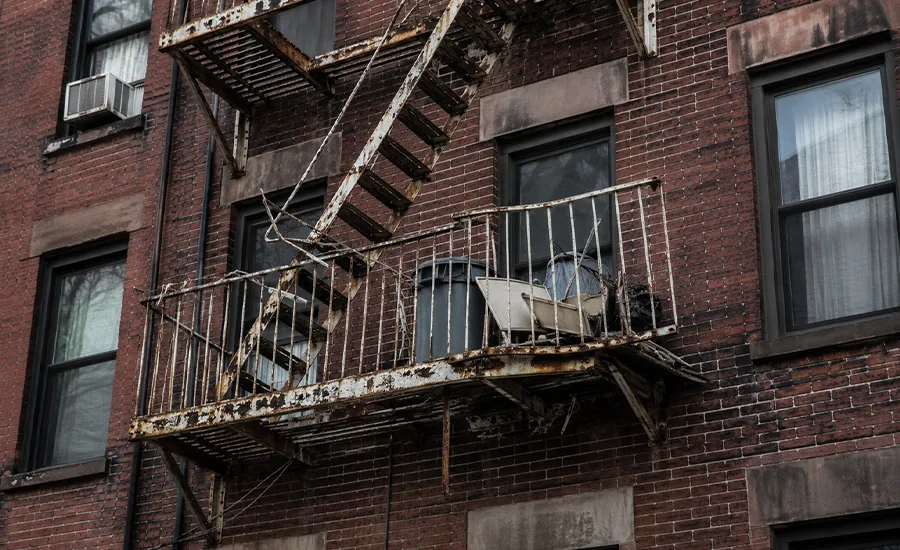
Corrosion is one of the most common reasons fire escapes become unsafe or non-compliant in NYC. Since fire escapes are constantly exposed to rain, snow, moisture, and pollution, metal components can gradually weaken.
Signs of corrosion include:
- Peeling metal surfaces
- Surface rust
- Section loss
- Weak connections
- Rust around brackets, stairs, or platforms
When corrosion is visible, timely fire escape repair in NYC can help correct affected areas before the issue becomes more serious.
2. Compromised Fire Escape Connections and Anchors
Every fire escape relies on bolts, brackets, welds, anchors, and attachment points to remain secure. Over time, these connections can loosen, crack, corrode, or pull away from the building.
Common connection issues include:
- Missing bolts
- Loose fasteners
- Broken welds
- Corroded anchors
- Weak attachment points
If cracked joints, weakened brackets, or unstable metal connections are present, fire escape welding in NYC may be needed to restore safer support.
3. Fire Escape Structural Deterioration
Structural components such as stairs, landings, railings, stringers, platforms, and support brackets must remain stable and usable. If these components bend, crack, sag, or deteriorate, the fire escape may no longer support safe emergency movement.
Examples of structural defects include:
- Bent steel members
- Fractured components
- Sagging platforms
- Damaged stair treads
- Incomplete structural assemblies
A deteriorated fire escape should be reviewed before occupants, tenants, or contractors rely on it during an emergency.
4. Missing or Damaged Fire Escape Railings
Guardrails and handrails help reduce fall risks and support safer movement across platforms and stairs. A fire escape may become non-compliant when safety barriers are missing, unstable, or damaged.
Common railing issues include:
- Missing safety railings
- Compromised guardrails
- Corroded railing sections
- Removed safety barriers
- Loose or unstable handrails
Missing or damaged railings should be corrected promptly because they directly affect occupant safety.
5. Blocked Fire Escape Exit Points and Access Routes
A fire escape must remain accessible at all times. Even if the structure is strong, blocked access can create a serious compliance issue because occupants may not be able to reach or use the system during an emergency.
Common access problems include:
- Windows that do not open
- Security gates are blocking access
- Obstructed pathways
- Stored items on platforms
- Accumulated debris
Owners should understand whether fire escapes are required on NYC buildings before treating an existing exterior escape as unused or optional. If it remains part of the approved exit system, blocked access can create a major safety concern.
How Poor Maintenance Causes Fire Escape Non-Compliance
Neglected maintenance is one of the main reasons fire escapes fall out of compliance. Poor upkeep allows rust, coating failure, loose connections, blocked access, and structural deterioration to develop over time.
Ongoing maintenance and routine inspections help property owners monitor weakened areas and arrange corrective work before conditions become expensive or unsafe.
Property owners should understand NYC landlord fire escape maintenance responsibilities, especially when tenants, managers, or inspectors report unsafe conditions. A planned fire escape maintenance in NYC schedule can help manage corrosion, blocked access, coating failure, and loose components.
1. Failing Fire Escape Paint and Surface Coatings
Protective coatings help shield metal surfaces from moisture and corrosion. When paint separates, flakes, or wears away, exposed metal becomes more vulnerable to rust.
A fire escape may become vulnerable when:
- Paint is peeling
- Metal surfaces are exposed
- Older coatings are failing
- Rust is spreading beneath the coating
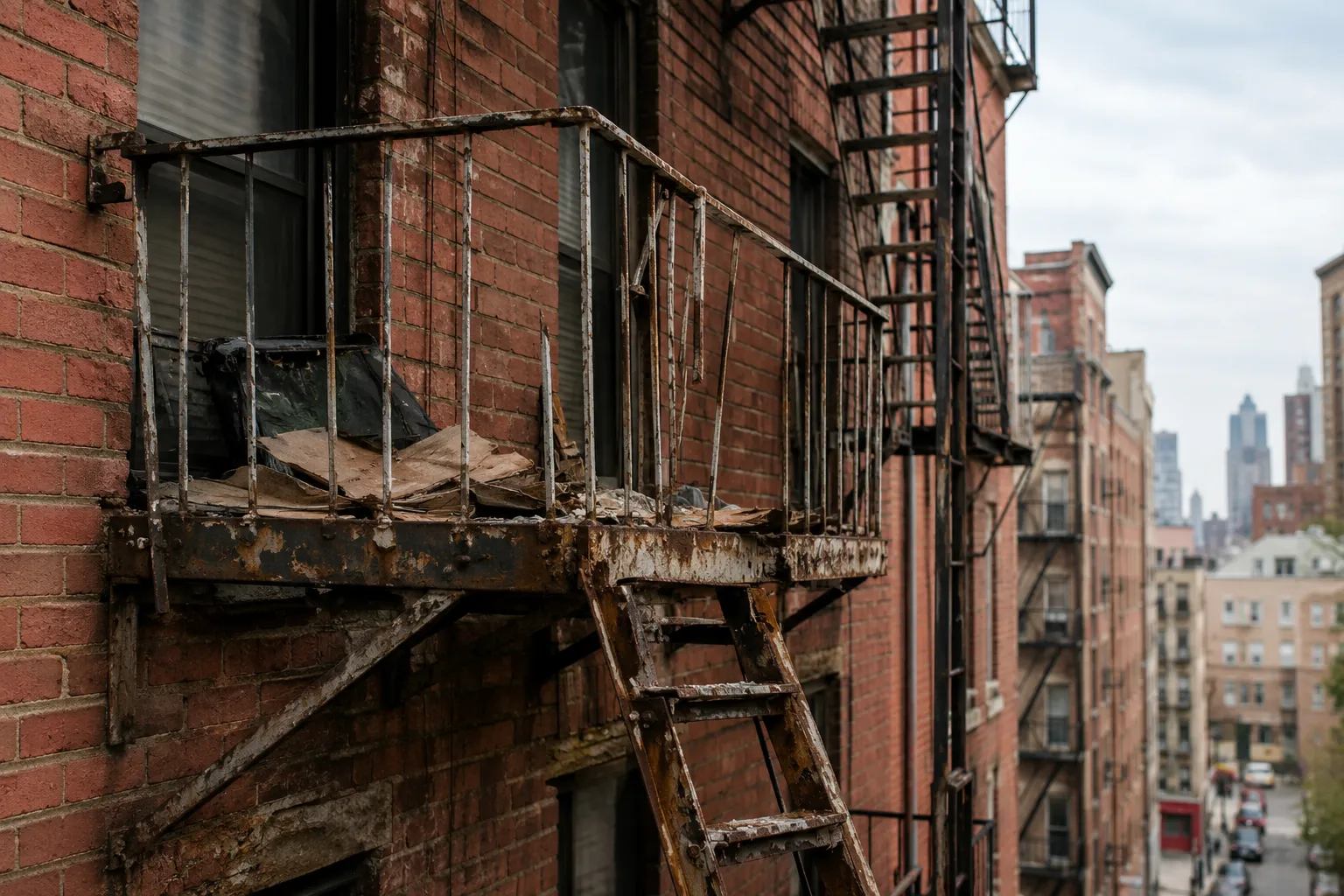
A proper fire escape painting in NYC approach can help slow moisture-related rust and support longer service life. Property owners should also know why ignoring fire escape maintenance during NYC winters can turn minor rust or coating failure into larger compliance concerns.
2. Incomplete Fire Escape Inspection Protocols
Routine inspections help identify developing issues before they become safety hazards. Without regular evaluations, property owners may overlook hidden defects or assume a fire escape is safe based only on appearance.
Without proper inspections, owners may miss:
- Concealed corrosion
- Structural vulnerabilities
- Attachment failures
- New safety concerns
- Blocked access points
A professional fire escape inspection in NYC can help identify visible rust, damaged stairs, loose railings, weak connections, and access problems before they become more serious.
Fire Escape Compliance Challenges for NYC Property Owners
Compliance challenges often begin when fire escapes no longer meet expected safety, access, or structural conditions. Non-permitted changes, postponed maintenance, missing components, and a lack of corrective action can all contribute to non-compliance.
These problems can affect both occupant safety and owner responsibility. In many cases, a visible defect may start as a safety concern before it becomes a formal violation.
Property owners should understand the difference between fire escape safety issues and code violations, because not every issue begins the same way, but serious conditions should never be ignored.
1. Unapproved Fire Escape Changes
Modifying a fire escape without proper planning or approvals can create compliance issues. Even minor changes can affect emergency access, structural performance, or safe movement.
Examples include:
- Removing components
- Altering stairs
- Changing structural supports
- Installing incompatible materials
- Modifying railings improperly
Before making changes, owners should understand when they can remove or alter a fire escape in NYC. Unauthorized changes may affect safety, approvals, and future corrective work.
2. Missing Fire Escape Components
Every component of a fire escape system serves a purpose. Missing or incomplete elements can affect safety and usability, especially during emergencies.
Missing elements may include:
- Handrails
- Guardrails
- Bracing components
- Ladder sections
- Bolts or fasteners
Incomplete systems can compromise safety and functionality.
3. Documented Hazardous Fire Escape Conditions
Professional inspections may uncover hazardous conditions that require immediate attention. These issues often become more serious when they affect structural stability, access, or emergency use.
Hazardous conditions may include:
- Severe corrosion
- Structural instability
- Unsafe anchorage
- Potential collapse risks
- Unsafe platforms or stairs
When serious defects are discovered, corrective action is typically necessary to restore safer conditions. Owners should also understand what happens when a fire escape violates NYC building codes, because delays can increase repair scope, documentation needs, and compliance pressure.
Potential Outcomes of a Non-Compliant Fire Escape in NYC
A non-compliant fire escape can create serious consequences for both occupants and property owners. When access, structure, or safety components are compromised, the system may not perform properly during an emergency.
Non-compliance can lead to safety risks, corrective action, repair costs, liability concerns, and reduced confidence in the building’s overall condition.
1. Occupant Safety Hazards
The main concern is life safety. A deteriorated fire escape may not support safe movement during an emergency, which can increase the risk of injury.
2. Regulatory Action and Corrective Work
Unsafe or hazardous conditions may require corrective work. When problems are documented, property owners may need to respond with inspections, repairs, and proof of corrective action.
3. Increased Legal Responsibility for Owners
Property owners may face legal or financial exposure if poor maintenance contributes to injuries, unsafe conditions, or property damage. Responsibility can depend on ownership, management duties, lease terms, and the type of issue, so owners should understand who is responsible for fire escape violations in NYC before delaying corrective work.
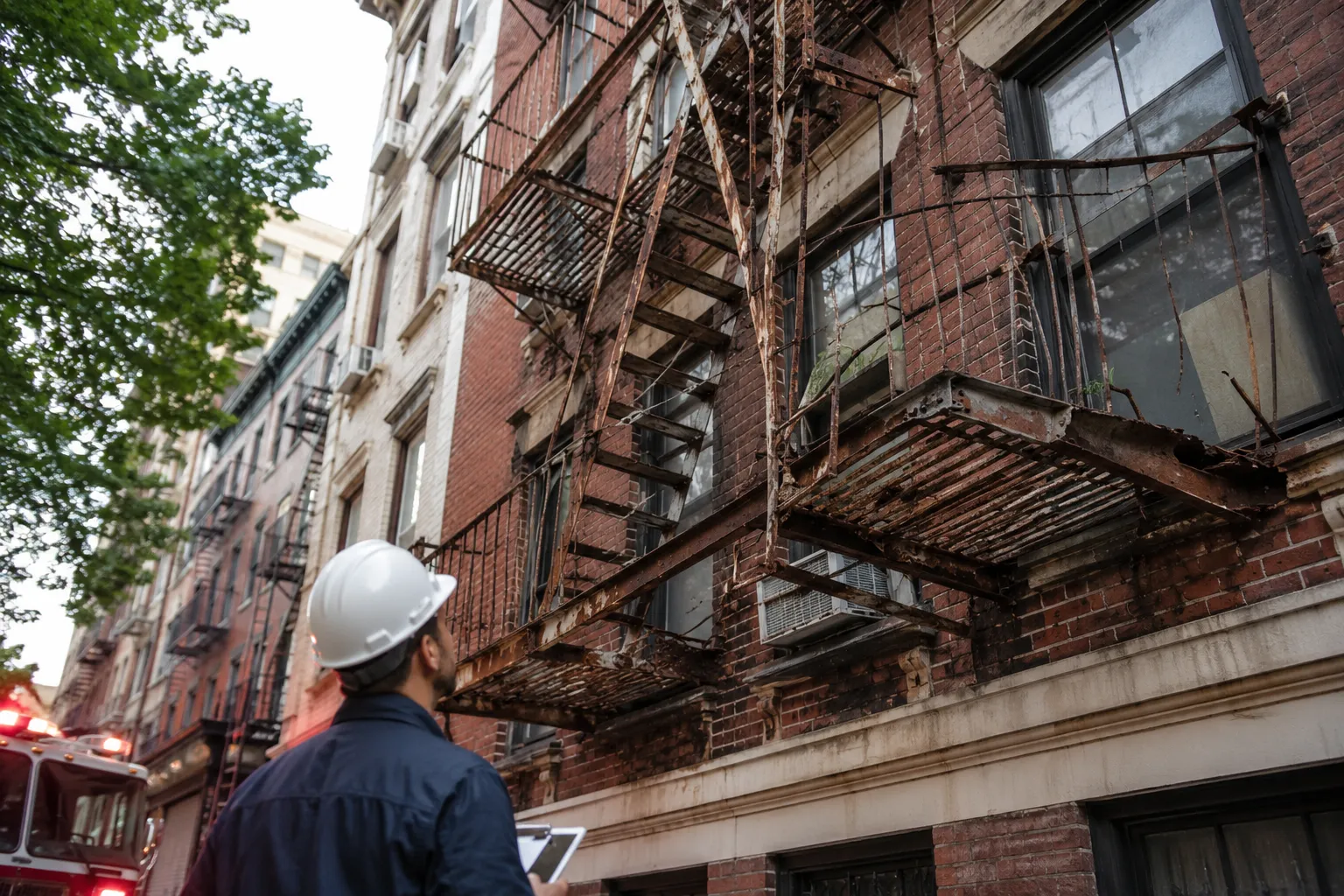
4. Higher Fire Escape Repair and Restoration Costs
Neglected maintenance often allows deterioration to spread. Small repairs can turn into larger restoration needs when rust, damaged platforms, loose railings, and weak connections are left uncorrected.
For older or historic buildings, fire escape restoration in NYC may be needed when the system requires deeper structural correction. If the work is focused on surface renewal, coating improvement, and limited component correction, fire escape refurbishment in NYC can help improve usable condition without unnecessary replacement.
5. Lower Building Condition and Property Value
Visible deterioration and unresolved safety concerns can affect the overall condition and exterior appearance of the building. A poorly maintained fire escape may also raise concerns during property reviews, inspections, or transactions.
Final Thoughts on Fire Escape Non-Compliance in NYC
The effectiveness of a fire escape depends on accessibility, structural soundness, regular inspection, and proper maintenance. By addressing corrosion, blocked access, missing components, loose railings, and damaged connections early, NYC property owners can reduce the risk of violations, expensive repairs, and unsafe emergency conditions.
Sardar Restoration Corp supports residential, commercial, mixed-use, and historic properties across NYC, including the Bronx, Manhattan, Brooklyn, Queens, Westchester, and nearby areas. If your property has rust, loose railings, blocked access, missing components, damaged platforms, cracked welds, or non-compliant fire escape conditions, a trusted fire escape contractor in NYC can help correct issues before they become larger safety risks.
Contact Sardar Restoration Corp today at (+1) 917-355-8556 or sardarrestoration@gmail.com, or visit us at 2770 Fish Ave, Bronx, NY 10469, United States.
FAQs
How can I tell if a fire escape is unsafe?
Common signs of an unsafe fire escape include severe rust, loose railings, missing bolts, sagging platforms, cracked welds, blocked access, and unstable structural components.
What is a fire escape?
A fire escape is an exterior emergency exit system that helps occupants leave a building when interior routes become unsafe. For a simple overview, property owners can review what a fire escape is before checking compliance issues.
Can rust automatically make a fire escape in NYC non-compliant?
Not always. Surface rust may be manageable with maintenance, but severe corrosion that weakens stairs, platforms, railings, anchors, or brackets can create safety and compliance concerns.
Why must fire escape pathways remain clear?
Fire escape pathways must remain clear because blocked windows, stored items, locked access points, or accumulated debris can delay evacuation and prevent safe emergency use.
Can tenants sit on a fire escape in NYC?
A fire escape should not be used as an outdoor living space, seating, or storage. Property owners and tenants should understand whether sitting on a fire escape in NYC is allowed because misuse can create access and safety concerns.
How often should fire escapes be inspected in NYC?
Fire escapes should be checked regularly and professionally inspected when visible rust, loose parts, damaged platforms, blocked access, or structural movement appears.
Can missing railings create compliance issues?
Yes. Damaged or missing guardrails and handrails increase fall risk and may create unsafe conditions that require corrective action.
Can unapproved changes make a fire escape non-compliant?
Yes. Removing parts, changing stairs, modifying railings, enclosing access, or altering structural supports without proper review can create safety and compliance problems.
What should property owners do if a fire escape looks non-compliant?
Property owners should keep access clear, avoid unauthorized changes, document visible issues, and arrange a professional fire escape inspection before defects worsen.
Can a blocked fire escape lead to a violation?
Yes. Blocked windows, stored items, locked access points, or debris can prevent emergency use and may lead to safety concerns, corrective action, or violations.