
 ChatGPT
 Perplexity
 Google AI
 Claude
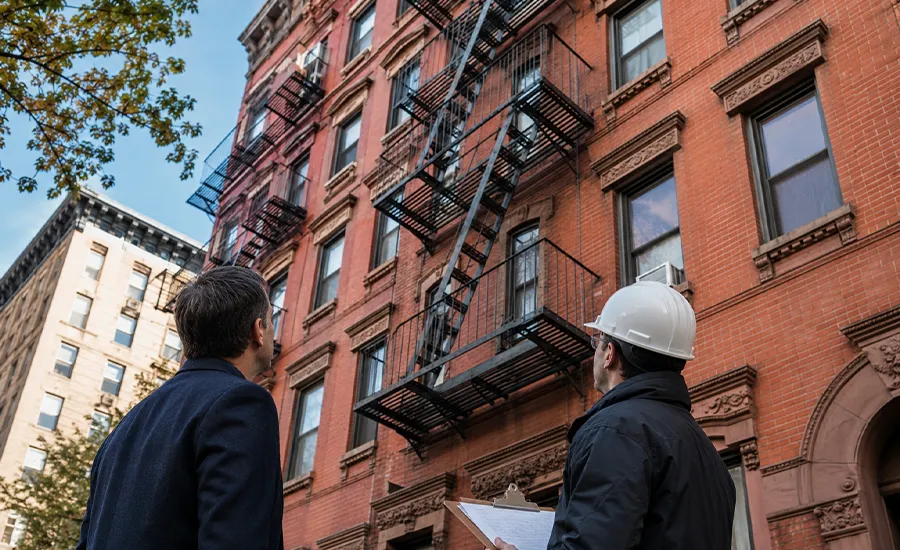
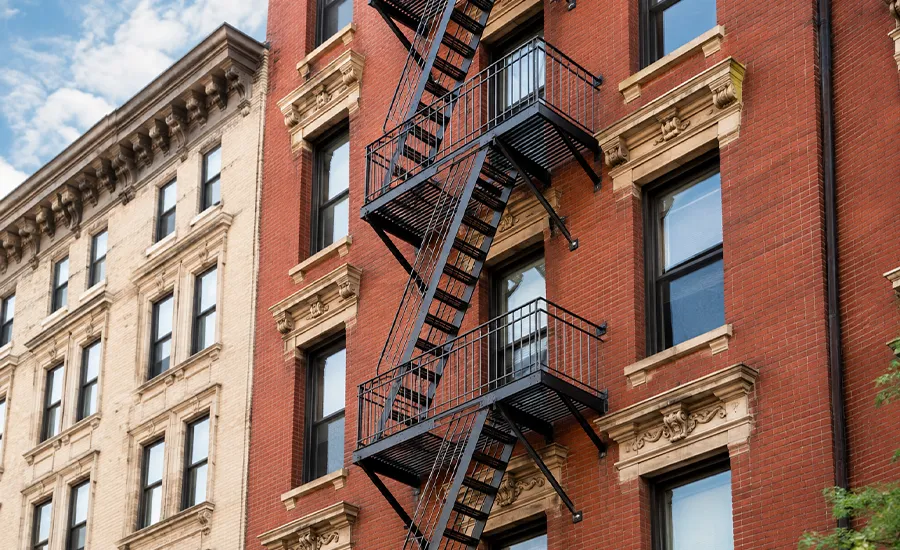
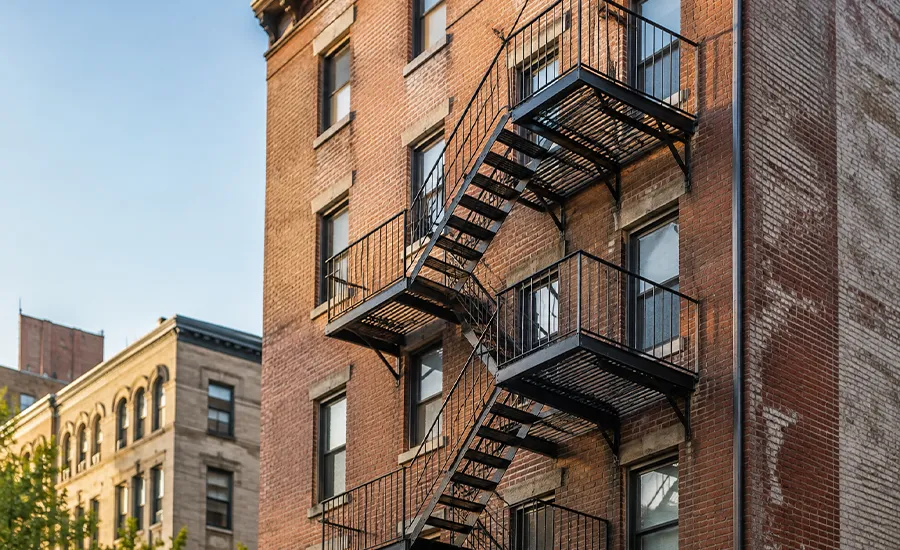
Fire escapes are one of the most recognizable life-safety features on older New York City buildings. While modern buildings often rely on enclosed stairwells, sprinkler systems, alarms, and protected interior exits, many older residential, commercial, mixed-use, and historic properties still depend on exterior fire escapes as part of their emergency exit system.
For NYC property owners, the fire escape code is not only about avoiding violations. It is about keeping the structure safe, stable, accessible, maintained, and ready for emergency use. A rusted, blocked, loose, damaged, or poorly maintained fire escape can create safety concerns, repair costs, and code-related problems.
This blog explains what property owners should know about the NYC fire escape code, including owner responsibilities, inspections, seasonal risks, maintenance, restoration work, historic building concerns, and practical safety measures.
- Ο NYC fire escape code focuses on safe access, structure, maintenance, and emergency use.
- Ο Existing fire escapes must remain clear, stable, functional, and properly maintained.
- Ο Property owners are responsible for correcting unsafe fire escape conditions.
- Ο Rust, blocked access, loose railings, and weak connections can create code concerns.
- Ο Inspections and repair records help owners stay ahead of violations.
- Ο Fire escape alterations, removal, or replacement may require proper review.
The Role of Fire Escape Code Compliance in NYC Occupant Safety
Fire escape code compliance matters because exterior fire escapes are part of a building’s emergency egress planning. When interior exits become unsafe due to fire, smoke, or another emergency condition, an existing fire escape may provide a secondary path out of the building.
Property owners managing older exterior systems should also be familiar with NYC fire escape types, installation, laws, and safety. For a clearer understanding of legal responsibilities, maintenance standards, inspection expectations, and violation risks, refer to NYC fire escape laws, codes, and compliance.
Owners should also understand fire escape requirements for NYC buildings, because code compliance starts with knowing whether an existing fire escape must remain available, accessible, and safe for emergency use.
| Fire Escape Code Priority | Why It Matters for NYC Owners |
|---|---|
| Emergency access | Keeps exit routes usable during emergencies |
| Structural stability | Reduces risks from weak or deteriorated components |
| Clear pathways | Prevents blocked evacuation routes |
| Ongoing maintenance | Helps reduce unsafe conditions and violations |
| Professional repair planning | Supports safer corrective work |
What Are the Fire Escape Responsibilities of NYC Property Owners?
Many newer buildings are constructed with protected interior exits and modern fire safety systems, but older structures throughout NYC may still rely on exterior fire escapes. When a fire escape is part of the building’s emergency exit system, property owners have an ongoing responsibility to keep it safe, accessible, and functional.
Owners should also review whether fire escapes are required on NYC buildings before assuming an exterior system can be ignored, removed, enclosed, or altered. If the fire escape remains part of the approved egress system, it should be maintained as a life-safety feature.
Every NYC property owner should focus on the following responsibilities.
1. Routine Fire Escape Inspections
Routine observations can help identify:
- Visible rust
- Structural movement
- Loose components
- Damaged railings
- Missing hardware
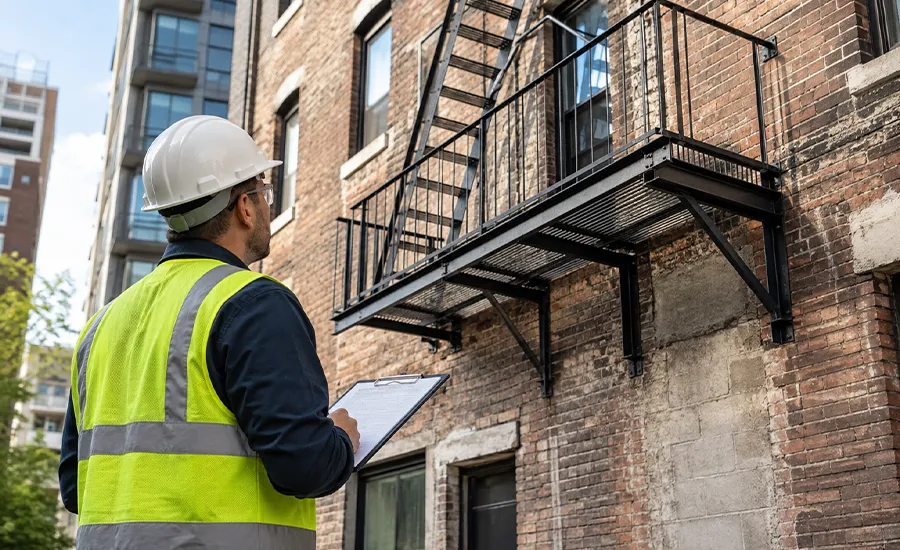
A professional fire escape inspection in NYC can help review visible rust, movement, unstable railings, blocked access, weak connections, and damaged walking surfaces before issues become more serious.
Early detection often reduces repair costs and helps prevent more extensive corrective work.
2. Prompt Fire Escape Repairs
Any signs of damage should be addressed promptly by qualified professionals. Delaying repairs can allow deterioration to spread and increase safety risks.
When damage is visible, timely fire escape repair in NYC can help correct unsafe components before they create larger code or compliance concerns. If cracked joints, weakened brackets, or loose metal connections are present, fire escape welding in NYC may be needed to restore safer support.
3. Reliable Fire Escape Access
Property owners should prevent:
- Storage of items on platforms
- Blocked windows leading to fire escapes
- Obstructions around ladders and exits
- Unauthorized alterations
Owners should understand what makes a fire escape non-compliant in NYC, because blocked access, unsafe stairs, rusted components, missing parts, or altered openings can quickly become code concerns.
4. Long-Term Fire Escape Care
Proper maintenance includes:
- Rust removal
- Protective coatings
- Component replacement
- Structural reinforcement when required
- Periodic condition assessments
Property owners should understand NYC landlord fire escape maintenance responsibilities, especially when tenants, managers, or inspectors report unsafe conditions.
How Seasonal Changes Affect NYC Fire Escapes
New York City’s climate creates year-round challenges for exterior metal fire escapes. Rain, snow, humidity, summer heat, freeze-thaw cycles, and pollution can all affect exposed metal components. Over time, these conditions may contribute to rust, coating failure, loose connections, and structural deterioration.
Seasonal risks should be part of every property owner’s fire escape maintenance plan. Regular seasonal checks help owners keep the system accessible, safer to use, and better prepared for inspections.
The following conditions commonly affect fire escape performance.
1. Rain and Moisture Damage
Water exposure can speed up rust and weaken metal components over time. Moisture often collects around joints, stair treads, platforms, brackets, and wall connections, especially when coatings are already failing.
2. Freeze-Thaw Cycles in NYC Winters
During winter, trapped moisture can freeze and expand, adding stress to metal connections, masonry contact points, and weakened surfaces. This can make existing rust or loose components worse.
For older residential properties, winter fire escape inspections for NYC landlords can help identify ice-related access issues, coating failure, loose parts, and rust before winter conditions make problems harder to correct.
3. City Pollution and Surface Wear
Airborne pollutants can slowly break down protective coatings and speed up oxidation. This is especially common on exterior metal systems exposed to traffic, moisture, and long-term weathering.
4. Heat, Expansion, and Structural Movement
Seasonal temperature changes can cause expansion and contraction. Over time, movement may affect welds, brackets, fasteners, and older connection points.
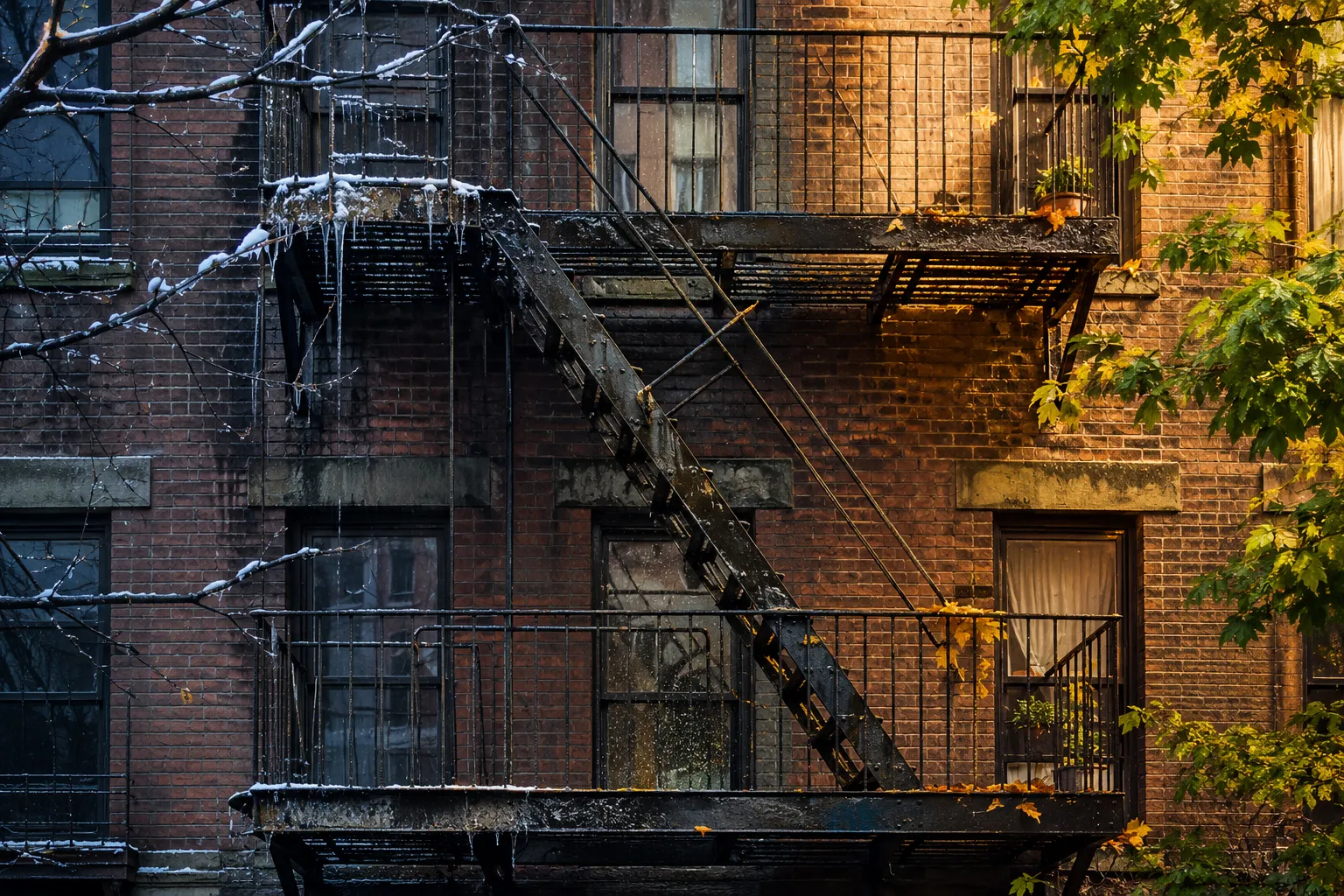
Property owners should also understand why ignoring fire escape maintenance during NYC winters can turn minor rust, blocked access, or coating failure into larger repair and compliance concerns.
How to Keep a Fire Escape Inspection-Ready in NYC
Regular inspections help determine whether a fire escape remains structurally stable, accessible, and ready for emergency use. Property owners who plan inspections and maintenance early can reduce surprise repair costs, improve safety, and avoid letting small defects become larger code problems.
A professional assessment helps confirm whether fire escapes remain usable, unobstructed, and safe enough for their intended emergency function.
1. Fire Escape Components
Inspectors may assess:
- Platforms
- Stairs
- Railings
- Support brackets
- Connections
- Fasteners
Owners who want to understand how layout affects inspection concerns can review the different types of fire escapes used in NYC buildings, because balcony-style systems, rear-yard escapes, ladder-connected systems, and platform-and-stair layouts may have different access and repair issues.
2. Rust Severity
The extent of rust and metal deterioration should be carefully reviewed. Small surface rust may be manageable, but severe corrosion around load-bearing areas, railings, stairs, or brackets can create safety concerns.
3. Structural Stability
Inspectors should check whether the fire escape remains secure and properly attached to the building. Movement, loose fasteners, cracked welds, and damaged brackets should not be ignored.
4. Emergency Access
Emergency access routes must remain functional and unobstructed. Windows, doors, ladders, platforms, and discharge routes should be usable without unnecessary delay.
5. General Fire Escape Safety
The entire fire escape system should be evaluated for risks that affect emergency use. This includes checking walking surfaces, railings, ladders, wall connections, coatings, and signs of deterioration.
| Fire Escape Inspection Area | What Property Owners Should Review |
|---|---|
| Platforms and stairs | Stability, surface damage, and safe movement |
| Railings and guards | Secure support and fall protection |
| Anchors and brackets | Firm connection to the building |
| Ladders and access points | Emergency operation and clearance |
| Coatings and rust | Surface protection and corrosion control |
Fire Escape Restoration Work and Code Compliance in NYC
A fire escape is an exterior life-safety feature, so ongoing exposure can lead to rust, coating failure, weakened joints, and structural wear. When deterioration is identified, repairs should be completed by experienced professionals familiar with NYC fire escape systems.
For older and historic buildings, restoration work can help preserve the existing system while improving safety and usability. The goal is not only to improve appearance, but to help the fire escape remain stable, accessible, and ready for emergency use.
1. Corrosion Removal
Corroded areas are cleaned and treated to help slow further deterioration. Rust control is especially important around joints, railings, stairs, platforms, brackets, and wall connections.
2. Metal Repair and Replacement
Damaged metal sections may need repair or replacement using suitable components. Where older fire escapes have weakened over time, fire escape restoration in NYC may be appropriate for deeper corrective work.
3. Welding Repairs
Cracked or weakened welds can affect structural stability. Welding repairs may be needed when joints, brackets, or metal connections show visible weakness.
4. Railing Restoration
Loose or damaged railings should be strengthened or reconstructed to improve safety and reduce fall risks.
5. Stair and Platform Repairs
Worn treads and damaged walking surfaces should be repaired to support safer emergency movement.
6. Protective Surface Treatment
Specialized coatings help protect metal surfaces from water intrusion and oxidation. A planned fire escape painting in NYC approach can help slow moisture-related rust and support longer service life.
If the project is focused on surface renewal, coating improvement, and limited component correction, fire escape refurbishment in NYC can help improve usable condition without unnecessary replacement.
What Challenges Do Historic NYC Building Owners Face?
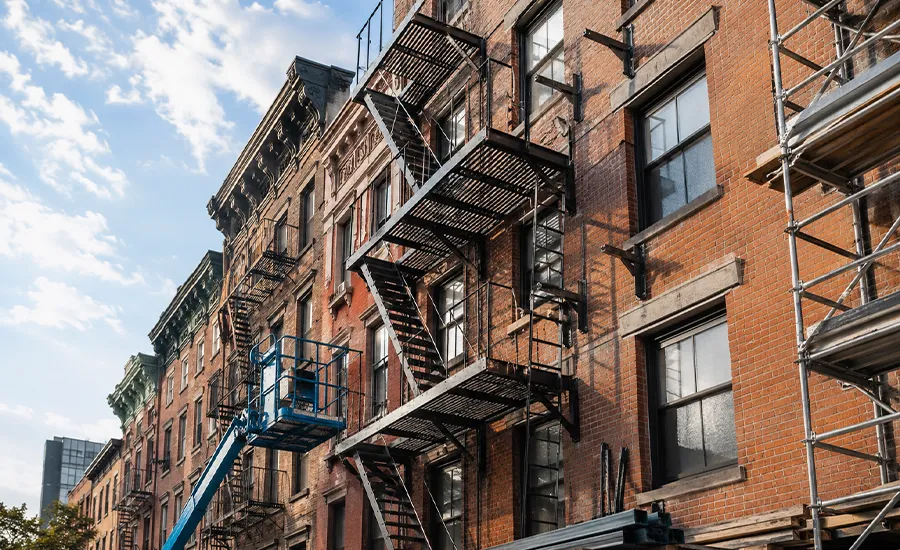
Many NYC fire escapes are attached to historic, landmarked, or older masonry buildings. These properties often require extra care because owners may need to balance fire escape safety, code compliance, and exterior preservation.
Historic building owners should avoid making quick changes without proper review. The fire escape may affect exterior character, masonry attachment points, approved egress, and preservation-sensitive repairs.
Property owners of historic buildings in NYC should focus on:
- Protecting traditional architectural features
- Preserving historic exterior appearance
- Using suitable repair techniques
- Maintaining safety while respecting building character
Proper planning helps maintain both compliance and architectural integrity.
Before changing an existing exterior system, owners should understand when they can remove or alter a fire escape in NYC. If a replacement system is required, fire escape installation in NYC should be planned around structure, safe discharge, access, approvals, and long-term maintenance.
Best Fire Escape Safety Measures for NYC Property Owners
Maintaining a fire escape should be part of every building’s preventive maintenance plan. Taking action early helps property owners extend service life, reduce violation risk, support code readiness, and keep emergency routes usable.
Property owners can reduce risk by taking the following steps:
- Arrange regular inspections
- Respond to damage promptly
- Treat rust before it spreads
- Keep pathways unobstructed
- Maintain protective coatings
- Record repair history
- Hire qualified fire escape professionals
- Conduct seasonal inspections
- Focus on life-safety concerns
A planned fire escape maintenance in NYC schedule can help owners manage corrosion, blocked access, coating failure, loose fasteners, and early repair needs.
Owners should also understand the next steps when a fire escape violates NYC building codes, because delaying corrective work can increase repair scope, documentation needs, and compliance pressure. A visible defect does not always begin as a formal violation, but it can become one when it affects safe use, structure, or emergency access.
Final Thoughts on NYC Fire Escape Code
Understanding NYC fire escape code helps property owners keep exterior escape systems safe, accessible, and ready for emergency use. Code readiness depends on clear access, stable components, regular inspections, timely repairs, protective coatings, and responsible long-term maintenance.
Sardar Restoration Corp supports residential, commercial, mixed-use, and historic properties across NYC, including the Bronx, Manhattan, Brooklyn, Queens, Westchester, and nearby areas. If your property has rust, loose railings, blocked access, damaged platforms, cracked welds, or code-related fire escape concerns, a trusted fire escape contractor in NYC can help address issues before they become larger safety risks.
Contact Sardar Restoration Corp today at (+1) 917-355-8556 or sardarrestoration@gmail.com, or visit us at 2770 Fish Ave, Bronx, NY 10469, United States.
FAQs
What is NYC fire escape code?
NYC fire escape code generally refers to the safety, access, structural, inspection, and maintenance expectations that apply to existing fire escapes on NYC buildings.
What is a fire escape on an NYC building?
A fire escape is an exterior emergency exit system that may help occupants leave a building when interior routes become unsafe. Owners who need the basics can review what a fire escape is before checking code responsibilities.
Who is responsible for fire escape code compliance in NYC?
Property owners or responsible managing parties are generally responsible for keeping existing fire escapes safe, accessible, maintained, and ready for emergency use.
Who is responsible for fire escape violations in NYC?
Responsibility usually depends on ownership, management duties, lease terms, and the type of issue. Property owners should understand who is responsible for fire escape violations in NYC before delaying corrective work.
What makes a fire escape a code concern?
A fire escape may become a code concern when it has blocked access, severe rust, loose railings, damaged stairs, missing parts, weak wall connections, or unsafe structural conditions.
Can a blocked fire escape access create a code issue?
Yes. Blocked windows, locked access points, stored items, or obstructed ladders can create a code concern because the fire escape must remain usable during emergencies.
Does rust affect NYC fire escape code compliance?
Yes. Surface rust may be manageable, but severe rust around stairs, railings, platforms, brackets, or wall connections can affect safety and may require repair.
Can a property owner remove an existing fire escape?
A property owner should not remove or alter an existing fire escape without proper review. If it is part of the approved egress system, removal may require permits and an approved alternative exit route.
How often should a fire escape be inspected?
Fire escapes should be checked regularly and professionally inspected when visible rust, loose components, damaged platforms, blocked access, or structural movement appears.
Why should owners hire a fire escape contractor?
A qualified fire escape contractor can inspect visible conditions, identify safety concerns, recommend repairs, and help keep the fire escape usable and code-conscious.