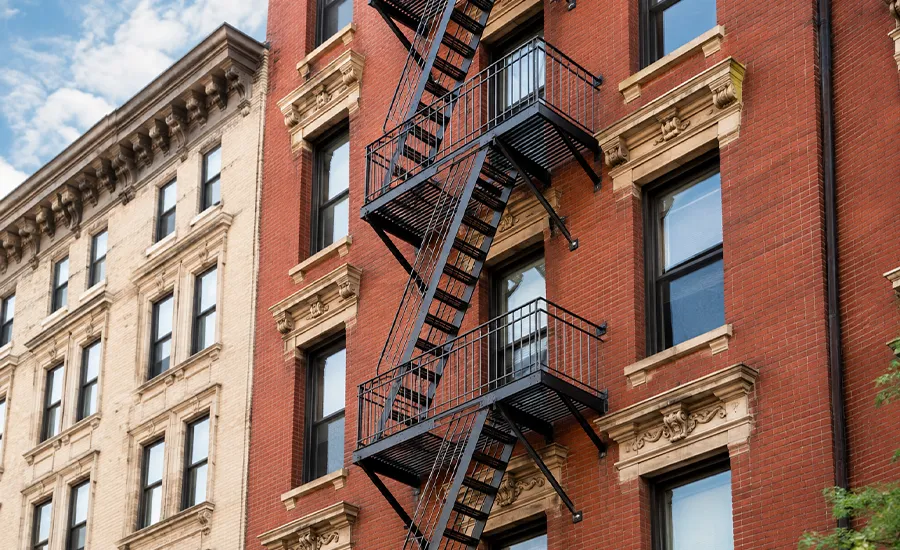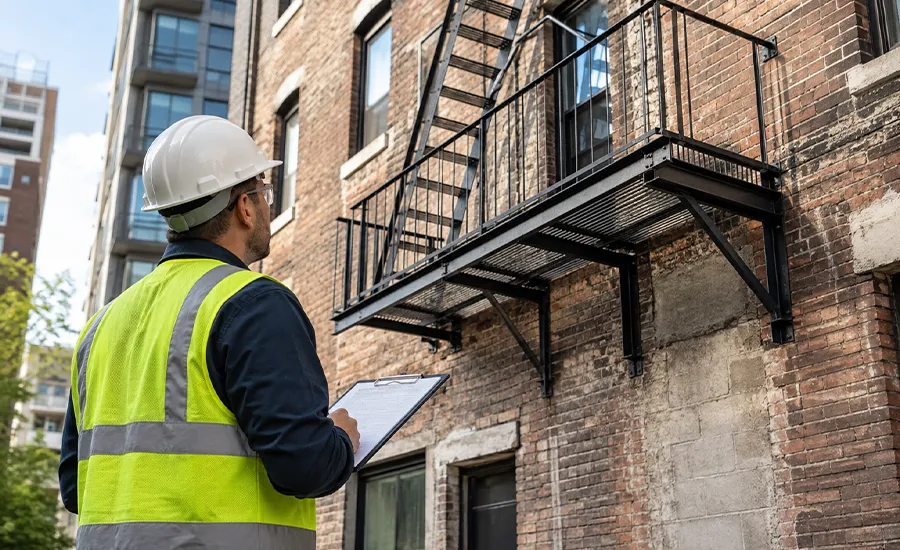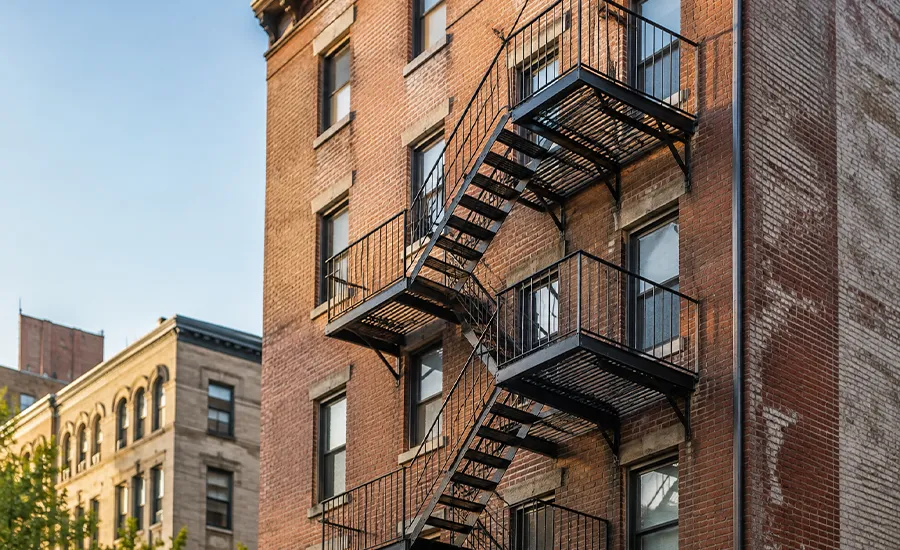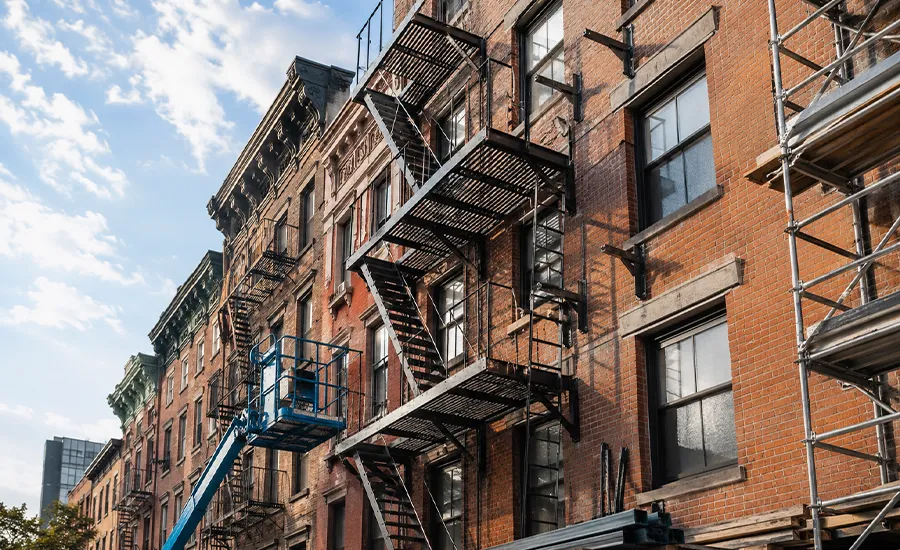

 ChatGPT
 Perplexity
 Google AI
 Claude
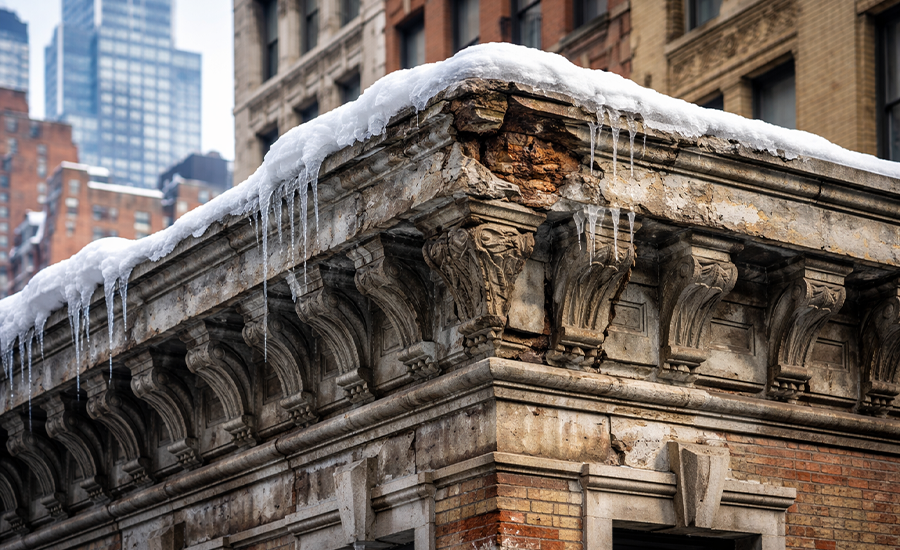
Freeze-thaw cycles are a major cause of cornice damage in NYC buildings, particularly on older residential and commercial properties. When water enters small cracks or mortar joints, and temperatures drop below 32°F, the water freezes and expands, creating internal pressure that gradually weakens masonry and decorative cornice elements.
Because cornices sit at the upper edge of building facades, they are constantly exposed to rain, snow, wind-driven moisture, and rapid winter temperature changes. Over time, repeated freezing and thawing can cause cracks, spalling, loosened decorative pieces, and structural instability if the damage is not addressed early.
This guide explains how freeze-thaw cycles affect building cornices in NYC, why local buildings face greater risk, the warning signs property owners should watch for, and how proper maintenance can help prevent costly façade repairs.
- Ο Freeze-thaw damage occurs when trapped water freezes, expands, and cracks masonry materials.
- Ο Cornices in NYC are highly exposed to winter moisture and rapid temperature swings.
- Ο Early warning signs include hairline cracks, flaking surfaces, rust stains, and loose decorative pieces.
- Ο Ignoring minor damage can lead to spalling, anchor corrosion, and increased risk of falling debris.
- Ο Routine inspections and timely repairs help prevent structural deterioration and costly reconstruction.
What Is a Freeze-Thaw Cycle?
A freeze-thaw cycle occurs when water enters small cracks, joints, or porous building materials and freezes as temperatures drop below 32°F (0°C). When water freezes, it expands by about 9 percent, creating internal pressure inside masonry components such as stone, brick, mortar, and decorative cornice elements commonly used in brickwork in building construction. As temperatures rise, the ice melts and the material contracts again. This repeated expansion and contraction gradually weakens the structure.
A typical freeze-thaw cycle occurs in the following sequence:
- Temperatures drop below 32°F, and moisture inside masonry begins to freeze
- Frozen water expands and increases internal pressure within the material
- Temperatures rise above freezing, and the ice melts
- Melted water moves deeper into cracks, joints, and porous surfaces
- The cycle repeats during the next freezing period
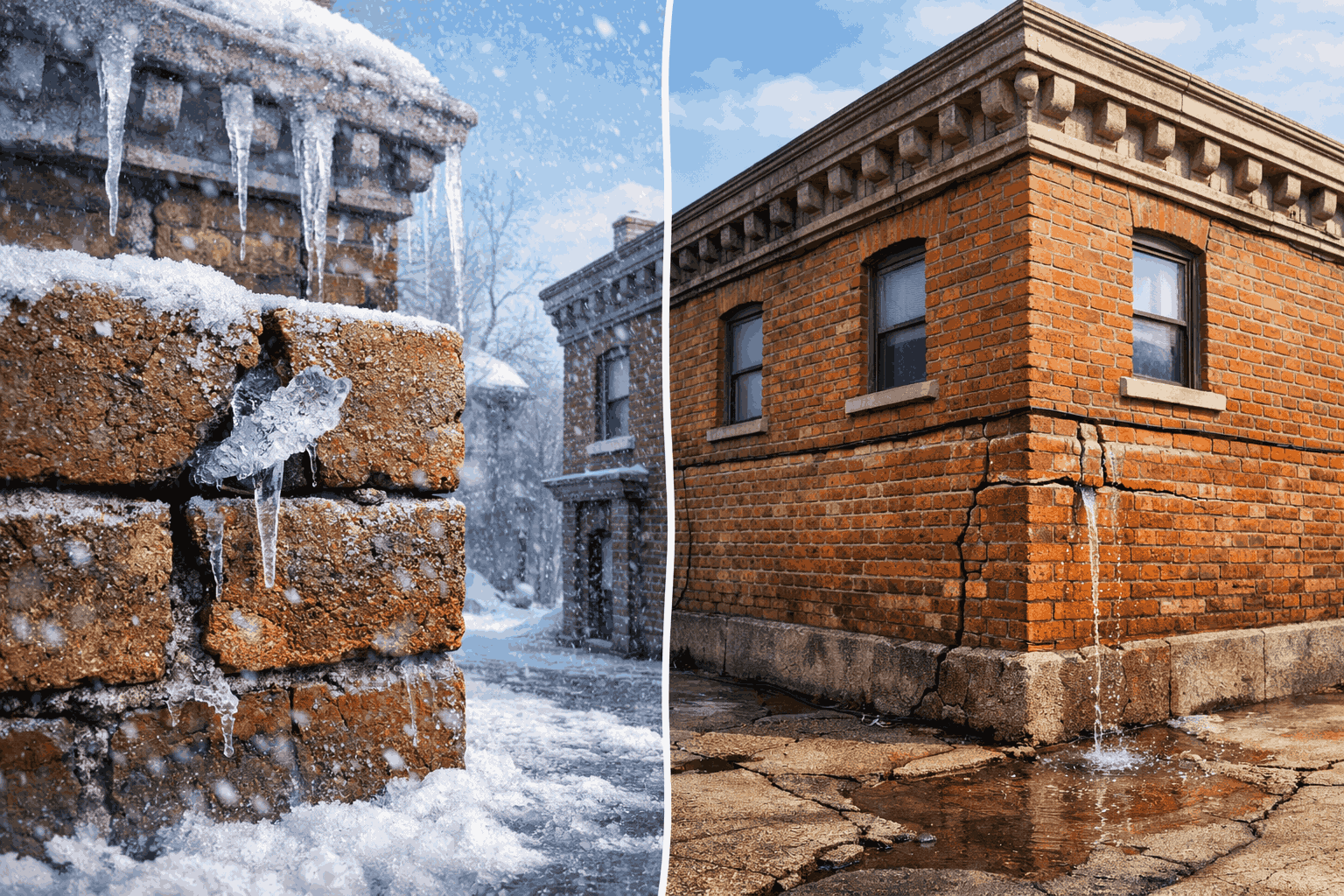
When this process occurs repeatedly during winter, the pressure inside masonry materials increases with every cycle. Over time, this leads to cracking, surface scaling, deterioration of mortar joints, and progressive structural damage. Older masonry buildings are particularly vulnerable because aging mortar joints and existing micro-cracks allow moisture to penetrate deeper into the structure.
Why NYC Buildings Face Higher Risk of Freeze-Thaw Damage
New York City buildings face a higher risk of freeze-thaw damage due to the city’s climate patterns and aging masonry architecture. During winter and early spring, temperatures frequently fluctuate around the freezing point, allowing moisture inside building materials to repeatedly freeze and thaw. These repeated cycles accelerate the deterioration of exposed façade components, such as cornices, which are often part of various types of building facades used across residential and commercial structures in NYC.
Several environmental and structural factors increase the risk of freeze-thaw damage in NYC buildings:
- Frequent temperature swings above and below 32°F
- Heavy winter precipitation, including snow and freezing rain
- Wind-driven moisture exposure along rooflines and facades
- Dense urban shading that slows surface drying
- Large numbers of aging historic masonry buildings
Because cornices are positioned at the upper edge of building facades, they are continuously exposed to moisture, wind, and rapid temperature changes. This constant exposure allows water to penetrate small cracks and joints, increasing the likelihood of freeze-thaw deterioration over time.
Why Cornices Are Highly Vulnerable to Weather Exposure
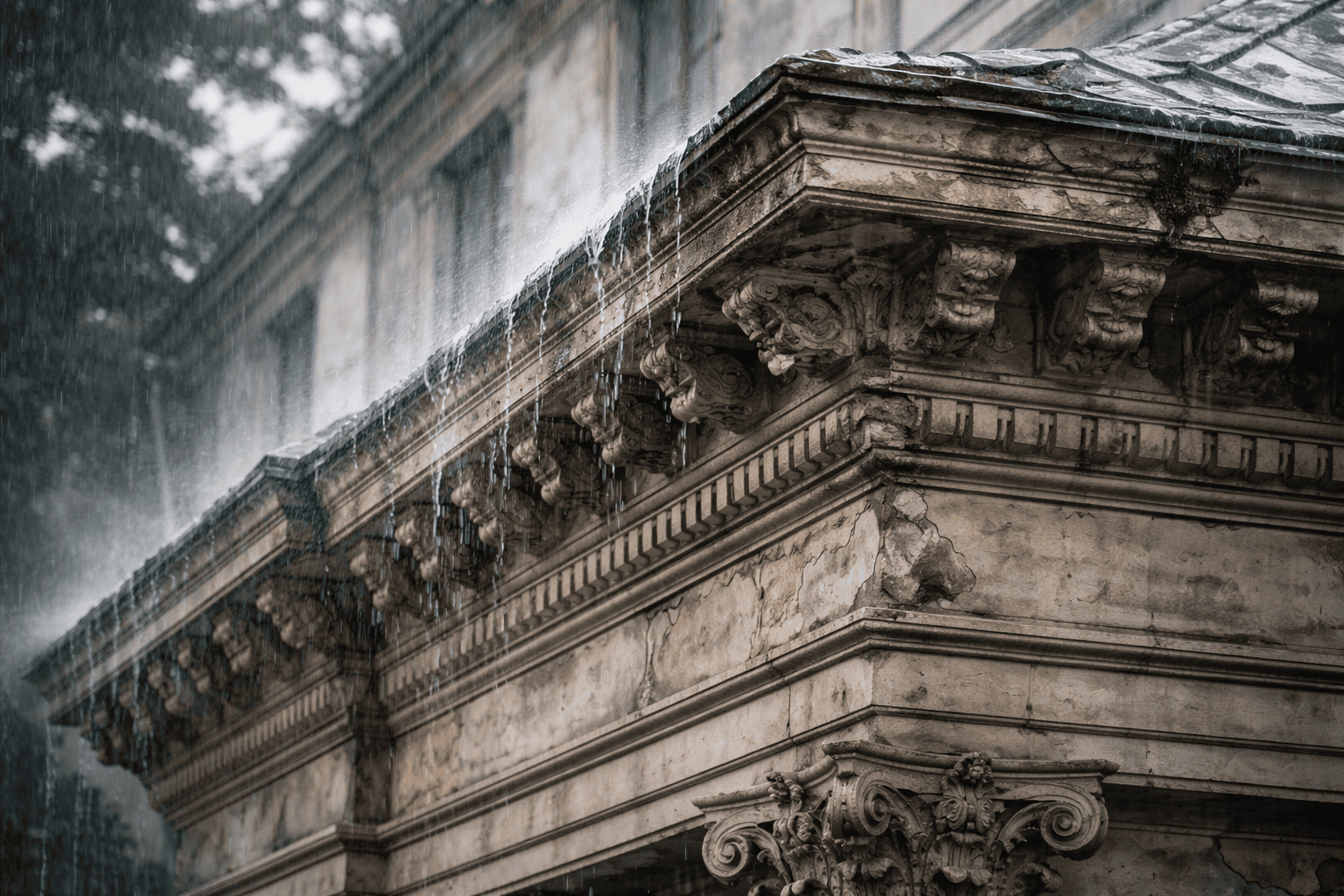
Cornices are among the most exposed architectural features of a building because they sit at the roofline and project outward from the façade. Their decorative shapes and horizontal surfaces allow water to accumulate more easily than on flat masonry walls, increasing the likelihood of moisture penetration.
Several structural characteristics make cornices particularly vulnerable to weather-related damage:
- Horizontal ledges where rainwater and snow collect
- Decorative recesses that trap moisture
- Aging mortar joints that allow water infiltration
- Hidden metal anchors that corrode when exposed to moisture
- Direct exposure to sun, wind, and rapid temperature changes
When moisture enters small cracks or joints in cornice materials and later freezes, internal pressure builds within stone, terra cotta, or concrete components. Over time, this pressure contributes to cracking, spalling, and loosening of decorative cornice elements.
What Are Signs of Freeze-Thaw Cornice Damage?
Freeze-thaw damage often begins with small surface changes that gradually develop into visible structural problems. Because cornices are exposed architectural elements, early deterioration typically appears around joints, decorative bands, and exposed masonry surfaces. Identifying these warning signs early allows property owners to address moisture intrusion before the damage spreads to larger sections of the façade.
Common signs of freeze-thaw cornice damage include:
- Hairline cracks along decorative bands or cornice edges
- Surface scaling or flaking on stone, terra cotta, or concrete
- Bulging or shifting masonry units
- Rust stains caused by corroding internal anchors
- Separation or deterioration of mortar joints
- Loose or displaced ornamental components
- Small pieces of falling debris near the façade
When these symptoms appear, they often indicate that moisture has already penetrated the cornice assembly. In many cases, contractors may need to repair damaged brick mortar or stabilize weakened masonry joints to prevent the deterioration from spreading further. If the damage continues through multiple winter cycles, cracks widen, materials weaken, and sections of the cornice may eventually require structural repair or restoration.
How Minor Damage Develops Into Major Structural Decay
Freeze-thaw deterioration usually develops gradually rather than appearing suddenly. Small openings in mortar joints or surface materials allow moisture to enter the cornice structure. As seasonal temperature changes continue over multiple winters, these small defects expand and begin affecting deeper components of the façade.
In many NYC buildings, especially older masonry structures, this progression can move from minor surface deterioration to structural instability if repairs are delayed. In such cases, professional façade repair and maintenance work is often required to stabilize damaged cornices and prevent further deterioration.
The following timeline illustrates how freeze-thaw damage typically develops over time.
Year 1–2
Early deterioration usually appears as minor surface changes that allow more moisture to enter the cornice assembly.
- Small hairline cracks begin forming along joints and edges
- Moisture penetration increases within masonry components
Year 3–5
As repeated seasonal cycles continue, visible material deterioration becomes more noticeable.
- Surface spalling and material flaking develop
- Mortar joints begin to separate or weaken
- Rust staining appears from corroding internal anchors
Year 5+
If deterioration continues without repair, the cornice structure may begin to lose stability.
- Decorative or ornamental pieces start loosening
- Internal metal anchors corrode and weaken structural support
- Structural movement or instability may begin to appear
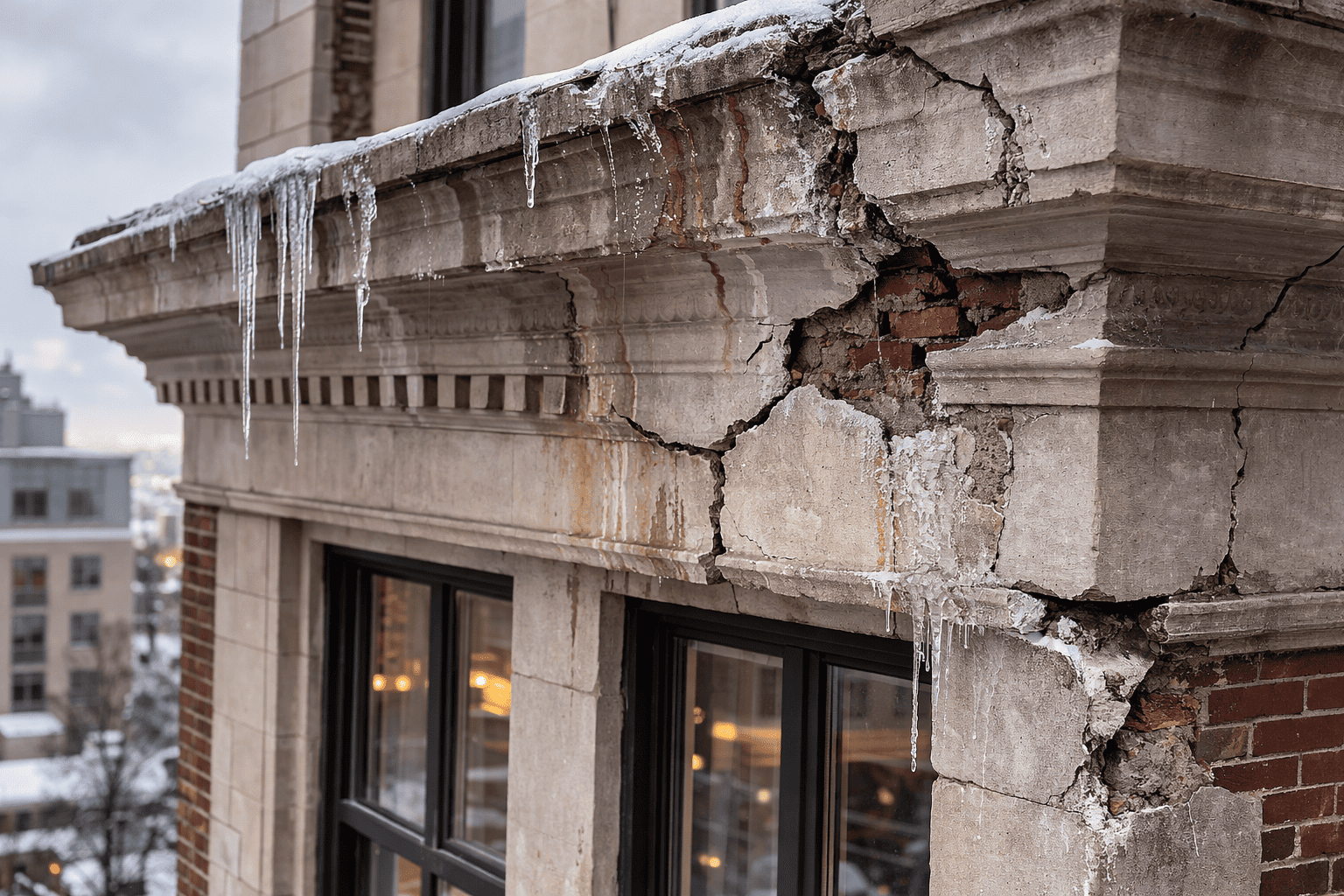
Over time, continued exposure to moisture and seasonal temperature changes can cause large sections of the cornice to deteriorate. At this stage, restoration work may require significant repair or partial reconstruction rather than simple maintenance.
What Is the Cost Impact of Freeze-Thaw Cornice Damage?
Freeze-thaw deterioration can significantly increase building maintenance costs if left unchecked. Small cracks and moisture infiltration may appear minor at first, but repeated seasonal cycles can gradually expand the damage and affect larger sections of the cornice structure. As deterioration progresses, repair work often shifts from simple maintenance to more complex restoration.
For many NYC property owners, early maintenance such as repointing mortar joints or applying protective waterproofing treatments can prevent water from accumulating inside masonry components. Taking action early helps reduce structural deterioration, maintain property value, and avoid more expensive reconstruction later.
Timely repairs also reduce safety risks associated with loose cornice elements, falling debris, and façade instability. Addressing problems early allows building owners to manage repair costs more effectively and prevent emergency restoration projects.
Typical Cost Progression of Freeze-Thaw Cornice Damage
| Structural Condition | Typical Repair Work | Relative Cost Impact |
|---|---|---|
| Hairline cracking | Spot repointing and minor sealing | Low |
| Surface chipping or scaling | Localized masonry or stone repair | Moderate |
| Significant material deterioration | Partial cornice restoration | High |
| Safety or structural instability | Code-required cornice reconstruction | Very high |
Preventive maintenance and early repairs are generally far more cost-effective than large-scale cornice reconstruction after long-term deterioration.
Wrapping Up
Freeze-thaw cycles remain among the most common causes of cornice deterioration in NYC buildings, particularly in older masonry structures exposed to winter moisture and frequent temperature fluctuations. When water enters small cracks and repeatedly freezes and thaws, the resulting expansion gradually weakens joints, decorative elements, and structural supports. Identifying early warning signs, scheduling regular inspections, and addressing damage early are essential steps in preventing more serious façade problems.
In many cases, building owners rely on a professional masonry contractor to assess deterioration, stabilize cornice components, and perform the necessary repairs. With proper maintenance and timely restoration, property owners can protect architectural features, maintain property value, and reduce the risk of costly structural repairs.
Sardar Restoration Corp. proudly serves every corner of NYC, including the Bronx, Manhattan, Brooklyn, Westchester, and Queens. Our services are designed to meet your needs and provide top-quality solutions wherever you are. Check our service areas to see how we can assist you in your location.
Contact us today at (+1) 917-355-8556 or sardarrestoration@gmail.com, or visit us at 2770 Fish Ave, Bronx, NY 10469, United States.
FAQs
Why are cornices in NYC especially vulnerable to freeze-thaw cycles?
Cornices in NYC are subject to frequent freeze-thaw cycles because winter temperatures often fluctuate around freezing. These temperature changes allow moisture trapped in masonry to freeze and expand, repeatedly accelerating deterioration.
What materials are most affected by freeze-thaw damage?
Porous masonry materials absorb moisture more easily, making them more susceptible to freeze-thaw deterioration. Common materials affected include:
- Terra cotta
- Limestone
- Brownstone
- Cast stone
- Mortar joints
What are the early warning signs of freeze-thaw cornice damage?
Early signs usually include hairline cracks, surface flaking, mortar joint separation, and rust stains from internal anchors. In more advanced cases, loose decorative pieces or small falling debris may appear.
How often should NYC building cornices be inspected?
Cornices should be inspected at least once a year, especially after the winter season when freeze-thaw damage becomes visible. Buildings taller than six stories must also follow NYC Local Law 11 (FISP) façade inspection requirements.
Does sealing a cornice completely stop freeze-thaw damage?
No, sealants only help reduce water penetration but cannot completely prevent freeze-thaw damage. Breathable coatings must be used so trapped moisture can escape instead of worsening masonry deterioration.
Can freeze-thaw damage cause cornice collapse?
Yes, severe freeze-thaw deterioration can weaken internal anchors and structural supports within a cornice. If the damage is left unrepaired, sections of the cornice may loosen or detach from the façade.
Can freeze-thaw damage spread to other parts of a building façade?
Yes, freeze-thaw deterioration can spread from cornices to surrounding masonry surfaces if moisture continues to penetrate cracks and joints. Over time, this can lead to wider façade damage, including mortar deterioration and masonry spalling.
What is the best way to prevent freeze-thaw cornice damage?
Preventing freeze-thaw damage requires regular façade inspections, timely mortar repointing, and proper waterproofing treatments. Controlling moisture entry is the most effective way to reduce long-term deterioration in cornice structures.